Norwich TerrierSmall prick-eared ratter from East Anglia
The Norwich Terrier is one of the smallest working terriers, a sturdy, prick-eared little dog with a big personality. Affectionate, fearless and fun, it suits families who want a compact dog with real terrier spirit.
Why people love the Norwich Terrier
- One of the more easygoing, sociable terriers
- Sturdy, confident small dog, not fragile
- Usually good with children and other dogs
- Adapts well to apartments and city life
- Hardy, weather-resistant coat with moderate shedding
Things to consider
- Upper airway syndrome can limit breathing in heat or exertion
- Never safe off leash in unfenced areas
- Digging and chasing small animals are strong instincts
- Hand stripping is time-consuming or costly to outsource
- Puppies are scarce, with waiting lists common
Is this breed right for you?
10 questions · live resultHistory and Origin
The breed developed in East Anglia, England, in the late 19th century. Small red terriers became popular with Cambridge University students as ratters and were known as Trumpington Terriers. Later they were bred in the Norwich area and used by hunt staff to bolt foxes and control vermin.
Early Norwich Terriers could have prick or drop ears. The drop-eared type was separated as the Norfolk Terrier by The Kennel Club in 1964 and by the AKC in 1979. Today the Norwich is the one with upright, pointed ears.
Size, Coat and Colors
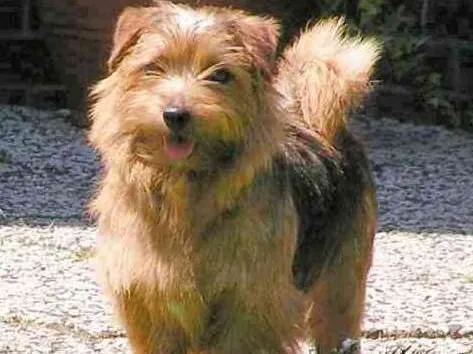
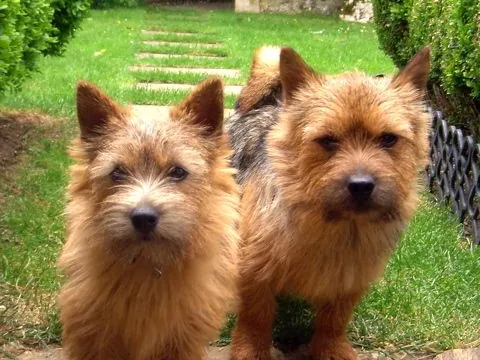
The Norwich Terrier is one of the smallest working terriers: compact, short-legged and solid, with a fox-like expression and upright, pointed ears. Adults stand about 10 inches at the shoulder and weigh around 12 lb. The AKC standard calls for a height not exceeding 10 inches and a weight of about 12 lb, so males and females are very close in size. Males often look slightly broader in the head.
The body is short-backed with a deep chest and good spring of rib, and the tail is medium length, carried upright. Docking is still seen in some US dogs but banned in the UK.
The coat is hard, wiry and straight, lying close to the body over a thick undercoat. It is longer and rougher on the neck and shoulders, forming a slight ruff, with short, smooth hair on the head and ears apart from slight eyebrows and whiskers.
Accepted colors are:
- All shades of red
- Wheaten
- Black and tan
- Grizzle (red and black hairs mixed)
White marks or patches are undesirable. Correct texture depends on hand stripping, so clipped pets often look softer and lighter.
Temperament and Personality
Norwich Terriers are cheerful, affectionate and sociable, and they are often described as one of the more easygoing terriers. They usually do well with children and enjoy being in the middle of family life.
They remain true terriers: alert, quick to announce visitors and keen on chasing small animals. Most get along with other dogs, though small pets such as hamsters are at risk.
For such a small dog, the Norwich is remarkably sturdy and confident. It is not a fragile lap dog and enjoys rough-and-tumble play, digging and exploring. Many like to burrow under blankets. Despite their friendliness, they want company and may bark or dig if left alone for long periods.
Are Norwich Terriers Good for First-Time Owners?
Yes, they are often recommended as a first terrier. Norwich are affectionate, sociable and less sharp-edged than many terrier breeds, and their small, sturdy build makes them easy to handle.
First-time owners should still expect terrier traits: a strong interest in chasing, a love of digging and an independent streak during training. Recall needs ongoing work, and a fenced yard or leash is essential. The other practical point is coat care: learning to hand strip, or finding a groomer who does, takes some effort. Owners who accept these quirks typically find the Norwich cheerful, adaptable and easy to live with.
Are Norwich Terriers Good With Cats?
Often yes with a cat they are raised with, but outdoor cats and small pets are a different story. Norwich were bred to bolt foxes and catch rats, so anything that runs can trigger a chase.
Introduce a puppy to a calm, confident resident cat, give the cat high perches and a dog-free retreat, and reward the dog for calm behavior. Many Norwich then live peacefully with their own cat. Rodents, rabbits, ferrets and birds should be kept safely separated, as the ratting instinct is strong. Neighborhood cats are likely to be chased, so keep the dog leashed on walks.
Are Norwich Terriers Easy to Train?
They are moderately easy: smart, food motivated and keen to engage, but with a terrier's independence. They learn basic cues quickly and enjoy tricks, though they may decide a squirrel is more interesting than your request.
What works well:
- Short, upbeat sessions with food rewards
- Recall practice on a long line, never in open, unfenced areas
- Teaching a quiet cue and a leave-it early
- Channeling digging and chasing into earthdog or barn hunt
House training is generally straightforward compared with many toy breeds, especially with a regular routine and crate training. Harsh corrections tend to make a Norwich stubborn rather than compliant.
Exercise and Training
A Norwich needs more activity than its size suggests: daily walks plus play and training sessions add up to around an hour. They enjoy earthdog, barn hunt, agility and scent games.
They learn readily but are independent thinkers, so training needs patience and rewards. Never trust a Norwich off leash in unfenced areas, as it will follow a scent or chase a squirrel.
Many Norwich enjoy long country walks and can keep up surprisingly well.
Grooming and Shedding
The hard, wiry, weather-resistant coat should be hand stripped, usually twice a year, to keep its texture and color. Clipping softens the coat. Brush weekly to remove loose hair. Shedding is moderate.
Colors include red, wheaten, black and tan and grizzle. Trim nails regularly and brush the small teeth often, since dental disease is common in small breeds.
Feeding and Nutrition
Weight control is the most important feeding goal for a Norwich Terrier. The breed is affected by upper airway syndrome, and even a little extra fat around the neck and chest makes breathing harder, especially in heat or during exercise. Keep your dog lean with a visible waist and ribs you can feel easily.
Norwich are typically hearty eaters that will happily accept more than they need. Feed measured portions, weigh treats into the daily total and avoid free feeding.
- Two meals a day suit most adults; puppies need three to four.
- Small kibble encourages chewing, and daily tooth brushing helps prevent dental disease, which is common in small terriers.
- Feed after rather than before exercise on hot days, and give water in small amounts if the dog is panting heavily.
- Use tiny, low-fat treats for training and earthdog practice.
Any snoring that gets louder, noisy breathing during meals or regurgitation is worth discussing with a vet, as they can be linked to the airway structure.
| Adult weight | Less active | Typical adult | Very active |
|---|---|---|---|
| 12 lb | 350 kcal | 400 kcal | 500 kcal |
Estimates use the resting energy formula veterinarians work with (70 × body weight in kg0.75) and standard activity factors. Use the feeding guide on your food as a starting point and adjust to body condition. Puppies, seniors, pregnant animals and pets that need to lose weight have different needs, so ask your vet.
Health and Lifespan
Norwich Terriers typically live 12 to 15 years. The breed is affected by a condition called Norwich Terrier upper airway syndrome, in which features of the throat and airway narrow breathing passages. Affected dogs may snore, struggle in heat or tire quickly. Ask breeders about airway assessments.
Litters are small and many females need cesarean sections to give birth. Epilepsy has also been described. Keep your dog lean and avoid hard exercise in hot weather.
Norwich Terrier Price and Cost of Ownership
Typical breeder price in the US$2,000 to $4,000
A Norwich Terrier puppy from a reputable US breeder typically costs about $2,000 to $4,000. Prices vary by breeder, region and lines. Litters are small and many are delivered by cesarean section, so few puppies are available and waiting lists are common. Ask breeders about airway assessments and the health of the parents.
Norwich rescue is limited, but breed clubs sometimes place retired show or breeding dogs, which can be an excellent option.
Breed-specific ongoing costs include:
- Professional hand stripping, usually about twice a year, or tools and time to learn it
- Dental cleanings over a long life
- Veterinary assessment of upper airway syndrome if symptoms appear
- Secure fencing and leash gear to prevent chasing escapes
- Insurance that covers airway problems and epilepsy
Is the Norwich Terrier Right for You?
The Norwich works well in apartments and houses alike, as long as it gets daily exercise and company. It is a good choice for families with children and for first-time terrier owners willing to train consistently.
- Good match: families, city dwellers, owners who are home a lot.
- Think twice: homes with pet rodents, people who want silence, long workdays alone.
Ask breeders about airway checks and whelping history in their lines.
Norwich Terrier Traits at a Glance
Norwich Terrier FAQ
Are Norwich Terriers good with kids?
Yes. They are usually affectionate, sturdy and playful with children who treat them kindly.
How big do Norwich Terriers get?
They are small: about 10 inches tall and around 12 lb.
What is the difference between Norwich and Norfolk Terriers?
They share origins, but the Norwich has upright, prick ears while the Norfolk has folded drop ears.
Do Norwich Terriers shed?
They shed moderately. Hand stripping twice a year keeps the coat tidy and weatherproof.
Can Norwich Terriers live in apartments?
Yes, they adapt well to apartment life if they get daily walks and play.
How long do Norwich Terriers live?
Typically 12 to 15 years.
Do Norwich Terriers bark a lot?
They are alert and will bark at visitors and noises, but they are usually less noisy than many other terriers if given enough exercise.