Border TerrierFriendly, hardy terrier from the Borders
The Border Terrier is a small, scruffy working terrier with an otter-shaped head and a famously good-natured personality. It is affectionate, adaptable and easier to live with than many terriers, but it has strong hunting instincts and needs plenty of exercise.
Why people love the Border Terrier
- Friendly, adaptable terrier, often good with children
- Usually gets along well with other dogs
- Wiry coat sheds lightly and needs little bathing
- Sturdy small size with great hiking stamina
- Generally easier to live with than many terriers
Things to consider
- Strong prey drive with cats and small pets
- Determined digger and escape artist
- Coat needs hand-stripping for best results
- Breed-linked CECS and seizure-like disorders
- Can become vocal or destructive when bored or alone
Is this breed right for you?
10 questions · live resultHistory and Origin
The Border Terrier was developed in the Cheviot Hills along the border between England and Scotland, probably in the 1700s, to help farmers and hunts control foxes that preyed on livestock. It needed long enough legs to keep up with horses and a narrow body to follow a fox underground.
The Kennel Club recognized the breed in 1920, and the AKC in 1930. Both list it in the Terrier group, and it is consistently one of the most popular terriers in the UK.
The breed is closely associated with the Border Hunt in Northumberland, and early breeders included hunting families such as the Robsons and Dodds. The name comes from that hunt and the border country itself.
Size, Coat and Colors
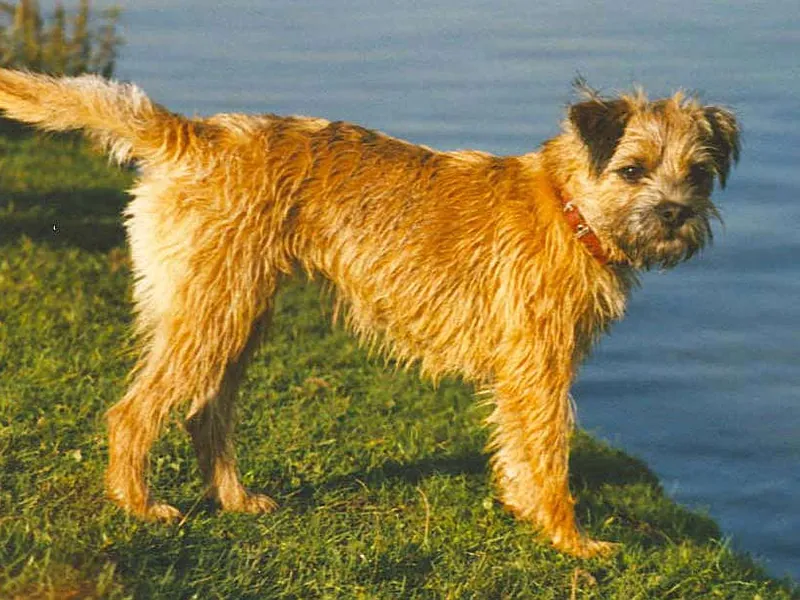
The Border Terrier is a small, workmanlike dog of 12 to 15 inches and 11 to 16 lb. It is longer-legged and narrower than many terriers, built to follow a horse all day and squeeze into a fox earth. The standard says you should be able to span the chest behind the shoulders with two hands.
The head is the breed's signature: broad in the skull with a short, strong muzzle, often called otter-like. Small V-shaped ears drop forward, and the tail is moderately short and thick at the base.
Males are a little larger than females. The AKC gives about 13 to 15.5 lb for males and 11.5 to 14 lb for females.
The double coat combines a harsh, dense outer coat with a short, soft undercoat, plus thick, loose skin. Accepted colors are:
- Red
- Grizzle and tan
- Blue and tan
- Wheaten
A small white patch on the chest is allowed. A dark muzzle is typical and desirable.
Temperament and Personality
Border Terriers are friendly, affectionate and adaptable. They are typically good with children and usually get along with other dogs. They are alert but not overly noisy.
Their prey drive is strong, so cats and small pets can be a challenge unless the dog was raised with them. They can be determined diggers and escape artists. Many become restless or vocal if left alone for long.
Borders tend to be less scrappy with other dogs than many terrier breeds, which helps explain their reputation as a good first terrier. They are adaptable: equally happy on a long country walk or curled up indoors afterward.
Are Border Terriers Good for First-Time Owners?
Yes, the Border Terrier is one of the better terrier choices for first-time owners. It is friendly, usually responsive to reward-based training and less quarrelsome with other dogs than many terrier breeds.
Beginners should still be ready for:
- At least an hour of exercise daily
- Securing fences and gates against digging and squeezing
- Teaching recall early and using a long line near wildlife
- Finding a groomer who hand-strips
A Border's sensitivity means harsh handling backfires, which suits owners who are happy to use rewards.
Do Border Terriers Bark a Lot?
Border Terriers bark moderately, less than many small terriers. Most give an alert when someone comes to the door or something unusual happens and then settle.
Barking tends to increase when a Border is bored, under-exercised or left alone for long periods. Some also bark or whine with excitement when they spot squirrels or cats through a window. Plenty of exercise, scent games and a cue to stop barking keep noise manageable in most homes, including apartments. Reward quiet moments at the window early, before watching for wildlife becomes a barking habit.
Are Border Terriers Hypoallergenic?
No dog is completely hypoallergenic, and Border Terriers still produce dander and saliva allergens. Their wiry coat sheds lightly, especially when hand-stripped regularly, which some people with mild allergies find easier to live with.
Clipping, rather than stripping, can increase loose hair, as it leaves dead hairs in the coat. If you have allergies, spend time with adult Borders before committing, keep the dog off beds and groom outdoors. Reactions vary from person to person and even from dog to dog.
Exercise and Training
Border Terriers need at least an hour of exercise daily. They love long walks, hiking, agility and earthdog trials.
- Training is usually straightforward with rewards.
- Teach recall early, but use a long line near wildlife.
- Secure fences and gates; they dig and squeeze through gaps.
- Provide mental games to channel their curiosity.
Because many Borders have good stamina, they make excellent hiking companions once fully grown. Keep training upbeat and reward-based: they are sensitive and can switch off if handled harshly.
Many Borders also enjoy scent games in the garden on quieter days.
Grooming and Shedding
The wiry coat sheds lightly. Weekly brushing and hand-stripping two or three times a year keep the coat weatherproof. Clipping softens the texture.
The dense undercoat and harsh outer coat protect against wet and cold. Colors include red, grizzle and tan, blue and tan, and wheaten. Many pet owners have a groomer strip the coat, as clipping makes it soft and less weatherproof.
Feeding and Nutrition
Border Terriers should look and feel athletic: a visible waist, ribs easy to feel and no fat pad over the hips. Many are enthusiastic eaters, and neutered adults put on weight quickly if portions are not adjusted.
Puppies grow quickly and usually reach adult size by about a year. Three or four meals a day until about six months, then two meals for adults, suits most.
Some breed clubs and researchers have studied gluten sensitivity as a factor in canine epileptoid cramping syndrome (CECS). If your Border shows cramping episodes, work with your vet, who may suggest a dietary trial. Do not change diet as a cure without a diagnosis.
Gallbladder mucocele has been reported in the breed, and high-fat diets and obesity are suspected contributors in dogs generally. Avoid frequent fatty table scraps. Use small treats for recall training, deducted from the daily ration.
| Adult weight | Less active | Typical adult | Very active |
|---|---|---|---|
| 11 lb | 330 kcal | 370 kcal | 470 kcal |
| 16 lb | 430 kcal | 500 kcal | 620 kcal |
Estimates use the resting energy formula veterinarians work with (70 × body weight in kg0.75) and standard activity factors. Use the feeding guide on your food as a starting point and adjust to body condition. Puppies, seniors, pregnant animals and pets that need to lose weight have different needs, so ask your vet.
Health and Lifespan
Border Terriers typically live 12 to 15 years. Conditions include kneecap luxation, skin and ear problems, shaking puppy syndrome (spongiform leukoencephalomyelopathy, SLEM), canine epileptoid cramping syndrome (CECS, also known as Spike's disease) and gallbladder mucocele.
Ask breeders about family history of CECS and seizures.
CECS can be confused with epilepsy, as affected dogs have episodes of trembling, stumbling and cramping. If your Border shows unusual episodes, filming them for your vet helps diagnosis. Keep up with dental care and check ears regularly.
Border Terrier Price and Cost of Ownership
Typical breeder price in the US$1,500 to $2,500
A Border Terrier puppy from a reputable US breeder typically costs about $1,500 to $2,500. Prices vary by breeder, region and lines, and waiting lists are common because litters are small. Ask breeders about CECS, seizures and SLEM history in their lines, along with knee and eye checks.
Border Terrier rescues occasionally rehome adults.
Breed-specific costs to plan for:
- Hand-stripping two or three times a year by a groomer experienced with terriers
- Secure fencing to stop digging and escapes
- Diagnostic workups if cramping or seizure-like episodes occur
- Insurance for neurological and gallbladder conditions
Food and equipment costs are low for a dog this size.
Is the Border Terrier Right for You?
The Border Terrier suits active families and first-time owners who want a friendly, sturdy small dog. It adapts to apartments if exercised.
It is less suited to homes with small pets, or owners wanting a dog to run off leash near wildlife.
They are a good fit for country walkers who want a sturdy companion with a gentle nature at home.
Border Terrier Traits at a Glance
Border Terrier FAQ
Are Border Terriers good family dogs?
Yes. They are typically friendly, affectionate and good with children.
How big do Border Terriers get?
They stand about 12 to 15 inches tall and weigh roughly 11 to 16 lb.
Do Border Terriers shed?
Lightly. The wiry coat needs hand-stripping a few times a year.
Are Border Terriers good with cats?
They can be if raised together, but their prey drive is strong.
How much exercise does a Border Terrier need?
At least an hour a day.
How long do Border Terriers live?
Most live 12 to 15 years.