Boston TerrierTuxedoed American companion with big charm
The Boston Terrier is a compact, friendly companion with a distinctive tuxedo coat and a playful, people-loving nature. Its short muzzle brings real health and heat-tolerance considerations, so it suits owners who will choose a breeder carefully and manage exercise sensibly.
Why people love the Boston Terrier
- Friendly, clownish companion that usually likes people and pets
- Small, portable size suits apartments and city living
- Short coat sheds lightly and needs minimal grooming
- Moderate exercise needs fit busy or older owners
- Quick learner that enjoys tricks and reward-based games
Things to consider
- Short muzzle limits heat tolerance and strenuous exercise
- Prominent eyes are prone to scratches and ulcers
- Breathing and spine problems can bring high vet bills
- Some are slow to house train
- Many are clingy and dislike long days alone
Health note: this breed is affected by health concerns linked to its body shape. Read the health section and choose a breeder who health-tests and breeds for moderate features.
Is this breed right for you?
10 questions · live resultHistory and Origin
The Boston Terrier traces back to Boston, Massachusetts, in the 1870s. A dog named Judge, a cross of English Bulldog and the now-extinct white English Terrier, was bought by Robert C. Hooper and became the foundation sire. Early dogs were heavier and used in pit contests, but breeders soon reduced their size and shaped them into gentle companions.
The AKC recognized the breed in 1893, making it one of the first American-developed breeds to gain recognition. It is the official state dog of Massachusetts and the mascot of Boston University. In the UK The Kennel Club places it in the Utility group.
Weight Classes, Coat and Colors
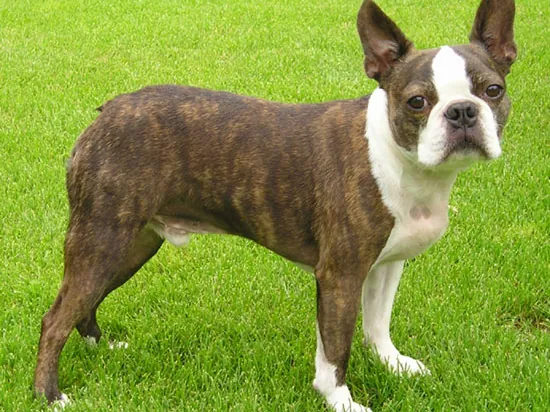
The Boston Terrier is a compact, square, short-backed dog with a short tail, erect ears and large, round, dark eyes set wide apart. The muzzle is short and square but should remain in proportion to the skull, and the overall look is lively and alert rather than heavy.
Instead of sizes, the AKC standard divides Bostons into three weight classes: under 15 lb, 15 to under 20 lb, and 20 to 25 lb. Most pet Bostons weigh 12 to 25 lb and stand roughly 15 to 17 inches tall. Males and females are similar in size, though males often have a slightly heavier head.
The coat is short, smooth and fine. Recognized colors are:
- black and white
- brindle and white
- seal and white (black with a red cast in sunlight)
The classic tuxedo markings include a white muzzle band, a white blaze between the eyes and a white chest. Colors such as blue, lilac, chocolate or merle are sold by some breeders but are not accepted by the standard, and some of them are linked to health concerns.
Temperament and Personality
Bostons are affectionate, cheerful and clownish. They tend to be friendly with strangers and good with children, and most get along with other dogs and cats. They are not big barkers, though they will announce visitors.
They thrive on company and like to be involved in everything, which can lead to clinginess. Some individuals are excitable and can be rough in play with other dogs, so early socialization helps. They are bright and quick to pick up routines, both good and bad.
Many Bostons are sensitive to tone of voice and respond best to praise and play. They often enjoy learning tricks and can do well in rally and beginner agility.
Are Boston Terriers Good for First-Time Owners?
Yes, Boston Terriers are one of the more beginner-friendly breeds. They are small, sociable, eager to please and happy with moderate exercise, and they generally respond well to gentle, reward-based training.
The learning curve is mostly about health, not behavior. New owners need to understand heat management, choose a breeder who selects for open nostrils and moderate faces, and recognize warning signs such as noisy breathing, collapse or a squinting eye. House training can take longer than expected, so plan for consistency. Budget for insurance from day one, since airway, eye and spinal problems can appear at any age.
Can Boston Terriers Be Left Alone?
Most adult Boston Terriers can handle four to six hours alone once they have been trained to it, but they are companion dogs that prefer company and many become clingy.
Build alone time gradually from puppyhood, starting with a few minutes and extending slowly. A walk and play session before you leave, a safe chew and a crate or puppy-proof room help. Keep the home cool, since heat is a real risk for this short-faced breed and a hot apartment with no air conditioning can quickly cause heatstroke. If you work full days, a midday dog walker or daycare is worth considering.
Do Boston Terriers Bark a Lot?
No, Boston Terriers are generally moderate barkers. They will usually alert you to the doorbell or someone at the door, then settle, which is one reason they do well in apartments.
What surprises many owners is the other noise: snorting, snuffling, reverse sneezing and snoring are common because of the short muzzle. Loud or labored breathing at rest is not normal, though, and should be checked by a vet. Barking tends to increase with boredom or isolation, so daily play and company keep a Boston quiet. Teaching a quiet cue early helps with the occasional excitable individual.
Exercise and Training
Bostons are lively and enjoy daily walks, fetch and short play sessions. Many enjoy agility and trick training. The key is moderation: their short muzzle limits how well they cool down.
- Walk in the cooler parts of the day in summer and stop at signs of heavy panting or noisy breathing.
- Use a harness rather than a collar to avoid pressure on the airway.
- Short, playful reward-based sessions work best; Bostons are sensitive to harsh tones.
- Begin house training early and be consistent, as some can be slow to housebreak.
Grooming and Shedding
The short, smooth coat needs only a weekly brush and sheds lightly. The large, prominent eyes need daily attention: check for redness, discharge or squinting, and protect them from scratches during rough play or walks through brush.
Clean any facial folds gently and keep nails short. Bostons are sensitive to cold as well as heat, so a coat helps in winter.
Feeding and Nutrition
A Boston Terrier's feeding plan should protect its breathing. Extra weight around the neck and chest makes airway problems worse, so keeping a Boston lean is one of the most useful things an owner can do.
- Measure meals and adjust to body condition. A slight waist and easily felt ribs are the goal.
- Feed puppies three or four small meals a day, and adults two meals.
- Choose a kibble size and shape that suits a short jaw, or try a puzzle feeder. Gulping food and air can lead to gas and regurgitation, both common in short-faced breeds.
- Keep training rewards tiny and count them as part of the day's food.
Some Bostons develop skin allergies. If your dog has chronic itching, ear problems or soft stools, work with your veterinarian on a structured elimination trial instead of switching foods at random. Avoid feeding right before exercise or in hot weather, and always provide fresh water, since panting is how they cool down.
| Adult weight | Less active | Typical adult | Very active |
|---|---|---|---|
| 12 lb | 350 kcal | 400 kcal | 500 kcal |
| 18 lb | 470 kcal | 540 kcal | 680 kcal |
| 25 lb | 610 kcal | 690 kcal | 870 kcal |
Estimates use the resting energy formula veterinarians work with (70 × body weight in kg0.75) and standard activity factors. Use the feeding guide on your food as a starting point and adjust to body condition. Puppies, seniors, pregnant animals and pets that need to lose weight have different needs, so ask your vet.
Health and Lifespan
Boston Terriers usually live 11 to 13 years. As a brachycephalic (short-faced) breed, many are affected by brachycephalic obstructive airway syndrome (BOAS), which can cause noisy breathing, exercise intolerance and dangerous overheating. The prominent eyes are prone to ulcers and other eye problems.
Other conditions include kneecap luxation, malformed spinal vertebrae (hemivertebrae), skin allergies and a high rate of births by cesarean section. Choose parents with open nostrils, moderate muzzles and health tests, and consider a respiratory function assessment where available.
Boston Terrier Price and Cost of Ownership
Typical breeder price in the US$1,000 to $2,500
A Boston Terrier puppy from a reputable US breeder typically costs about $1,000 to $2,500, with prices varying by breeder, region and lines. Be cautious with much higher prices for nonstandard colors, which are not a sign of quality. Boston Terrier rescues and shelters regularly have adults available for adoption.
The biggest ongoing cost drivers are health related:
- Insurance or savings for airway surgery, eye ulcers and spinal problems
- Cesarean births are common in the breed, which raises breeding costs and puppy prices
- Air conditioning, cooling mats and harnesses for safe summer care
- Allergy management for dogs with itchy skin
Grooming costs are low, as the coat needs only a weekly brush at home.
Is the Boston Terrier Right for You?
The Boston suits families, singles and seniors in houses or apartments who want a sociable, portable companion with moderate exercise needs. Owners should be ready to manage heat, protect the eyes and budget for veterinary care.
It is less suited to hot climates without air conditioning, to owners wanting a long-distance running partner, or to people who are away all day.
Boston Terrier Traits at a Glance
Boston Terrier FAQ
Are Boston Terriers good family dogs?
Yes. They are usually friendly, playful and gentle with children and get along well with other pets.
How big do Boston Terriers get?
Bostons typically weigh 12 to 25 lb and stand about 15 to 17 inches tall. Breed standards divide them into weight classes.
Do Boston Terriers have breathing problems?
Many do, because of their short muzzle. Choose a breeder who selects for open nostrils and moderate faces, and avoid exercise in heat.
Do Boston Terriers shed?
They shed lightly, and their short coat needs only weekly brushing.
Are Boston Terriers good apartment dogs?
Yes, they adapt well to apartments thanks to their size and modest barking, as long as they get daily walks and company.
How long do Boston Terriers live?
Most Boston Terriers live 11 to 13 years.