Danish-Swedish FarmdogA small, cheerful all-round farm dog
The Danish-Swedish Farmdog is a small, athletic all-rounder from Scandinavian farms, where it caught rats, announced visitors and kept the family company. It is friendly, quick to learn and good with children, a great choice for active families and first-time owners.
Why people love the Danish-Swedish Farmdog
- Small but sturdy and athletic
- Cheerful, sociable and great with kids
- Easy to train; good for beginners
- Low-maintenance short coat
- Generally robust with few known inherited diseases
Things to consider
- Barks to announce visitors
- Needs an hour of activity daily
- Dislikes long hours alone
- Will chase mice and small rodents
- Few breeders in North America
Is this breed right for you?
10 questions · live resultHistory and Origin
Small, pinscher-type farm dogs lived on farms in Denmark and southern Sweden for generations. They kept rats and mice under control, warned of visitors and were family companions. Some even performed in circuses because they learned tricks so easily.
As farming modernized, these dogs became scarce. In the 1980s the Danish and Swedish kennel clubs worked together to document and recognize the breed, which was officially accepted in 1987. The FCI lists it in Group 2. In the United States the AKC granted full recognition in 2025, placing it in the Working Group.
Size, Colors and Build
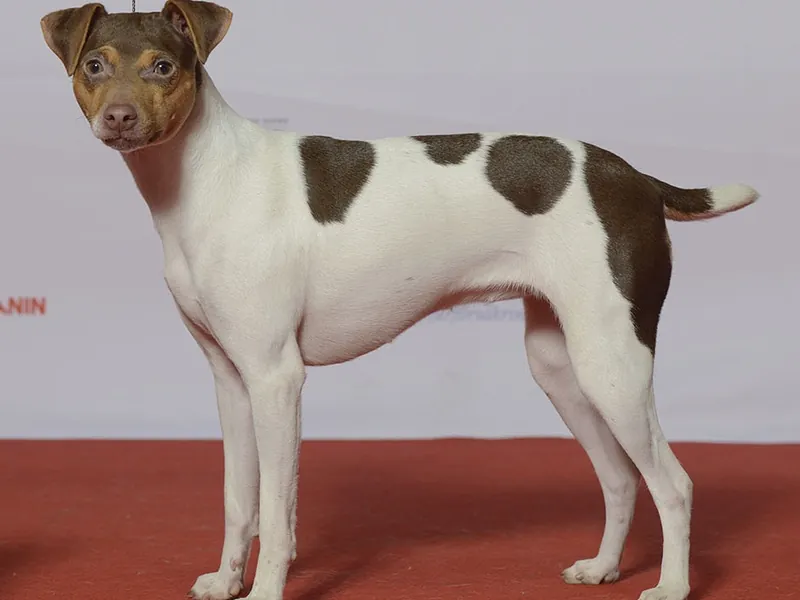
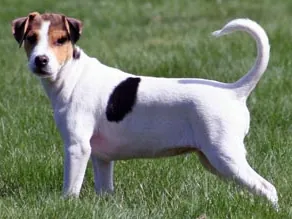
The Danish-Swedish Farmdog is a small, compact and slightly rectangular dog standing 13 to 15 inches and weighing about 15 to 20 lb. It is sturdy rather than delicate, with a fairly broad chest, a small triangular head and ears that may be rose-shaped or folded. Its overall impression is of an agile, quick, muscular little working dog, built for barn life rather than lap life.
The coat is short, hard and smooth, lying close to the body. It is predominantly white with patches of color: black, brown, fawn or tan in various shades, sometimes with tan markings on black or brown patches. Ticking within the white areas may appear.
Tails can be long or naturally short, as some puppies are born with a natural bobtail. Males are usually slightly taller and stronger in head and body than females, though the difference is modest. Breeders select for a balanced, functional build and a sound, efficient gait rather than for exaggerated features.
Temperament and Personality
Farmdogs are cheerful, sociable and alert. They are usually excellent with children and enjoy family activities. Most get along well with other dogs and can live with cats when raised together.
They are watchful and will bark to announce visitors, but they are not usually excessive barkers. Their hunting interest is generally modest, though many cannot resist mice and rats.
Owners often describe Farmdogs as playful and funny, with an easygoing approach to new situations. They like to be involved in whatever the family is doing, from garden work to road trips.
Are Danish-Swedish Farmdogs Good Apartment Dogs?
Yes, Danish-Swedish Farmdogs can live happily in apartments if they get enough exercise and mental stimulation.
Their small size and easy-care coat make them good indoor companions. The main points to manage are energy and barking. An hour of activity a day, including walks, play and training games, keeps most Farmdogs calm at home. They are alert and will bark to announce visitors or noises in the hallway, so teach a quiet cue early and reward calm behavior. Puzzle toys and short training sessions help on rainy days. A Farmdog left alone all day in a small apartment may become noisy or restless.
Are Danish-Swedish Farmdogs Good with Cats?
Many Danish-Swedish Farmdogs live well with cats, especially when raised with them from puppyhood.
The breed is generally sociable, and its hunting interest is focused mostly on mice and rats. Cats in the household are usually accepted as family, while unfamiliar cats outdoors may be chased. Introduce a puppy to a calm, dog-savvy cat with places to retreat, and reward the dog for calm behavior. Pet rodents such as hamsters, guinea pigs and rats are a different matter and should be kept securely out of reach.
Can Danish-Swedish Farmdogs Be Left Alone?
Farmdogs can stay alone for a few hours once trained, but they are sociable dogs that do best with company for much of the day.
Start alone-time training in puppyhood with short absences and build up gradually. A walk or play session before leaving and a chew or puzzle toy help them settle. Long workdays alone often lead to barking or restlessness. If you work full-time away from home, plan for a dog walker, daycare or bringing the dog along where possible. Their small size makes them easy to take on errands and trips.
Exercise and Training
Plan for an hour of daily activity, including walks, play and mental games. Farmdogs are agile and energetic, and they excel in agility, obedience, rally, barn hunt and trick training.
Training is usually easy with positive methods. The breed is eager to learn, quick and willing, which makes it a good choice for first-time owners. Keep sessions fun and varied. Farmdogs prefer company and do not do well with long hours alone.
Their size makes them easy travel companions, and many adult Farmdogs enjoy long hikes. Mental work matters as much as running: puzzle toys, scent games and short training sessions help keep them content indoors.
Secure fencing helps, since a Farmdog may follow a mouse trail under a hedge or through a gap.
Grooming and Shedding
The short, smooth coat is low-maintenance. It is mostly white with patches of black, brown or fawn, sometimes with tan markings.
- Brush weekly with a rubber mitt or soft brush.
- Trim nails and check ears regularly.
- Brush teeth several times a week.
Shedding is fairly light compared with many breeds.
Their compact size and short coat make them easy to towel off after muddy walks, one reason they are popular in rural homes.
Feeding and Nutrition
Danish-Swedish Farmdogs are lively and athletic, but their small size means extra treats quickly add up. Keep them lean to protect their knees and hips: the ribs should be easy to feel and the waist visible from above. Many Farmdogs are enthusiastic eaters and will try to convince you they need more.
- Feed puppies three or four meals a day and adults two meals.
- Use small, low-calorie treats for training, and count them in the daily ration.
- Adjust portions to activity; a dog doing agility or barn hunt several times a week needs more than a quiet companion.
Small breeds are prone to dental disease, so regular tooth brushing and appropriate chews matter. Choose chews sized for a small dog and supervise chewing. Farmdogs may scavenge mice and other finds on walks and on farms, so keep parasite prevention up to date and discuss with your vet. Fresh water should always be available, especially after active play.
| Adult weight | Less active | Typical adult | Very active |
|---|---|---|---|
| 15 lb | 410 kcal | 470 kcal | 590 kcal |
| 20 lb | 510 kcal | 590 kcal | 730 kcal |
Estimates use the resting energy formula veterinarians work with (70 × body weight in kg0.75) and standard activity factors. Use the feeding guide on your food as a starting point and adjust to body condition. Puppies, seniors, pregnant animals and pets that need to lose weight have different needs, so ask your vet.
Health and Lifespan
The breed is considered robust, with no frequently occurring inherited diseases according to the AKC. Typical lifespan is about 11 to 13 years.
Responsible breeders screen breeding dogs for common orthopedic conditions. Keep the dog lean and fit to protect its joints.
Ask breeders whether parents have been screened for hips and knees, and keep up regular dental care, as with any small breed.
Danish-Swedish Farmdog Price and Cost of Ownership
The Danish-Swedish Farmdog is still rare in the US, and there is no well-established typical puppy price. Prices vary by breeder, region and lines, and some puppies are imported from Denmark or Sweden, which adds travel costs. Contact the breed club early, as breeders often have waiting lists.
Adoption is rarely possible for this breed in the US, though breed clubs sometimes help rehome adult dogs.
Breed-specific ongoing costs are modest. The short coat needs no professional grooming, and food costs are low for a small dog. Budget for regular dental care, which small breeds often need. Health screening of hips and knees in breeding dogs is reflected in the puppy price. Dog sports such as agility, rally and barn hunt are popular with Farmdog owners and add class and entry fees. Insurance is still worth considering for unexpected injuries.
Is the Danish-Swedish Farmdog Right for You?
This breed suits active families and first-time owners who want a small, sturdy, trainable dog. It adapts to houses or apartments when well exercised.
- Good match: families with children, first-time owners, active singles, dog sport fans.
- Less ideal: owners away all day, households with pet rodents.
Breeders in North America are still relatively few, so contact the breed club early if you are interested in a puppy.
Danish-Swedish Farmdog Traits at a Glance
Danish-Swedish Farmdog FAQ
How big do Danish-Swedish Farmdogs get?
They stand about 13 to 15 inches at the shoulder and weigh roughly 15 to 20 lb.
Are Danish-Swedish Farmdogs good with kids?
Yes, they are typically cheerful, playful and excellent with children.
Are Danish-Swedish Farmdogs easy to train?
Yes. They are quick learners and respond well to positive training, which makes them a good choice for first-time owners.
Do Danish-Swedish Farmdogs shed?
Shedding is fairly light. Weekly brushing keeps the coat tidy.
Are Danish-Swedish Farmdogs hypoallergenic?
No dog is truly hypoallergenic, but their short coat sheds less than many breeds.
How long do Danish-Swedish Farmdogs live?
Typically 11 to 13 years.