Lancashire HeelerSmall English drover with a terrier streak
The Lancashire Heeler is a small, sturdy dog that once nipped at cattle heels and cleared farms of rats. Energetic, smart and people focused, it suits owners who want a compact dog with big working drive.
Why people love the Lancashire Heeler
- Small, sturdy and easy to travel with
- Cheerful and strongly attached to its family
- Short coat needs only weekly brushing
- Bright learner that enjoys dog sports
- Often lives 12 to 15 years
Things to consider
- High energy for a small dog
- May nip at heels from herding instinct
- Strong urge to chase rodents and rabbits
- Vocal when bored or alerting
- Very rare; hard to find in the US
Is this breed right for you?
10 questions · live resultHistory and Origin
The Heeler comes from northwest England, especially the Ormskirk area of Lancashire. Farmers and drovers used it to move cattle by nipping at their heels and to keep barns free of rats and rabbits. It is commonly believed to descend from Welsh Corgis crossed with Manchester Terriers, which would explain its low build and black-and-tan coloring.
The Kennel Club recognized the breed in 1981, and today it appears on the Kennel Club's list of vulnerable native breeds because so few puppies are registered each year. The AKC granted full recognition in 2024, placing it in the Herding Group.
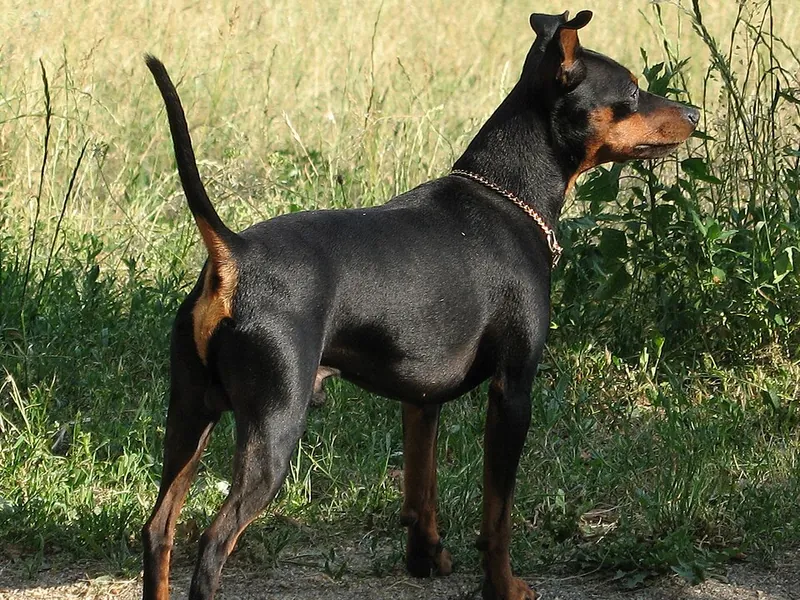
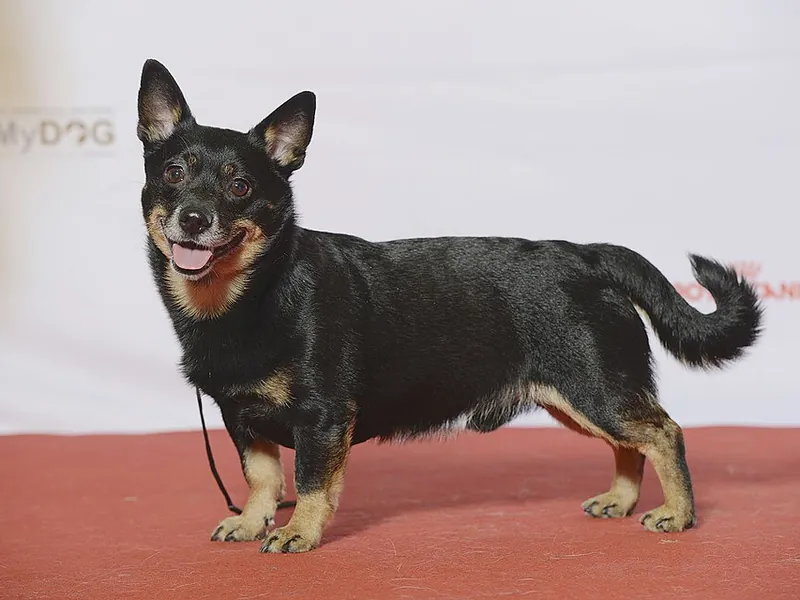
The breed standard allows black and tan or liver and tan, with the tan in clearly defined markings on the muzzle, legs and chest.
Size, Coat and Colors
The Lancashire Heeler is a small, low-set, sturdy dog standing about 10 to 12 inches and weighing roughly 9 to 18 lb. Males are toward the top of the height range and females toward the lower end. The body is longer than tall, with a firm topline, well-sprung ribs and strong, short legs suited to working cattle and catching rats.
The head is wedge-shaped with alert, erect or tipped ears and dark, almond-shaped eyes. The tail is set high and carried over the back in a gentle curve when the dog is alert.
The coat is short, hard and flat, with a fine undercoat that is not visible through the outer coat. In winter many Heelers grow a slightly longer coat and a visible mane around the neck. The standard allows two colors: black and tan or liver and tan. The tan should be rich and clearly marked on the muzzle, spots on the cheeks, often above the eyes, on the lower legs and inside the hind legs. A small white spot on the chest is allowed.
Temperament and Personality
Heelers are cheerful, alert and strongly attached to their families. Many greet their owners with a so-called Heeler smile, pulling back their lips in a friendly grin. They are usually good with considerate children and enjoy being part of everything.
The terrier side shows in a strong urge to chase small animals, and the herding side may show as nipping at heels. They are watchful and vocal, and a bored Heeler will bark.
Heelers are usually friendly with visitors once they have announced them. Raised with cats, many live peacefully with them indoors while still chasing anything that runs outside. They bond strongly and are not suited to being left alone for most of the day.
Are Lancashire Heelers Good for First-Time Owners?
Yes, for active first-time owners. Heelers are small, affectionate and eager to learn, and their short coat is simple to care for, which makes them manageable for newcomers.
New owners should be prepared for more energy than the size suggests. A Heeler needs daily exercise and brain work, such as tricks, scent games or agility. Herding nips at heels and chasing small animals need early, consistent redirection. If you can commit to training and daily activity and find a breeder, which can take time, a Heeler can be a rewarding first dog.
Are Lancashire Heelers Good with Cats?
Many are, if raised with them. Heelers that grow up with a cat often live peacefully indoors, but the terrier side of the breed means they may still chase cats or other animals outdoors.
Introduce a Heeler puppy to the household cat early and calmly, give the cat high escape routes and supervise until both are relaxed. Adult Heelers new to cats need slower introductions. Pet rodents, rabbits and birds are a different matter: the breed was used to catch rats, and small caged pets should be kept securely out of reach.
Are Lancashire Heelers Easy to Train?
Generally yes. Heelers are intelligent, responsive and food-motivated, and they often enjoy training sessions as much as walks. They pick up tricks quickly and do well in obedience, rally, agility and scent work.
Training challenges come from their working instincts. Heel nipping and chasing need to be redirected early with games and clear alternatives. Recall is reliable in many Heelers but can fail near rabbits or livestock, so practice on a long line. Keep sessions short and upbeat, since repetition bores them. Consistent rules matter, as a clever Heeler quickly learns where the gaps are.
Exercise and Training
Despite the small size, energy is high. Plan on at least an hour of daily activity with plenty of brain work: trick training, scent games, agility, rally or herding. A walk around the block is not enough.
Heelers learn quickly and generally enjoy training with rewards. Teach a solid recall, but use caution near rabbits or livestock. Redirect any heel nipping early with games and clear alternatives.
Their size makes them easy travel and hiking companions. Many enjoy long country walks once fully grown, but build distance gradually in young dogs.
Grooming and Shedding
The short, hard, flat coat is easy to keep. A weekly brush removes loose hair, and the breed sheds moderately, more during seasonal coat changes. Bathe only when dirty, trim nails regularly and check teeth.
Expect a seasonal coat change when more hair comes out; a rubber brush or grooming mitt helps.
Feeding and Nutrition
Lancashire Heelers are active, food-loving little dogs that can gain weight easily if exercise drops. Feed a complete diet sized for small breeds in two measured meals a day, and adjust portions to activity rather than relying on the bag's guide.
Keeping a Heeler lean matters for its long back and short legs. Extra weight adds strain to the spine and knees, where kneecap luxation occurs in the breed. You should be able to feel the ribs easily and see a waist from above.
Training treats can add up quickly, since Heelers learn fast and are often trained with food. Use tiny pieces, light, low-fat treats or part of the daily kibble as rewards.
Puzzle feeders and scatter feeding provide useful mental work. Small breeds are prone to dental issues, so brush teeth regularly. Puppies benefit from three or four small meals a day before moving to two meals as adults.
| Adult weight | Less active | Typical adult | Very active |
|---|---|---|---|
| 9 lb | 280 kcal | 320 kcal | 400 kcal |
| 14 lb | 390 kcal | 450 kcal | 560 kcal |
| 18 lb | 470 kcal | 540 kcal | 680 kcal |
Estimates use the resting energy formula veterinarians work with (70 × body weight in kg0.75) and standard activity factors. Use the feeding guide on your food as a starting point and adjust to body condition. Puppies, seniors, pregnant animals and pets that need to lose weight have different needs, so ask your vet.
Health and Lifespan
Lancashire Heelers typically live 12 to 15 years. The main inherited concerns are eye diseases: primary lens luxation, where the lens slips out of place and can cause painful glaucoma, and Collie eye anomaly. DNA tests exist for both, and breeders should test all breeding dogs. Kneecap luxation also occurs.
Like other low-built dogs with a longer back, Heelers benefit from staying lean and avoiding excessive jumping.
Lancashire Heeler Price and Cost of Ownership
Lancashire Heelers are very rare in the US, even after full AKC recognition in 2024, and there are only a handful of breeders. There is no reliable typical price range. Expect waiting lists, possible imports from the UK or Europe and added costs for transport. Prices vary by breeder, region and lines. Ask breeders for DNA test results for primary lens luxation and Collie eye anomaly on both parents.
Rescue Heelers are uncommon, but breed clubs sometimes help rehome adult dogs.
Ongoing costs are modest. The breed needs little professional grooming and eats small amounts. Main cost drivers are eye exams, dog sport fees and pet insurance, which is worth considering for eye conditions and knee problems. Training classes are a good investment for this intelligent, active breed.
Is the Lancashire Heeler Right for You?
A Heeler fits active people who want a small, low-grooming dog that can join hikes and training classes. It can live in an apartment if it gets enough exercise and mental work.
- Good match: active singles and families, dog sport fans, people home much of the day.
- Think twice: homes with rabbits or rodents, owners wanting a quiet lap dog, long hours alone.
Lancashire Heeler Traits at a Glance
Lancashire Heeler FAQ
How big do Lancashire Heelers get?
They are small dogs, about 10 to 12 inches tall and roughly 9 to 18 lb.
Are Lancashire Heelers good family dogs?
Yes, they are affectionate and usually good with respectful children, though some may nip at heels in play.
How much exercise does a Lancashire Heeler need?
At least an hour a day, plus training and games to keep the mind busy.
Do Lancashire Heelers bark a lot?
They can be vocal, especially when bored or alerting to something new.
Are Lancashire Heelers rare?
Yes. The Kennel Club lists the breed as a vulnerable native breed because of low registration numbers.
How long do Lancashire Heelers live?
Typically 12 to 15 years.