SchipperkeBelgium's bold little black watchdog
The Schipperke is a small, black Belgian dog with a fox-like face, a ruff and a big personality. Curious, confident and very alert, it was bred as a ratter and watchdog. It suits active owners who enjoy a busy, vocal little dog and can keep it entertained.
Why people love the Schipperke
- Small, sturdy and long-lived
- Excellent, alert watchdog
- Clever and quick at agility and tricks
- Coat repels dirt with little dog odor
- Loyal and closely bonded to its family
Things to consider
- Barks readily and loudly
- Strong prey drive toward small animals
- Escape artist that needs secure fencing
- Independent streak and short attention span
- Mischievous when bored or under-exercised
Is this breed right for you?
10 questions · live resultHistory and Origin
The Schipperke developed in the Flemish region of Belgium, likely from the same black sheepdog ancestors as the Belgian Shepherds. It was used by craftsmen and shopkeepers, such as shoemakers in Brussels and Antwerp, to catch rats and guard homes and workshops.
The name is often linked to Flemish words for "little captain" or "little shepherd", and the breed is associated with canal barges, where it may have served as a watchdog. Queen Marie Henriette of Belgium owned one in the 1880s, raising the breed's profile. The AKC recognized it in 1904.
Many Schipperkes are born with naturally short or absent tails, a well-known breed trait.
Size, Colors and Coat
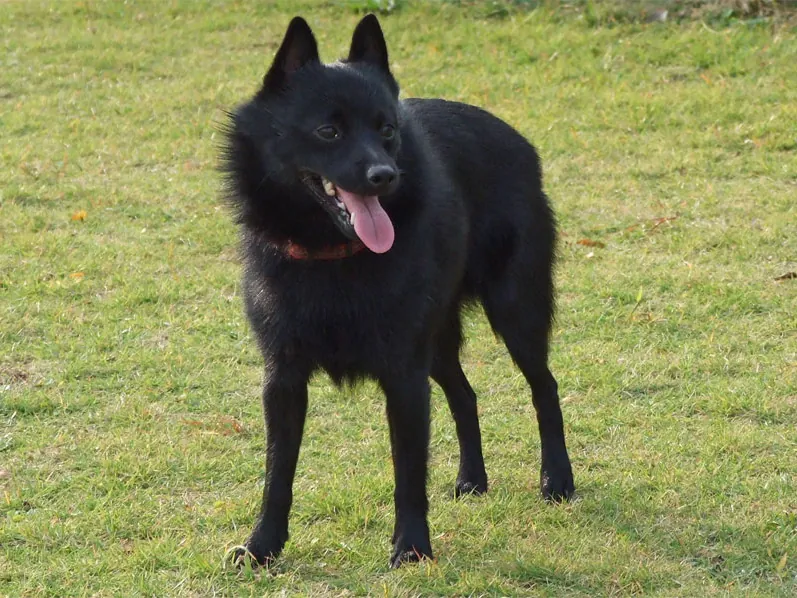
The Schipperke is a small, cobby dog that looks fox-like from the front and sloping from the side, thanks to a thick ruff and a back line that slopes from the shoulders to the croup. It stands about 10 to 13 inches at the shoulder and weighs roughly 7 to 20 lb. Under the AKC standard, males are 11 to 13 inches and females 10 to 12 inches, and males often carry a more dramatic ruff and cape.
The coat is the breed's signature. It is harsh and dense, short on the face, ears and front legs, and much longer in three areas:
- A ruff around the neck
- A cape over the shoulders
- Culottes on the backs of the thighs
The AKC accepts only solid black. Some other registries, including The Kennel Club in the UK, allow other solid colors, so cream or gold Schipperkes appear in some countries. Ears are small, triangular and erect. Tails may be natural bobs, docked or full where docking is not practiced.
Temperament and Personality
Schipperkes are lively, inquisitive and fearless. They want to know everything that happens around the house and will loudly announce visitors, which makes them excellent watchdogs.
They can be independent and mischievous, and their ratting instinct makes them likely to chase small animals. They are loyal to their family and can be good with respectful children, but they may be reserved with strangers.
Schipperkes are known for their curiosity and like to investigate every noise and movement. They often follow their owners from room to room and want to be involved in everything. Their high energy and intelligence mean they can become mischievous if bored. They are generally affectionate with their own family but may be wary or bossy with unfamiliar dogs.
Is the Schipperke Good for First-Time Owners?
Sometimes. A Schipperke is small and easy to groom, but its personality takes more management than its size suggests.
First-time owners need to be ready for a bold, independent dog that barks at everything, tests boundaries and looks for ways to escape. Consistent rules, early training of a quiet cue and secure fencing are essential. People who enjoy a lively, clever dog and like teaching tricks often thrive with the breed. Those who want a quiet, compliant lapdog may find a Schipperke more challenging than expected.
Are Schipperkes Easy to Train?
Schipperkes are smart and learn quickly, but they are not the most biddable breed. They were bred to make their own decisions as ratters and watchdogs, so they often ask what is in it for them.
Short, upbeat sessions with food rewards work best, and variety keeps their interest. They excel at agility, tricks and scent games once motivated. Recall is the hardest skill, because a Schipperke chasing a squirrel can ignore everything else. Practice in enclosed areas, use a long line and keep the dog on a leash in unfenced spaces.
Are Schipperkes Good With Cats?
They can be, especially when raised with a cat from puppyhood. Many Schipperkes live peacefully with the household cat while still chasing any other cat or squirrel outside.
The breed's ratting background means a strong prey drive. Introductions should be slow and supervised, with escape routes and high perches for the cat. Rodents, rabbits and other small pets are much harder to combine with a Schipperke and are best kept completely separate. Adult rescue dogs should ideally be cat-tested before adoption.
Exercise and Training
Daily walks, play sessions and mental challenges like puzzle toys or scent games keep a Schipperke happy. They excel at agility and obedience.
They are intelligent and generally eager to learn, but short attention spans mean sessions should be short and fun. Teach a reliable "quiet" cue early. Schipperkes are skilled escape artists, so secure fencing and gates are important.
Many Schipperkes enjoy jobs such as tracking, earthdog-style games or carrying small items. Rotating toys and teaching new tricks helps keep their busy minds occupied.
Grooming and Shedding
The medium-length double coat forms a ruff around the neck, a cape and "culottes" on the back of the thighs. Weekly brushing is usually enough, but during seasonal sheds, typically once or twice a year, daily brushing helps. Bathing is needed only occasionally.
The coat naturally repels dirt, and most Schipperkes have little dog odor. Nails, ears and teeth need routine attention like any small breed.
Feeding and Nutrition
Schipperkes are energetic as young dogs but often become keen eaters that gain weight in middle age. Because they live into their teens, keeping them lean pays off for their knees and hips over a long life.
- Feed two measured meals a day for adults; small puppies do best on three or four meals until around four to six months.
- Use tiny treats for training and take them from the daily ration. Schipperkes train often, so rewards add up.
- Puzzle feeders and scatter feeding give this busy dog something to do.
Like many small breeds, Schipperkes are prone to tartar build-up, so combine daily tooth brushing with vet-approved dental chews. Hypothyroidism occurs in the breed and can cause weight gain despite normal portions; if your dog gains weight without eating more, ask your vet to check thyroid function before cutting food drastically.
| Adult weight | Less active | Typical adult | Very active |
|---|---|---|---|
| 7 lb | 230 kcal | 270 kcal | 330 kcal |
| 14 lb | 390 kcal | 450 kcal | 560 kcal |
| 20 lb | 510 kcal | 590 kcal | 730 kcal |
Estimates use the resting energy formula veterinarians work with (70 × body weight in kg0.75) and standard activity factors. Use the feeding guide on your food as a starting point and adjust to body condition. Puppies, seniors, pregnant animals and pets that need to lose weight have different needs, so ask your vet.
Health and Lifespan
Schipperkes often live 12 to 16 years. Health issues noted by the AKC include:
- Mucopolysaccharidosis IIIB (MPS IIIB): a fatal inherited disease, for which a DNA test is available and essential
- Luxating kneecaps
- Legg-Calvé-Perthes disease
- Eye conditions
- Thyroid disorders
Look for breeders who DNA test for MPS IIIB and screen eyes, knees and thyroid.
Schipperke Price and Cost of Ownership
Typical breeder price in the US$1,000 to $2,000
A Schipperke puppy from a reputable US breeder typically costs around $1,000 to $2,000. Prices vary by breeder, region and lines. The breed is uncommon, so waiting lists are normal. Ask for proof that both parents are DNA tested for MPS IIIB.
The Schipperke Club of America supports a rescue network, and adult dogs occasionally become available.
Breed-specific ongoing cost drivers include:
- Secure fencing and gate repairs for an escape-prone dog
- Professional dental cleanings over a long lifespan
- Thyroid testing and medication if hypothyroidism develops
- Treatment for luxating kneecaps or Legg-Calve-Perthes disease
- Insurance for a dog that may live 16 years
Is the Schipperke Right for You?
A Schipperke is a good fit for active owners who want a small, sturdy watchdog with lots of character. It adapts to apartments if exercised and trained to manage barking.
It is less suitable for homes with small pets, owners who need a quiet dog or those who will leave the dog alone for long periods.
Their small size, toughness and alertness make them well suited to owners who like a dog with a big presence in a small package.
Schipperke Traits at a Glance
Schipperke FAQ
How big do Schipperkes get?
They stand about 10 to 13 inches tall and weigh roughly 7 to 20 lb.
Do Schipperkes bark a lot?
Yes, they are vocal watchdogs and bark readily at noises and visitors.
Are Schipperkes good family dogs?
They can be loyal family dogs for active households with respectful children.
Do Schipperkes shed?
They shed moderately, with heavier seasonal shedding.
How long do Schipperkes live?
Typically 12 to 16 years.
What does Schipperke mean?
The name is usually linked to Flemish words for little captain or little shepherd.