Miniature PinscherFearless little German with a big stride
The Miniature Pinscher is a small, sleek German dog with a confident, energetic personality and a distinctive high-stepping gait. It is alert, vocal and very active, and suits owners who enjoy a busy little dog and can keep up with its curiosity.
Why people love the Miniature Pinscher
- Fearless, lively watchdog in a small, sturdy body
- Short, glossy coat needs only a weekly rub
- Long lifespan, often 12 to 16 years
- Enjoys sports like agility, barn hunt and trick training
- Adapts to apartments if exercised daily
Things to consider
- Barks readily at noises and visitors
- Skilled escape artist that bolts through doors and gaps
- Strong instinct to chase rodents and small pets
- Independent and willful during training
- Feels the cold and needs a coat in winter
Is this breed right for you?
10 questions · live resultHistory and Origin
Despite its look, the Miniature Pinscher is not a small Doberman. It developed in Germany, where small pinscher-type dogs were kept on farms and in stables to catch rats long before the Doberman existed. Germans call it the Zwergpinscher, meaning dwarf pinscher.
The Pinscher-Schnauzer Klub, founded in 1895, helped standardize the breed. Min Pins arrived in the US in the early 1900s, and the AKC recognized them in 1925, placing them in the Toy group. The Kennel Club also lists it as a Toy breed. Fans call it the King of Toys.
Its high-stepping hackney gait, in which the front legs lift and bend sharply at the wrist, is a breed hallmark that judges look for in the show ring.
Size, Build, Coat and Colors
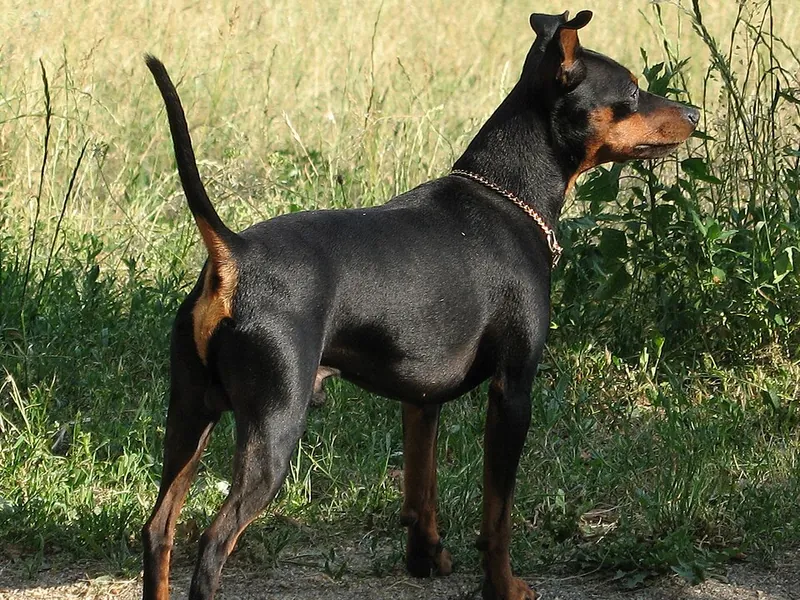
The Miniature Pinscher is a small, square, well-muscled dog with a proud head carriage and a distinctive high-stepping hackney gait. Adults stand 10 to 12 inches at the shoulder and weigh about 9 to 13 lb. The AKC disqualifies dogs under 10 inches or over 12.5 inches. Males and females are similar in size; males often look slightly more muscular with a stronger head.
The head is narrow and tapering, with dark oval eyes and high-set ears that are naturally erect or folded. Ears are cropped in some US dogs, while cropping is banned in the UK and much of Europe. Tails are docked in some countries and left natural in others.
The coat is smooth, hard, short and lies tight to the body with a natural shine. Accepted colors are:
- Clear red
- Stag red (red with black hairs intermingled)
- Black with rust-red markings
- Chocolate with rust-red markings
Markings appear on the cheeks, lips, throat, chest, legs and under the tail. White patches over half an inch and colors such as blue or fawn are disqualified in the AKC standard.
Temperament and Personality
Min Pins are bold, inquisitive and full of energy. They are excellent watchdogs that bark readily at unusual sounds and visitors, and they rarely back down from larger dogs, which can get them into trouble.
They tend to be affectionate with their family but independent and sometimes willful. Small animals can trigger their old ratting instincts. With children they do best with older kids who handle them gently and respect their space; a startled or mishandled Min Pin may snap.
They are known as escape artists: they squeeze through gaps, dart out of doors and climb.
Are Miniature Pinschers Good for First-Time Owners?
They can be for a committed first-timer, but the Min Pin is more demanding than its size suggests. It has the energy of a terrier, an independent streak and a talent for escaping.
First-time owners do best if they treat the Min Pin as a real dog rather than a lapdog: structured training from day one, two brisk walks daily, mental games and clear house rules. Expect to work on barking, door-dashing and house training. Puppy classes help a lot. People who want a quiet, cuddly small dog that needs little guidance are usually happier with a calmer toy breed. Those who enjoy a bold, busy companion often fall for the Min Pin.
Are Miniature Pinschers Good With Other Dogs and Cats?
Many get along with other dogs and cats in their own household, especially when raised together. Problems tend to come from the Min Pin's confidence: it may challenge larger dogs on walks without regard for its own size, which puts it at risk.
Cats are often accepted once introductions are calm and the cat can retreat to high places. Rodents, rabbits and birds are a different matter; the old ratting instinct is strong, and those pets should be kept safely separated. Early socialization with calm, dog-friendly adults, and teaching a reliable leave-it cue, helps a Min Pin respond to other animals without escalating.
Can Miniature Pinschers Be Left Alone?
A trained adult Min Pin can usually manage four hours or so alone, but it is an active, curious dog that finds trouble when bored. Chewing, barking at outside noises and escaping a poorly secured space are common.
Leave it in a safe, puppy-proofed area or crate, ideally away from windows where passersby trigger barking. Exercise it before you go and provide a food puzzle. Because Min Pins are small and excellent at squeezing through gaps, check gates and fences carefully if the dog has yard access. A midday walk or second pet can help on long workdays.
Exercise and Training
For a toy breed, the Min Pin has high exercise needs. Two brisk walks a day plus active play and games keep it settled. They enjoy agility, scent games and trick training.
- Secure the yard: check fences for gaps and teach a solid wait at doors.
- Use short, varied, reward-based training sessions; they bore quickly.
- Work on a quiet cue early to manage barking.
- House training can take longer than with larger breeds, so be patient and consistent.
Many Min Pins thrive in barn hunt, a sport where dogs locate safely caged rats in straw bales, which taps into their original job without harm to anyone.
Grooming and Shedding
The short, hard, glossy coat needs only a weekly rub with a soft brush or mitt. Shedding is moderate. Min Pins feel the cold and benefit from a coat in winter.
Regular tooth brushing is important, as small breeds are prone to dental disease, and nails should be trimmed often.
Colors include solid red, stag red and black or chocolate with rust markings.
Feeding and Nutrition
Miniature Pinschers are lively but small, and a pound of extra weight is a big percentage of a 10 lb body. Feed measured portions and check by touch that ribs are easy to feel. Begging is a Min Pin specialty, and table scraps add up fast.
Weight control matters for two breed-linked joint problems: luxating patellas and Legg-Calve-Perthes disease, a hip condition in young dogs. Lean dogs cope better with both.
- Very young puppies need three to four small meals a day to avoid low blood sugar.
- Adults do well on two meals a day.
- Small kibble encourages chewing; pair with daily tooth brushing, since small mouths are prone to dental disease.
- Use tiny treats and subtract them from daily food, especially during barking or door-manners training.
Bladder stones are reported in the breed. Fresh water at all times helps, and any straining, frequent urination or blood in the urine needs a vet. If stones are diagnosed, follow your veterinarian's specific diet plan.
| Adult weight | Less active | Typical adult | Very active |
|---|---|---|---|
| 9 lb | 280 kcal | 320 kcal | 400 kcal |
| 13 lb | 370 kcal | 420 kcal | 530 kcal |
Estimates use the resting energy formula veterinarians work with (70 × body weight in kg0.75) and standard activity factors. Use the feeding guide on your food as a starting point and adjust to body condition. Puppies, seniors, pregnant animals and pets that need to lose weight have different needs, so ask your vet.
Health and Lifespan
Min Pins often live 12 to 16 years. Conditions seen in the breed include kneecap luxation, Legg-Calve-Perthes disease (degeneration of the hip joint in young dogs), heart defects, progressive retinal atrophy, cataracts and bladder stones.
Ask breeders about patella checks, eye examinations and cardiac screening of the parents. Keep them lean, since extra weight stresses small joints.
Miniature Pinscher Price and Cost of Ownership
Typical breeder price in the US$1,000 to $2,500
A Miniature Pinscher puppy from a reputable US breeder typically costs about $1,000 to $2,500. Prices vary by breeder, region and lines. Ask for patella, eye and heart screening of the parents.
Min Pins and Min Pin mixes turn up regularly in shelters and with dedicated rescues, often because owners were unprepared for the energy and barking. Adult rescues can be a good choice when their personality is already known.
Breed-specific ongoing costs include:
- Secure fencing, gate checks and a well-fitted harness
- Winter coats and sweaters for cold-sensitive dogs
- Professional dental cleanings over the dog's long life
- Possible treatment for luxating patellas or Legg-Calve-Perthes disease
- Training classes for barking, recall and door manners
Is the Miniature Pinscher Right for You?
The Min Pin suits active singles, couples or families with older children who want a small dog with big energy and a strong watchdog instinct. It adapts well to apartments if exercised daily and if neighbors tolerate barking.
It is less suited to homes with very young children, small pets like rodents, or owners wanting a quiet, sedate lapdog.
Miniature Pinscher Traits at a Glance
Miniature Pinscher FAQ
Is the Miniature Pinscher a small Doberman?
No. The Min Pin is an older German breed that developed separately; the two simply share a similar look and pinscher ancestry.
How big do Miniature Pinschers get?
They stand about 10 to 12 inches tall and weigh roughly 9 to 13 lb.
Do Miniature Pinschers bark a lot?
They are alert and vocal and often bark at noises and visitors. Early training helps.
Are Min Pins good with kids?
They do best with older, gentle children. Toddlers may handle them too roughly.
Do Miniature Pinschers shed?
They shed moderately, and the short coat needs only weekly brushing.
How long do Miniature Pinschers live?
Most live 12 to 16 years.