PhalèneThe drop-eared Continental Toy Spaniel
The Phalène is the drop-eared form of the Papillon, a tiny, bright and highly trainable toy spaniel. It is lively and people-focused, a wonderful fit for owners who enjoy training and want a small dog that wants to be part of everything.
Why people love the Phalène
- Among the easiest toy breeds to train
- Cheerful, affectionate and outgoing
- Excels in agility, rally and tricks
- Single coat mats less than many long coats
- Long-lived, often 14 to 16 years
Things to consider
- Barks at sounds and visitors
- Fine bones easily injured by falls
- Prone to dental disease and knee problems
- Struggles with separation if not trained
- Less common than the erect-eared Papillon
Is this breed right for you?
10 questions · live resultHistory and Origin
Small toy spaniels with fringed ears appear in European paintings from the Renaissance onward, often sitting on the laps of nobles in Italy, France and Spain. The drop-eared type is the older form. The erect-eared variety, now called the Papillon, became fashionable later and eventually outnumbered it.
The name Phalène is French for moth, a reference to the folded, drooping ears, while Papillon means butterfly. The FCI recognizes both as varieties of the Continental Toy Spaniel in Group 9. The AKC and The Kennel Club treat the Phalène as part of the Papillon breed, so it appears in their Toy groups. Phalène and Papillon puppies can be born in the same litter.
Size, Drop Ears and Colors
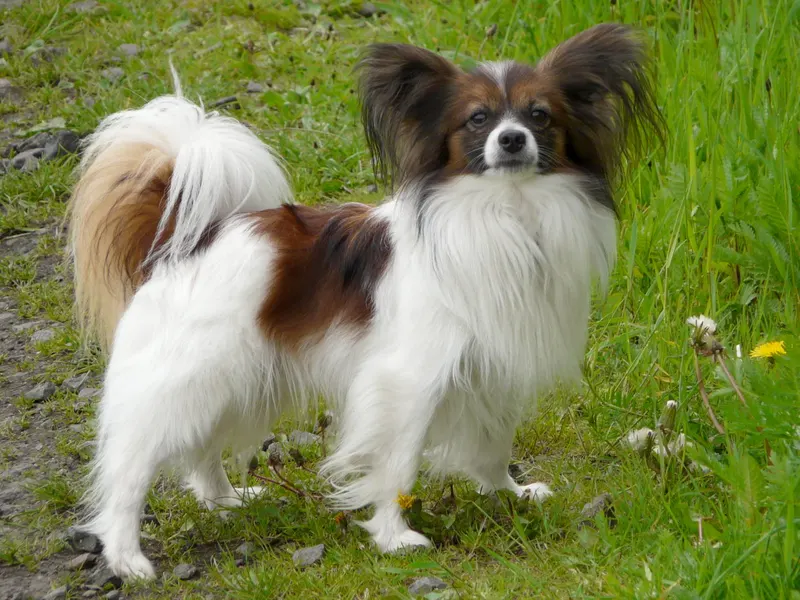
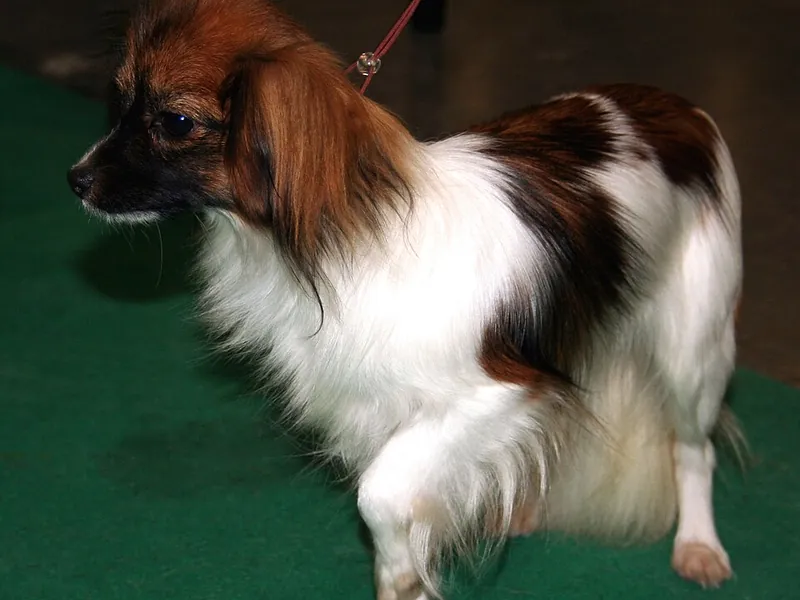
The Phalène is a fine-boned toy spaniel standing about 8 to 11 inches and weighing 3 to 11 lb. It is the drop-eared variety of the Papillon. Its name means moth in French, describing the ears, which hang down with long, flowing fringes, unlike the Papillon's upright butterfly ears. The body is slightly longer than tall, with a dainty head, a fine, pointed muzzle and a plumed tail carried arched over the back.
The coat is long, silky and flowing, with no undercoat. It is shorter on the face and front of the legs, with a frill on the chest, fringes on the ears and feathering on the back of the legs.
The color is always white with patches of any color, such as black, red, sable, lemon or tricolor. A symmetrical head marking with a white blaze is preferred. Papillons and Phalènes can appear in the same litter. The AKC and the Kennel Club register both ear types as one breed under the Papillon name, while the FCI lists them as varieties. Size differences between males and females are small.
Temperament and Personality
Phalènes are cheerful, curious and very affectionate. They are quick-witted and notice everything, so they tend to bark at sounds and visitors. With their family they are often cuddly and playful, and many are friendly with strangers once introduced.
They attach strongly to their people and can struggle with separation if not taught to be alone. They are best with older or gentle children, because their fine bones are easily injured by falls or rough handling. Most get along with other pets.
Despite their delicate looks, Phalènes are usually bold and outgoing rather than timid. They like to be at the center of family life and often greet guests with enthusiasm.
Are Phalènes Good for First-Time Owners?
Yes, the Phalène is one of the better toy breeds for first-time owners who are home often and enjoy training.
It is eager to learn, responds very well to positive methods and adapts easily to apartments. The main things to manage are barking, separation stress and the dog's delicate build. Teach a quiet cue and gradual alone time from puppyhood, and protect the dog from falls off furniture and rough play. Beginners who choose a breeder that screens knees and eyes, and who keep up dental care, usually find the Phalène a rewarding first dog.
Are Phalènes Good with Kids?
Phalènes are best with older, gentle children rather than toddlers.
They are playful and affectionate and enjoy family activity, but their fine bones are easily injured if they are dropped, stepped on or squeezed. Young children often want to carry small dogs, which is risky for a Phalène. Teach children to sit on the floor to cuddle the dog, never to pick it up unsupervised and to let it walk away when it wants to rest. With respectful school-age children, a Phalène can be a cheerful, engaged companion that loves learning tricks together.
Can Phalènes Be Left Alone?
Phalènes can stay alone for a few hours once trained, but they are strongly attached to their people and can develop separation stress.
Start alone-time training early with very short absences and build up gradually. A puppy pen or a safe, small room prevents falls and chewing accidents. A puzzle toy or chew helps the dog settle, and a short training session or walk before leaving uses up energy. Long workdays alone are not ideal for this people-focused breed. Many Phalènes travel well in a carrier, which makes it easier to take them along.
Exercise and Training
Phalènes are more active than many toy breeds. Daily walks, indoor games and mental challenges keep them content. They love learning and excel in agility, obedience, rally and trick training, often outperforming much larger dogs.
They are among the easiest breeds to train with positive methods. Keep sessions short and varied. Teach calm alone time gradually from puppyhood to reduce separation stress, and supervise play with larger dogs. Avoid letting puppies jump from sofas and beds.
Grooming and Shedding
The long, silky single coat has no undercoat, so it mats less than many long coats. The coat is always white with patches of color, and the ears carry long fringes.
- Brush two or three times a week, paying attention to ear fringes and the area behind the ears.
- Trim nails and the hair between the pads regularly.
- Brush teeth often, since small breeds are prone to dental disease.
Many owners keep the coat in a natural, full style, while others trim the feet and rear for easier care.
Feeding and Nutrition
A Phalène's small size means portions are tiny, and even a few extra treats can lead to weight gain. Extra weight strains the knees, where luxating patellas are common, and the windpipe, which can be prone to collapse in toy breeds. Keep the dog slim: you should feel the ribs easily and see a clear waist.
- Toy puppies can develop low blood sugar if they go too long without food. Feed young puppies four meals a day, and watch for weakness or trembling.
- Adults usually do well on two meals a day.
- Use tiny treats for training and count them in the daily ration.
Small mouths often have crowded teeth, so dental disease is a major concern. Brush teeth several times a week, offer chews sized for a toy dog and schedule regular dental checks. Choose kibble or food pieces small enough for the jaw. Liver shunts are reported in the breed; a puppy that grows poorly or shows odd behavior after meals should see a vet promptly, as diet management is part of treatment.
| Adult weight | Less active | Typical adult | Very active |
|---|---|---|---|
| 3 lb | 120 kcal | 140 kcal | 180 kcal |
| 7 lb | 230 kcal | 270 kcal | 330 kcal |
| 11 lb | 330 kcal | 370 kcal | 470 kcal |
Estimates use the resting energy formula veterinarians work with (70 × body weight in kg0.75) and standard activity factors. Use the feeding guide on your food as a starting point and adjust to body condition. Puppies, seniors, pregnant animals and pets that need to lose weight have different needs, so ask your vet.
Health and Lifespan
Phalènes often live 14 to 16 years. Conditions to watch for include patellar luxation, dental disease, progressive retinal atrophy, allergies, liver shunts and tracheal collapse.
Use a harness rather than a collar to protect the windpipe, keep up dental care and choose breeders who screen knees and eyes. Keep your dog slim, as even a pound of extra weight matters on a dog this small.
Phalène Price and Cost of Ownership
Phalènes are less common than erect-eared Papillons in the US, and there is no separate, well-established price range. Prices vary by breeder, region and lines, and are often similar to Papillon puppies from the same breeders. Because both ear types can appear in a litter, ask Papillon breeders specifically about Phalène puppies and expect to wait.
Adoption is possible through Papillon and toy breed rescues, which occasionally place Phalènes.
Breed-specific ongoing costs are modest. Food costs are low, and the single coat needs no professional grooming, though some owners pay for occasional trims. The main expense is dental care, as toy breeds often need professional cleanings and extractions. Budget also for knee and eye screening, possible treatment of luxating patellas and a harness rather than a collar. Insurance is worth comparing while the dog is young.
Is the Phalène Right for You?
This breed suits owners who are home much of the day and enjoy training and activity with their dog. It adapts very well to apartments.
- Good match: singles, couples, retirees, families with older children, people interested in dog sports.
- Less ideal: homes with toddlers, owners away all day, very noise-sensitive neighbors.
Phalène Traits at a Glance
Phalène FAQ
What is the difference between a Phalène and a Papillon?
The Phalène has drooping ears, while the Papillon has upright, butterfly-like ears. Otherwise they are the same breed in the AKC and KC.
How big do Phalènes get?
They stand about 8 to 11 inches at the shoulder and weigh roughly 3 to 11 lb.
Are Phalènes easy to train?
Yes, they are among the most trainable toy breeds and enjoy learning.
Do Phalènes bark a lot?
They are alert and tend to bark, so training a quiet cue early helps.
How long do Phalènes live?
Often 14 to 16 years.
Are Phalènes good apartment dogs?
Yes. Their small size and adaptable nature suit apartments, provided they get daily walks and mental stimulation.