PapillonA tiny toy dog with a big brain
Named for its butterfly-wing ears, the Papillon is one of the brightest and most athletic toy breeds. It weighs under 11 lb but thrives on training, games and dog sports, making it ideal for people who want a small dog that actually likes to work.
Why people love the Papillon
- Highly trainable, a star of toy-breed agility
- Long-lived, often 14 to 16 years
- Single coat without dense undercoat, easy to maintain
- Confident and friendly rather than nervous
- Small enough for apartments and travel
Things to consider
- Barks readily at sounds and visitors
- Fine bones are vulnerable to falls and rough handling
- Prone to dental disease and luxating patellas
- Dislikes long periods alone
- House training can take longer than with larger breeds
Is this breed right for you?
10 questions · live resultHistory and Origin
The Papillon descends from the dwarf spaniels of European nobility, seen in Renaissance paintings by artists such as Titian and Rubens from the 1500s onward. These early dogs had drooping ears. The erect, fringed ear that gives the breed its French name, meaning butterfly, became popular later.
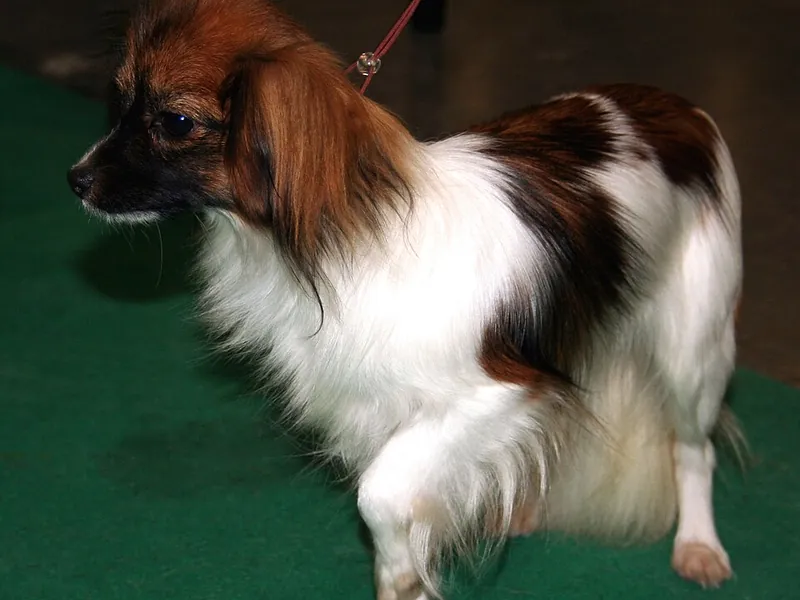
Both ear types still exist: the erect-eared Papillon and the drop-eared Phalene, French for moth. Both can be born in the same litter. France and Belgium are credited with developing the breed, and the AKC recognized it in 1915.
Size, Ear Types and Colors
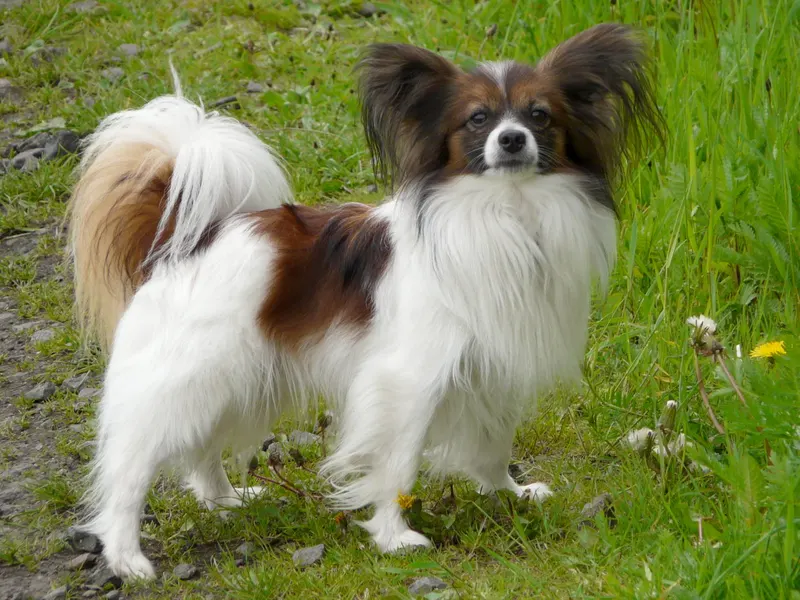
The Papillon is a small, fine-boned toy spaniel, slightly longer than tall, standing 8 to 11 inches at the shoulder. The AKC disqualifies dogs over 12 inches. Weight is not fixed by the standard but should be in proportion to height, which explains the wide 3 to 11 lb range; most adults weigh 5 to 10 lb.
There are two ear types within the same breed:
- Papillon: large, erect ears set obliquely and heavily fringed, like a butterfly's wings
- Phalene: drop ears carried down, fully covered with long hair
The coat is long, flowing and silky, with a profuse frill on the chest, feathered ears, culottes on the back of the thighs and a plumed tail carried over the back.
Papillons are always parti-color: white with patches of any color, such as black, lemon, red, sable or tricolor. A symmetrical head with a clear white blaze is preferred. Under AKC rules, an all-white dog or one with no white is disqualified. Males and females look very similar, though males often grow a slightly fuller frill.
Temperament and Personality
Papillons are cheerful, alert and curious. They bond closely to their people and are usually friendly with visitors once they have announced them. They are keen watchdogs and many bark readily at sounds, so teaching a quiet cue early helps.
They can do well with gentle, older children, but their fine bones make them vulnerable to rough handling and falls. Some Papillons try to take on much larger dogs, so supervise play at the dog park.
Papillons tend to be confident rather than nervous. They are often described as more dog than their size suggests: curious, busy and keen to join whatever their owner is doing.
Are Papillons Good With Kids?
Papillons can be good with children who are calm and gentle, typically school-age kids and older. They enjoy play and learn tricks happily, which suits children who want to train a dog.
The concern is the dog's safety. A Papillon's fine legs can break if it is dropped, stepped on or jumps from a child's arms. Teach children to sit on the floor to hold the dog, never chase it and let it walk away when it has had enough. With toddlers, constant supervision is needed, and many breeders prefer not to place puppies in homes with very young children.
Are Papillons Good Apartment Dogs?
Yes, Papillons adapt well to apartments. They are small, get much of their exercise from indoor games and training, and handle stairs and elevators easily.
Barking is the main challenge. Papillons are alert and comment on hallway noises, so teach a quiet cue and reward calm behavior early. They are still active dogs and need two walks a day plus mental work; a bored Papillon finds its own entertainment. Hard floors can be slippery for small joints, so rugs on main walkways help, as does keeping them from leaping off high furniture.
Can Papillons Be Left Alone?
Adult Papillons can usually manage a few hours alone, but they are companion dogs that prefer to be with their people and are not ideal for long workdays.
Start alone-time training early: short absences, a safe pen or room, a food puzzle and a calm departure routine. Many Papillons do better with another small, friendly dog for company. If you are regularly out for eight hours or more, plan for a midday visit or a dog walker. Signs that a Papillon is struggling include constant barking, accidents and chewing near doors.
Exercise and Training
Despite their size, Papillons are active. Two walks a day plus indoor games and short training sessions keep them content. They are among the stars of toy-breed agility and also excel at obedience, rally and trick training.
They learn fast and respond well to rewards. Housetraining can take longer than with larger breeds, so use a consistent routine. Prevent jumping from furniture during puppyhood to protect legs and knees.
Use a harness rather than a collar on walks to protect the delicate throat, and supervise around larger dogs, because a Papillon rarely realizes how small it is. Puzzle feeders and short trick sessions are a good way to burn mental energy on rainy days.
Grooming and Shedding
The single coat is long, fine and silky, without the dense undercoat of many long-coated breeds. Brushing two or three times a week, with extra attention to the ear fringes and the hair behind the thighs, prevents tangles. Shedding is moderate.
Toy breeds are prone to dental disease, so brush teeth several times a week. Trim nails regularly, as small dogs often do not wear them down.
Feeding and Nutrition
Papillons are small but active, and their needs vary widely across the 3 to 11 lb range. Feed to body condition, aiming for a visible waist and ribs you can feel easily under the coat. Even half a pound of extra weight is a meaningful gain on a dog this size and adds stress to the knees.
Puppies, especially the smallest, can develop low blood sugar if they skip meals. Feed three to four small meals a day for the first months and watch for lethargy or trembling. Adults usually do well with two meals.
Toy breeds are prone to dental crowding and early tartar. A small kibble size that requires chewing can help a little, but daily brushing remains essential. Avoid hard chews that can fracture small teeth.
Papillons are keen students, so many treats are used in training. Choose tiny rewards, use part of the daily kibble for practice sessions and reduce meal portions on heavy training days.
Picky eating is common in toy breeds. Resist adding table food, which often leads to selective eating and weight gain.
| Adult weight | Less active | Typical adult | Very active |
|---|---|---|---|
| 3 lb | 120 kcal | 140 kcal | 180 kcal |
| 7 lb | 230 kcal | 270 kcal | 330 kcal |
| 11 lb | 330 kcal | 370 kcal | 470 kcal |
Estimates use the resting energy formula veterinarians work with (70 × body weight in kg0.75) and standard activity factors. Use the feeding guide on your food as a starting point and adjust to body condition. Puppies, seniors, pregnant animals and pets that need to lose weight have different needs, so ask your vet.
Health and Lifespan
Papillons are long-lived, often 14 to 16 years. Conditions to know about:
- Luxating patellas
- Progressive retinal atrophy (PRA), with DNA testing available
- Von Willebrand disease, a bleeding disorder
- Cataracts and dental disease
Good breeders check knees and eyes and can explain their health testing.
Papillon Price and Cost of Ownership
Typical breeder price in the US$1,000 to $3,000
Papillon puppies from reputable US breeders typically cost about $1,000 to $3,000, depending on breeder, region and lines. Show-quality pups and well-marked dogs may cost more, and some breeders have waiting lists. Toy-breed and Papillon rescues occasionally have adult dogs available.
Breed-specific cost factors include:
- Dental care, including periodic professional cleanings
- Insurance covering patellar luxation, eye conditions and bleeding disorders
- Health screening: knees and eyes, plus a DNA test for PRA if the breeder has not done it
- Sports and training: many owners take up agility or obedience classes
Grooming is usually done at home, and food costs are low.
Is the Papillon Right for You?
A Papillon suits apartment dwellers, older adults and families with considerate children who want an engaged, trainable small dog. It is a poor fit if you want a quiet lapdog that needs little attention or if you are away from home for long stretches.
Families with toddlers should think carefully: a Papillon can be injured by being dropped or stepped on, and it may nip if it feels cornered.
Papillon Traits at a Glance
Papillon FAQ
Are Papillons good for first-time owners?
Yes. They are eager to learn and easy to train with rewards, though their barking needs managing.
How big do Papillons get?
Papillons stand about 8 to 11 inches tall and weigh roughly 3 to 11 lb, with most around 5 to 10 lb.
Do Papillons bark a lot?
Many do. They are alert watchdogs, so early training of a quiet cue is helpful, especially in apartments.
Are Papillons hypoallergenic?
No. They lack a thick undercoat but still shed moderately.
How long do Papillons live?
Typically 14 to 16 years.
What is the difference between a Papillon and a Phalene?
Only the ears: the Papillon has upright butterfly ears, the Phalene has drooping ears. They are the same breed.