King Charles SpanielQuiet royal toy spaniel of England
The King Charles Spaniel, known in the US as the English Toy Spaniel, is a small, gentle companion spaniel with a domed head and a very short muzzle. Calm and affectionate, it suits quieter homes, but its flat face brings health concerns that buyers should understand.
Why people love the King Charles Spaniel
- Gentle, affectionate and calm indoors
- Generally quiet; good neighbor in apartments
- Usually gets along with dogs and cats
- Enjoys lap time and close companionship
- Moderate exercise needs
Things to consider
- Short muzzle linked to breathing problems and heat intolerance
- Heart disease, eye problems and Chiari-like malformation reported
- Can be shy with strangers
- House training may take patience
- Rare; hard to find in the US
Health note: this breed is affected by health concerns linked to its body shape. Read the health section and choose a breeder who health-tests and breeds for moderate features.
Is this breed right for you?
10 questions · live resultHistory and Origin
Small spaniels were favorites of the English court in the 16th and 17th centuries. King Charles II was famously devoted to his toy spaniels, and the breed still carries his name. These early dogs had longer muzzles.
During the 19th century, breeders favored a rounder head and shorter face, likely with influence from Asian toy breeds. The four colors were once considered separate breeds: Blenheim (red and white), Prince Charles (tricolor), King Charles (black and tan) and Ruby (solid red). In the 1920s, efforts to recreate the older long-nosed type led to the separate Cavalier King Charles Spaniel. The AKC lists the breed as the English Toy Spaniel.
Size, Coat and Four Colors
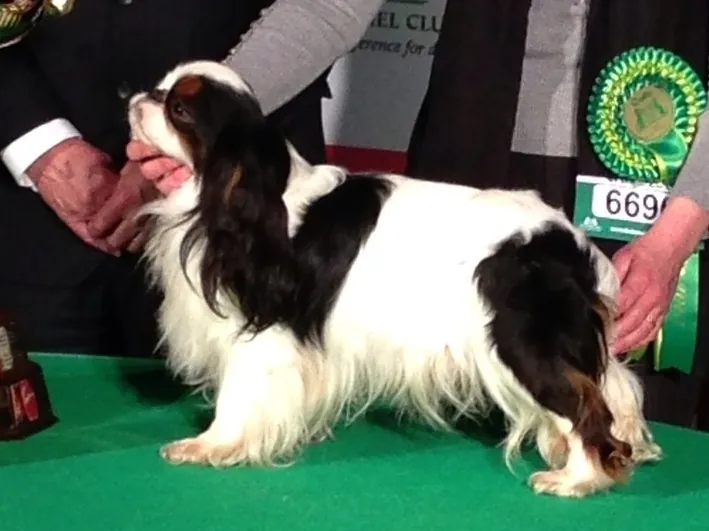
The King Charles Spaniel, known in the US as the English Toy Spaniel, is a compact toy dog standing about 9 to 10 inches and weighing roughly 8 to 14 lb. Males and females are similar in size. The body is short, cobby and sturdy, with a broad chest and a level back.
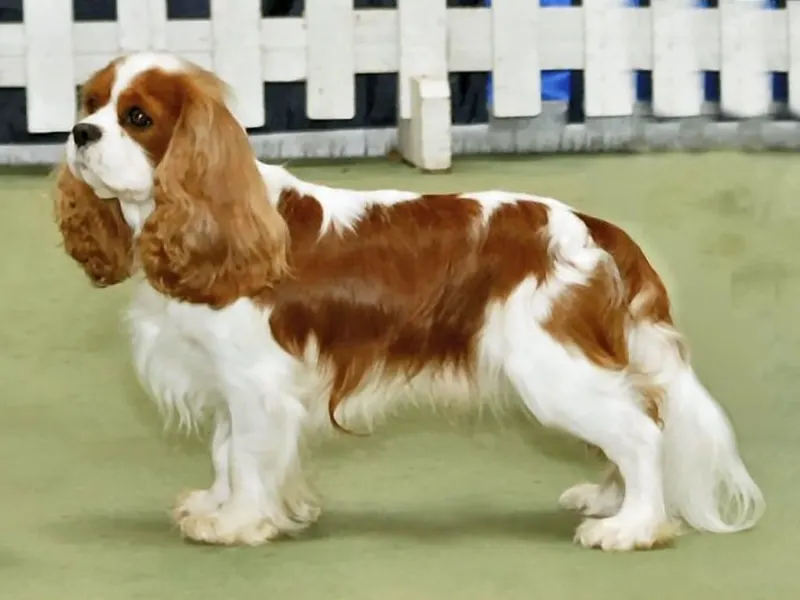
The head is distinctive: a large, domed skull, a very short, upturned nose, large, dark, wide-set eyes and long, low-set ears with heavy feathering. This head shape sets the breed apart from the longer-muzzled Cavalier King Charles Spaniel.
The coat is long, silky and straight or slightly wavy, with heavy feathering on the ears, chest, legs and feet. Four colors are accepted: Blenheim (red and white, ideally with a red spot on top of the head called the lozenge), Prince Charles (tricolor: white, black and tan), King Charles (black and tan) and Ruby (solid rich red). In the AKC, Blenheim and Prince Charles form one variety and King Charles and Ruby another.
Temperament and Personality
King Charles Spaniels are gentle, affectionate and calm indoors. They are often more reserved than the Cavalier and may be shy with strangers. They usually get along well with other dogs and cats.
They bond closely with their owners and enjoy lap time. They are generally quiet, making them good neighbors in apartments.
Many King Charles Spaniels are less outgoing than Cavaliers and prefer a predictable routine. They enjoy short games and walks but are equally content to rest on the sofa. They typically do not bark much and are usually gentle with older children.
Are King Charles Spaniels Good Family Dogs?
Yes, for calm families with older, gentle children. King Charles Spaniels are affectionate, quiet and enjoy being with their people, which makes them good companions in peaceful homes.
They are small and can be injured by rough handling, so homes with very young children need close supervision. Many are shy with strangers and prefer predictable routines, so busy, noisy households may stress them. Their health needs, especially breathing and heart issues, mean families should be prepared for veterinary care and heat management. Older children who enjoy calm play and gentle grooming are the best match.
Do King Charles Spaniels Bark a Lot?
No, King Charles Spaniels are generally quiet dogs. They may bark to announce visitors or unusual sounds, but they are not typically nuisance barkers.
This makes them good neighbors in apartments and shared buildings. Barking can increase if the dog is bored, anxious or left alone for long periods. Gentle training and plenty of companionship usually keep barking to a minimum. Noisy breathing, snorting and snoring are more common than barking, due to the breed's short muzzle. Persistent loud breathing or snoring at rest is worth discussing with your vet.
Are King Charles Spaniels Good for First-Time Owners?
Yes, in terms of temperament. King Charles Spaniels are gentle, affectionate and easy to live with, and their exercise needs are moderate.
First-time owners should be prepared for the breed's health needs. The short muzzle requires care in heat and humidity, and heart, eye and neurological problems are reported. Regular veterinary checks and budgeting for potential costs are important. House training may take patience. Choose a breeder who screens hearts, eyes and knees and selects for more open airways. Adult rescue dogs can also suit beginners well.
Exercise and Training
Moderate daily walks and indoor play are enough. Because of the short muzzle, avoid exercise in heat and humidity, and watch for breathing difficulty.
- Use a harness instead of a collar to reduce pressure on the airway.
- Train with gentle, positive methods; they are sensitive.
- Keep walks in cool parts of the day in summer.
Training is generally easy with treats and praise, though house-training may take patience, as with many toy breeds.
Grooming and Shedding
The silky, wavy coat has feathering on the ears, chest, legs and feet. Brush two or three times a week. Clean facial folds and around the eyes regularly to prevent irritation.
Shedding is moderate. Keep ears clean and dry.
The breed's prominent eyes are vulnerable to injury and irritation, so check them daily and contact your vet promptly if you notice squinting or discharge.
Feeding and Nutrition
King Charles Spaniels are small and fairly inactive, so they gain weight easily. Feed a complete small-breed diet in two measured meals a day, and adjust portions to body condition. Extra weight worsens breathing problems, heart strain and knee issues, all reported in the breed.
The short muzzle and flat face can make eating awkward. Some dogs do better with kibble shaped for brachycephalic breeds or with shallow, wide bowls. Feeding in a calm environment helps avoid gulping air.
Dental crowding is common in toy breeds with short muzzles, so brush teeth daily and schedule regular dental checks.
If your dog has heart disease such as mitral valve disease, your vet may recommend dietary adjustments; follow their guidance. Use tiny treats in training and count them toward the daily total. Puppies need three or four small meals a day.
| Adult weight | Less active | Typical adult | Very active |
|---|---|---|---|
| 8 lb | 260 kcal | 290 kcal | 370 kcal |
| 11 lb | 330 kcal | 370 kcal | 470 kcal |
| 14 lb | 390 kcal | 450 kcal | 560 kcal |
Estimates use the resting energy formula veterinarians work with (70 × body weight in kg0.75) and standard activity factors. Use the feeding guide on your food as a starting point and adjust to body condition. Puppies, seniors, pregnant animals and pets that need to lose weight have different needs, so ask your vet.
Health and Lifespan
King Charles Spaniels typically live 10 to 12 years. The very short muzzle and domed skull are linked to breathing problems and heat intolerance. Eye problems, heart disease such as mitral valve disease, and patellar luxation are also reported.
Chiari-like malformation and syringomyelia, where the skull is too small for the brain and fluid-filled cavities form in the spinal cord, have been described in the breed. Choose breeders who screen hearts, eyes and knees and select for more open airways. Consider adopting an adult from rescue.
King Charles Spaniel Price and Cost of Ownership
Typical breeder price in the US$1,500 to $3,000
A King Charles Spaniel (English Toy Spaniel) puppy from a reputable US breeder typically costs about $1,500 to $3,000. The breed is rare in the US, so expect waiting lists and possibly travel. Prices vary by breeder, region and lines. Ask breeders for heart, eye and knee screening on both parents and select for more open airways.
Adult dogs sometimes come into toy breed rescues.
Ongoing costs are driven by health. Breathing problems, heart disease and eye issues may require regular veterinary care, and some dogs need surgery to widen nostrils or treat other conditions. Pet insurance is worth considering early, before conditions appear. Grooming is mostly do-it-yourself, but some owners pay for professional grooming. Air conditioning in hot climates is important.
Is the King Charles Spaniel Right for You?
This breed suits calm households, retirees and apartment dwellers looking for a gentle companion that enjoys quiet company.
It is not suited to hot climates without air conditioning or very active owners. Be prepared for potential veterinary costs linked to its flat face.
Families with young children should supervise interactions, since a small dog can be injured by rough handling. Ask breeders about heart and breathing health of parents, and avoid puppies with very pinched nostrils.
King Charles Spaniel Traits at a Glance
King Charles Spaniel FAQ
What is the difference between a King Charles Spaniel and a Cavalier?
The King Charles Spaniel is smaller with a flatter face and domed head. The Cavalier has a longer muzzle and flatter skull.
How big do King Charles Spaniels get?
They stand about 9 to 10 inches tall and weigh 8 to 14 lb.
Are King Charles Spaniels good apartment dogs?
Yes. They are quiet and have moderate exercise needs.
Do King Charles Spaniels have breathing problems?
The breed's short muzzle can cause breathing difficulties and heat intolerance.
How long do King Charles Spaniels live?
Typically 10 to 12 years.
Do King Charles Spaniels shed?
They shed moderately. Brushing two or three times a week keeps the silky coat tangle-free and reduces loose hair.