PugCharming companion with serious health needs
The Pug is an ancient Chinese companion breed known for its wrinkled face, curled tail and affectionate, comical nature. It is ideal for apartment living and loves people, but its flat face brings serious breathing, eye and heat-related health risks.
Why people love the Pug
- Affectionate, people-focused companion built for indoor living
- Small, sturdy and usually good with children and other pets
- Low exercise needs suit city and apartment life
- Rarely barks, though it snorts and snores
- Comical, playful personality that lasts into old age
Things to consider
- High risk of BOAS and breathing problems from flat face
- Poor heat tolerance; summer walks need careful planning
- Prominent eyes prone to ulcers and injury
- Sheds heavily despite the short coat
- Gains weight easily, which worsens breathing
Health note: this breed is affected by health concerns linked to its body shape. Read the health section and choose a breeder who health-tests and breeds for moderate features.
Is this breed right for you?
10 questions · live resultHistory and Origin
Pugs were kept as companions in imperial China for centuries. Dutch traders brought them to Europe in the 16th century, and the breed became associated with the Dutch House of Orange. A popular story says a Pug alerted William the Silent to an approaching attack. The breed later became fashionable in Britain and across Europe.
The AKC recognized the Pug in 1885. Through the 20th century, breeders selected for an increasingly flat face and prominent eyes, which has contributed to the breed's health problems.
Size, Coat and Colors
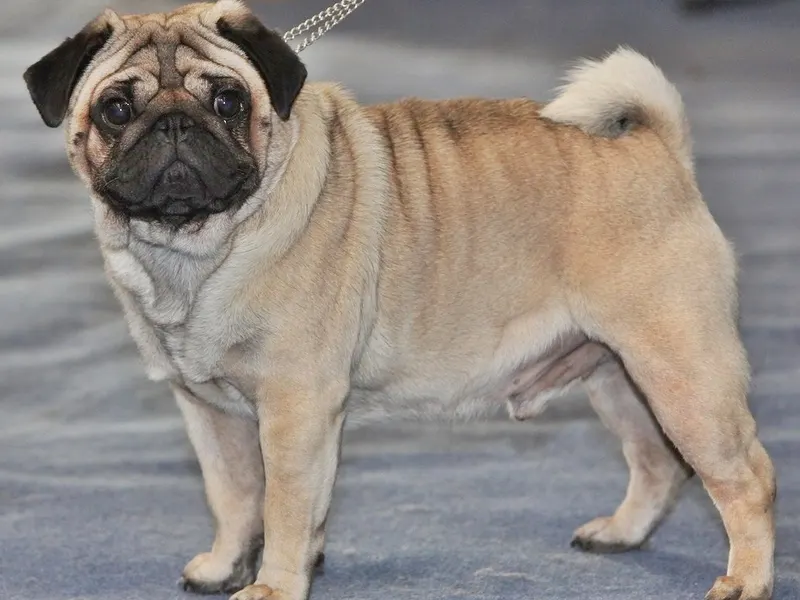
The Pug is a square, compact dog with a lot of substance packed into a small frame. The breed motto, multum in parvo or much in little, sums it up. Adults weigh about 13 to 18 lb and stand around 10 to 13 inches tall. Males are often a little heavier and broader in the head, but the size difference between the sexes is small.
The head is large and round, with a short muzzle, deep wrinkles and large, dark eyes. Ears are thin and soft, in either a rose or button shape. The tail curls tightly over the hip, and a double curl is prized in the show ring.
The coat is fine, smooth and short. Many Pugs, especially fawns, have a dense undercoat, which explains the heavy shedding.
Colors: the AKC accepts fawn and black. Fawn dogs have a black mask, black ears and often a dark trace line along the back. The Kennel Club also recognizes silver and apricot. Brindle, white and so-called blue or merle Pugs are outside the standard.
Temperament and Personality
Pugs are affectionate, playful and sociable. They love people, follow their owners around and are usually good with children and other pets. They bark little, but they snort, snore and grunt a lot.
Pugs strongly dislike being left alone and can become anxious or destructive. They can be stubborn and food-motivated, which makes training fun but means they gain weight easily.
Pugs were bred for one job, keeping people company, and it shows. They tend to read their owners well, enjoy sitting close on the sofa and often greet family members with full-body wiggles. Most have little interest in chasing other animals.
Are Pugs Good for First-Time Owners?
Pugs are easy-going in temperament and well suited to first-time owners, but their health needs mean they are not low-maintenance dogs.
On the plus side, they are friendly, adaptable and need only modest exercise. On the other side, a new owner must learn to read breathing problems, manage heat, clean facial folds and keep the dog lean. House training can take longer than with many breeds, so a consistent routine is essential. A first-time owner who budgets for veterinary care, chooses a breeder selecting for open airways or adopts an adult with a known health history usually does well.
Are Pugs Good Apartment Dogs?
Yes, Pugs are among the best-suited breeds for apartment living. They are small, rarely bark and are content with short walks and indoor play.
The most important apartment consideration is temperature. A Pug cannot cool itself efficiently, so the home needs air conditioning or good ventilation in summer, and walks should happen in the cooler hours. Many Pugs struggle with long staircases, so an elevator helps, particularly with older dogs. Their snoring can be loud enough to hear through thin walls. Expect some hair on furniture, since the coat sheds heavily.
Are Pugs Easy to Train?
Pugs are moderately easy to train. They are eager for food and attention, but they can be stubborn and lose interest quickly.
Short sessions of three to five minutes with small, low-calorie treats work best. Basic manners and tricks usually come quickly, while house training is often the hardest part. Use a regular schedule, take the puppy out after meals and naps and reward right away. Avoid long training sessions in heat or exercise that leaves your Pug panting hard. Harsh corrections tend to make Pugs shut down, so keep training positive and playful.
Exercise and Training
Two short walks and play sessions, about 30 to 45 minutes in total, are usually enough. Exercise in the cooler parts of the day, avoid strenuous activity and watch for breathing distress. Use a harness instead of a collar.
Training responds best to short, positive sessions with treats. Pugs can be stubborn, especially with house training, so be consistent. Keep them lean, as excess weight worsens breathing problems.
- Carry water on walks and rest in the shade.
- Avoid hot cars, hot pavement and midday walks in summer.
- Ask your vet about a breathing assessment if your Pug snores loudly or tires quickly.
Grooming and Shedding
The short coat sheds heavily year-round, more than many people expect. Brush weekly or more often during heavy shedding. Clean the facial wrinkles regularly and dry them well to prevent skin infections. Check eyes daily and brush teeth regularly.
Feeding and Nutrition
Weight control is the most important feeding goal for a Pug. Even a pound or two of extra fat narrows the airway further, worsens heat intolerance and adds strain to the spine and joints. Weigh your Pug regularly and adjust portions if the waist disappears or the ribs become hard to feel.
Treats: Pugs are very food-motivated and skilled at begging. Use small pieces of the regular food as training rewards and keep treats to about 10 percent of daily intake. Avoid table scraps.
Eating comfortably: the short muzzle can make picking up food awkward, and some Pugs swallow air while eating. A shallow, wide bowl or a kibble shape that suits flat-faced dogs makes eating easier. Feed two or three smaller meals rather than one large one, and avoid exercise right after eating to limit regurgitation.
The crowded mouth makes dental disease common. Daily tooth brushing and regular veterinary dental checks are part of good nutrition care. Clean the facial folds after meals to keep food from irritating the skin.
| Adult weight | Less active | Typical adult | Very active |
|---|---|---|---|
| 13 lb | 370 kcal | 420 kcal | 530 kcal |
| 18 lb | 470 kcal | 540 kcal | 680 kcal |
Estimates use the resting energy formula veterinarians work with (70 × body weight in kg0.75) and standard activity factors. Use the feeding guide on your food as a starting point and adjust to body condition. Puppies, seniors, pregnant animals and pets that need to lose weight have different needs, so ask your vet.
Health and Lifespan
The Pug is severely brachycephalic. Many suffer from brachycephalic obstructive airway syndrome (BOAS), causing noisy breathing, sleep problems, poor exercise and heat tolerance and, in severe cases, collapse. Prominent eyes are prone to ulcers and injuries. Skin fold infections, spinal malformations, pug dog encephalitis and obesity are also seen. The Kennel Club places the Pug in Breed Watch Category 3, its highest level of concern, and German veterinary authorities have issued welfare guidance on breeding Pugs.
If you choose a Pug, look for breeders who select for longer muzzles, open nostrils and good breathing and who use respiratory function grading, or consider adopting. Pugs typically live 10 to 15 years.
Pug Price and Cost of Ownership
Typical breeder price in the US$1,000 to $2,500
A Pug puppy from a reputable US breeder typically costs around $1,000 to $2,500. Prices vary by breeder, region and lines. Be wary of very cheap puppies and of rare colors marketed at premium prices. A responsible breeder should be able to discuss breathing assessments, nostril width, eye health and spinal screening in the parents.
Adoption is a good option: Pug rescues regularly place adults whose health is already known.
Ongoing cost drivers include treatment for breathing problems, such as airway surgery for BOAS, eye care including ulcer treatment, skin fold infections and dental cleanings. Because many of these problems are common in the breed, pet insurance premiums are often higher than for other small dogs, and pre-existing conditions are usually excluded. Air conditioning in summer is a genuine welfare cost for this breed.
Is the Pug Right for You?
The Pug suits apartment dwellers and families who want an affectionate, low-exercise companion and are home often. It adapts well to city life.
Owners must budget for veterinary care, avoid heat and strenuous exercise and be prepared for breathing and eye issues. It is not suited to runners or long days alone.
Pet insurance or savings for veterinary care are particularly important with this breed, as airway surgery and eye treatment can be costly. Choosing an older rescue Pug with known health status is a good option for many families.
Pug Traits at a Glance
Pug FAQ
Are Pugs good family dogs?
Yes, they are affectionate and usually great with children and other pets. Families should be ready for their health needs.
How big do Pugs get?
Adults weigh about 13 to 18 lb and stand around 10 to 13 inches tall.
Do Pugs shed a lot?
Yes, they shed heavily year-round despite their short coat.
Why do Pugs snore?
Their flat face and narrow airways restrict airflow. Loud breathing can indicate BOAS and should be checked by a vet.
Can Pugs be left alone?
Pugs prefer company and can become anxious when left alone for long periods.
How long do Pugs live?
Pugs typically live 10 to 15 years.