Lakeland TerrierA bold terrier from the English Lakes
The Lakeland Terrier is a small, wiry, confident terrier from the rugged Lake District of northern England. Bold, clever and full of character, it suits owners who enjoy a lively dog and will keep up with training and coat care.

Why people love the Lakeland Terrier
- Sheds very little when the coat is kept properly
- Compact, sturdy size adapts to city or country homes
- Cheerful, clownish personality with plenty of character
- Generally healthy breed with a lifespan of 12 to 15 years
- Agile and fit enough for long hikes once grown
Things to consider
- Wiry coat needs hand-stripping or clipping every few months
- Can be bossy with other dogs, especially the same sex
- Prey drive makes small pets risky
- Digs, climbs and has unreliable recall
- Gets bored with repetitive training
Is this breed right for you?
10 questions · live resultHistory and Origin
The Lakeland comes from the mountainous Lake District of Cumbria. Farmers kept terriers that ran with packs of hounds in the fells to find and dispatch foxes that preyed on lambs. These dogs needed stamina to cover rough terrain and courage to work underground among rocks.
The various local working terriers were gradually standardized under the Lakeland name in the early 20th century. The AKC recognized the breed in 1934. Its narrow chest lets it squeeze into rocky dens, and it is closely related to other fell terriers.
Size, Coat and Colors
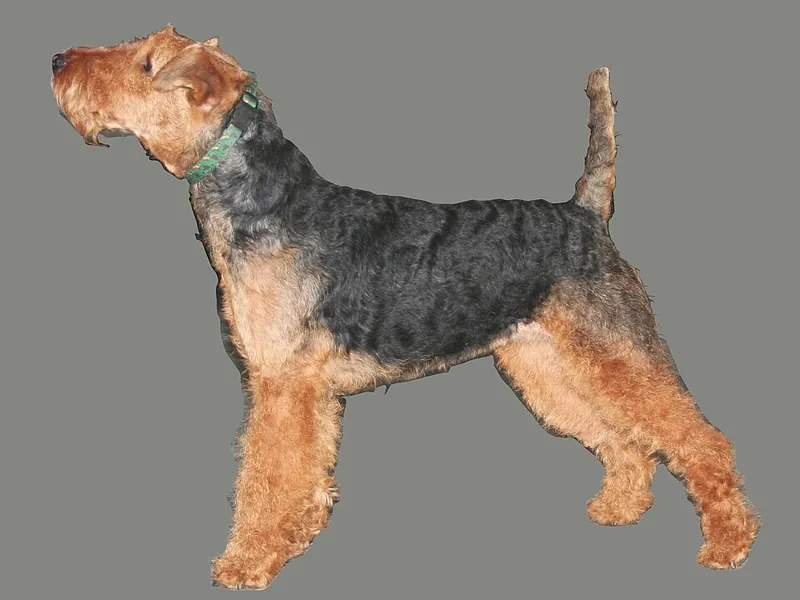
The Lakeland Terrier is a small, sturdy, square terrier with a rectangular head, a strong muzzle, small V-shaped ears and a narrow chest that let it squeeze into rocky fox dens. It moves with a free, springy stride and carries its tail upright.
Adults stand up to about 15 inches and weigh roughly 15 to 17 lb. The AKC standard sets about 14.5 inches as ideal for males, with females up to an inch smaller. Males also tend to have a slightly more powerful head.
The double coat is hard and wiry on top with a soft undercoat, and the furnishings on the legs and muzzle are a little softer. Accepted colors are:
- solid colors: blue, black, liver, red and wheaten
- saddle patterns: a blue, black, liver or grizzle saddle over wheaten or tan
Many puppies are born darker and lighten as the adult coat comes in. Regular hand-stripping keeps colors rich and the texture correct, while clipping softens and fades the coat over time.
Temperament and Personality
Lakelands are confident, cheerful and friendly with their families. They are playful, often clownish and like to be the center of attention. With strangers they are usually polite but watchful, and they make alert watchdogs.
Like many terriers, they can be stubborn and may challenge other dogs, especially of the same sex. Small pets may trigger the chase. Good socialization and clear guidance from puppyhood help channel their boldness.
Lakelands tend to be adaptable and travel well. They usually love children who can keep up with their play, but they want to be part of family life and do not enjoy long periods alone.
Are Lakeland Terriers Good Family Dogs?
Yes, Lakeland Terriers are usually good family dogs for active households, especially with children who are old enough to play respectfully. They are cheerful, playful and like to be involved in everything.
They are terriers, though, and families should expect some independence, digging and chasing. Supervise play with young children, since Lakelands may nip during excited games and will not tolerate rough handling forever. Homes with rabbits, guinea pigs or other small pets need strict separation. A family that enjoys walks, play and training and wants a small dog with a big personality is a good match.
Do Lakeland Terriers Bark a Lot?
Lakelands are moderate barkers. They are alert watchdogs and will announce visitors and unusual noises, but most are not constant yappers when their needs are met.
Barking increases with boredom and isolation. A Lakeland that gets an hour of activity, play and short training sessions each day is usually quiet at home. Teach a quiet cue early, reward calm behavior at windows and doors, and avoid accidentally rewarding barking with attention. In apartments, where hallway noises are common, early desensitization to building sounds helps keep neighbors happy.
Can Lakeland Terriers Be Left Alone?
Adult Lakelands can usually handle a few hours alone, but they prefer company and do not enjoy long days by themselves. Bored terriers tend to dig, chew or bark.
Teach alone time gradually from puppyhood. Exercise your Lakeland before leaving, provide a safe chew or food puzzle and use a crate or dog-proofed room until the dog is reliable. Do not leave a Lakeland unsupervised in the yard, as many are skilled diggers and climbers. For full workdays, a midday walk or doggy daycare makes a big difference to behavior.
Exercise and Training
A Lakeland needs around an hour of activity daily, combining walks with play and training. They thrive in earthdog, barn hunt, agility and rally. Because they are compact, they adapt well to apartment life if exercised enough.
Training requires consistency and creativity. Lakelands are intelligent but can tune out boring repetition. Keep sessions short and rewarding. Recall in unfenced areas is unreliable around wildlife, and a fenced yard should be checked for gaps since many love to dig.
Lakelands were bred to keep up with hounds over hills, so many enjoy long hikes once fully grown. They are agile climbers and jumpers, so supervise in gardens with low walls.
Grooming and Shedding
The double coat is hard and wiry on top with a soft undercoat. It sheds very little, but it needs regular attention: brush weekly and hand strip every few months to keep texture and color. Many pet owners have the coat clipped, which is easier but softens and lightens it.
The beard and leg furnishings should be combed to prevent tangles. Colors include black and tan, blue and tan, red, wheaten, liver and grizzle.
Feeding and Nutrition
Lakeland Terriers are compact, active dogs that usually keep a good appetite. Keeping them lean protects their joints and helps them stay agile into old age.
- Feed puppies three or four meals a day, then two measured meals for adults.
- Increase portions modestly for dogs that hike or compete in earthdog or agility, and reduce them for less active seniors.
- Check body condition with your hands, since a full furnished coat can hide extra weight.
- Use part of the daily ration for training rewards and puzzle toys, which also help with boredom.
Dental disease is common in smaller dogs. Daily tooth brushing helps more than any treat, and regular dental checks catch problems early. The beard can collect food after meals, so wipe it to keep the face clean and prevent staining. Lakelands are not known for specific food sensitivities, but if your dog develops itchy skin or digestive upset, talk to your veterinarian before changing diets.
| Adult weight | Less active | Typical adult | Very active |
|---|---|---|---|
| 15 lb | 410 kcal | 470 kcal | 590 kcal |
| 17 lb | 450 kcal | 520 kcal | 650 kcal |
Estimates use the resting energy formula veterinarians work with (70 × body weight in kg0.75) and standard activity factors. Use the feeding guide on your food as a starting point and adjust to body condition. Puppies, seniors, pregnant animals and pets that need to lose weight have different needs, so ask your vet.
Health and Lifespan
Lakelands are generally a healthy, long-lived breed, typically living 12 to 15 years. According to the AKC, breed-specific diseases are uncommon and occur at low rates. Responsible breeders still check eyes and knees and keep track of health in their lines.
Keep weight in check and brush teeth regularly, as dental disease is common in smaller dogs.
Ask breeders whether parents have had eye exams and knee checks, and choose one who will stay in touch for advice.
Lakeland Terrier Price and Cost of Ownership
Typical breeder price in the US$1,000 to $2,500
A Lakeland Terrier puppy from a reputable US breeder typically costs about $1,000 to $2,500. Prices vary by breeder, region and lines. The breed is relatively uncommon in the US, so expect waiting lists and possibly travel to collect a puppy. Terrier rescues occasionally place adults.
The main breed-specific cost driver is grooming. Professional hand-stripping a few times a year keeps the classic texture and color but costs more than clipping. Many pet owners choose clipping every six to eight weeks for convenience.
Other costs include secure fencing for a breed that digs and climbs, dental care, and eye and knee checks. Food and equipment costs are modest for a dog of 15 to 17 lb.
Is the Lakeland Terrier Right for You?
A Lakeland suits people who want a small, sturdy dog with plenty of personality and low shedding, and who are willing to train consistently.
- Good match: active singles or couples, families with older children, city or country homes.
- Think twice: homes with small pets, multi-dog households with same-sex dogs, owners who dislike grooming.
Lakeland Terrier Traits at a Glance
Lakeland Terrier FAQ
Do Lakeland Terriers shed?
They shed very little, but the wiry coat needs regular brushing and stripping or clipping.
Are Lakeland Terriers good apartment dogs?
Yes, they adapt well to apartments if they get enough exercise and mental stimulation.
How big do Lakeland Terriers get?
They stand up to about 15 inches tall and weigh roughly 15 to 17 lb.
Are Lakeland Terriers good with other dogs?
Some are, but many can be bossy with other dogs, particularly of the same sex. Early socialization helps.
Are Lakeland Terriers hard to train?
They are clever but independent, so training takes consistency, patience and variety.
How long do Lakeland Terriers live?
Typically 12 to 15 years.