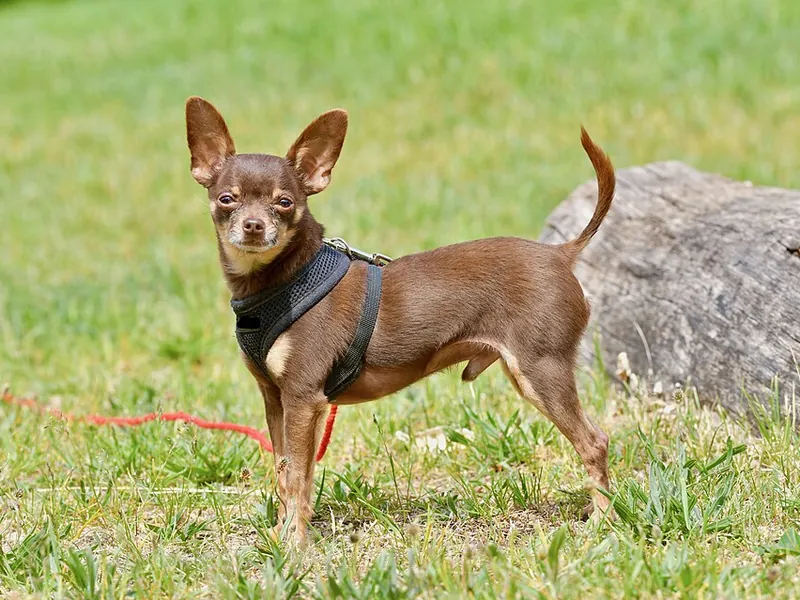
ChihuahuaTiny Mexican companion with big confidence
The Chihuahua is the smallest recognized dog breed, yet it carries itself with the confidence of a much larger dog. It is loyal, alert and portable, and it suits adults who want a close companion and can protect a very small body from rough handling and cold.

Why people love the Chihuahua
- Tiny size fits apartments, travel and small homes
- Often lives 14 to 16 years or longer
- Smooth coat needs only a quick weekly brush
- Fiercely loyal and keeps close to its person
- Low exercise needs suit less active owners
Things to consider
- Easily injured by falls, jumps and rough handling
- Quick to bark at sounds and visitors
- House training often takes months of consistency
- Dental crowding leads to early tooth problems
- Feels the cold and needs protection in winter
Health note: this breed is affected by health concerns linked to its body shape. Read the health section and choose a breeder who health-tests and breeds for moderate features.
Is this breed right for you?
10 questions · live resultHistory and Origin
The breed is named after the Mexican state of Chihuahua, where American visitors found and bought small dogs in the mid-1800s. Many historians link it to the Techichi, a small companion dog kept by the Toltec people, though its exact ancestry is still debated. Pottery and carvings from pre-Columbian Mexico show small dogs that resemble the breed.
The AKC registered its first Chihuahua in 1904, and the breed grew steadily more popular in the US during the 20th century. Both smooth-coated and long-coated dogs exist. The AKC shows them as two varieties of one breed, while The Kennel Club treats them as separate breeds.
Size, Coat Types and Colors
The Chihuahua is the smallest recognized breed, standing about 5 to 8 inches at the shoulder and weighing 2 to 6 lb. The AKC standard sets 6 lb as the upper limit. Terms such as teacup or pocket are marketing labels, not varieties, and very small adults carry higher health risks.
Two coat types exist:
- Smooth coat: short, glossy and close-lying, sometimes with a slightly thicker ruff on the neck.
- Long coat: soft, flat or slightly wavy hair with feathering on the ears, legs and a plumed tail.
Almost any color or marking is accepted, including fawn, cream, red, black, chocolate, white, black and tan, brindle and parti-color. The UK Kennel Club does not accept merle. The head is a rounded apple dome with large, erect ears and full, round eyes. Some dogs keep a soft spot on the skull, called a molera. Males and females look very similar, and size varies more between lines than between sexes.
Temperament and Personality
Chihuahuas often attach strongly to one person and can be wary of strangers. They are alert, quick to bark at sounds and visitors, and tend to defend their space and owners regardless of their size. Well-socialized Chihuahuas are curious, playful and enjoy short adventures.
Because they are so small, they can feel threatened easily, and a frightened Chihuahua may snap. The AKC does not recommend the breed for homes with very young children. Many get along with other small dogs or cats, especially when raised together, but they can be bold toward large dogs, which puts them at risk.
Are Chihuahuas Good for First-Time Owners?
Yes, Chihuahuas can suit first-time owners who are prepared for a tiny, sensitive dog with a strong personality.
Their small size makes daily exercise and handling easy, but it also means owners must be careful about falls from sofas, being stepped on and encounters with large dogs. The most common mistakes are carrying the dog everywhere and letting it bark or growl because it seems harmless. Treat a Chihuahua like any other dog: give it real training, structured socialization and clear rules. First-time owners who do that usually find the breed loyal, funny and easy to live with.
Are Chihuahuas Hard to Potty Train?
Chihuahuas are often slower to house train than larger breeds, but with a consistent routine most become reliable.
A tiny bladder means puppies need to go out very often: after waking, after meals, after play and every hour or two at first. Many also dislike cold, wet grass, so they may avoid going outdoors in bad weather. A covered outdoor spot, a dog coat and an indoor pad option help. Reward every success immediately, supervise indoors and use a crate or pen for short rests. Accidents happen most when owners give a young dog the run of the house too soon.
Can Chihuahuas Be Left Alone?
Adult Chihuahuas can handle a few hours alone if they are taught gradually, but they are companion dogs and do not suit long daily absences.
Many bond closely with one person, which can make separation stressful. Start with short absences of a few minutes and build up slowly, leaving a chew or food puzzle. A small pen or safe room keeps the dog away from stairs and furniture it could fall from. Keep the home warm, since this breed chills quickly. If you work full days away from home, a dog walker, daycare or a second compatible dog can help.
Exercise and Training
Chihuahuas are more energetic than many people expect. Two short walks plus indoor play, around 30 to 60 minutes in total, usually suffice. They enjoy trick training, short scent games and exploring new places on their own feet rather than being carried everywhere. Protect them from cold and heat, and use a harness, since pressure from a collar can strain the windpipe.
Training works well with tiny food rewards and short sessions. House training is often the hardest part; a consistent schedule, frequent trips outside and an indoor option in bad weather help. Teach a quiet cue early, and let the dog meet calm people and dogs to build confidence.
Grooming and Shedding
Smooth Chihuahuas need only a weekly brush. Long-coated dogs need brushing two or three times a week, with attention to the fringes on the ears, legs and tail. Both coats shed moderately. Dental care matters a lot: small jaws often crowd the teeth, so daily brushing and regular dental checks help prevent early tooth loss. Trim nails often, as small dogs rarely wear them down.
Feeding and Nutrition
Chihuahua puppies are prone to hypoglycemia, a drop in blood sugar that can cause weakness, trembling or collapse. Feed young puppies three to four small meals a day and do not let them skip meals. Adults usually do well on two or three small meals.
Choose a complete food made for small or toy breeds, with kibble small enough for tiny jaws. Because the teeth are often crowded, dental disease starts early. Daily tooth brushing matters more than any food, but avoid feeding only soft, sticky food that clings to the teeth.
- Weigh portions on a kitchen scale. A few extra pieces of kibble are a big share of a 4 lb dog's daily intake.
- Even half a pound of extra weight is significant at this size and adds strain to knees and the windpipe.
- Use tiny training treats, cut to pea size or smaller, and count them toward the day's food.
- Keep table scraps away; fatty food can trigger stomach upsets.
| Adult weight | Less active | Typical adult | Very active |
|---|---|---|---|
| 2 lb | 90 kcal | 100 kcal | 130 kcal |
| 4 lb | 150 kcal | 180 kcal | 220 kcal |
| 6 lb | 210 kcal | 240 kcal | 300 kcal |
Estimates use the resting energy formula veterinarians work with (70 × body weight in kg0.75) and standard activity factors. Use the feeding guide on your food as a starting point and adjust to body condition. Puppies, seniors, pregnant animals and pets that need to lose weight have different needs, so ask your vet.
Health and Lifespan
Extreme miniaturization brings specific risks. Some Chihuahuas have a very rounded, apple-shaped skull, an open fontanel (molera) that does not close, hydrocephalus or a Chiari-like malformation with syringomyelia, which can cause neck pain and scratching at the air. German veterinary welfare experts consider breeding from affected dogs highly problematic, and the German Kennel Club warns against breeding for extremely small size. Avoid dogs sold as teacup Chihuahuas.
Luxating patellas, hip problems, eye conditions, dental disease and low blood sugar in young puppies are also seen. Choose a breeder who selects for moderate size and a normal skull shape and who checks knees, eyes and hearts. Chihuahuas typically live 14 to 16 years.
Chihuahua Price and Cost of Ownership
Typical breeder price in the US$800 to $2,500
A Chihuahua puppy from a reputable US breeder typically costs about $800 to $2,500. Prices vary by breeder, region, coat type and lines. Be cautious with very small teacup puppies sold at premium prices, since breeding for extreme smallness raises health risks.
Chihuahuas are among the most common breeds in US shelters, so adoption is a realistic option, including adults whose personality is already known.
Ongoing cost drivers for this breed include:
- Dental cleanings under anesthesia, often needed regularly over a long life.
- Pet insurance for patellar luxation, heart and tracheal problems.
- Coats or sweaters for cold weather.
- Grooming for long-coated dogs if you use a groomer.
Food costs are low, but a lifespan of 14 to 16 years adds up.
Is the Chihuahua Right for You?
The Chihuahua suits adults or families with older children who want a devoted, portable companion and are home much of the time. It adapts well to apartments, provided neighbors tolerate some barking.
It is a poor choice for homes with toddlers, for people who want a dog to join long hikes in all weather, or for anyone who finds a vocal dog stressful. Owners must stay alert to falls, encounters with large dogs and outdoor temperatures.
Chihuahua Traits at a Glance
Chihuahua FAQ
Are Chihuahuas good with kids?
They are best with older, calm children. Toddlers can easily injure a Chihuahua, and a frightened dog may snap in self-defense.
How big do Chihuahuas get?
Adults usually weigh 2 to 6 lb and stand about 5 to 8 inches at the shoulder. Extremely small dogs carry extra health risks.
Do Chihuahuas bark a lot?
Yes, they are alert and quick to bark at sounds and strangers. Training and socialization help reduce it.
Do Chihuahuas shed?
Both coat types shed moderately. Long-coated Chihuahuas need more brushing but do not necessarily shed more.
Are Chihuahuas good apartment dogs?
Yes, their small size suits apartment life, as long as they get daily walks and play and their barking is managed.
How long do Chihuahuas live?
Chihuahuas typically live 14 to 16 years, making them one of the longer-lived breeds.