Entlebucher Mountain DogSmallest, busiest of the Swiss mountain dogs
The Entlebucher is the smallest of the four Swiss mountain dog breeds: a compact, tricolor cattle dog with huge energy and a strong watchdog instinct. It bonds closely with its family and needs an active owner who can give it a job.
Why people love the Entlebucher Mountain Dog
- Loyal and deeply bonded to its family
- Reliable, alert watchdog
- Short, easy-care coat
- Athletic, tireless partner for dog sports and hikes
- Most compact of the Swiss mountain dogs
Things to consider
- Needs vigorous daily exercise and mental work
- Herding instinct can lead to heel nipping
- Wary of strangers without careful socialization
- Higher-than-average risk of ectopic ureter
- Rare in the US, puppies hard to find
Is this breed right for you?
10 questions · live resultHistory and Origin
The Entlebucher comes from the Entlebuch valley in the canton of Lucerne, Switzerland, where it drove cattle between pastures and guarded farms. It was first described as a distinct type in 1889 and shown in 1913, when four dogs were presented at a Swiss show.
A breed club was founded in 1926, and Albert Heim, who championed all the Swiss mountain dogs, helped establish its standard. The AKC recognized it in 2011 in the Herding group. In the UK The Kennel Club lists it on the Imported Breed Register within the Working group.
Size, Coat and Colors
The Entlebucher is the smallest of the four Swiss mountain dog breeds, standing 17 to 20 inches and weighing 40 to 64 lb. It is compact, muscular and slightly longer than tall, built for agility in steep pastures rather than draft work like the larger Bernese or Greater Swiss.
The head is wedge-shaped with small, brown eyes, high-set triangular ears and a lively, friendly expression.
Males are larger and more heavily muscled than females. The AKC standard gives about 17 to 21 inches for males and 16 to 20 inches for females.
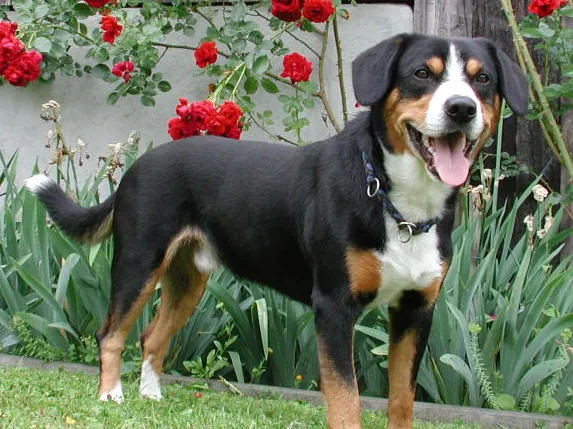
The coat is short, close-fitting, harsh and shiny, with a dense undercoat that can be black, gray or brown. There is one color pattern, a symmetrical tricolor:
- Black base color
- Tan to mahogany markings above the eyes, on the cheeks, legs and chest
- White blaze, chest, feet and tail tip
The Entlebucher is the only Swiss mountain dog breed that can be born with a natural bobtail; others have full tails.
Temperament and Personality
Entlebuchers are energetic, smart and deeply loyal. They tend to bond closely with their family and are wary of strangers, which makes them reliable watchdogs.
They usually get along with other household pets they are raised with, but their herding instinct can lead to nipping at heels or chasing. Some are independent thinkers. Without enough work, they may become noisy or destructive.
Entlebuchers often stay close to their owners and like to keep the whole family in sight, a trait that suits farm life but can mean they shadow you from room to room.
They are usually patient with respectful children they know, but their quick movements and herding nips need guidance. Calm, structured routines help them settle in the house.
Are Entlebuchers Good for First-Time Owners?
Entlebuchers are generally better suited to owners with dog experience. They are high-energy, quick to test boundaries and naturally wary of strangers, and their herding instinct can show up as nipping at the heels of children or visitors.
A first-time owner can succeed with:
- An hour or more of vigorous daily exercise plus training
- Puppy classes and wide socialization from the start
- A job such as herding, agility, rally or treibball
- A breeder who screens health and temperament
If your lifestyle is quiet or you are away much of the day, a calmer breed is a better first dog.
Are Entlebuchers Easy to Train?
Entlebuchers are quick learners and love having a job, but they can be strong-willed, so they are best described as trainable rather than easy. Opinions vary: some breeders call them biddable, while others stress their independence.
What tends to work:
- Reward-based training with food and play
- Short, varied sessions that keep their busy minds engaged
- Clear, consistent rules from everyone in the household
- Redirecting herding nips into tug or fetch
Many Entles excel in obedience, agility, herding and flyball. Boredom, not lack of intelligence, is the usual reason training stalls.
Can Entlebuchers Live in Apartments?
Entlebuchers are not a good fit for most apartments. They are compact but extremely energetic, and their watchdog instinct means they bark at noises in hallways and neighboring units.
An Entle could manage apartment life only with:
- An hour or more of vigorous exercise every day, such as running, hiking or sports
- Daily mental work like training or puzzle feeders
- Owners who are home much of the day
- Consistent work on calm behavior around noises
A house with a securely fenced yard suits the breed far better, though a yard never replaces structured exercise with the family.
Exercise and Training
This breed needs vigorous daily exercise, often more than an hour, plus mental work. Herding, agility, obedience, flyball and long hikes are excellent outlets.
- Reward-based training works well; they learn quickly but can be strong-willed.
- Socialize early and often to keep wariness of strangers in balance.
- Redirect herding behavior with structured play.
- Provide puzzle feeders and training games on quiet days.
Many Entlebuchers enjoy herding instinct tests and treibball, a sport in which dogs push large balls into a goal. These activities match their original work moving cattle.
Rainy days call for indoor games such as hide-and-seek with toys or short trick sessions, which help prevent restlessness.
Grooming and Shedding
The short, dense double coat is tricolor: black with white and rust markings. Weekly brushing is usually enough, increasing during seasonal sheds. Shedding is moderate.
Trim nails regularly and check ears after outdoor work.
The Entlebucher is the only Swiss mountain dog breed that can be born with a natural bobtail, though many have full tails.
Feeding and Nutrition
Entlebuchers are muscular, active dogs that should stay lean and athletic. They are often very food-motivated, which helps training but makes overfeeding easy. Aim for a defined waist and ribs that are easy to feel under the short coat.
Puppies grow quickly and should be fed a diet suited to medium to large breed puppies in measured portions. Avoid letting youngsters get heavy, since hip dysplasia and kneecap problems are reported in the breed. Three meals a day until about six months, then two for adults, suits most.
Ectopic ureter, a urinary malformation more common in this breed, is not caused by diet, but good hydration supports urinary health in general. Make fresh water easy to reach, and tell your vet about any dribbling, frequent urination or accidents in a house-trained dog.
Use part of the daily ration for training, food puzzles and scent games, which also burns mental energy on quiet days.
| Adult weight | Less active | Typical adult | Very active |
|---|---|---|---|
| 40 lb | 860 kcal | 980 kcal | 1,230 kcal |
| 64 lb | 1,230 kcal | 1,400 kcal | 1,750 kcal |
Estimates use the resting energy formula veterinarians work with (70 × body weight in kg0.75) and standard activity factors. Use the feeding guide on your food as a starting point and adjust to body condition. Puppies, seniors, pregnant animals and pets that need to lose weight have different needs, so ask your vet.
Health and Lifespan
Entlebuchers typically live 11 to 13 years. Ectopic ureter, a urinary tract malformation that can cause incontinence, occurs more often in this breed than in many others and has been studied by Swiss and UK breed clubs. Eye diseases such as progressive retinal atrophy, cataracts and glaucoma, as well as hip dysplasia, heart issues and kneecap luxation, are also reported.
Ask breeders about ectopic ureter screening, hip scores, eye exams and PRA DNA testing.
Entlebucher Mountain Dog Price and Cost of Ownership
Typical breeder price in the US$1,500 to $3,000
An Entlebucher puppy from a reputable US breeder typically costs about $1,500 to $3,000. Prices vary by breeder, region and lines. The breed is uncommon in the US, so most buyers contact the national breed club and join a waiting list. Some puppies come from European lines.
Rescue is rare, but the breed club helps rehome adults occasionally.
Breed-specific cost drivers:
- Ectopic ureter screening and potential surgery if the condition is found
- Hip and elbow evaluations, eye exams and PRA DNA testing
- Dog sports classes or herding lessons for an active working breed
The short coat keeps grooming costs low. Insurance taken out early can help with urinary and orthopedic problems.
Is the Entlebucher Right for You?
The Entlebucher suits active, experienced owners who want a loyal, watchful working companion and enjoy training and dog sports.
It is less suited to apartments, quiet households, or owners unable to provide daily exercise and mental work.
The breed is uncommon in both the US and UK, so expect to contact breed clubs and wait for a puppy from health-tested parents.
Entlebucher Mountain Dog Traits at a Glance
Entlebucher Mountain Dog FAQ
How big do Entlebuchers get?
Entlebuchers stand about 17 to 20 inches tall and weigh roughly 40 to 64 lb.
Are Entlebucher Mountain Dogs good family dogs?
They are loyal and affectionate with their family, but their energy and herding instinct need guidance around children.
Do Entlebuchers bark a lot?
They are alert watchdogs and will bark at strangers and unusual activity.
How much exercise does an Entlebucher need?
Usually more than an hour a day of vigorous activity plus mental challenges.
Do Entlebuchers shed?
Moderately. Their short coat needs weekly brushing.
How long do Entlebuchers live?
Most live 11 to 13 years.