Pembroke Welsh CorgiA big herding dog on short legs
The Pembroke Welsh Corgi is a sturdy, foxy-faced herding dog from Wales with a big personality packed into a low-slung body. Smart, bold and affectionate, it makes a lively companion for active households that can handle barking, heavy shedding and a dog that likes to be in charge.
Why people love the Pembroke Welsh Corgi
- Big-dog attitude in a body that fits most homes
- Quick learner that enjoys tricks, herding and agility
- Alert watchdog that notices every arrival
- Sturdy and playful with considerate older children
- Food motivation makes reward training easy
Things to consider
- Heavy year-round shedding with two big seasonal blows
- Herding instinct can show as nipping at heels
- Gains weight easily, which stresses the long back
- Barks readily and can be bossy
- Back health needs lifelong management
Is this breed right for you?
10 questions · live resultHistory and Origin
Pembrokes come from Pembrokeshire in southwest Wales, where farmers used them to drive cattle by nipping at their heels. Their short legs were an advantage: the dog could dart in, nip and drop low to avoid a kick. They also guarded the farm and kept vermin down.
The Kennel Club first recognized Welsh Corgis in 1925 and separated the Pembroke and Cardigan into two breeds in 1934. The breed became world-famous through Queen Elizabeth II, who owned more than 30 Pembrokes during her reign. The AKC recognized the Pembroke in 1934.
Size, Coat and Colors
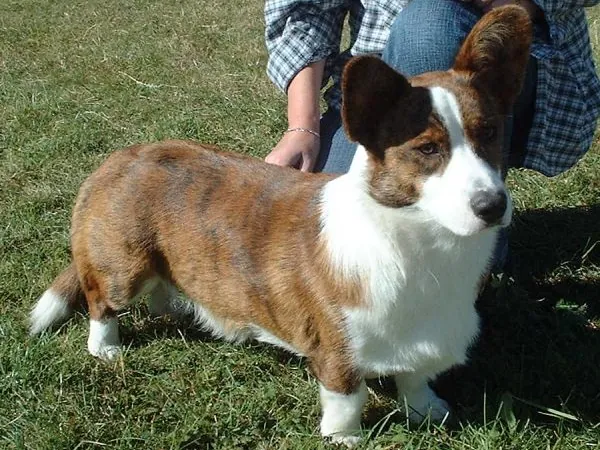
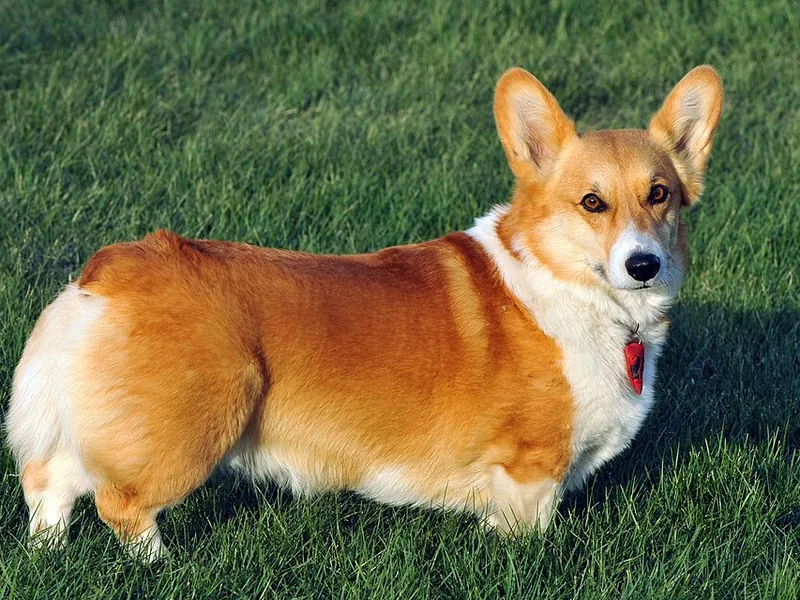
The Pembroke is a low, long-bodied herding dog that stands only 10 to 12 inches at the shoulder yet weighs 22 to 26 lb. It is heavier boned than it looks, with a deep chest, short legs and a body roughly 40 percent longer than it is tall. The head is fox-like, with erect, medium-sized ears that taper to a rounded point.
The coat is a medium-length double coat: a short, thick undercoat under a slightly coarser outer coat. Accepted colors are red, sable, fawn, and black and tan, with or without white flashings on the legs, chest, neck, muzzle and as a narrow blaze. An overly long, soft coat (often called a fluffy) is a fault in the show ring but makes no difference to a pet.
The tail is traditionally docked or naturally short, though natural tails are common where docking is banned. Males tend to be slightly larger and heavier in bone than females.
Temperament and Personality
Corgis are outgoing, curious and often comical, but they are not lapdogs. They are confident, quick-thinking and have strong opinions. Many are excellent watchdogs that bark at anything unusual.
The herding instinct remains: some Pembrokes try to herd children, cats or joggers by circling and nipping at heels. This is normal breed behavior that needs early redirection, not punishment. With other dogs and pets, most Corgis are sociable when raised with them.
Pembrokes often form close bonds with the whole family and like to be involved in everything happening at home. They can be more outgoing with visitors than some herding breeds, though many still announce each arrival loudly.
Are Pembroke Welsh Corgis Good for First-Time Owners?
Yes, for first-time owners who are ready to train consistently and exercise daily. Pembrokes are smart, food-motivated and compact, which makes them easier to manage than many herding breeds.
The challenges are behavioral rather than physical. A Corgi tests rules, barks at noises and may herd children or other pets by nipping. Owners who start puppy classes early, teach a solid leave-it and a quiet cue, and keep the dog slim usually do well. If you want a dog that simply follows you around without opinions, a calmer companion breed may suit you better.
Do Pembroke Welsh Corgis Bark a Lot?
Yes, most Pembrokes are vocal. They were bred to work cattle and guard farms, and they still bark at visitors, delivery drivers, other dogs and sudden sounds. Some also bark from excitement during play.
Barking can be managed but rarely eliminated. Useful steps:
- Reward quiet behavior and teach a cue to stop barking.
- Block views of busy streets from favorite lookout spots.
- Give daily mental work, since a bored Corgi finds its own job.
If you share walls with neighbors, plan this training from the first week.
Can a Pembroke Welsh Corgi Live in an Apartment?
Yes, many Pembrokes live happily in apartments if they get at least an hour of activity each day. Their small size is an advantage, but their energy and voice are the real factors.
Apartment living works best with a few adjustments. Elevator access or carrying the dog on long staircases protects its back. Ramps or steps onto the sofa and bed reduce jumping. Barking at hallway noises should be addressed early with training and white noise. Expect to vacuum often, because a shedding Corgi leaves hair on every floor surface.
Exercise and Training
Despite the short legs, Pembrokes are working dogs with plenty of stamina. Aim for at least an hour daily of walks, play and training. They do well in herding, agility (with low jump heights), rally and obedience.
- Redirect heel nipping to a toy and teach a solid leave-it from puppyhood.
- Limit jumping off furniture and repeated stair use to protect the long back.
- Use food rewards wisely; Corgis are food-motivated and gain weight easily.
They learn fast but can be stubborn, so consistent rules matter.
Grooming and Shedding
The medium-length double coat is weather-resistant and sheds a lot, year-round and especially during seasonal changes. Brush two to three times a week, and daily during heavy shedding, with an undercoat rake. A good vacuum cleaner is part of Corgi ownership.
Colors include red, sable, fawn and black and tan, with or without white markings. Trim nails regularly, as long nails affect gait in such a low dog.
Feeding and Nutrition
Weight control is the most important part of feeding a Pembroke. Extra pounds put direct pressure on the long spine and raise the risk of disc problems, and the breed is famously eager to eat. Weigh food rather than scooping it, and check body condition monthly: you should feel the ribs easily under a thin layer of fat and see a waist from above.
- Feed adults two measured meals a day; puppies three or four.
- Subtract training treats from the daily ration and use small pieces of the regular food during lessons.
- Avoid free-feeding and table scraps, which add up quickly in a dog this size.
Pembrokes lose fitness quickly when exercise drops, for example after injury or in older age, so reduce portions when activity falls. Neutered dogs often need less food than before surgery. If a Corgi seems constantly hungry, puzzle feeders and lick mats slow eating and give mental work without extra food. Sudden weight gain can signal thyroid problems, so mention it to your vet.
| Adult weight | Less active | Typical adult | Very active |
|---|---|---|---|
| 22 lb | 550 kcal | 630 kcal | 790 kcal |
| 26 lb | 620 kcal | 710 kcal | 890 kcal |
Estimates use the resting energy formula veterinarians work with (70 × body weight in kg0.75) and standard activity factors. Use the feeding guide on your food as a starting point and adjust to body condition. Puppies, seniors, pregnant animals and pets that need to lose weight have different needs, so ask your vet.
Health and Lifespan
Pembrokes usually live 12 to 13 years. Their short legs come from chondrodysplasia, a form of dwarfism that raises the risk of intervertebral disc disease (IVDD), so keeping them slim and limiting high-impact jumps is important. Degenerative myelopathy, a progressive spinal cord disease, is well documented in the breed and can be screened by DNA test.
Hip and elbow dysplasia, von Willebrand disease (a bleeding disorder) and progressive retinal atrophy are also reported. Obesity is a common, preventable problem that worsens back and joint stress. Choose a breeder who tests for hips, eyes and DM.
Pembroke Welsh Corgi Price and Cost of Ownership
Typical breeder price in the US$1,500 to $3,500
A Pembroke puppy from a reputable US breeder typically costs about $1,500 to $3,500. Prices vary by breeder, region and lines, and show-prospect puppies or those from well-known lines sit at the top of the range. Good breeders test parents for hip dysplasia, eye conditions, von Willebrand disease and degenerative myelopathy.
Corgi rescues and general shelters regularly have Pembrokes and Corgi mixes, often adults whose temperament is already known.
Ongoing cost drivers for this breed include:
- Pet insurance or savings for possible disc disease, which can require surgery.
- Grooming tools for heavy shedding, plus optional deshedding sessions at a groomer.
- Ramps, harnesses and training classes to manage the back and herding habits.
Is the Pembroke Welsh Corgi Right for You?
At 22 to 26 lb and only 10 to 12 inches tall, the Pembroke fits in many homes, including apartments, if its exercise and training needs are met. It suits active singles and families with older kids who enjoy an involved, clever dog.
Think twice if constant shedding, alert barking or a dog that tests boundaries would bother you, or if you cannot commit to keeping it lean for life.
Pembroke Welsh Corgi Traits at a Glance
Pembroke Welsh Corgi FAQ
Are Corgis good family dogs?
Yes, for active families. They are affectionate and playful, but their herding instinct may lead to nipping at running children, which needs early training.
Do Pembroke Welsh Corgis shed a lot?
Yes. They shed heavily year-round and even more during seasonal coat changes.
How big do Pembroke Welsh Corgis get?
They stand 10 to 12 inches tall and weigh about 22 to 26 lb.
What is the difference between a Pembroke and a Cardigan Welsh Corgi?
They are separate breeds. The Cardigan has a long tail, larger rounded ears and is slightly heavier, while the Pembroke is smaller and often has a short or docked tail where docking is legal.
Do Corgis have back problems?
Their long backs and short legs make them prone to disc disease. Keeping them lean and avoiding repeated high jumps helps reduce the risk.
How long do Pembroke Welsh Corgis live?
Most live around 12 to 13 years.