Cardigan Welsh CorgiThe long-tailed corgi of Wales
The Cardigan Welsh Corgi is a long, low, sturdy herding dog from Wales, recognizable by its fox-like tail and large ears. Smart, loyal and vocal, it suits active owners who enjoy training and can handle shedding.
Why people love the Cardigan Welsh Corgi
- Steady, adaptable companion in a compact package
- Smart and quick to learn with reward-based training
- Alert watchdog without the size of a guard breed
- Wide choice of colors, including blue merle
- Sturdy enough for active play and dog sports
Things to consider
- Heavy shedding, especially twice a year
- Vocal and quick to bark
- Herding nips at heels without early training
- Long back needs weight control and care with jumping
- Dislikes long hours alone
Is this breed right for you?
10 questions · live resultHistory and Origin
The Cardigan comes from Cardiganshire in Wales and is regarded as the older of the two corgi breeds. Farmers used it to drive cattle by nipping at their heels and ducking under kicks, and also to guard homes and catch vermin.
For years Cardigans and Pembrokes were shown together, though they differ in ancestry. The Kennel Club separated them in 1934, and the AKC recognized the Cardigan in 1935. The most visible difference is the tail: the Cardigan has a long, full tail, while many Pembrokes have a short or docked one.
Size, Coat and Colors
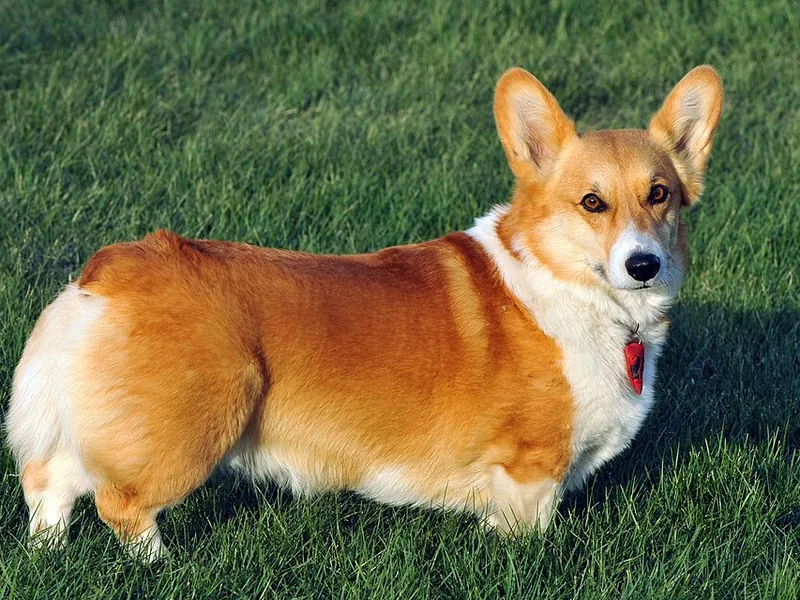
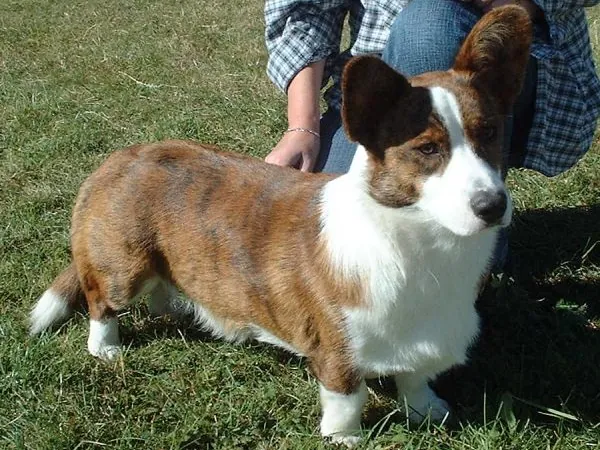
The Cardigan is a long, low herding dog with heavier bone than the Pembroke. It stands about 11 to 13 inches tall and weighs 24 to 37 lb, with males usually at the upper end and females more moderate. The body is noticeably long, the chest deep, and the front legs curve slightly around the ribcage. The ears are large and rounded at the tips, and the long, low-set tail is carried down at rest, a hallmark of the breed.
The coat is a medium-length double coat with a harsh outer layer and a thick undercoat. Accepted colors include:
- Red, sable and brindle, usually with white flashings.
- Black with or without tan or brindle points.
- Blue merle, with or without tan or brindle points.
White should not dominate the coat. Blue merles may have one or both eyes blue, partly blue or brown. Responsible breeders avoid merle-to-merle pairings because of the risk of deafness and eye defects.
Temperament and Personality
Cardigans are affectionate, loyal and even-tempered with their families. They are often more reserved with strangers than Pembrokes and make keen watchdogs. Many are very vocal and bark readily.
They are clever and quickly notice inconsistent rules. Herding instinct can show as nipping at heels or rounding up children. Most do well with other pets they are raised with, though some are bossy.
Cardigans are adaptable and usually calm in the house when exercised. They enjoy being involved in family routines and are sturdy enough for active play, but they are not fond of being left alone for long hours.
Are Cardigan Welsh Corgis Good for First-Time Owners?
Yes, Cardigans are often a good choice for first-time owners who want an active, trainable dog of moderate size. They tend to be steadier and slightly less pushy than many herding breeds.
New owners should be ready for three things: heavy shedding, barking and herding behavior such as nipping at heels. Puppy classes, a consistent daily routine and early work on a quiet cue address most of this. Because Cardigans are more reserved with strangers than Pembrokes, early socialization with visitors, children and new places matters. A first-time owner who enjoys training will usually find the breed rewarding.
Can a Cardigan Welsh Corgi Live in an Apartment?
Yes, with daily exercise and attention to barking. A Cardigan needs around an hour of walks and brain games a day, but it does not need a yard to be content.
For apartment life, protect the back by carrying the dog on long stairways or using elevators, and provide ramps to furniture. Train a quiet cue early, since Cardigans tend to alert at hallway sounds. A good vacuum and regular brushing keep hair under control. Owners who are away for long workdays should arrange a midday walk, as the breed does not enjoy long periods alone.
Are Cardigan Welsh Corgis Easy to Train?
Yes, Cardigans are intelligent and learn quickly, though they are thinkers rather than blindly obedient dogs. They notice inconsistent rules immediately and may test them.
Training works best when it is short, varied and reward-based. Many Cardigans excel in rally, obedience, herding and tracking. Focus early on:
- Redirecting heel nipping to toys.
- A reliable quiet cue.
- Calm greetings with strangers, since the breed can be reserved.
Food rewards are effective, but keep them small to protect the back from extra weight.
Exercise and Training
Cardigans need around an hour of activity daily, including walks and games that challenge the brain. They enjoy herding, agility, rally, tracking and obedience. Low ramps are a good idea in the home to reduce jumping.
Training should be consistent and fun, using rewards. Teach a quiet cue early, and redirect heel nipping. Do not let puppies run up and down stairs or jump from heights, which strains the back.
Herding instinct tests and trials are a great way to see the breed's original talents in action.
Grooming and Shedding
The medium-length, weather-resistant double coat sheds heavily, especially during seasonal shedding twice a year. Brush several times a week, and daily during heavy sheds. Baths help loosen undercoat.
Colors include red, sable, brindle, black with or without tan or brindle points, and blue merle. Breeding two merles together is avoided because it raises the risk of deafness and eye defects.
A grooming rake helps during heavy sheds.
Feeding and Nutrition
A lean Cardigan has a healthier back. Excess weight adds strain to a long spine and short legs, raising the risk of intervertebral disc disease and joint problems. Aim for ribs you can feel easily and a visible waist, and weigh the dog every few weeks.
- Feed adults two measured meals a day; puppies three or four.
- Use part of the daily ration as training rewards.
- Cut back when activity drops, for example in winter or older age.
Cardigans have a hearty appetite and can be persuasive beggars. Puzzle feeders and snuffle mats slow eating and give mental work without extra calories. Puppies should grow steadily, not quickly; a balanced puppy diet fed in measured amounts supports good bone development without excess weight.
Because the breed has heavier bone than the Pembroke, some Cardigans look stocky even when lean, so judge condition by touch rather than appearance. Ask your vet to show you how to body-condition score your dog at its yearly checkup.
| Adult weight | Less active | Typical adult | Very active |
|---|---|---|---|
| 24 lb | 590 kcal | 670 kcal | 840 kcal |
| 37 lb | 810 kcal | 930 kcal | 1,160 kcal |
Estimates use the resting energy formula veterinarians work with (70 × body weight in kg0.75) and standard activity factors. Use the feeding guide on your food as a starting point and adjust to body condition. Puppies, seniors, pregnant animals and pets that need to lose weight have different needs, so ask your vet.
Health and Lifespan
Cardigans usually live 12 to 15 years. Their long back and short legs increase the risk of intervertebral disc disease and other back problems. Hip dysplasia, progressive retinal atrophy and degenerative myelopathy also occur, and DNA tests are available for some of these conditions.
Keeping your Cardigan lean is the most important thing you can do for its back and joints. Choose breeders who test hips, eyes and DNA.
Cardigan Welsh Corgi Price and Cost of Ownership
Typical breeder price in the US$1,500 to $3,000
A Cardigan puppy from a reputable US breeder typically costs about $1,500 to $3,000. Prices vary by breeder, region and lines. Cardigans are less common than Pembrokes, so waiting lists are normal. Ask for hip evaluations, eye exams and DNA results, including degenerative myelopathy and PRA.
Corgi rescues sometimes have Cardigans or Cardigan mixes, and breed club rescue programs can help match adult dogs to new homes.
Breed-specific ongoing costs include:
- Insurance or savings for possible disc disease treatment.
- Deshedding tools and occasional professional grooming during coat blows.
- Ramps and harnesses to protect the back.
- Training classes or herding instinct sessions.
Is the Cardigan Welsh Corgi Right for You?
The Cardigan is a great choice for active people and families who want a smart, sturdy dog that is not too big. It can live in an apartment with enough exercise, though barking may be a concern.
- Good match: active families, dog sport fans, people home much of the day.
- Think twice: owners bothered by heavy shedding or barking, very long days alone.
Cardigan Welsh Corgi Traits at a Glance
Cardigan Welsh Corgi FAQ
What is the difference between Cardigan and Pembroke Corgis?
Cardigans have a long fox-like tail, larger rounded ears, heavier bones and more color options, including blue merle and brindle.
Do Cardigan Welsh Corgis shed?
Yes, heavily. Brush several times a week and daily during seasonal sheds.
How big do Cardigan Welsh Corgis get?
They stand about 11 to 13 inches tall and weigh roughly 24 to 37 lb.
Are Cardigan Corgis good family dogs?
Yes. They are loyal and affectionate, but may herd or nip at running children.
Do Cardigan Corgis bark a lot?
Many are quite vocal and make keen watchdogs, so early training helps.
How long do Cardigan Welsh Corgis live?
Typically 12 to 15 years.