Curly-Haired Cat BreedsRex cats with waves, curls and crimps
A breed qualifies for this list when a natural mutation gives it a curly, wavy or wiry coat, often called a rex coat. This page explains how the curly breeds differ from one another and how to care for coats that need a lighter touch than ordinary fur.
All Curly-Haired Cat Breeds A to Z

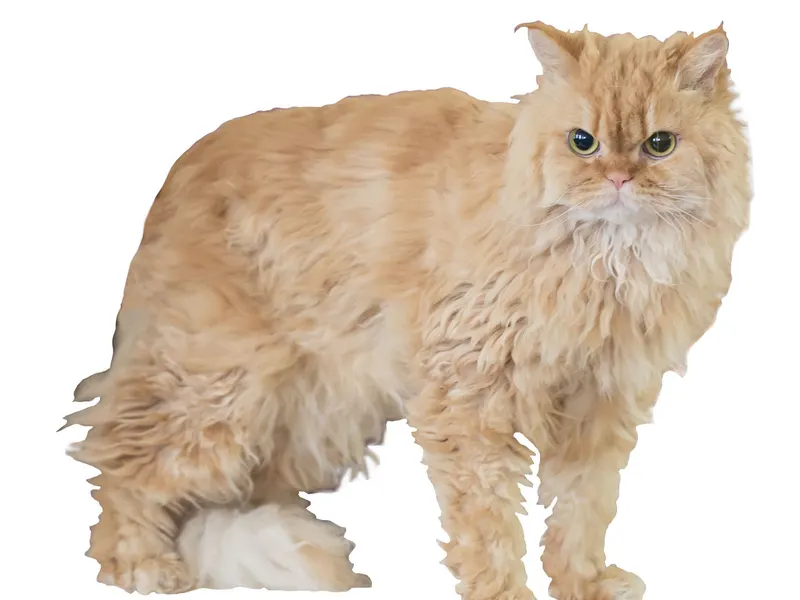
What a rex coat is
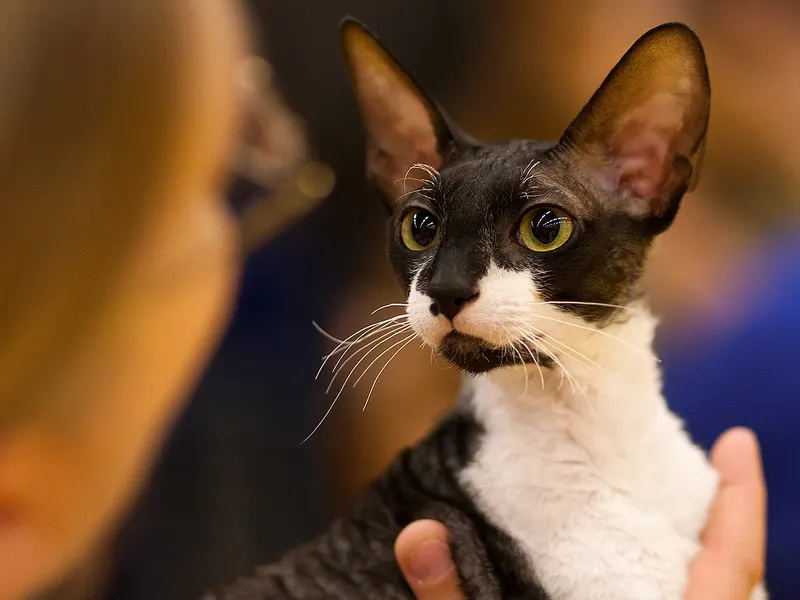
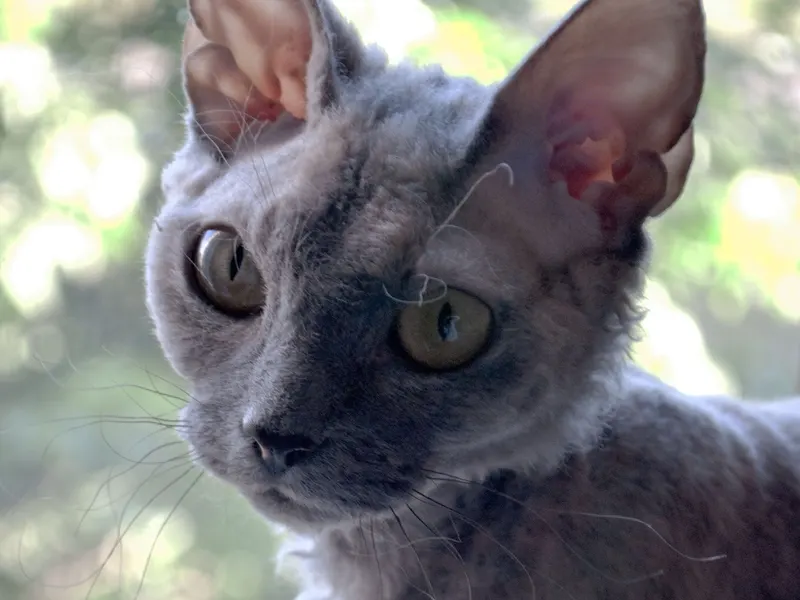
A normal cat coat has three kinds of hair: long, straight guard hairs on top, plus softer awn and down hairs underneath. Rex mutations change that structure. The Cornish Rex, which appeared in Cornwall, England, around 1950, has no guard hairs at all, leaving a short coat of tight marcel waves. The German Rex has a similar coat, and both share the same gene. The Devon Rex, discovered in Devon a decade later, carries a different gene that produces a loose, wavy, very short coat with a pixie face and enormous ears.
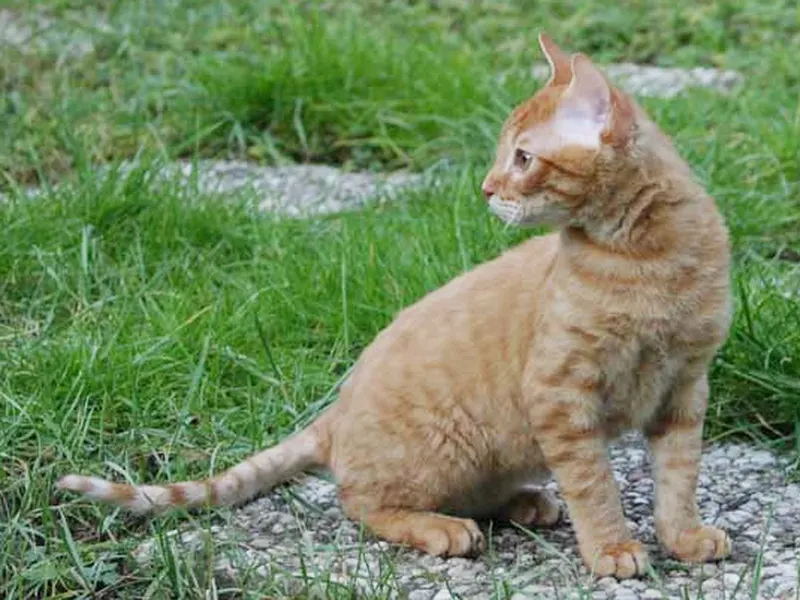
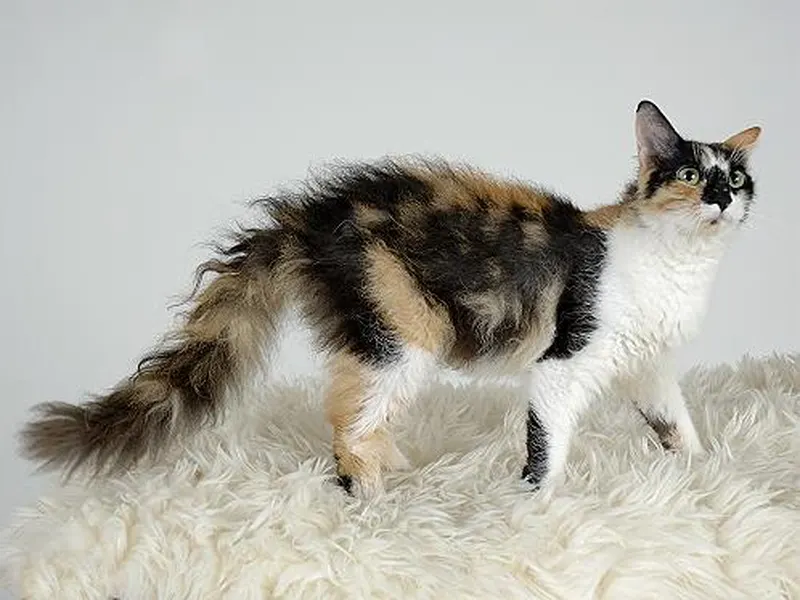
The other curly breeds come from American mutations. The American Wirehair, first seen in New York in the 1960s, has crimped, springy hair that feels coarse. The LaPerm, from Oregon, has loose ringlets that can be short or long. The Selkirk Rex, from Montana, has a thick, plush coat of loose curls on a sturdy, rounder body.
Recessive and dominant curls
The genetics matter if you are looking at kittens. The Cornish, German and Devon Rex mutations are recessive, so both parents must carry the gene for a kitten to be curly. The Selkirk Rex, LaPerm and American Wirehair mutations are dominant, so a single copy is enough, and litters can include straight-coated kittens. Some kittens also go through a sparse or straight phase before their adult coat comes in.
Grooming a curly coat
- Brush gently or not at all: Cornish and Devon Rex coats are fragile. A soft cloth, a rubber grooming mitt or your hand is usually enough. Hard brushing can break the hair and leave bald patches.
- Selkirk and LaPerm: these fuller coats benefit from occasional combing with a wide-toothed comb. Brushing too often straightens and frizzes the curls.
- Skin and ears: thin-coated rex breeds can get oily skin and waxy ears, so occasional wiping or bathing helps.
- Warmth: the Cornish and Devon Rex have little insulation and look for warm laps, radiators and blankets.
Curly cats and allergies
Curly breeds are often marketed as hypoallergenic because some shed less. That is not the full picture. The main cat allergen, Fel d 1, is produced in the skin and saliva and spread by grooming, so every cat produces it. Less shed hair may help some people, but reactions vary from cat to cat. Spend time with the breed and, ideally, the individual cat before you decide.
Personality and fit
Rex breeds are known for their energy and their attachment to people. The Devon and Cornish Rex are playful, acrobatic and often called the clowns of the cat world. The Selkirk Rex and LaPerm are generally more relaxed, and the American Wirehair shares the easygoing nature of the American Shorthair it came from. Curly-coated mixed-breed cats are rare, but shelters and breed rescues sometimes have adult rex cats looking for homes.
Frequently Asked Questions
Which cat breeds have curly hair?
The main curly-haired breeds are the Devon Rex, Cornish Rex, Selkirk Rex, LaPerm, American Wirehair and German Rex. Each has its own mutation and coat texture.
Are rex cats hypoallergenic?
No cat is fully hypoallergenic. Rex cats may shed less hair, but they still produce the Fel d 1 allergen in their skin and saliva, and individual cats vary.
Do curly-haired cats shed?
They shed, but usually less visibly than standard coats. Cornish and Devon Rex coats are short and sparse, while the Selkirk Rex has a thicker coat that sheds more.
What is the difference between a Devon Rex and a Cornish Rex?
They carry different genes. The Cornish Rex has tight, even waves and a slim, arched body, while the Devon Rex has a looser, wavier coat, huge ears and a pixie face.
Can you brush a Cornish Rex?
Only very gently. Its coat is delicate, so a soft cloth, rubber mitt or hand stroking usually works better than a brush.
Not sure which cat breed fits you?
Answer 10 quick questions and get cat breeds ranked for your home, schedule and family.