German RexBerlin's curly-coated companion
The German Rex is a medium-sized cat with a soft, wavy coat, first found in Berlin in 1951. It carries the same curly-coat gene as the Cornish Rex but has a sturdier body, and it is a friendly, playful companion for people who want an affectionate cat.
Why people love the German Rex
- Friendly, affectionate and playful
- Low-shedding wavy coat
- Calmer than the very energetic Cornish Rex
- Usually good with children and other pets
- Easy grooming with a soft cloth or hand
Things to consider
- Very rare, especially outside Europe
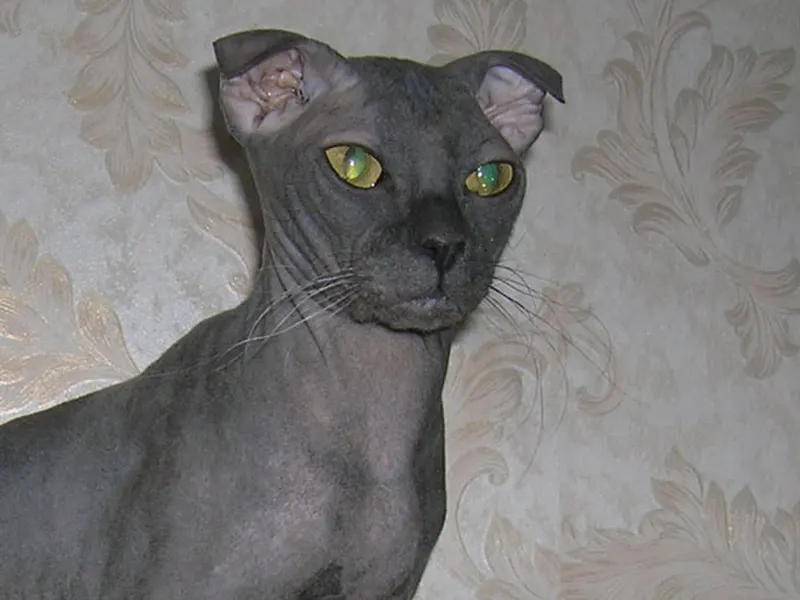
- Needs warmth; thin coat offers little insulation
- Not allergen-free
- Dislikes long periods alone
- Small gene pool
Is this breed right for you?
10 questions · live resultHistory and Origin
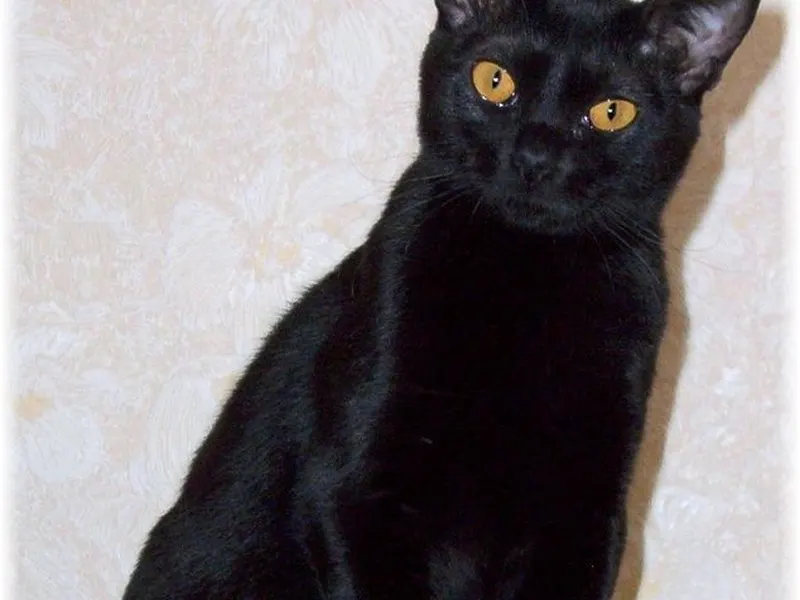
In 1951, Dr. Rose Scheuer-Karpin, a doctor in Berlin, noticed a curly-coated black cat in the hospital garden in Berlin-Buch. The cat, named Lämmchen (little lamb), became the foundation of the German Rex.
Breeding later showed that the German Rex carries the same recessive gene as the Cornish Rex. The breed was developed further in Germany and other European countries and is recognized by FIFe. It remains rare, and it is not separately recognized by CFA.
Size, Build, Coat and Colors
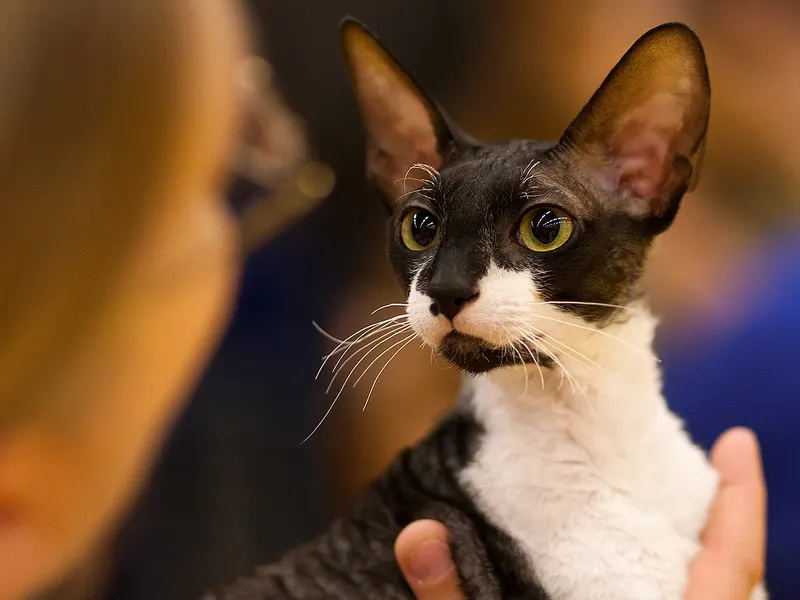
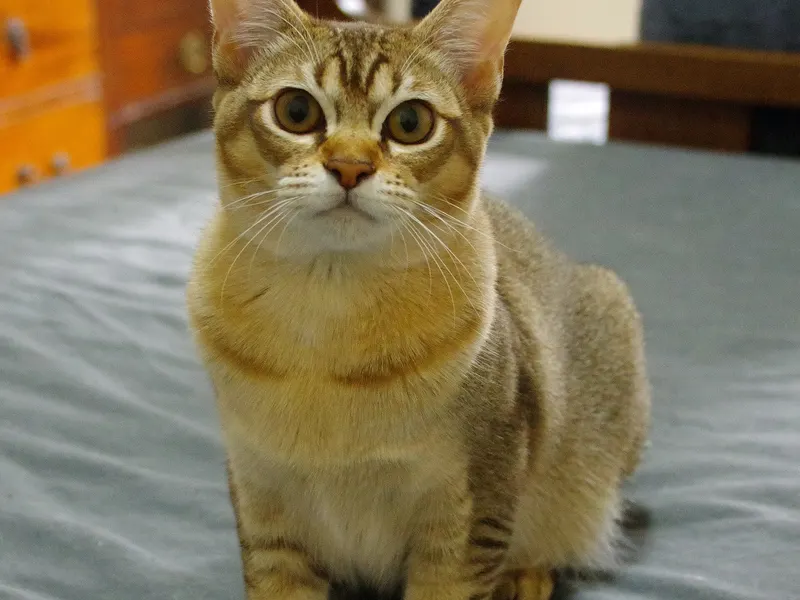
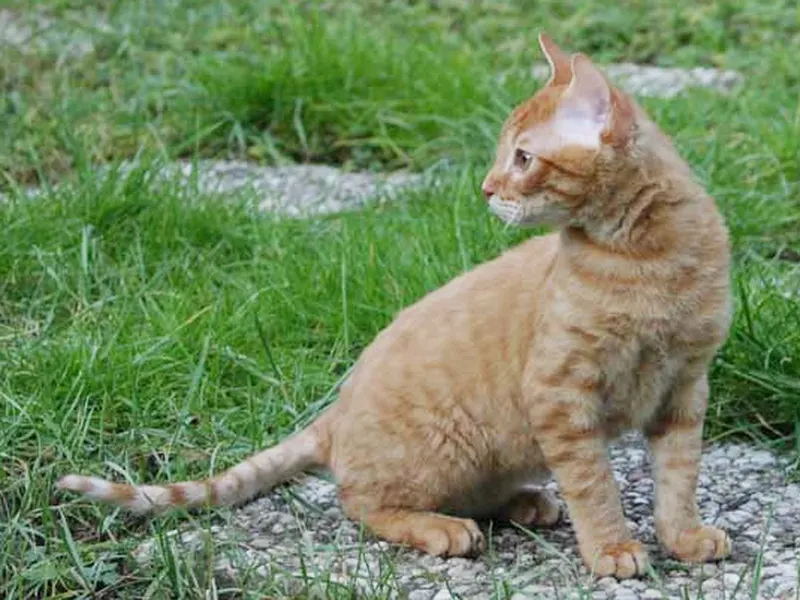
The German Rex is a medium-sized cat with a sturdy, muscular body and a rounded, balanced appearance. Adults weigh about 6 to 11 lb. Males are slightly larger and heavier than females, with broader heads.
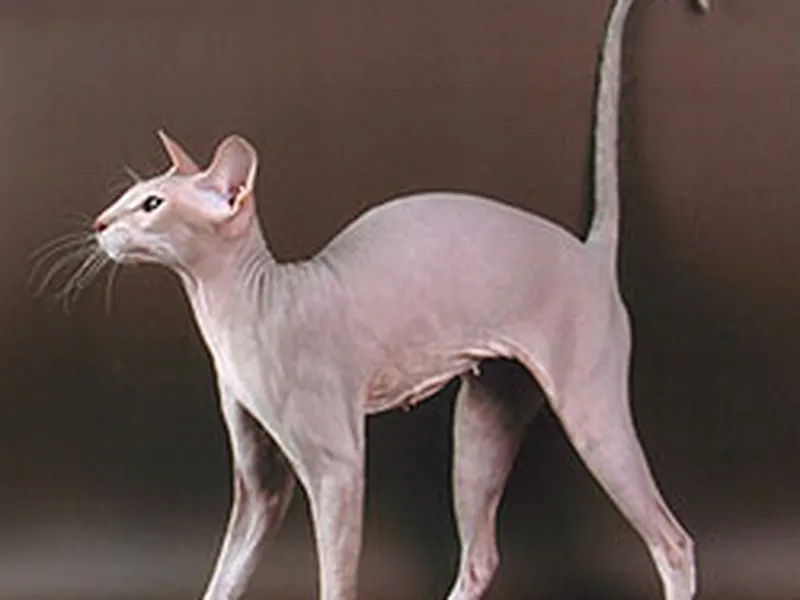
Unlike the slender, arched Cornish Rex, the German Rex has a moderate build closer to a European Shorthair: a rounded head with well-developed cheeks, medium-sized ears that are open at the base, medium-length legs and a moderately long tail with a rounded tip.
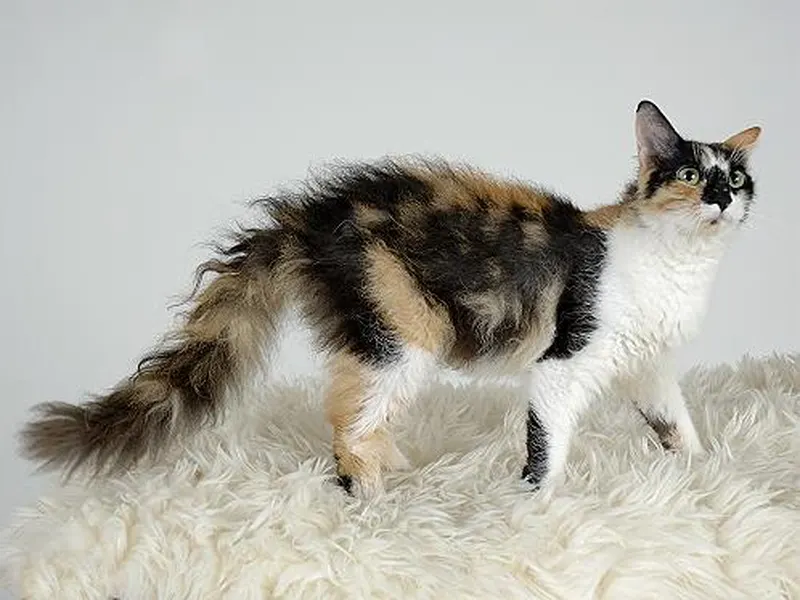
The coat is short, soft and plush, with a distinct wave or curl and fewer guard hairs than a normal coat. It should feel velvety. Whiskers are usually curly and may be shorter than normal or break easily.
FIFe recognizes a wide range of colors and patterns, including:
- Solid colors such as black, blue, red, cream and white
- Tabby patterns
- Tortie and bicolor
- Smoke and silver variations
Eye color generally corresponds to coat color.
Personality and Temperament
German Rex cats are typically friendly, affectionate and playful. They like people, often enjoy being held and tend to follow their family around the house.
They are usually confident and get along with children and other pets. They are moderately vocal and enjoy interaction, so they do best in homes where someone is around for much of the day.
Are German Rex Cats Lap Cats?
Many are. German Rex cats are affectionate and often enjoy being held, sitting on laps and following their owners around the house.
Their thin coat makes them seek warmth, so a warm lap or a spot under the blanket is especially attractive. They are generally a little calmer than the Cornish Rex, which makes them more likely to settle for longer cuddles after a play session. Individual personalities still vary, and some prefer sitting beside you rather than on you. Because the breed is rare, spending time with the kitten and its parents, even by video call, helps you judge temperament before committing.
Are German Rex Cats Good for First-Time Owners?
Yes. German Rex cats are friendly, adaptable and easy to groom, which suits first-time owners who want a sociable, interactive cat.
The main challenge is finding one. Most breeders are in Europe, so expect a waiting list and possibly import arrangements. New owners should also plan for a warm home, heated resting spots and occasional ear cleaning and bathing if the skin gets oily. German Rex cats like company and play, so they suit people who are home often or can offer a second cat. With those needs covered, they are easygoing and affectionate companions.
Can German Rex Cats Be Left Alone?
They can manage moderate periods alone once adult, but they prefer company. German Rex cats are social and moderately vocal, and long, regular absences may lead to boredom or attention-seeking when you return.
Before you leave, make sure the home is warm, since the short, wavy coat offers limited insulation. Provide heated beds, climbing furniture, window perches and puzzle toys. A second cat with a similar temperament is a good solution for owners who work long hours. For trips of more than a day, arrange a cat sitter who will also spend time playing, not just refill bowls.
Activity, Play and Enrichment
They are active and playful but somewhat calmer than the very energetic Cornish Rex.
- Daily play sessions with wand toys and chase games.
- Climbing furniture and window perches.
- Warm resting places, since the short coat offers limited insulation.
Puzzle feeders are useful for indoor cats.
Grooming and Shedding
The coat is short, soft and wavy, with fewer guard hairs than a normal coat. It sheds very little.
- Avoid hard brushes; a soft cloth or hand stroking is enough.
- Clean ears regularly and bathe occasionally if the skin becomes oily.
Whiskers are usually curly and may be shorter than normal. Protect from cold and strong sun.
Feeding and Nutrition
The German Rex's thin, wavy coat means it may use more energy to stay warm, especially in cooler homes or in winter. That does not mean it needs unlimited food: measure portions and monitor body condition, adjusting with the season and the cat's activity level.
A healthy German Rex feels firm and muscular, with ribs easy to feel and a visible waist. Keeping the home warm helps cats stay comfortable without relying on extra food.
- Feed kittens three to four meals a day and adults at least two.
- Puzzle feeders provide mental stimulation for this playful breed.
- Fresh water and some wet food support hydration and urinary health.
- Dental care, including tooth brushing, matters throughout life.
Rex cats can have oily skin, and a complete, balanced diet supports skin and coat health. If you notice greasy patches, flaking or sudden changes in appetite or weight, check with your vet rather than changing food on your own.
| Adult weight | Indoor, less active | Typical adult | Active or intact |
|---|---|---|---|
| 6 lb | 150 kcal | 180 kcal | 210 kcal |
| 8 lb | 180 kcal | 220 kcal | 260 kcal |
| 11 lb | 230 kcal | 280 kcal | 330 kcal |
Estimates use the resting energy formula veterinarians work with (70 × body weight in kg0.75) and standard activity factors. Use the feeding guide on your food as a starting point and adjust to body condition. Kittens, seniors, pregnant animals and pets that need to lose weight have different needs, so ask your vet.
Health and Lifespan
German Rex usually weigh 6 to 11 lb and commonly live 12 to 16 years.
No major breed-specific inherited diseases are well documented, but the gene pool is small. Because curly or reduced whiskers and a thin coat are part of the breed, some European animal welfare discussions mention rex traits in this context. Keep them warm and protected from sunburn, and choose a breeder who tracks health in their lines.
German Rex Price and Cost of Ownership
The German Rex is very rare in the US, and there is no reliable published price range. Most breeders are in Europe, particularly Germany and neighboring countries, so acquiring a kitten usually means importing, with added costs for transport, health certificates and travel. Prices vary by breeder, region and lines, and waiting lists are common.
Rescue German Rex cats are extremely rare. Some people consider a Cornish Rex, which carries the same coat gene, if a German Rex cannot be found.
Breed-specific ongoing costs include:
- Import and travel costs
- Heated beds and a warm home
- Bathing and ear cleaning supplies
- Routine vet and dental care
- Insurance for general feline conditions
Is the German Rex Right for You?
A good match if you want an affectionate, playful cat with a low-shedding coat, live in a warm home and can provide company.
Think twice if you need a kitten quickly or want an independent cat.
Allergies: low shedding may help some allergy sufferers, but German Rex cats still produce Fel d 1. Most breeders are in Europe, and there is no reliable typical US price.
German Rex Traits at a Glance
German Rex FAQ
What is the difference between a German Rex and a Cornish Rex?
They share the same curly-coat gene, but the German Rex has a sturdier, more moderate body than the slender, arched Cornish Rex.
Do German Rex cats shed?
Very little, thanks to their short, wavy coat.
Are German Rex cats hypoallergenic?
No. They shed little but still produce the Fel d 1 allergen.
How big do German Rex cats get?
Usually 6 to 11 lb.
Where can I find a German Rex?
Most breeders are in Europe, particularly Germany and neighboring countries, so expect to wait or import.