PeterbaldSt. Petersburg's elegant hairless cat
The Peterbald is a long, slender, Oriental-type cat from Russia whose coat can range from completely bald to short and wiry. It is an affectionate, talkative companion, but its hairlessness brings care needs and welfare questions buyers should understand.
Why people love the Peterbald
- Affectionate, sociable and people-focused
- Sheds little or no hair in bald types
- Usually good with children, dogs and cats
- Agile, playful and easy to train
- Elegant Oriental build and unique look
Things to consider
- Hairless skin needs weekly bathing or wiping
- Feels the cold and burns in sun
- Talkative and demanding of attention
- Does not cope well alone for long
- Rare in the US with limited breeders
Health note: this breed is affected by health concerns linked to its body shape or coat. Read the health section and choose a breeder who screens their cats and breeds responsibly.
Several European countries treat breeding of hairless cats, especially those lacking whiskers, as a welfare-relevant trait (e.g. Germany's Qualzucht provisions; the Netherlands has announced restrictions on hairless cats); check local rules.
Is this breed right for you?
10 questions · live resultHistory and Origin
The breed began in St. Petersburg, Russia, in 1994, when breeder Olga Mironova crossed a Donskoy (Don Sphynx) male with an Oriental Shorthair female. The goal was a hairless cat with the elegant, long-bodied Oriental type.
Further crosses with Oriental Shorthairs and Siamese refined the look. TICA recognized the breed in the late 1990s, and it is also recognized by FIFe and the GCCF. It is distinct from the Sphynx: its hairlessness comes from a dominant gene shared with the Donskoy rather than the recessive Sphynx gene.
Size, Coat Types and Colors
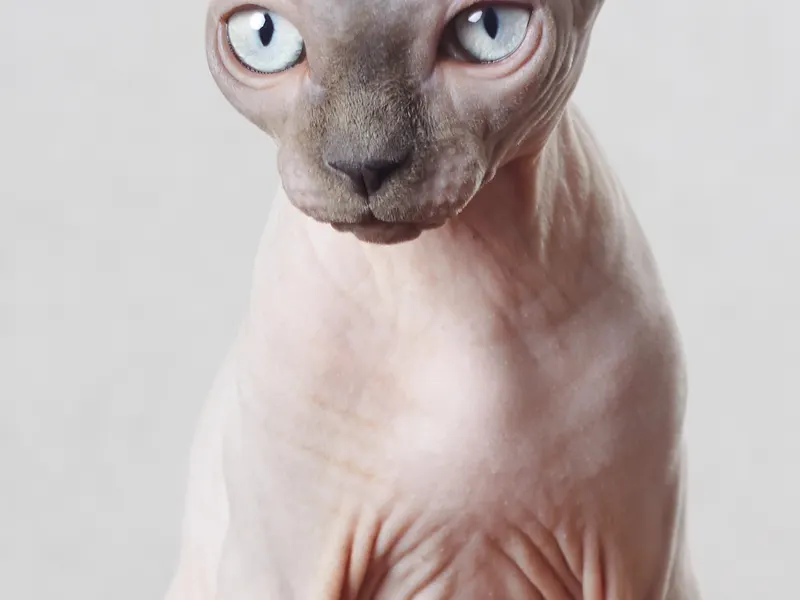
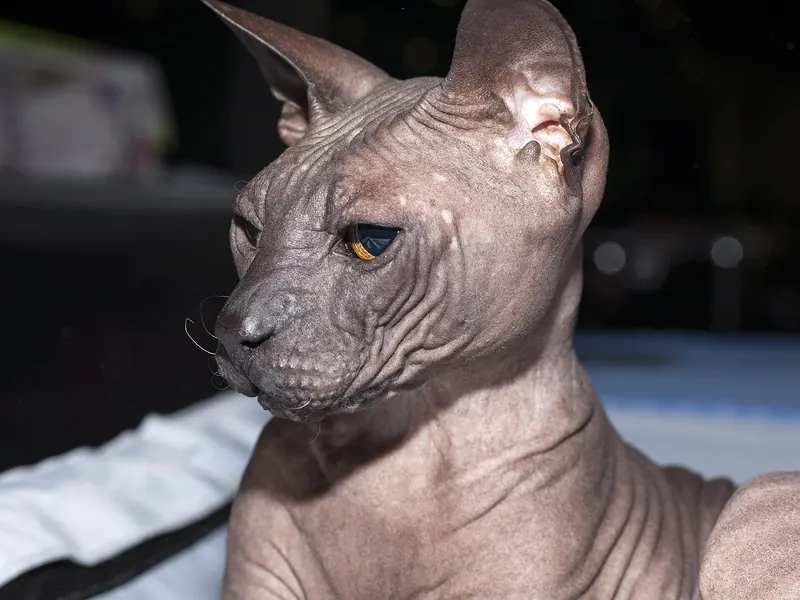
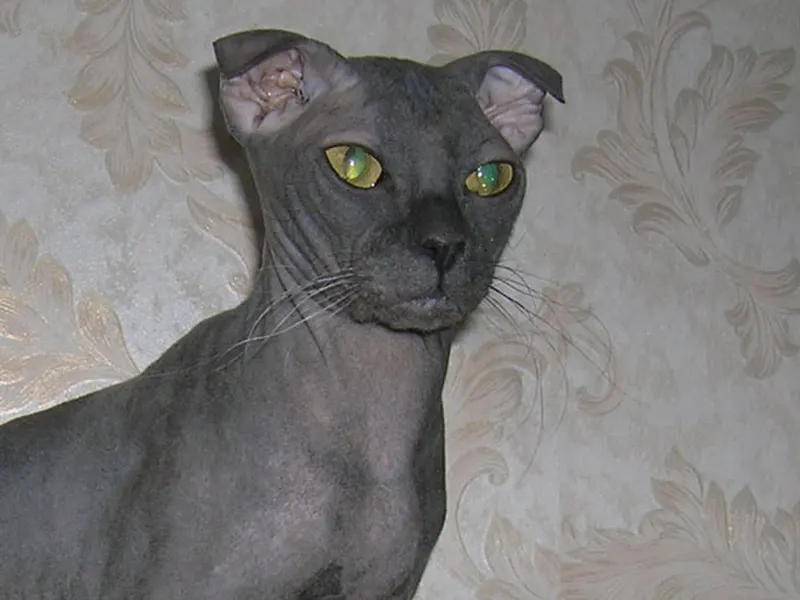
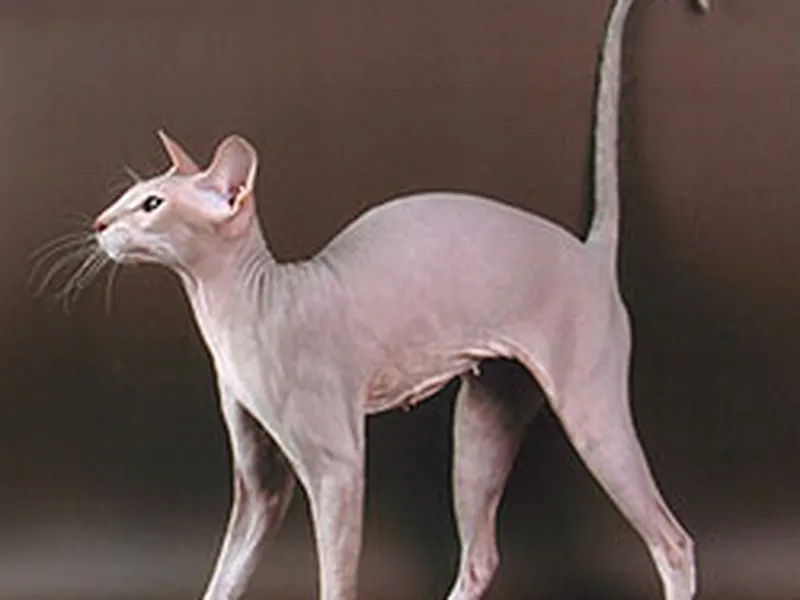
The Peterbald is a medium-sized, long, slender cat with an Oriental build: a long wedge-shaped head, large ears, almond-shaped eyes and long legs with a whip-like tail. Adults weigh about 6 to 12 lb. Males are usually larger and more muscular, while females are smaller and finer.
The body is lean and muscular, with fine bones and an elegant outline. The ears are large and set to continue the lines of the wedge-shaped head.
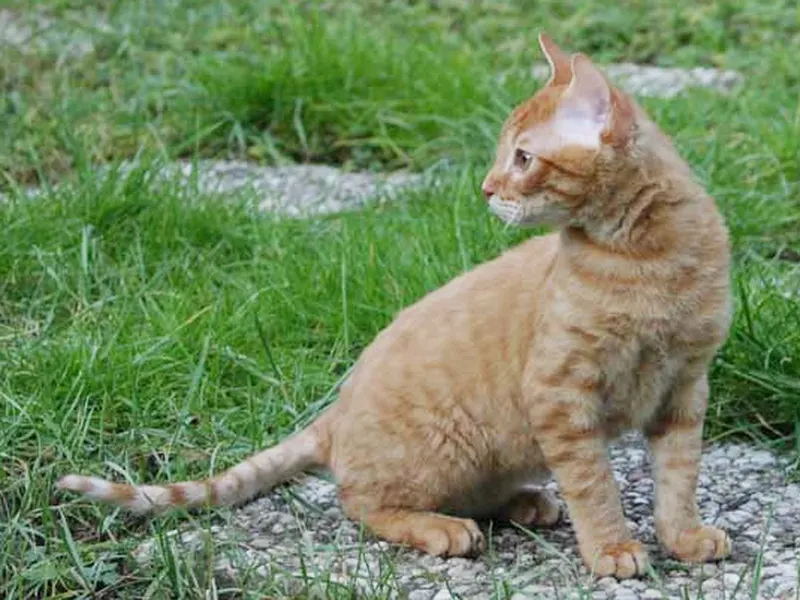
The Peterbald's coat varies widely. Types include bald (completely hairless), flock (very fine fuzz like suede), velour (short, sparse hair), brush (wiry, wavy hair) and straight (a normal short coat). Kittens may change coat type as they mature, and some lose hair over the first two years. All colors and patterns are accepted, including solid, tabby, bicolor and pointed patterns. On hairless cats, color shows as skin pigment. Eye color often matches coat or point color, and many have green or blue eyes.
Personality and Temperament
Peterbalds are sociable, affectionate and curious, with many traits of their Oriental and Siamese ancestry. They follow people, talk frequently and want to be part of every activity.
They usually get along with children, dogs and other cats, and they greet visitors readily. They seek physical contact and warmth, so expect a cat that sleeps under the covers. They do not do well left alone for long periods.
Should a Peterbald Be an Indoor-Only Cat?
Yes, Peterbalds should live indoors. Their hairless or lightly coated skin offers little protection against cold, sun and scratches, and they are vulnerable to sunburn and temperature extremes.
Indoors, provide warm beds, heated pads and cat sweaters if your home is cool. A secure catio or harness walks in mild weather can offer safe outdoor time, but avoid strong sun and cold. Their sociable nature also means they are better off near people than roaming outdoors. Keep windows secure, as curious Peterbalds may try to explore.
Is the Peterbald Good for First-Time Owners?
The Peterbald can be a good choice for first-time owners who are home a lot and willing to handle skin care. It is affectionate, sociable and easy to handle, but its hairlessness adds care needs.
Beginners should be ready for weekly baths or wipe-downs to remove skin oils, regular ear and nail cleaning and protection from cold and sun. The breed is talkative and demands attention, so it suits owners who enjoy an interactive cat. Choose a breeder who prioritizes health and temperament, and research welfare concerns linked to hairlessness.
Are Peterbalds Talkative?
Yes, Peterbalds are talkative cats. Their Oriental and Siamese ancestry gives them a strong voice and a habit of commenting on everything.
They chirp, meow and call to their people, especially when they want attention, food or company. The voice is usually softer than a Siamese, but frequent. Owners who enjoy conversation with their cat often find this endearing. Those who prefer a quiet cat should consider other breeds. Plenty of interaction, play and company help keep vocalizing at a manageable level.
Activity, Play and Enrichment
Peterbalds are agile, athletic cats with long legs and a whip-like tail.
- Daily interactive play and climbing furniture are essential.
- Puzzle toys and training keep their minds busy.
- A warm, safe indoor environment is important; heated beds and cat sweaters can help in cool homes.
A second sociable cat often makes life better for a Peterbald in a home where people work long hours.
Grooming and Shedding
Coat types include:
- Bald: no hair, skin feels warm and slightly sticky.
- Flock: fine fuzz that feels like suede.
- Velour and brush: short, sparse or wiry hair.
- Straight: a normal short coat.
Kittens may change coat type as they mature. Hairless and nearly hairless cats need weekly baths or wipe-downs, because skin oils build up without fur to absorb them. Clean ears and nail beds regularly, and protect skin from sunburn and cold.
Feeding and Nutrition
Hairless and lightly coated Peterbalds lose more body heat than furred cats, so many need more energy to maintain condition, especially in cool homes. At the same time, their lean Oriental build should stay slim, so monitor body condition closely.
- Feed measured meals and adjust to body condition and the season. Some Peterbalds need more food in winter.
- Kittens benefit from three to four meals a day, moving to two or three meals for adults.
- Fresh water should always be available, and wet food can increase water intake.
- Dental disease can occur, as in Oriental and Siamese lines. Regular tooth brushing and dental checks help.
Skin health reflects overall health, so if you notice acne, excessive oiliness or irritation, talk to your vet before changing diet. Use small treats and count them toward the daily ration.
| Adult weight | Indoor, less active | Typical adult | Active or intact |
|---|---|---|---|
| 6 lb | 150 kcal | 180 kcal | 210 kcal |
| 9 lb | 200 kcal | 240 kcal | 280 kcal |
| 12 lb | 250 kcal | 300 kcal | 350 kcal |
Estimates use the resting energy formula veterinarians work with (70 × body weight in kg0.75) and standard activity factors. Use the feeding guide on your food as a starting point and adjust to body condition. Kittens, seniors, pregnant animals and pets that need to lose weight have different needs, so ask your vet.
Health and Lifespan
Peterbalds usually weigh about 6 to 12 lb and commonly live 12 to 15 years.
Welfare concerns center on hairlessness. Hairless cats lose some protection against cold, sun and skin injury, and many lack normal whiskers, which cats use for touch and orientation. Skin problems such as acne and oily buildup are common without regular care. Because of their Oriental and Siamese ancestry, conditions seen in those breeds, such as dental disease, may occur.
Some European countries treat breeding hairless cats, particularly those without whiskers, as a welfare issue under animal protection laws. Check local rules and choose a breeder who prioritizes health and temperament.
Peterbald Price and Cost of Ownership
Typical breeder price in the US$1,500 to $3,000
A Peterbald kitten from a reputable US breeder typically costs about $1,500 to $3,000. Prices vary by breeder, region and lines, and coat type, color and show potential affect price. The breed is uncommon in the US, so waiting lists are common, and some kittens are imported. Ask breeders how they handle skin health and whisker issues in their lines.
Peterbalds occasionally appear in breed rescues, especially hairless cat rescues.
Breed-specific ongoing costs include:
- Bathing supplies, gentle skin cleansers and ear cleaning products.
- Heated beds, warm blankets and cat sweaters.
- Sun protection and secure catio or harness equipment.
- Insurance or savings for skin and dental problems.
Is the Peterbald Right for You?
A good match if you want a highly social, affectionate cat, are home a lot and are willing to handle regular bathing and skin care.
Think twice if you keep a cool home, want a low-maintenance cat or are away often.
Allergies: hairless cats are often recommended to allergy sufferers, but they still produce the Fel d 1 allergen in saliva and skin. Some people react less; others do not.
Peterbalds are uncommon in the US; pet kittens typically cost about $1,500 to $3,000, varying by breeder and region.
Peterbald Traits at a Glance
Peterbald FAQ
Are Peterbald cats completely hairless?
Not always. Coats range from fully bald to flock, velour, brush and normal straight coats, and kittens can change as they grow.
Are Peterbalds hypoallergenic?
No cat is hypoallergenic. Peterbalds shed little or no hair but still produce the Fel d 1 allergen.
What is the difference between a Peterbald and a Sphynx?
The Peterbald has a slender Oriental body and dominant hairless gene from the Donskoy, while the Sphynx is stockier and its hairlessness is recessive.
Do Peterbalds need baths?
Hairless and nearly hairless Peterbalds usually need a bath or wipe-down about once a week to remove skin oils.
Are Peterbalds good with other pets?
Generally yes. They are sociable and usually get on with cats and cat-friendly dogs.
How much does a Peterbald cost?
About $1,500 to $3,000 for a pet kitten in the US, depending on breeder and region.