BalineseThe Siamese mind in a silky coat
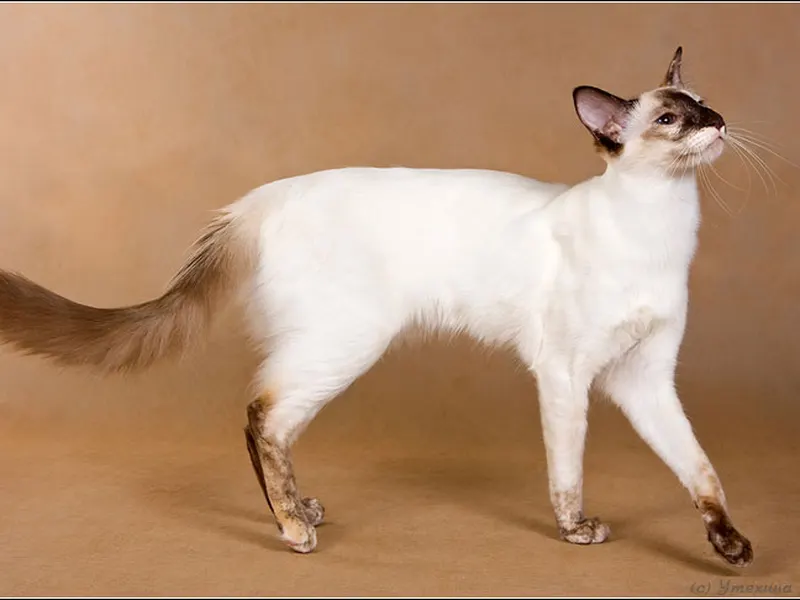
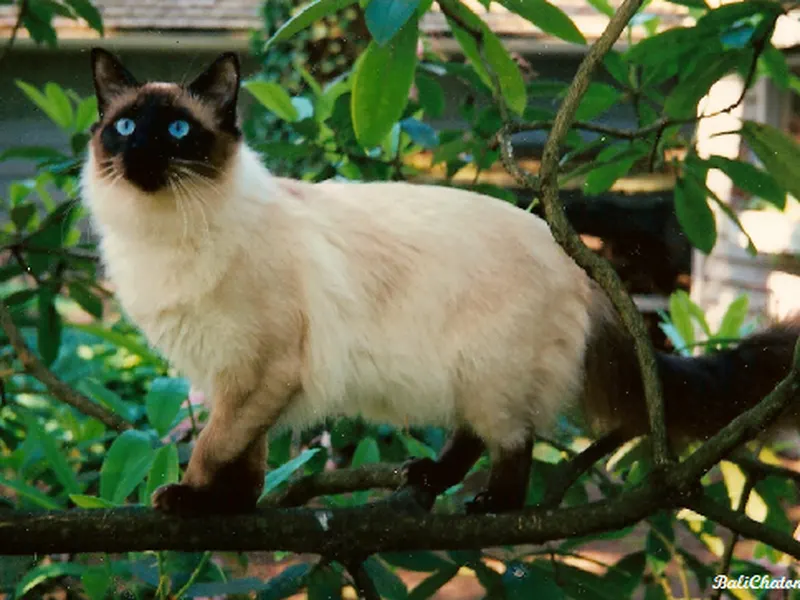
The Balinese is essentially a longhaired Siamese: slim, pointed and blue-eyed, with a silky coat and a plumed tail. It shares the Siamese talkativeness and devotion, so it suits people who want a chatty, affectionate shadow and are home often.
Why people love the Balinese
- Very social and affectionate companion
- Single coat rarely mats
- Long-lived, often 15 to 20 years
- Smart and easy to train
- Good with children and cat-friendly dogs
Things to consider
- Very vocal and talkative
- Dislikes being left alone
- Needs daily play and attention
- Dental and gum disease common
- PRA and amyloidosis in Siamese lines
Is this breed right for you?
10 questions · live resultHistory and Origin
Longhaired kittens occasionally appeared in Siamese litters, most likely from a recessive longhair gene introduced in the past. In the 1950s American breeders Helen Smith in New York and Sylvia Holland in California began developing these cats as a breed. The name Balinese was chosen for the graceful movement of Balinese dancers; the cats have no link to Bali.
CFA recognized the Balinese in 1970. In CFA, colors beyond the four classic Siamese points (seal, chocolate, blue and lilac) were long registered as Javanese, but CFA merged the Javanese back into the Balinese in 2010. TICA, FIFe and the GCCF also recognize the breed.
Size, Coat and Colors
The Balinese is a slender, elegant cat with a long, tubular body and fine bones. Adults weigh about 5 to 10 lb, with males larger and more muscular than females.
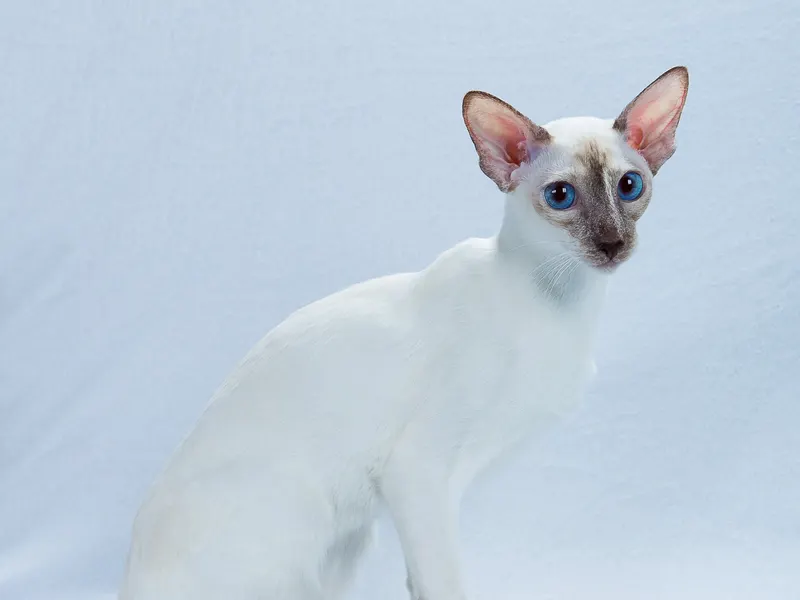
The head is a long, tapering wedge with large, pointed ears and almond-shaped, vivid blue eyes. The legs are long and slim, and the tail is long and plumed.
The coat is medium-long, fine and silky, lying close to the body with no woolly undercoat. It is longest on the tail, where it forms a graceful plume.
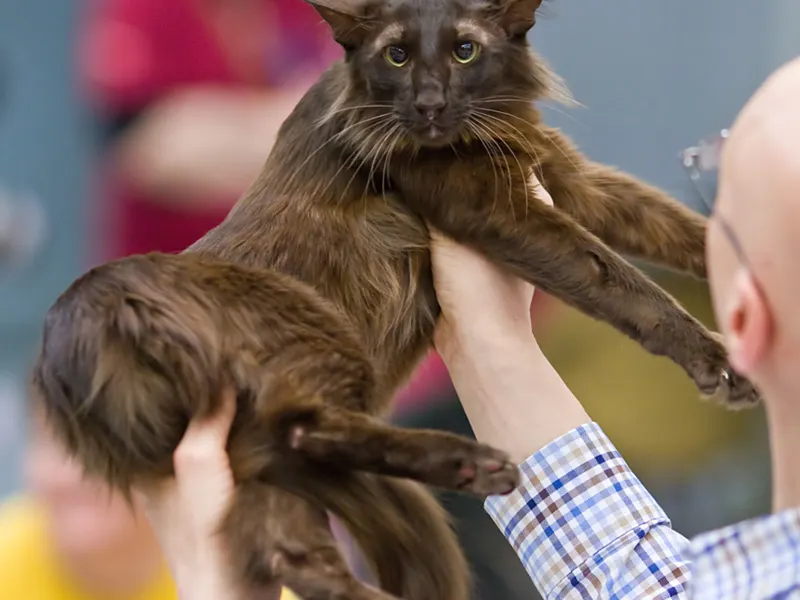
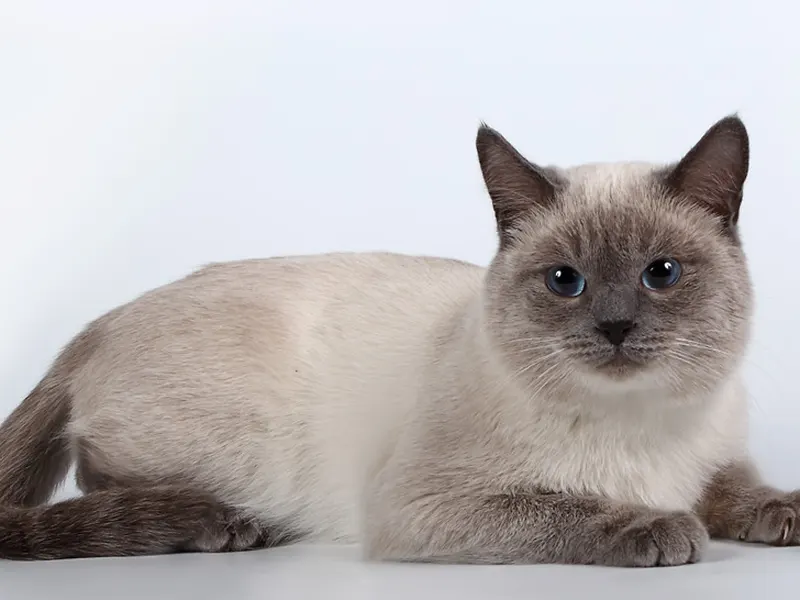
The Balinese is always color-pointed, with darker color on the face, ears, legs and tail. Point colors include:
- Seal, chocolate, blue and lilac
- Red and cream
- Tortie and lynx (tabby) points
Body color is lighter and shades gradually. Kittens are born almost white, and points develop over time.
Personality and Temperament
Balinese are social, curious and very communicative. They comment on everything and expect answers. Their voice is often described as a little softer than a Siamese, but they are still among the most vocal breeds.
- Bond closely with family and want to be involved
- Usually friendly with visitors, children and cat-friendly dogs
- Dislike being left alone for long hours
- Smart enough to learn tricks and to train their owners
Balinese are extremely social and often attach themselves to whoever is sitting down, climbing onto laps or shoulders. They also have strong opinions about routine: meals late, a closed door or a suitcase on the bed tends to get loud commentary. Early socialization with visitors and household noises helps them grow into relaxed adults.
Are Balinese Cats Lap Cats?
Yes, many Balinese are true lap cats. They are extremely people-focused and tend to seek physical contact rather than simply sharing a room.
A Balinese will often settle on whoever sits down, ride on shoulders or tuck under the covers at night. Many also follow their owners from room to room and want to supervise cooking, working and bathing. Affection is usually on their schedule, though, and an active young Balinese may prefer play to cuddling until it matures. If you want a cat that wants to be close to you most of the day, the breed is a strong match.
Can Balinese Cats Be Left Alone?
Balinese can handle short absences, but they do not do well alone for long workdays. They are highly social and can become bored, noisy or stressed without company.
If you work away from home, a second sociable cat is the most effective solution, ideally another active, people-oriented breed. Rotate toys, provide puzzle feeders and climbing space, and set aside play time before you leave and when you return. A cat sitter or neighbor visit helps on long days. Many Balinese greet their owners with loud commentary after an absence, which is normal.
Is the Balinese Good for First-Time Owners?
Yes, the Balinese can be a good choice for first-time owners who want an interactive, affectionate cat. Its single coat is easy to maintain, it adapts well to apartments, and it is usually friendly with people.
The main considerations are voice and attention. New owners should be ready for a talkative cat that wants to take part in daily life and gets restless without play. Training with treats and a clicker comes naturally to the breed and helps channel its intelligence. Those who want a quiet, independent cat, or who travel often, may prefer a calmer breed.
Activity, Play and Enrichment
Balinese are active and athletic. They enjoy fetch, chasing wand toys and climbing to high perches. Puzzle feeders and clicker training give their minds something to do. A second sociable cat helps a lot if you are out during the day.
They adapt well to apartments as long as they have climbing space and attention.
Rotate toys weekly to keep their interest, and use clicker training to teach useful behaviors such as coming when called or sitting on a mat during meal preparation.
Grooming and Shedding
The coat is medium-long, fine and silky, with no woolly undercoat, so it lies flat and rarely mats. Comb once or twice a week, paying attention to the tail plume. Shedding is light to moderate. Brush teeth regularly, since dental disease is common in Siamese-type cats.
Feeding and Nutrition
Balinese are slender, athletic cats, and keeping them lean supports a lifespan that often reaches 15 to 20 years. Measure portions, weigh the cat every few months and aim for a sleek body where the ribs are easy to feel. Extra weight is easy to miss under the medium-long coat.
Dental and gum disease are common in Siamese-type cats. Regular tooth brushing and dental checkups are important, and food alone does not prevent dental disease.
Amyloidosis, mainly affecting the liver, has been reported in Siamese lines. Routine bloodwork as your cat ages helps detect liver and kidney changes early, and any diet change for a diagnosed condition should follow your vet's plan.
Encourage water intake with fountains or wet food to support urinary and kidney health over a long life.
Feed two or more meals a day, or use puzzle feeders to slow eating and give this intelligent breed something to solve. Treats used for clicker training should be tiny and counted.
Senior Balinese often lose muscle while staying hungry, so ask your vet about adjusting the diet in later years.
| Adult weight | Indoor, less active | Typical adult | Active or intact |
|---|---|---|---|
| 5 lb | 130 kcal | 160 kcal | 180 kcal |
| 8 lb | 180 kcal | 220 kcal | 260 kcal |
| 10 lb | 220 kcal | 260 kcal | 300 kcal |
Estimates use the resting energy formula veterinarians work with (70 × body weight in kg0.75) and standard activity factors. Use the feeding guide on your food as a starting point and adjust to body condition. Kittens, seniors, pregnant animals and pets that need to lose weight have different needs, so ask your vet.
Health and Lifespan
Balinese often live 15 to 20 years. They share health concerns with the Siamese:
- Progressive retinal atrophy (PRA, rdAc): an inherited form of blindness; a DNA test is available
- Amyloidosis, mainly affecting the liver, reported in Siamese lines
- Dental and gum disease
- Crossed eyes and kinked tails occur in some cats but are now uncommon in show lines
Choose breeders who DNA test for PRA and keep good health records.
Balinese Price and Cost of Ownership
Typical breeder price in the US$800 to $2,500
Balinese kittens from reputable US breeders typically cost about $800 to $2,500, depending on breeder, region and lines. Show-quality kittens and rarer point colors may cost more. Ask breeders for DNA test results for PRA and health records for both parents.
Adult Balinese are sometimes available from breeder retirements and rescues, including Siamese-focused rescue groups.
Ongoing cost drivers include:
- Dental care, including professional cleanings under anesthesia
- Insurance covering PRA, amyloidosis and dental disease, ideally started young
- Enrichment: interactive toys, climbing space and possibly a second cat for company
- Senior care over a life that can last two decades
Grooming is usually done at home with a comb, and food costs are low for this small cat.
Is the Balinese Right for You?
The Balinese suits people who work from home, families with children and anyone who enjoys a talkative cat. It is a good choice for apartments.
If you want a quiet cat or are away most of the day, consider a calmer breed. Pet-quality kittens usually cost about $800 to $2,500 in the US, varying by breeder and region.
Because they live so long, a Balinese kitten is a commitment that can last two decades. Adult cats from breeder retirements and rescues are worth considering, since their personality and voice level are already known.
Balinese Traits at a Glance
Balinese FAQ
Are Balinese cats hypoallergenic?
No cat is hypoallergenic. Balinese are frequently said to produce less Fel d 1 allergen and some allergy sufferers do better with them, but evidence is limited and individual cats vary.
Do Balinese cats shed?
They shed lightly to moderately. Their single coat lacks an undercoat, so weekly combing is usually enough.
Are Balinese cats loud?
They are very talkative, though their voice is often softer than a Siamese.
What is the difference between a Balinese and a Siamese?
Coat length. The Balinese is the longhaired version of the Siamese, with the same body type, points and temperament.
How much does a Balinese cat cost?
Pet-quality kittens typically cost about $800 to $2,500 in the US, depending on breeder and region.
How long do Balinese cats live?
Often 15 to 20 years.