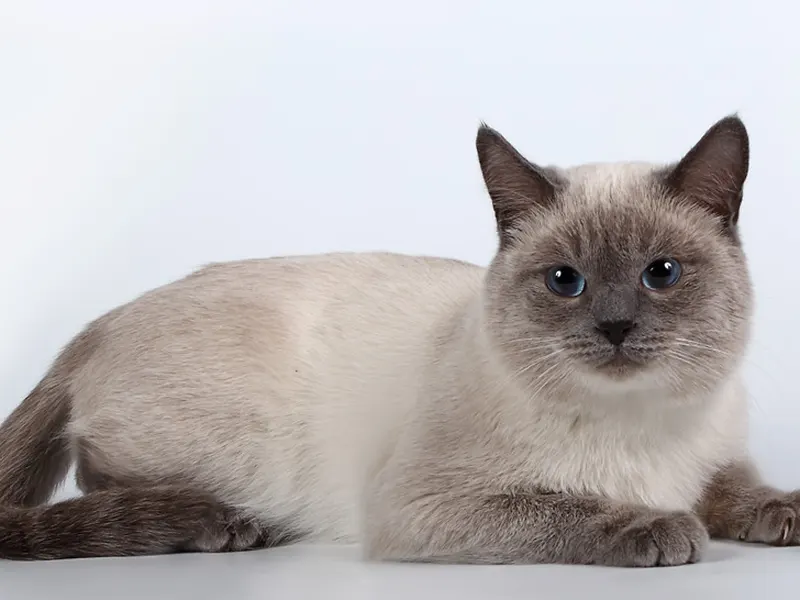
JavaneseA silky, talkative Siamese-type longhair
<p>The Javanese is a slender, longhaired cat of Siamese type, with a silky single coat, a plumed tail and blue eyes. It covers point colors beyond the four traditional Siamese colors, such as red, cream, lynx (tabby) and tortie points. It suits people who want an intelligent, talkative, very affectionate cat and who are home often.</p>
Why people love the Javanese
- Devoted, people-oriented and affectionate
- Clever, learns tricks and fetch easily
- Silky coat with no undercoat rarely mats
- Generally good with children and other pets
- Softer voice than a Siamese
Things to consider
- Needs a lot of company and interaction
- Talkative and opinionated
- Prone to boredom and mischief when alone
- Shares Siamese health risks such as PRA and amyloidosis
- Few breeders under the Javanese name
Is this breed right for you?
10 questions · live resultHistory and Origin
The Javanese grew out of the Balinese, the longhaired form of the Siamese that appeared in US Siamese litters and was developed into a breed from the 1950s. CFA accepted the Balinese only in the four traditional Siamese colors: seal, chocolate, blue and lilac point. Breeders working with longhairs in other point colors, influenced by the Colorpoint Shorthair, pushed for separate recognition.
CFA accepted these cats in 1979 under the name Javanese, a name that, like Balinese, has nothing to do with Indonesia and was chosen for its exotic sound. In 2008, CFA breeders voted to merge the two into a single Balinese breed with a Javanese division, so in CFA today a Javanese is shown as a Balinese-Javanese. Some other registries use the name differently, which is why "Javanese" can mean slightly different cats depending on where you are.
Size, Coat and Point Colors
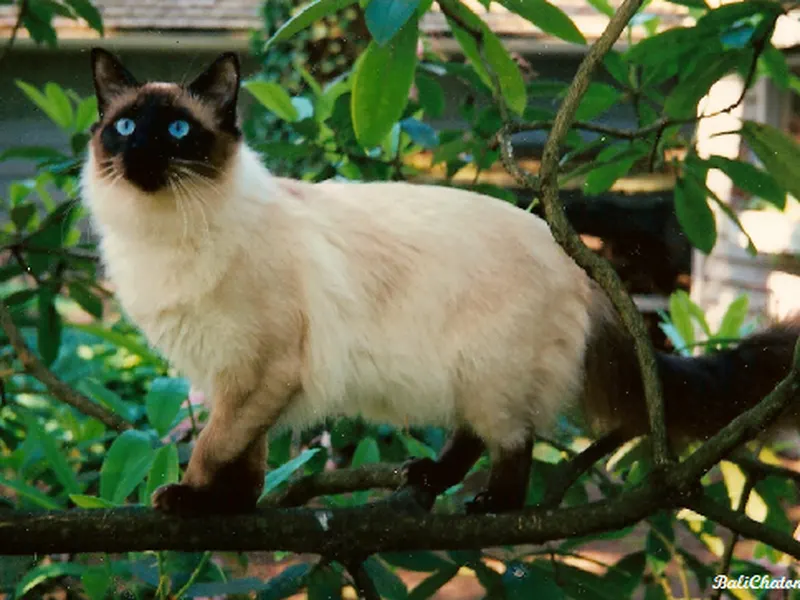
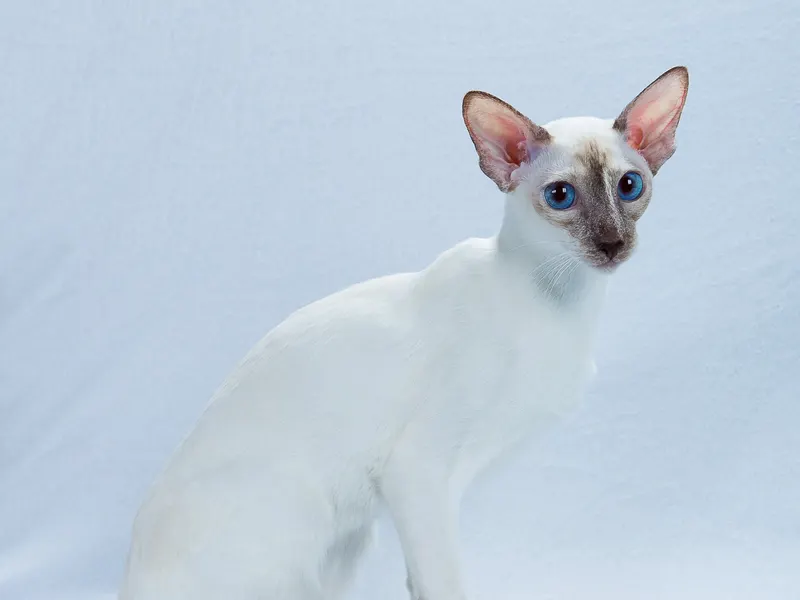
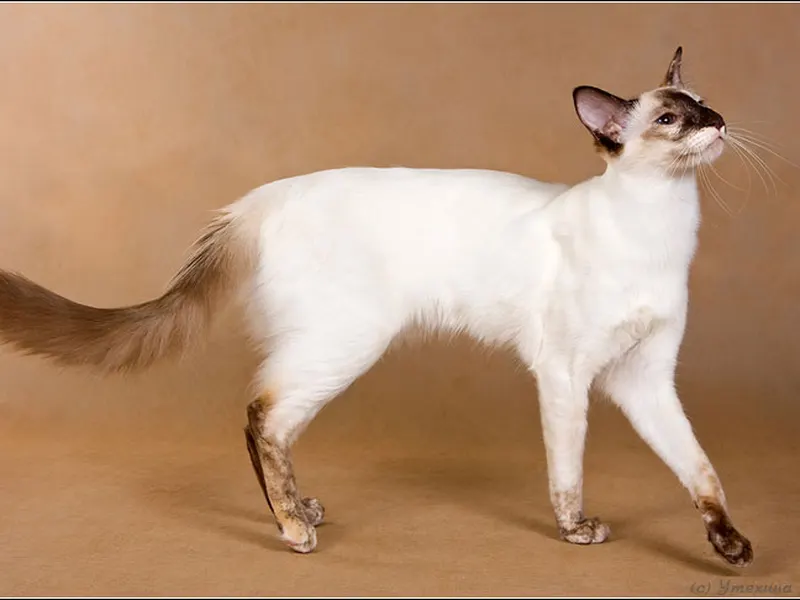
The Javanese is a slender, elegant cat with a long, tubular body and fine bones. Adults usually weigh about 5 to 10 lb. Males are larger and more muscular, while females are smaller and more delicate.
The head is a long, tapering wedge with large, pointed ears and almond-shaped, deep blue eyes. The legs are long and slim, with hind legs slightly longer than front legs. The tail is long and thin, ending in a plume of longer hair.
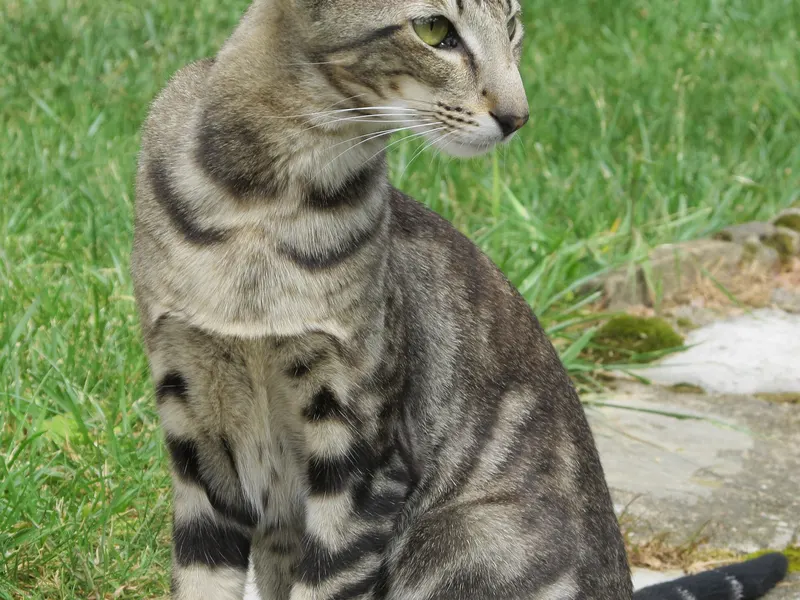
The coat is medium-length, fine and silky, with no undercoat. It lies close to the body, giving a sleek look, with the longest hair on the tail. Javanese colors include point colors beyond the four traditional Siamese colors, such as:
- Red point and cream point.
- Lynx (tabby) point in various colors.
- Tortoiseshell point and tortie-lynx point.
- Parti-color point in some lines.
Kittens are born pale and develop their point color over the first months.
Personality and Temperament
Javanese are lively, devoted and opinionated. They want to be wherever you are, often on your lap, shoulder or bed, and they will tell you what they think. Their voices are generally softer than a Siamese, but they are still chatty.
They are clever enough to learn fetch, open doors and find treats in pockets. Most get along with children and other pets. Their need for company is strong; a Javanese left alone for long hours often becomes bored, vocal or destructive, so a second cat is often recommended.
Is the Javanese Good for First-Time Owners?
It can be, for first-time owners who are home often and want an engaged, talkative companion. The Javanese is affectionate and trainable, with easy coat care.
The main challenge is its need for company. A Javanese left alone for long hours may become bored, vocal or destructive. First-time owners should plan for daily interactive play, climbing structures and puzzle toys. The breed's talkative nature also requires tolerance. With enough attention and enrichment, a Javanese is a rewarding, loving companion. Clicker training can also be a fun outlet.
Can Javanese Cats Be Left Alone?
Not for long. The Javanese has a strong need for company and does not do well when left alone for many hours.
A Javanese left alone for long workdays may become bored, vocal or destructive. Providing toys, puzzle feeders, cat trees and window perches helps, but they are not a substitute for interaction. Many owners find that a second cat, especially another active breed, helps meet the Javanese's social needs. Longer absences require a pet sitter who can provide companionship. Even a few hours alone daily is fine for most adults with enough enrichment, but full days alone are hard on this breed.
Can Javanese Cats Live With Dogs?
Yes, usually. Javanese cats are sociable and often get along well with cat-friendly dogs.
Introduce the dog and cat gradually, keeping them separated at first and allowing scent exchange before supervised meetings. Give the cat high places and escape routes. Calm, gentle dogs are the best match. Many Javanese become playful companions to dogs, and some even play fetch together. Supervise early interactions and reward calm behavior from both animals. Some Javanese even learn to walk on a harness alongside a dog. Avoid dogs with strong prey drive.
Activity, Play and Enrichment
This is an active, athletic breed that loves to climb and play.
- Provide tall cat trees and wall shelves; they enjoy surveying the room from above.
- Rotate toys and use puzzle feeders to keep their sharp minds occupied.
- Teach tricks with clicker training, which they often pick up quickly.
- Interactive play twice a day helps prevent attention-seeking behavior.
Grooming and Shedding
The Javanese coat is medium-length, fine and silky, with no undercoat. It lies close to the body, so the cat looks sleek rather than fluffy, with the longest hair on the tail plume. Because there is no undercoat, it rarely mats. Combing once or twice a week is enough, and shedding is relatively light.
Like all pointed cats, kittens are born pale and develop color on the face, ears, legs and tail over time.
Feeding and Nutrition
The Javanese is a slender, active cat, and maintaining its lean build is the main feeding goal. Check body condition regularly: ribs should be easy to feel without a visible layer of fat. Its active nature helps, but indoor cats can still gain weight with free feeding.
Feed kittens a complete kitten food until about 12 months, three to four times a day at first. Adults do well with two to three measured meals.
- Dental disease and gingivitis are reported in Siamese-type cats, so discuss dental care with your vet.
- Encourage hydration with wet food or water fountains, which supports kidney and urinary health; amyloidosis can affect the kidneys or liver in Siamese-type lines.
- Puzzle feeders and food-based games provide mental stimulation for this clever breed.
Use small treats in clicker training, which the Javanese often enjoys, and count them toward the daily ration.
| Adult weight | Indoor, less active | Typical adult | Active or intact |
|---|---|---|---|
| 5 lb | 130 kcal | 160 kcal | 180 kcal |
| 8 lb | 180 kcal | 220 kcal | 260 kcal |
| 10 lb | 220 kcal | 260 kcal | 300 kcal |
Estimates use the resting energy formula veterinarians work with (70 × body weight in kg0.75) and standard activity factors. Use the feeding guide on your food as a starting point and adjust to body condition. Kittens, seniors, pregnant animals and pets that need to lose weight have different needs, so ask your vet.
Health and Lifespan
Javanese share Siamese ancestry, so they share some Siamese health risks. Lifespans of about 12 to 18 years are common. Conditions to know about:
- Progressive retinal atrophy (PRA-rdAc), an inherited eye disease with a DNA test.
- Amyloidosis, reported in Siamese-type lines.
- Dental disease and gingivitis.
- Respiratory issues such as asthma are reported in Siamese-type cats.
Ask breeders for PRA test results and about the health history of related cats.
The Balinese and Javanese are sometimes said to be better for allergy sufferers. Cat allergies come mainly from the Fel d 1 protein in saliva and skin, not from hair, and there is no reliable evidence that these cats produce consistently less. Some people react less to their lighter shedding, but test your reaction first.
Javanese Price and Cost of Ownership
Typical breeder price in the US$800 to $2,000
A Javanese kitten from a reputable US breeder typically costs about $800 to $2,000, and prices vary by breeder, region and lines. Because most US breeders now register these cats as Balinese, searching for Balinese breeders often yields more options. Rescue and adoption are also possible through Siamese and Oriental rescues.
Breed-specific cost drivers include:
- PRA DNA testing and eye exams.
- Dental care, including cleanings, given breed tendency to gingivitis.
- Enrichment such as cat trees, puzzle toys and interactive toys.
- Insurance for potential amyloidosis or respiratory issues.
Kittens are usually ready to go home at around 12 to 16 weeks, after vaccinations and spay or neuter.
Is the Javanese Right for You?
A Javanese is ideal for people who want a constant, engaged companion and enjoy a conversational cat. It is not the right choice for quiet households that want a cat to keep to itself or for anyone away from home most of the day without other pets.
Because most US breeders now register them as Balinese, search for Balinese breeders too. Pet kittens typically cost about $800 to $2,000, varying by breeder and region.
Javanese Traits at a Glance
Javanese FAQ
What is the difference between a Javanese and a Balinese?
In CFA, the Javanese is now a division of the Balinese breed. Balinese covers the four traditional Siamese colors; Javanese covers other point colors such as red, cream, lynx and tortie points.
Are Javanese cats hypoallergenic?
No. They produce the Fel d 1 allergen. Their single coat sheds lightly, which some allergy sufferers tolerate better, but reactions vary.
How big do Javanese cats get?
Adults usually weigh 5 to 10 lb (about 2 to 4.5 kg). They are slender and fine-boned.
Are Javanese cats vocal?
Yes, they are talkative, though generally softer-voiced than a Siamese.
Do Javanese cats need a lot of grooming?
No. With no undercoat, a comb once or twice a week is usually enough.
How long do Javanese cats live?
Commonly about 12 to 18 years.