Tibetan TerrierShaggy Himalayan companion, not a true terrier
The Tibetan Terrier is a medium-sized, shaggy dog from the Himalayas, prized as a good-luck companion rather than a working terrier. Lively, affectionate and sure-footed, it suits families who can commit to regular coat care and patient training.
Why people love the Tibetan Terrier
- Affectionate, lively companion that loves family life
- Hardy, medium size suits many homes
- Long-lived, often 15 to 16 years
- Loose hair stays in the coat rather than on floors
- Copes well with cold weather and outdoor hikes
Things to consider
- Long double coat needs serious grooming time
- Independent streak can make training slow
- Reserved with strangers if not well socialized
- Matting phase during the adolescent coat change
- Inherited eye conditions require health-tested breeding
Is this breed right for you?
10 questions · live resultHistory and Origin
The breed developed in Tibet over many centuries, where dogs lived in monasteries and with nomadic families. They were valued as companions and luck bringers and were often given as gifts rather than sold. Some also helped herders. Despite its name, the breed has no terrier ancestry; Europeans gave it the name because of its size. Local names include Tsang Apso, meaning shaggy dog from the Tsang province, and it is related to the Lhasa Apso and the Tibetan Spaniel.
In the 1920s Dr Agnes Greig, a British doctor working in India, received a dog as a gift for treating a patient and began breeding them in England. The Kennel Club recognized the breed in the 1930s, and the AKC in 1973.
Size, Coat and Colors
The Tibetan Terrier is a square, sturdy, medium-sized dog standing about 14 to 16 inches at the shoulder and weighing 18 to 31 lb. Females are typically a little smaller and lighter than males, but the difference is moderate.
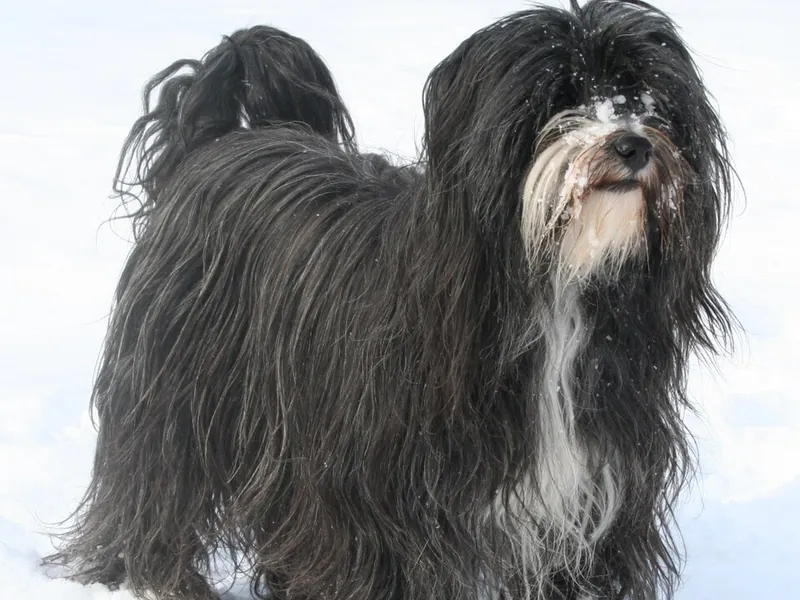
The double coat consists of a fine, profuse outer coat and a soft, woolly undercoat. The outer coat can be straight or wavy, never silky or curly, and it falls over the eyes and face. The tail is well feathered and curls over the back, often falling to one side.
The feet are one of the breed's distinctive traits: large, flat and round, with hair between the toes. They work almost like snowshoes on mountain terrain.
Almost any color is accepted under the AKC standard, including:
- White, cream and gold
- Silver, gray and smoke
- Black, brindle and tricolor
- Parti-colors with white
Liver and chocolate are not accepted. Coat color often changes as puppies mature, so a young TT may look quite different as an adult.
Temperament and Personality
Tibetan Terriers are affectionate, lively and devoted to their family, and they like to be included in daily life. They are often reserved or cautious with strangers and make good watchdogs, alerting with a bark when someone arrives.
They have a strong mind of their own and dislike pressure or rough handling, which can make them stubborn. Most get along well with considerate older children and with other pets when raised with them. Many enjoy perching on high spots to keep an eye on things.
Do Tibetan Terriers Bark a Lot?
Tibetan Terriers bark moderately. They are good watchdogs and will announce visitors, knocks and unusual sounds, which reflects their history as monastery and village dogs.
Most are not nuisance barkers once they have learned that you have heard their warning. Barking tends to increase with boredom or loneliness, so daily exercise and company help. Teach a quiet cue early by thanking the dog for its alert and rewarding silence. In apartments, early socialization to hallway noises reduces reactive barking. Many TTs also like to watch from a raised spot, so blocking street views can cut down on alerts.
Are Tibetan Terriers Easy to Train?
Tibetan Terriers are intelligent but not always easy to train. They learn quickly when they see a reason to cooperate, and they lose interest just as quickly with repetitive drills.
Use short, varied sessions with food and play rewards. Harsh corrections tend to make a TT more stubborn or withdrawn. Many owners find that humor and patience work better than strict obedience routines. House training is usually straightforward. Recall needs practice, as some TTs follow their own interests outdoors. Many enjoy agility, rally and tricks once they learn that training is fun.
Are Tibetan Terriers Good With Other Pets?
Yes, Tibetan Terriers usually get along well with other dogs and with cats, especially when raised with them. Their prey drive is generally lower than in true terriers.
Introductions should still be gradual. Some TTs can be bossy with other dogs or protective of their space and resources, so supervise early interactions and feed pets separately. Small pets such as rabbits or guinea pigs should be introduced carefully and housed securely, since individual dogs vary. A TT raised alongside a cat often becomes a close companion to it.
Exercise and Training
TTs need about an hour of daily exercise. They are agile and athletic, with large, flat, round feet that once helped them move through snow on mountain terrain. Many enjoy hiking, agility, rally and lively games of chase in a secure area.
Training requires patience, humor and positive reinforcement. Keep sessions short and varied, since repetition bores them. Socialize puppies widely with people, sounds and places to prevent excessive wariness, and practice alone time gradually.
Grooming and Shedding
The long double coat has a fine, profuse outer coat and a soft, woolly undercoat. It needs serious commitment:
- Brush down to the skin several times a week, or daily during the coat change as puppies mature, which can be a heavy matting phase.
- Many owners keep pet dogs in a shorter trim, which is easier to maintain.
- Trim hair around the eyes and between the paw pads, and check ears regularly.
Loose hair tends to stay in the coat rather than falling out, which means less hair on the floor but more mats if brushing is skipped.
Feeding and Nutrition
Tibetan Terriers are medium-sized dogs with moderate energy, and their needs vary across the 18 to 31 lb range. Feed to body condition and check by feel, since the long coat can hide weight gain.
A well-balanced diet supports the coat, which is the breed's biggest maintenance item. A dull, dry coat or flaky skin can signal that the diet or fat content needs review. Discuss any supplement with your vet rather than adding it on your own.
TTs live long lives, so think in stages. Puppies need three to four small meals daily and a growth diet appropriate for their adult size. Adults usually do well on two meals. In senior years, activity often drops while appetite stays the same, so reduce portions gradually and focus on lean muscle.
Keeping the dog slim matters for joints, as luxating patellas and hip dysplasia occur in the breed.
The beard and mustache collect food and water. Wiping the face after meals keeps it clean and prevents staining and odor. Use small, soft treats for training, since this independent breed works better for food than for praise alone.
| Adult weight | Less active | Typical adult | Very active |
|---|---|---|---|
| 18 lb | 470 kcal | 540 kcal | 680 kcal |
| 24 lb | 590 kcal | 670 kcal | 840 kcal |
| 31 lb | 710 kcal | 810 kcal | 1,020 kcal |
Estimates use the resting energy formula veterinarians work with (70 × body weight in kg0.75) and standard activity factors. Use the feeding guide on your food as a starting point and adjust to body condition. Puppies, seniors, pregnant animals and pets that need to lose weight have different needs, so ask your vet.
Health and Lifespan
Tibetan Terriers are long-lived, often reaching 15 to 16 years. Health concerns include:
- Primary lens luxation, an inherited eye condition with a DNA test
- Progressive retinal atrophy
- Cataracts and distichiasis
- Luxating patellas and hip dysplasia
Ask breeders for DNA test results for lens luxation and PRA, eye exam certificates and hip scores for both parents.
Tibetan Terrier Price and Cost of Ownership
Typical breeder price in the US$1,500 to $3,000
Tibetan Terrier puppies from reputable US breeders typically cost about $1,500 to $3,000, depending on breeder, region and lines. Look for breeders who can show DNA results for primary lens luxation and PRA, eye exam certificates and hip scores. TTs occasionally come into rescue, including through breed club rehoming programs.
Ongoing costs are shaped by the coat:
- Professional grooming: many owners book a trim every six to ten weeks
- Home grooming tools: pin brush, comb, slicker and a good dryer
- Insurance covering eye conditions, patellar luxation and hip dysplasia
- Eye exams through adulthood, as some conditions appear later
Food costs are moderate for a medium-sized dog.
Is the Tibetan Terrier Right for You?
A Tibetan Terrier suits families who want an affectionate, lively, medium-sized dog and are prepared for regular grooming or professional trims. It can adapt to apartments with enough exercise and copes well in cold weather. It is less suited to owners who want an eager-to-please obedience dog or who are away for long hours.
Ask breeders how they socialize puppies, as early positive experiences help this naturally cautious breed grow into a confident adult.
Tibetan Terrier Traits at a Glance
Tibetan Terrier FAQ
Is the Tibetan Terrier a real terrier?
No. It was named by Europeans based on size, but it is not related to terriers.
How big do Tibetan Terriers get?
They stand about 14 to 16 inches tall and weigh roughly 18 to 31 lb.
Do Tibetan Terriers shed?
Moderately. Much of the loose hair stays in the coat, so regular brushing is essential.
Are Tibetan Terriers hypoallergenic?
No dog is truly hypoallergenic. TTs shed relatively little onto floors, but their coat still produces allergens.
Are Tibetan Terriers good family dogs?
Yes, they are affectionate and lively, best with considerate children.
How long do Tibetan Terriers live?
Typically 15 to 16 years.