Kerry Blue TerrierIreland's spirited blue-coated all-rounder
The Kerry Blue Terrier is a medium-size Irish terrier famous for its soft, wavy blue-gray coat. Lively, clever and strongly attached to its people, it suits owners who enjoy training and grooming and can handle a confident terrier.
Why people love the Kerry Blue Terrier
- Sheds very little thanks to its single coat
- Spirited, playful and devoted to its family
- Alert watchdog that protects its household
- Athletic all-rounder for many dog sports
- Long-lived, typically 12 to 15 years
Things to consider
- Needs regular clipping and frequent brushing
- Often intolerant of other dogs, especially same sex
- Strong-willed and quick to test boundaries
- Terrier instinct makes small pets a poor mix
- Several inherited conditions need DNA testing
Is this breed right for you?
10 questions · live resultHistory and Origin
The Kerry Blue developed in Ireland, with its name tied to County Kerry in the southwest. Farm families used it as an all-round worker: hunting rats and other vermin, retrieving from water, guarding the house and even helping with livestock.
Irish nationalist leader Michael Collins is known to have kept and shown one, which added to the breed's reputation as an Irish symbol. The Kerry Blue entered the show ring in the early 20th century, and the AKC recognized it in 1924.
One unusual feature: puppies are born black. The coat gradually clears to its adult blue-gray, usually by around 18 months.
Size, Soft Coat and Blue Color
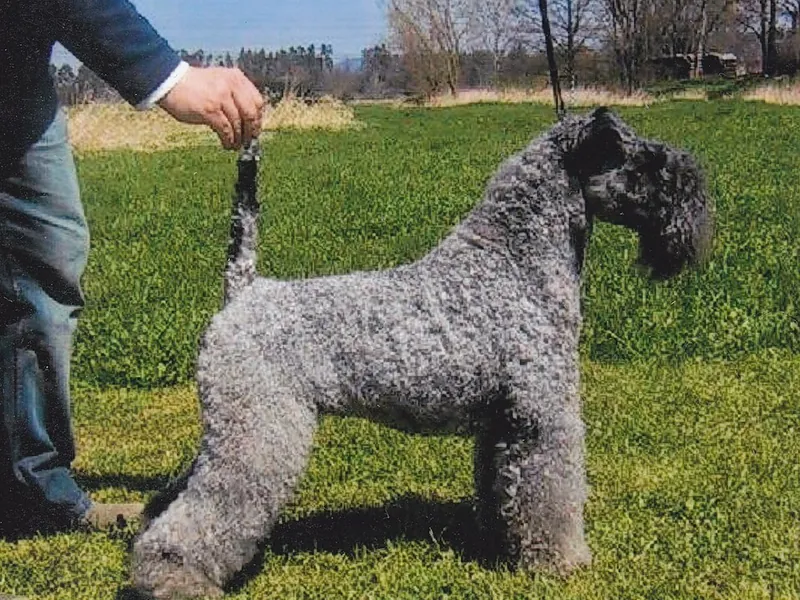
The Kerry Blue Terrier is a medium, well-muscled, long-legged terrier with a flat head, small V-shaped ears folded forward and a beard and fall over the eyes. It stands 18 to 19 inches at the shoulder and weighs about 33 to 40 lb. Under the AKC standard, males are slightly taller and heavier, while females are a little smaller and finer.
The coat is the breed's trademark: soft, dense and wavy, with no undercoat. It is neither wiry nor harsh, which sets the Kerry apart from most terriers. In the show ring the coat is trimmed to a clean outline with longer hair on the legs, beard and fall.
Puppies are born black, and the coat gradually clears to the adult color, usually by around 18 months. Any shade of blue-gray is accepted, from deep slate to light blue-gray, often with darker points on the muzzle, head, ears, tail and feet. Dogs older than 18 months should not still be solid black, and a small white patch on the chest is allowed.
Temperament and Personality
Kerry Blues are spirited, playful and deeply people oriented. Many are clownish at home and protective of their household, alert to anything unusual and quick to sound the alarm.
They are also strong-willed. A Kerry needs clear, consistent rules or it will make its own. Many are not tolerant of other dogs, especially of the same sex, and the terrier instinct makes small pets such as rodents a poor mix. Early socialization with dogs helps but does not always override this trait.
Inside the home, a well-exercised Kerry is usually calm and enjoys being close to its people, often following them from room to room.
Are Kerry Blue Terriers Good Family Dogs?
Kerry Blues can be very good family dogs in the right home. They are playful, affectionate and protective with their own people, and many are patient and fun-loving with respectful children.
The best family fits are active households with one dog and older kids. A Kerry's energy and terrier confidence can overwhelm toddlers, and the breed's frequent intolerance of other dogs makes multi-dog homes harder. Families also need to budget time or money for regular grooming. Teach children to give the dog space while it eats or rests, and involve them in training games.
Is the Kerry Blue Terrier Good for First-Time Owners?
The Kerry Blue is usually a better match for experienced owners. It is bright and loyal, but strong-willed, often reactive to other dogs and demanding in grooming.
A motivated first-timer can succeed with the right preparation. Choose a breeder who can match you with a steady puppy, start puppy classes early and set clear, consistent rules from day one. Plan for brushing several times a week and a professional groom every four to six weeks. Beginners who want a laid-back, low-maintenance dog will likely find a Kerry more work than expected.
Do Kerry Blue Terriers Bark a Lot?
Kerry Blues are alert and will bark to warn you, but most are not constant barkers. They tend to bark with a purpose: at visitors, unusual sounds or other dogs approaching their territory.
Barking increases when a Kerry is bored, under-exercised or left alone too long. Daily activity, training games and chew toys keep noise in check. Teach a quiet cue and reward calm behavior at doors and windows. If your Kerry barks at other dogs on walks, work with a trainer on calm passing, since this often stems from the breed's dog-to-dog intolerance rather than general noisiness.
Exercise and Training
Expect about an hour of daily activity, mixing walks with play and mental work. Kerry Blues are athletic and do well in obedience, agility, rally, earthdog and herding events.
Training should be firm, consistent and fun. Kerries learn quickly but get bored with repetition and test boundaries, especially during adolescence. Keep them on leash in unfenced areas because chasing small animals or confronting another dog can override recall.
Grooming and Shedding
The single coat is soft, dense and wavy and sheds very little, which is why the breed is often suggested for people with allergies. The tradeoff is high maintenance. Brush and comb down to the skin several times a week to prevent mats.
Plan on clipping and scissoring roughly every four to six weeks to keep the classic outline with its beard and fall of hair over the eyes. Many owners use a professional groomer. Check ears for hair buildup and keep the beard clean.
Feeding and Nutrition
Kerry Blues are active and usually hold their weight well, but the coat can hide gradual weight gain, so check ribs and waist by hand regularly.
- Feed puppies three to four meals a day, moving to two meals for adults.
- Keep the dog lean to protect knees and hips, since patellar luxation and hip dysplasia are reported in the breed.
- Clean the beard after meals. Food and water trapped in facial hair cause staining, odor and matting.
- Some Kerries have sensitive skin; if you notice persistent itching or ear problems, talk to your vet before changing foods on your own.
Use small treats in training, which suits the breed's quick, playful mind. Puzzle feeders and frozen food toys give mental work and reduce boredom-related habits. Fresh water should always be available, especially after active play.
| Adult weight | Less active | Typical adult | Very active |
|---|---|---|---|
| 33 lb | 750 kcal | 850 kcal | 1,070 kcal |
| 40 lb | 860 kcal | 980 kcal | 1,230 kcal |
Estimates use the resting energy formula veterinarians work with (70 × body weight in kg0.75) and standard activity factors. Use the feeding guide on your food as a starting point and adjust to body condition. Puppies, seniors, pregnant animals and pets that need to lose weight have different needs, so ask your vet.
Health and Lifespan
Kerry Blues generally live 12 to 15 years. Inherited conditions known in the breed include a progressive neurological disease (cerebellar abiotrophy), degenerative myelopathy, eye problems such as entropion and dry eye, bleeding disorders including von Willebrand disease and factor XI deficiency, hip dysplasia and kneecap luxation.
DNA tests exist for several of these, so ask breeders for results on both parents.
Kerry Blue Terrier Price and Cost of Ownership
Typical breeder price in the US$1,500 to $3,000
A Kerry Blue Terrier puppy from a reputable US breeder typically costs about $1,500 to $3,000. Prices vary by breeder, region and lines. Litters are infrequent, so expect to wait. Ask for DNA results for degenerative myelopathy, factor XI deficiency and other tests relevant to the breed.
The breed club and regional terrier rescues place adult Kerries from time to time.
Breed-specific ongoing costs include:
- Professional grooming every four to six weeks, a major recurring expense.
- Quality combs, brushes and possibly clippers if you groom at home.
- Insurance or savings for eye, joint and neurological conditions.
- Training to manage dog-to-dog behavior.
Is the Kerry Blue Terrier Right for You?
The Kerry Blue fits people who want a bright, loyal, low-shedding dog and are ready to invest in grooming and consistent training. It can adapt to a city home if exercised well.
- Good match: experienced or committed owners, one-dog homes, people interested in dog sports.
- Think twice: homes with small pets, multi-dog households, anyone who wants a low-grooming dog.
Kerry Blue Terrier Traits at a Glance
Kerry Blue Terrier FAQ
Are Kerry Blue Terriers hypoallergenic?
They shed very little and are often considered a good option for allergy sufferers, though no dog is completely allergen free.
Why are Kerry Blue puppies black?
Kerry Blues are born black and their coat gradually lightens to blue-gray, usually by around 18 months of age.
Are Kerry Blue Terriers good with other dogs?
Often not. Many are intolerant of other dogs, particularly of the same sex, so careful socialization and supervision are needed.
How big do Kerry Blue Terriers get?
They stand about 18 to 19 inches tall and weigh roughly 33 to 40 lb.
How often does a Kerry Blue need grooming?
Brush several times a week and plan for a clip roughly every four to six weeks.
How long do Kerry Blue Terriers live?
Typically 12 to 15 years.