Soft Coated Wheaten TerrierIreland's joyful, silky-coated farm terrier
The Soft Coated Wheaten Terrier is a medium-size Irish terrier with a silky, wheat-colored coat and a famously bouncy greeting. Affectionate and playful for life, it suits families who are ready for daily grooming and consistent training.
Why people love the Soft Coated Wheaten Terrier
- Affectionate, cheerful family dog that loves children
- Single coat sheds very little
- Usually less scrappy than many other terriers
- Adapts to houses and apartments with daily exercise
- Playful and active into old age
Things to consider
- Coat mats easily and needs near-daily brushing
- Professional trims every six to eight weeks
- Prone to protein-losing kidney and gut disease
- Enthusiastic jumping greetings need consistent training
- Chase instinct toward cats and squirrels outdoors
Is this breed right for you?
10 questions · live resultHistory and Origin
Wheatens worked on small Irish farms for well over two centuries as all-purpose dogs. They hunted rats, guarded homes and helped herd livestock. As a poor man's dog, the breed was valued for versatility rather than looks.
The Irish Kennel Club recognized it in 1937, reportedly on St. Patrick's Day. Wheatens reached the United States in the 1940s, and the AKC recognized the breed in 1973. Today it is a popular family companion in both the US and UK.
Size, Coat Types and Color Change
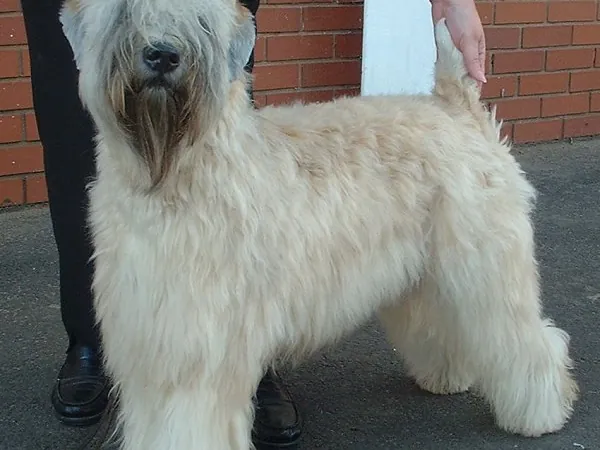
The Soft Coated Wheaten Terrier is a medium-sized, square, well-muscled terrier with a rectangular head, a full fall of hair over the eyes and a beard. Adults stand about 17 to 19 inches tall and weigh roughly 31 to 45 lb. Males are at the upper end of both ranges; females are typically an inch or so shorter and a few pounds lighter.
The defining feature is the single coat: soft, silky and gently waving, with no undercoat. There are two recognized coat types:
- Irish coat: thinner, silkier and wavier, lying closer to the body. It is easier to maintain.
- Heavy coat: fuller and thicker, often favored in American show rings. It needs more grooming.
Color: the only accepted adult color is wheaten, a shade from pale beige to warm golden. Puppies are born darker, often reddish brown with black masking, and lighten gradually, usually reaching their adult shade by about two years. Slight blue-gray shading on the ears and muzzle is allowed.
Temperament and Personality
Wheatens are cheerful, friendly and deeply devoted. Owners know the Wheaten greetin': jumping up with enthusiasm to say hello. They are usually excellent with children and keep their playful energy into old age.
They are still terriers. They can be stubborn, they chase squirrels and cats outdoors, and some are not tolerant of other dogs. They are slow to mature and can behave like puppies until two or three years old.
Wheatens are usually less scrappy than many other terriers, but individuals vary. Early, positive exposure to many dogs, people and situations helps raise a confident, friendly adult. They are people oriented and do not enjoy long hours alone; boredom can lead to barking, digging or chewing.
Are Wheaten Terriers Good for First-Time Owners?
Yes, Wheatens are a reasonable choice for first-time owners who are prepared for the grooming. Their friendly temperament makes them easier than many terriers.
The real commitment is the coat. A Wheaten needs brushing and combing to the skin almost daily and professional trims every six to eight weeks, or the coat will mat quickly. New owners also need to stay consistent with greetings, recall and chase behavior, because Wheatens stay puppyish until two or three years old. A puppy class from an early age and a groomer booked in advance help first-time owners succeed.
Do Wheaten Terriers Bark a Lot?
Wheatens are moderate barkers. They bark to announce visitors and exciting events, but they are usually not as noisy as many smaller terriers.
Barking often goes along with the famous Wheaten greetin', when excitement spills over into jumping and vocalizing at the door. Boredom and long hours alone can also cause nuisance barking. Daily exercise, puzzle toys and a calm routine around arrivals and departures help. Teach a quiet cue and reward calm behavior at windows. In apartments, early training to ignore hallway sounds makes life easier for everyone.
Can Wheaten Terriers Be Left Alone?
Most adult Wheatens can be left alone for about four hours, but the breed is very people-oriented and does not do well with long, regular absences.
Wheatens left too long may bark, dig or chew. Teach alone time gradually from puppyhood, starting with a few minutes and building up, and give the dog a safe space with a chew toy. A walk before you leave helps the dog settle. For full workdays, plan a midday dog walker, daycare or a family member who comes home. Signs of real distress, such as constant howling or destruction at exits, deserve help from a trainer.
Exercise and Training
Plan for about an hour of daily activity: brisk walks, play sessions, fetch and training. Wheatens enjoy agility, rally, obedience and even herding. Keep them on leash outside secure areas because the chase instinct is strong.
Training should start early and be consistent and upbeat. Work on polite greetings from puppyhood, rewarding four paws on the floor. Harsh methods make Wheatens stubborn; short, fun sessions work best.
Wheatens love games of chase and fetch and often do well in multi-activity classes for active terriers.
Grooming and Shedding
The single, soft, silky coat sheds very little, which is why the breed is often considered by allergy sufferers. But it mats easily. Brush and comb to the skin daily or at least several times a week, and plan on a professional trim every six to eight weeks.
Puppies are born darker, and the adult wheaten color develops gradually, often by about two years. Beards and leg furnishings collect dirt, so expect regular washing.
Feeding and Nutrition
Wheatens are prone to two inherited conditions that make nutrition and monitoring especially important: protein-losing nephropathy (PLN), affecting the kidneys, and protein-losing enteropathy (PLE), affecting the intestines. These need veterinary diagnosis and management; no food prevents or cures them. Any dietary changes for a dog with confirmed PLN or PLE should be made with your vet.
Watch for signs: unexplained weight loss, a change in appetite, vomiting, chronic soft stool or increased thirst are reasons to see your vet promptly. The parent club recommends regular urine and blood screening through adulthood.
Everyday feeding: feed a complete, balanced diet suited to a medium-sized, active dog, with two meals a day for adults. Some Wheatens have sensitive stomachs or skin, so make food changes gradually. Keep the dog lean, with a visible waist; weigh regularly because the coat hides body shape.
Wheatens are food-motivated, which helps with greeting training. Use small treats and subtract them from the daily ration. The beard collects food and water, so wipe it after meals.
| Adult weight | Less active | Typical adult | Very active |
|---|---|---|---|
| 31 lb | 710 kcal | 810 kcal | 1,020 kcal |
| 45 lb | 940 kcal | 1,080 kcal | 1,340 kcal |
Estimates use the resting energy formula veterinarians work with (70 × body weight in kg0.75) and standard activity factors. Use the feeding guide on your food as a starting point and adjust to body condition. Puppies, seniors, pregnant animals and pets that need to lose weight have different needs, so ask your vet.
Health and Lifespan
Wheatens usually live 12 to 14 years. The breed is prone to protein-losing nephropathy (PLN) and protein-losing enteropathy (PLE), conditions in which the kidneys or intestines leak protein. Addison's disease and renal dysplasia also occur.
A DNA test for a PLN risk variant is available, and the AKC parent club recommends regular screening such as urine and blood tests through adulthood. Ask breeders for parents' test results.
Watch for signs such as weight loss, vomiting, diarrhea, increased thirst or swelling, and see a vet promptly if they appear. Early detection of protein loss can help manage these conditions.
Soft Coated Wheaten Terrier Price and Cost of Ownership
Typical breeder price in the US$1,500 to $3,000
A Soft Coated Wheaten Terrier puppy from a reputable US breeder typically costs around $1,500 to $3,000. Prices vary by breeder, region and lines. A good breeder should share DNA results for the PLN risk variant and urine and blood screening for both parents.
Adoption through breed rescues is possible, and many Wheaten rescues also place Wheaten mixes.
Grooming is the major ongoing cost driver. Most owners book a professional groomer every six to eight weeks, and matted coats can incur extra fees. Routine urine and blood screening for protein loss adds to annual vet costs, and treating confirmed PLN, PLE or Addison's disease can be long-term and expensive. Pricing insurance early, before any symptoms appear, is especially sensible for this breed.
Is the Soft Coated Wheaten Terrier Right for You?
A Wheaten fits families who want a fun, affectionate, low-shedding dog and accept the grooming and patience it requires. It adapts to houses and apartments if well exercised.
- Good match: active families with children, allergy-conscious homes willing to groom.
- Think twice: homes with cats or small pets, multi-dog households with same-sex dogs, people wanting low maintenance.
Soft Coated Wheaten Terrier Traits at a Glance
Soft Coated Wheaten Terrier FAQ
Are Wheaten Terriers hypoallergenic?
They shed very little, which some allergy sufferers tolerate well, but no dog is completely allergen free.
Are Wheatens good family dogs?
Yes. They are affectionate, playful and usually excellent with children.
How big do Wheaten Terriers get?
They stand about 17 to 19 inches tall and weigh roughly 31 to 45 lb.
How often do Wheatens need grooming?
Brush daily or several times a week and schedule a trim every six to eight weeks.
Why do Wheatens jump on people?
The Wheaten greetin' is an enthusiastic breed trait. Consistent training can teach calmer greetings.
How long do Wheaten Terriers live?
Typically 12 to 14 years.