Cesky TerrierA calmer terrier from Czechoslovakia
The Cesky Terrier is a short-legged Czech terrier created in the mid-20th century to be a gentler, more sociable hunting terrier. With its silky, clipped coat and relaxed nature, it is one of the most family-friendly terriers, though its coat needs regular care.
Why people love the Cesky Terrier
- Calm, friendly and more relaxed than most terriers
- Often very good with children
- Low-shedding coat
- Moderate exercise needs suit apartments
- Usually less likely to pick fights with other dogs
Things to consider
- Coat needs brushing several times a week and regular clipping
- Prone to Scottie cramp
- Reserved with strangers if under-socialized
- Prey drive still present with small pets
- Rare; long waits for puppies
Is this breed right for you?
10 questions · live resultHistory and Origin
The breed was developed by Czech geneticist František Horák, starting in 1949, by crossing Scottish Terriers with Sealyham Terriers. He wanted a terrier that could work in burrows but was less aggressive and easier to work in packs.
The FCI recognized the Cesky Terrier in 1963. The AKC fully recognized it in the Terrier Group in 2011, and The Kennel Club also lists it in its Terrier Group. It is still rare but has a dedicated following.
Horák bred terriers for hunting in Bohemia and wanted a narrower-chested dog that could follow game into burrows, with drop ears and a more manageable temperament. In the 1980s a Sealyham Terrier was crossed in once more with approval of the Czech kennel club to widen the gene pool. The breed is also known as the Bohemian Terrier.
Size, Coat and Colors
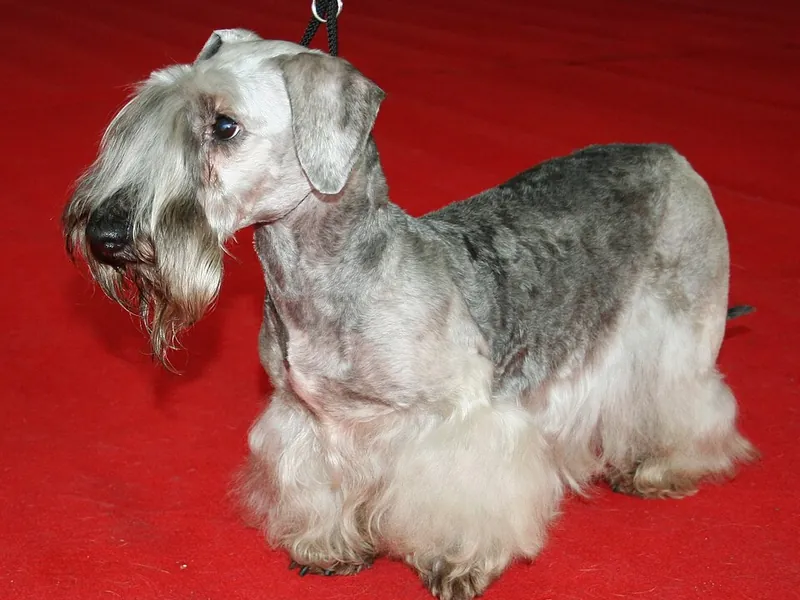
The Cesky Terrier is a small, sturdy, low-set terrier standing about 10 to 13 inches and weighing roughly 14 to 24 lb. Males are generally a little larger than females. The body is longer than tall, with a slightly arched loin, strong bone and short legs.
The head is long and blunt, with drop ears, deep-set eyes and full eyebrows and beard. The tail is long and carried low at rest.
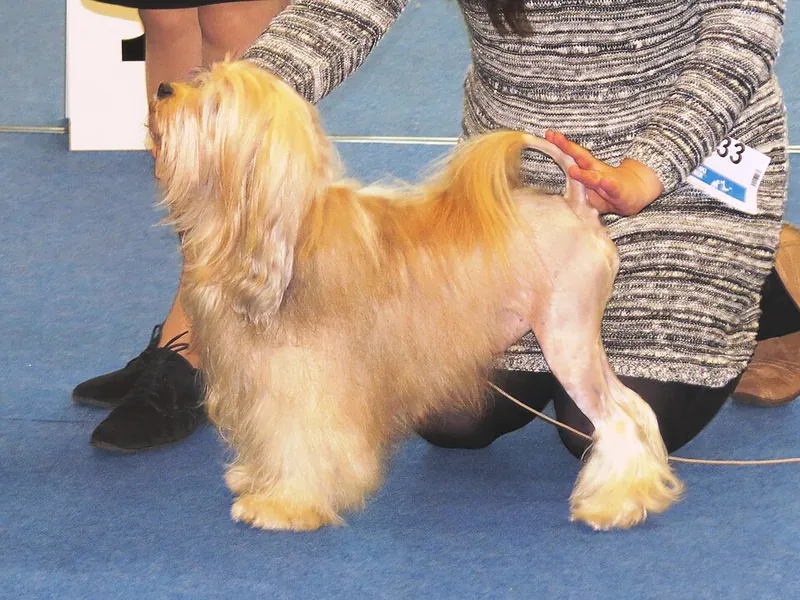
The coat is long, soft and silky with a slight wave, quite different from the harsh coats of most terriers. It is clipped rather than hand-stripped: the back, head and tail are trimmed short, while longer furnishings are left on the beard, eyebrows, legs and underside, creating a skirt.
The standard allows any shade of gray-blue, from charcoal to platinum, and light coffee brown. Yellow, gray or white markings are allowed on the head, beard, neck, chest, legs and around the vent. Puppies are born black or chocolate and lighten gradually, often reaching their adult shade by about two years.
Temperament and Personality
Ceskies are usually calm, friendly and affectionate. Many are excellent with children and adapt well to family life.
They can be reserved with strangers and will bark to announce visitors. Prey drive is still present, so supervision with small pets is wise.
Compared with most terriers, Ceskies are less excitable and less likely to pick fights with other dogs, which made them suitable for working in packs. Many are happy to curl up beside their owners after a walk and adapt well to calm family routines. Early socialization helps prevent wariness with strangers from turning into shyness.
Are Cesky Terriers Good for First-Time Owners?
Yes, the Cesky is one of the better terriers for first-time owners. It is calmer, more cooperative and less excitable than most terriers and adapts well to family routines.
The main learning curve is grooming. New owners should budget for regular professional clipping or learn to clip at home, and brush several times a week. Early socialization helps prevent reserved behavior with strangers. Finding a puppy may take patience, as the breed is rare. If you are ready for grooming and some waiting, a Cesky makes a pleasant, manageable first dog.
Are Cesky Terriers Good Apartment Dogs?
Yes, Ceskies generally adapt well to apartment living. Their exercise needs are moderate, they are usually calm indoors and they are not excessive barkers compared with many terriers.
Daily walks and some play are enough to keep them content. They will bark to announce visitors, so teaching a quiet cue helps in shared buildings. Because of the long back and short legs, avoid frequent stair climbing and jumping on and off high furniture, especially in young dogs. Ramps or steps for sofas and beds are a sensible addition.
Are Cesky Terriers Good with Other Dogs?
Generally yes. The breed was developed to work in packs, and Ceskies are less likely than most terriers to start fights with other dogs. Many enjoy canine company.
As with any terrier, early socialization with a range of dogs helps. Some Ceskies can be reserved or bossy with unfamiliar dogs, and same-sex dynamics vary. Introductions should be calm and gradual. With cats, Ceskies raised with them usually live peacefully, but small rodents and caged pets should be kept out of reach because of the breed's hunting background.
Exercise and Training
Moderate exercise needs: daily walks and play are enough.
- Positive training works well; they are more cooperative than many terriers.
- Earthdog and scent games use their natural instincts.
- Recall needs practice around wildlife.
They adapt well to apartments with sufficient walks.
Puppies benefit from short, frequent training sessions and plenty of positive exposure to new places. Because the breed has a long back and short legs, avoid encouraging repeated jumping on and off high furniture, especially in young dogs.
Grooming and Shedding
The coat is long, soft and silky, usually gray-blue or light coffee color. Unlike many terriers, it is clipped rather than hand-stripped.
Brush several times a week to prevent mats, and clip every six to eight weeks, leaving longer furnishings on the beard, eyebrows and legs. Shedding is low, but the breed is not truly hypoallergenic.
Puppies are born black and gradually lighten to gray-blue, usually by about two years of age, while brown puppies lighten to a coffee shade. Introduce clippers, brushing and nail trims early so grooming becomes routine. Many owners learn to clip at home; others book a groomer familiar with the breed pattern.
Feeding and Nutrition
Ceskies are sturdy small dogs that can gain weight easily, especially if exercise is limited. Feed a complete diet sized for small or medium breeds in two measured meals a day, and adjust portions to body condition.
Keeping a Cesky lean is especially important for its long back and short legs. Extra weight increases strain on the spine and knees, where patellar luxation is reported in the breed. You should be able to feel the ribs easily under the coat, which can hide weight gain; check by hand, not by eye.
Puppies benefit from three or four small meals a day, moving to two meals as adults.
Food can become stuck in the beard, so wipe it after meals to prevent staining and odor. Dental care is important, so brush teeth regularly. Use small treats or part of the daily kibble for training, and count them toward the daily total.
| Adult weight | Less active | Typical adult | Very active |
|---|---|---|---|
| 14 lb | 390 kcal | 450 kcal | 560 kcal |
| 19 lb | 490 kcal | 560 kcal | 700 kcal |
| 24 lb | 590 kcal | 670 kcal | 840 kcal |
Estimates use the resting energy formula veterinarians work with (70 × body weight in kg0.75) and standard activity factors. Use the feeding guide on your food as a starting point and adjust to body condition. Puppies, seniors, pregnant animals and pets that need to lose weight have different needs, so ask your vet.
Health and Lifespan
Ceskies typically live about 12 to 15 years. Health concerns noted by the AKC include Scottie cramp, a neurological condition causing episodes of muscle stiffness, as well as patellar luxation, heart problems, progressive retinal atrophy and cataracts.
The gene pool is small. Choose breeders who screen for known conditions and keep dogs lean to protect the long back.
Cesky Terrier Price and Cost of Ownership
Typical breeder price in the US$1,500 to $3,000
A Cesky Terrier puppy from a reputable US breeder typically costs about $1,500 to $3,000. The breed is rare, so expect waiting lists and possibly travel. Prices vary by breeder, region and lines. Ask breeders about health screening and how they manage Scottie cramp in their lines.
Rescue Ceskies are uncommon, but breed clubs sometimes help rehome adult dogs.
Grooming is the main ongoing cost. Most Ceskies need clipping every six to eight weeks, either by a professional familiar with the breed pattern or by owners who learn to clip at home. Pet insurance is worth considering for back and knee problems. Food costs are low for a small dog. Ramps or steps for furniture are a small but useful expense.
Is the Cesky Terrier Right for You?
The Cesky is a good choice for many households.
- Good match: families, apartment dwellers, first-time terrier owners.
- Less ideal: owners unwilling to groom, homes with pet rodents.
A Cesky is a good fit for owners who want a sturdy, small dog with a calmer temperament than most terriers. Budget time or money for grooming every few weeks, and look for breeders who are open about health testing and Scottie cramp in their lines.
Cesky Terrier Traits at a Glance
Cesky Terrier FAQ
How big is a Cesky Terrier?
It stands about 10 to 13 inches tall and weighs roughly 14 to 24 lb.
Are Cesky Terriers good with kids?
Yes, they are generally calm and very good with children.
Do Cesky Terriers shed?
They shed little, but the coat needs regular brushing and clipping.
How long do Cesky Terriers live?
Typically about 12 to 15 years.
Are Cesky Terriers hypoallergenic?
No dog is fully hypoallergenic, but their low shedding may suit some allergy sufferers.
What is Scottie cramp?
A neurological condition causing temporary muscle stiffness, seen in Cesky Terriers and Scottish Terriers.
Do Cesky Terriers bark a lot?
They are moderate barkers, usually alerting to visitors and unusual noises rather than barking constantly.