Rough CollieScotland's gentle, long-coated sheepdog
The Rough Collie is a graceful, long-coated sheepdog from Scotland and one of the best-known family dogs in the world. Gentle, sensitive and devoted, it suits families who want an affectionate, easily trained companion and do not mind brushing and barking.
Why people love the Rough Collie
- Gentle, devoted family dog that is usually excellent with children
- Intelligent and eager to please, so training goes smoothly
- Low prey drive; tends to stay close outdoors
- Moderate energy level for a herding breed
- Sensitive to its owner's moods and very loyal
Things to consider
- Long double coat sheds heavily and needs regular brushing
- Many are vocal barkers, especially when bored
- MDR1 mutation causes sensitivity to certain medications
- Dislikes long periods alone
- Sensitive nature reacts poorly to harsh handling or tense homes
Is this breed right for you?
10 questions · live resultHistory and Origin
Collies worked for centuries as sheepdogs in Scotland and northern England. The Rough Collie developed from these working dogs in the 19th century. Queen Victoria encountered collies at Balmoral in the 1860s and helped make them fashionable, after which breeders refined their elegant appearance for the show ring.
Albert Payson Terhune's stories and later the Lassie films and TV series made the breed a household name in America. The AKC treats the Collie as a single breed with rough and smooth varieties, while The Kennel Club in the UK registers the Rough Collie as a separate breed.
Size, Coat and Colors
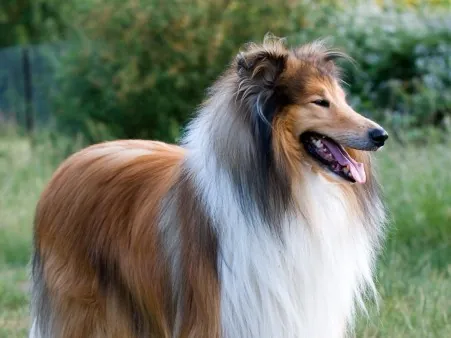
The Rough Collie is a large, lithe herding dog with a long, wedge-shaped head and an abundant mane and frill. Adults stand 20 to 24 inches at the shoulder and weigh about 51 to 75 lb. In the AKC standard, males are 24 to 26 inches and 60 to 75 lb, females 22 to 24 inches and 50 to 65 lb, while UK dogs are generally a little smaller. Males usually have a fuller mane and a stronger head.
The head should be smooth and clean, with almond-shaped eyes giving a sweet, intelligent expression. Ears are carried semi-erect with the tips folding forward.
The coat is a dense double coat: a harsh, straight outer coat over a soft, close undercoat. It forms a heavy mane and frill around the neck, feathering on the legs and a full tail. The Smooth Collie has the same body with a short coat and is a separate variety in the US.
Recognized colors are:
- Sable and white, from light gold to deep mahogany
- Tricolor (black with tan and white markings)
- Blue merle, a marbled silver-gray with black
- White, predominantly white with colored head markings (AKC only)
Temperament and Personality
Rough Collies are gentle, loyal and deeply attached to their families. They are usually excellent with children and friendly with other pets. Their hunting instinct is low, and they tend to stay close to their people outdoors.
They are sensitive and perceptive, responding to their owners' moods. Many are reserved with strangers. The biggest downside for some owners is barking: Collies can be very vocal, especially when bored or excited.
Collies are typically gentle with small children and can be protective in a watchful way, often positioning themselves between their family and newcomers. They are sensitive to tension at home and do best in calm, consistent households.
Are Rough Collies Easy to Train?
Yes. Rough Collies are intelligent, attentive and eager to please, and they often pick up house manners and basic cues quickly. They tend to be easier than more intense herding breeds like the Border Collie.
Their sensitivity is the key to success. Collies respond best to calm voices, praise and food rewards, while raised voices or physical corrections can make them anxious or shut down. Keep sessions varied, as a bored Collie may invent its own activities, such as barking or herding children. Many excel in obedience, rally, agility and therapy work, which also provide the mental stimulation the breed needs.
Are Rough Collies Good for First-Time Owners?
Yes, they are one of the more suitable large herding breeds for first-time owners. They are gentle, generally friendly with other pets and people, and usually responsive to positive training.
New owners should be realistic about two things. First, grooming: the full coat needs thorough brushing at least once or twice a week and daily attention during sheds, or mats form behind the ears and in the armpits. Second, barking: Collies can be vocal, so teaching a quiet cue early is worthwhile. A first-time owner who is prepared for coat care and wants an affectionate family dog will usually find the Collie rewarding.
Can Rough Collies Be Left Alone?
A well-adjusted adult Collie can usually cope with three to four hours alone, but the breed is happiest with company. Collies form close bonds with their families and may bark, pace or chew when lonely or bored.
Help your Collie adjust by:
- Practicing short absences from puppyhood
- Providing a walk and a training game before you leave
- Leaving a food puzzle or long-lasting chew
- Arranging a dog walker or friend for longer days
Because barking is the most common symptom of loneliness, Collies in apartments or homes with close neighbors need special attention to time alone. Households with someone home much of the day suit the breed best.
Exercise and Training
Collies need about an hour of daily exercise, including walks and games. They enjoy herding, obedience, agility, rally and tracking. Mental work is as important as physical activity.
Training is usually easy because Collies are intelligent and eager to please. Gentle, reward-based methods work best; harsh corrections can make them anxious. Teaching a quiet cue early helps manage barking.
Despite their herding background, Rough Collies usually have a moderate energy level compared with Border Collies and settle well indoors once exercised. Many enjoy therapy dog work thanks to their gentle nature.
Grooming and Shedding
The long, dense double coat is the breed's crowning glory and requires work. Brush thoroughly at least once or twice a week, reaching the undercoat, and pay attention to mat-prone areas behind ears and in the armpits. Heavy shedding happens seasonally, when daily brushing helps.
Colors include sable and white, tricolor, blue merle and white. Do not shave a Collie's coat; it protects against heat and cold.
Feeding and Nutrition
A Rough Collie's heavy coat makes weight gain hard to spot. Run your hands along the ribs and waist every few weeks instead of relying on looks; you should feel ribs easily under a thin layer of padding.
Collies are deep-chested and bloat is listed among the breed's risks. Reduce it by feeding two meals a day rather than one, avoiding vigorous exercise for about an hour around meals and using a slow-feeder bowl for fast eaters. Know the warning signs: restlessness, retching without producing anything and a tight belly need an emergency vet.
- Feed puppies a diet suited to large breeds to support steady growth.
- A complete, balanced diet supports coat quality; dull coat or flaky skin is worth a vet check rather than guesswork.
- Use small treats during training, which Collies love, and count them in the daily ration.
Because of the MDR1 mutation, never give medications, including some dewormers and livestock products, without a vet who knows your dog's MDR1 status. Keep animal feeds and medicated products for livestock out of reach.
| Adult weight | Less active | Typical adult | Very active |
|---|---|---|---|
| 51 lb | 1,030 kcal | 1,180 kcal | 1,480 kcal |
| 75 lb | 1,380 kcal | 1,580 kcal | 1,970 kcal |
Estimates use the resting energy formula veterinarians work with (70 × body weight in kg0.75) and standard activity factors. Use the feeding guide on your food as a starting point and adjust to body condition. Puppies, seniors, pregnant animals and pets that need to lose weight have different needs, so ask your vet.
Health and Lifespan
Rough Collies typically live 12 to 14 years. Many carry the MDR1 gene mutation, which makes them sensitive to certain drugs including some antiparasitic medications. A simple DNA test identifies affected dogs, and vets should know the result.
Other concerns include Collie eye anomaly, progressive retinal atrophy, hip dysplasia, dermatomyositis (an inflammatory skin and muscle disease) and bloat. Merle-to-merle breeding is avoided because it increases the risk of deafness and eye defects. Choose breeders who DNA test and examine eyes.
Rough Collie Price and Cost of Ownership
Typical breeder price in the US$1,200 to $2,500
A Rough Collie puppy from a reputable US breeder typically costs about $1,200 to $2,500. Prices vary by breeder, region and lines, and established show kennels may charge more. Ask for MDR1 DNA results, eye exams for Collie eye anomaly and PRA, and hip evaluations.
Collie rescue groups across the US regularly rehome adult Collies, including older dogs that make calm, easy companions.
Breed-specific ongoing costs include:
- Professional grooming or quality brushes and an undercoat rake
- MDR1 testing if not done by the breeder
- Medication choices adjusted for MDR1 status
- Insurance covering eye disease, hip dysplasia and dermatomyositis
- Training or dog sport classes for mental stimulation
Is the Rough Collie Right for You?
A Rough Collie is a classic family dog for homes with children and other pets, and it adapts to suburban life with daily exercise. It wants to be with its people and dislikes long periods alone.
- Good match: families, first-time owners willing to groom, multi-pet homes.
- Think twice: noise-sensitive neighbors, owners who dislike dog hair, very long workdays.
Rough Collie Traits at a Glance
Rough Collie FAQ
Are Rough Collies good family dogs?
Yes. They are gentle, loyal and usually excellent with children and other pets.
Do Rough Collies shed a lot?
Yes. They shed year round and heavily during seasonal coat changes, so regular brushing is essential.
How big do Rough Collies get?
They stand about 20 to 24 inches tall and weigh roughly 51 to 75 lb.
Do Rough Collies bark a lot?
Many do. Collies tend to be vocal, so early training on quiet behavior helps.
What is the MDR1 gene in Collies?
It is a mutation that makes dogs sensitive to some medications. A DNA test tells you whether your Collie is affected.
How long do Rough Collies live?
Typically 12 to 14 years.