Old English SheepdogShaggy English drover with clownish charm
The Old English Sheepdog is a large, shaggy herding dog with a rolling gait and a playful, affectionate personality. It is a devoted family companion, but its dense coat requires a serious grooming commitment and it needs plenty of exercise and company.
Why people love the Old English Sheepdog
- Affectionate, playful and gentle with children
- Distinctive, loud bark makes it a good watchdog
- Sociable with people and usually other dogs
- Rolling, bear-like gait and comical personality
- Adaptable herding dog that enjoys many dog sports
Things to consider
- Long double coat needs brushing several times weekly
- Professional grooming is a regular expense
- Struggles when left alone for long periods
- Heat-sensitive because of the dense coat
- May herd children or pets by bumping and circling
Is this breed right for you?
10 questions · live resultHistory and Origin
The Old English Sheepdog developed in western England, probably in the 1700s or early 1800s, as a drover's dog that moved cattle and sheep to market. Its exact ancestry is unclear. Working drovers' dogs were exempt from a dog tax, and docked tails marked them, which is one theory behind the nickname Bobtail.
The breed entered shows in the late 1800s, and the AKC recognized it in 1888. The Kennel Club places it in the Pastoral group. Tail docking is now banned or restricted in the UK and many other countries, so many Old English Sheepdogs have natural tails.
The breed became a familiar face in advertising and film in the 20th century, which boosted demand. Registrations later fell sharply, and The Kennel Club has at times placed it on its watch list of declining native breeds.
Size, Coat and Colors
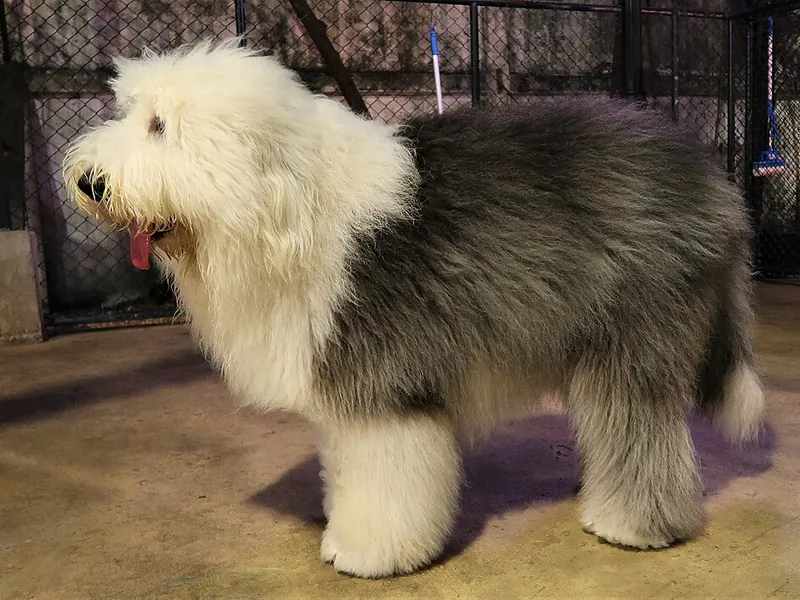
The Old English Sheepdog is a large, thickset, square dog with a pear-shaped outline: the topline rises from shoulder to loin, giving the body its distinctive look from the side. Adults weigh 60 to 100 lb. The AKC sets a minimum height of 22 inches for males and 21 inches for females, with no upper limit.
Males are larger and heavier-boned, while females are slightly finer but still substantial.
The double coat has a hard, shaggy outer coat that is never straight or silky, over a dense, waterproof undercoat. Hair covers the face and eyes in a full show coat. Accepted colors include:
- Any shade of gray
- Grizzle
- Blue or blue merle
Colors may come with or without white markings, typically on the head, neck, chest and forelegs. Puppies are born black and white and lighten as the adult coat comes in, often over two years or more. Brown or fawn coats are faults. Tails may be docked in the US; elsewhere many dogs keep a natural, plumed tail.
Temperament and Personality
Old English Sheepdogs are affectionate, sociable and often comical. They are typically gentle with children and protective in a watchful way, and they have a loud, distinctive bark.
They thrive on company and can struggle when left alone, which may lead to barking or destructive habits. Some herd children or pets by bumping or circling. They are intelligent but can be independent.
Their gait is distinctive: a rolling amble at a walk, often called a bear-like shuffle, that turns into a smooth, ground-covering trot when they move out.
Do Old English Sheepdogs Bark a Lot?
Old English Sheepdogs bark moderately, but their bark is famously loud and deep, often described as a "pot-casse" ring. Most use it to alert their family to visitors or unusual noises.
Barking increases with boredom and loneliness. An OES left alone for long periods may bark repeatedly, which can cause trouble with neighbors. Regular exercise, time with family, and teaching a quiet cue early keep it under control. Their alertness makes them good watchdogs, but they are usually friendly once someone is welcomed in.
Are Old English Sheepdogs Hypoallergenic?
No. No dog is truly hypoallergenic, and the Old English Sheepdog has a heavy double coat that holds a lot of dander. Loose hair stays trapped in the coat until brushed out, so it may seem like they shed little, but grooming releases large amounts of hair and dander.
People with dog allergies often react to this breed. If you are sensitive, spend extended time with adult dogs first. Keeping the coat in a short clip, grooming outdoors or by a professional, and regular cleaning at home can reduce exposure.
Are Old English Sheepdogs Good for First-Time Owners?
An Old English Sheepdog can suit a first-time owner who is ready for its size and coat. The breed is friendly and usually biddable, but it is also large, strong and a little independent.
Key questions to ask yourself:
- Can you spend 30 minutes several times a week on brushing, or pay for regular grooming?
- Do you have time for up to two hours of exercise daily?
- Is someone home for much of the day?
- Can you manage a strong adolescent dog on a leash?
If the answer is yes, puppy classes and a good breeder's guidance make the transition much easier.
Exercise and Training
Despite their teddy-bear look, these are working dogs. UK vets recommend up to two hours of exercise daily for adults, combining walks, play and activities such as herding, agility or obedience.
- Start training and socialization early; they are large and strong as adults.
- Use reward-based methods and keep sessions engaging.
- Avoid strenuous exercise in hot weather because of their dense coat.
- Redirect herding behavior toward toys and games.
Many Old English Sheepdogs enjoy herding trials, and their long stride makes them good companions on country walks.
Grooming and Shedding
Grooming is a major commitment. The long, shaggy double coat mats easily without thorough brushing down to the skin several times a week. Many owners opt for a shorter clip by a professional groomer to reduce workload.
Keep the hair around the eyes, mouth and rear clean and trimmed. Shedding is moderate, but it builds up in the undercoat, which is why regular brushing is essential.
Feeding and Nutrition
The OES coat hides body shape well, so feel through the coat to the ribs and waist rather than judging by eye. A shaggy dog can easily become overweight without anyone noticing.
Puppies grow into a large frame. A large-breed puppy diet with controlled calcium supports joint development, and portions should keep puppies lean. Hip dysplasia occurs in the breed, and extra weight makes it worse.
Bloat is a risk in this deep-chested breed:
- Feed two or three meals daily rather than one
- Avoid vigorous play after eating
- Monitor gulping and use a slow feeder if needed
Food and water easily collect in the facial hair. Wipe or rinse the beard after meals, or keep the face trimmed short, to prevent odor and skin irritation. Hypothyroidism, reported in the breed, can cause weight gain, so ask your vet if the dog gains despite controlled meals.
| Adult weight | Less active | Typical adult | Very active |
|---|---|---|---|
| 60 lb | 1,170 kcal | 1,330 kcal | 1,670 kcal |
| 80 lb | 1,450 kcal | 1,660 kcal | 2,070 kcal |
| 100 lb | 1,710 kcal | 1,960 kcal | 2,450 kcal |
Estimates use the resting energy formula veterinarians work with (70 × body weight in kg0.75) and standard activity factors. Use the feeding guide on your food as a starting point and adjust to body condition. Puppies, seniors, pregnant animals and pets that need to lose weight have different needs, so ask your vet.
Health and Lifespan
Old English Sheepdogs typically live 10 to 12 years. Health concerns include hip dysplasia, bloat, deafness, inherited cataracts and primary ciliary dyskinesia (PCD), a respiratory condition for which a DNA test exists. Without regular grooming, the coat can mat and trap moisture, causing skin problems.
Ask breeders for hip scores, eye examinations, hearing tests and PCD DNA results.
Old English Sheepdog Price and Cost of Ownership
Typical breeder price in the US$1,500 to $3,000
An Old English Sheepdog puppy from a reputable US breeder typically costs about $1,500 to $3,000. Prices vary by breeder, region and lines, and the breed is now relatively uncommon, so waiting lists are normal. Ask for hip scores, eye exams, hearing tests and PCD and MDR1 DNA results.
Breed rescues place adult dogs, often surrendered because of grooming demands.
Grooming is the dominant ongoing cost. Many owners book a professional groom every six to eight weeks, and a full coat takes longer and costs more than a short pet clip. Factor in:
- Quality slicker brushes, pin brushes and combs
- Food for a large dog
- Insurance covering hip dysplasia and bloat
Air conditioning matters in hot climates.
Is the Old English Sheepdog Right for You?
The Old English Sheepdog suits active families with time for daily exercise, grooming and companionship, and space for a large dog.
It is less suited to apartments, owners away for long hours, or people who want a low-maintenance coat.
Budget for professional grooming, which is a regular cost with this breed even if you brush at home.
Old English Sheepdog Traits at a Glance
Old English Sheepdog FAQ
Are Old English Sheepdogs good family dogs?
Yes. They are typically affectionate, playful and gentle with children.
How big do Old English Sheepdogs get?
They stand at least 21 to 22 inches tall and usually weigh 60 to 100 lb, with males larger.
How much grooming does an Old English Sheepdog need?
Thorough brushing several times a week, plus regular trims. Many owners use a professional groomer.
Do Old English Sheepdogs shed?
Moderately, but loose hair stays trapped in the coat unless it is brushed out.
How much exercise does an Old English Sheepdog need?
UK vets recommend up to two hours daily for healthy adults.
How long do Old English Sheepdogs live?
Most live 10 to 12 years.