Portuguese Water DogEnergetic, curly-coated fisherman's helper
The Portuguese Water Dog is a robust, athletic working dog bred to help fishermen along the Portuguese coast. It is intelligent, affectionate and full of energy, with a low-shedding coat that needs serious grooming.
Why people love the Portuguese Water Dog
- Low-shedding coat leaves little hair around the house
- Loves water and makes a great swimming partner
- Affectionate, playful and usually good with children
- Quick learner that enjoys dog sports and trick training
- Sturdy, medium size suits active families
Things to consider
- Needs one to two hours of vigorous exercise daily
- Regular professional clipping adds steady cost
- Mouthy and chewy as a puppy
- Struggles when left alone for long hours
- Can be headstrong without consistent training
Is this breed right for you?
10 questions · live resultHistory and Origin
The Portuguese Water Dog worked alongside fishermen in the Algarve region of Portugal, herding fish into nets, retrieving lost gear and carrying messages between boats and shore. As fishing modernized in the 20th century, the breed nearly disappeared.
Vasco Bensaude, a Portuguese shipping magnate, revived the breed in the 1930s. The AKC recognized it in 1983, and it gained wide attention when a Portie lived in the White House during the Obama administration. Both the AKC and The Kennel Club list it in the Working group.
Fishermen valued the dogs so highly that they were often counted as crew members. Strong swimmers with webbed feet, they could dive to retrieve broken nets and carry messages between boats.
Size, Coat Types and Clips
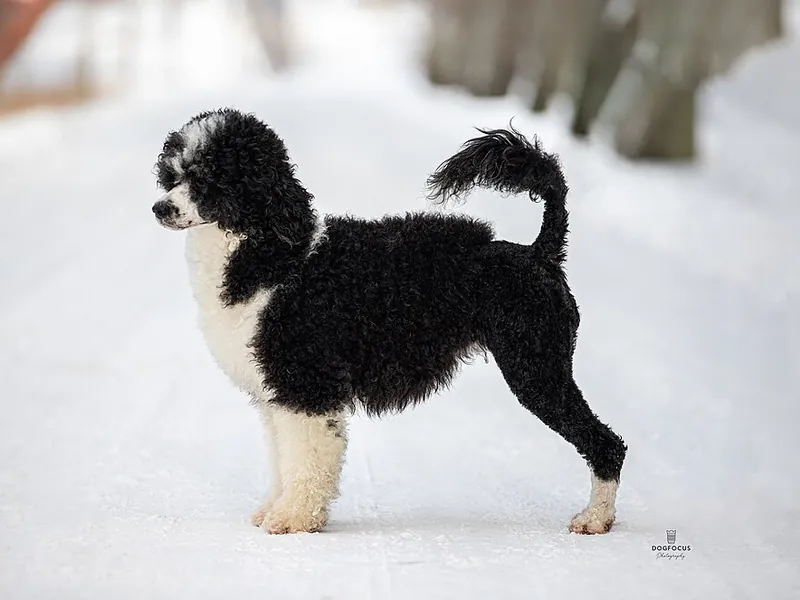
The Portuguese Water Dog is a robust, medium-sized, slightly longer-than-tall working dog with a broad head, strong neck and muscular hindquarters built for swimming. Adults stand about 17 to 22 inches and weigh roughly 35 to 55 lb. Males are clearly larger and heavier than females and tend to sit at the upper end of both ranges. Webbed feet and a thick, tapering tail that acts as a rudder are breed hallmarks.
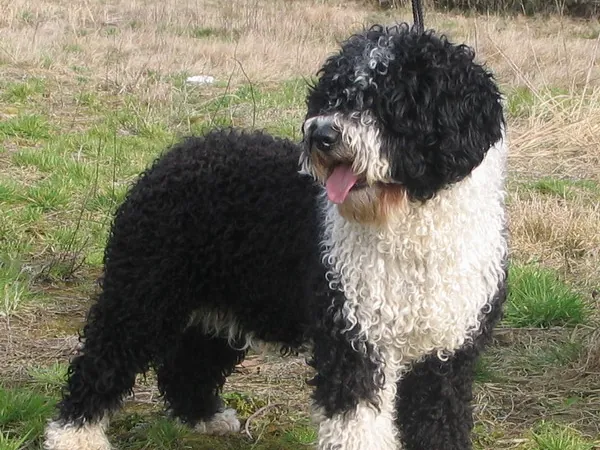
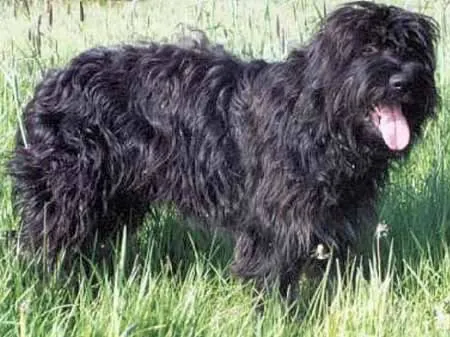
There are two coat types, both single coats without an undercoat. The curly coat forms compact, cylindrical curls, while the wavy coat falls in gentle waves with a slight sheen. Both can appear in the same litter.
Accepted colors are black, white and shades of brown, either solid or combined with white. Black with white markings is most common. Two clips are allowed in the show ring: the lion clip, with the hindquarters and muzzle shaved, and the retriever clip, an even trim about 1 inch long that many pet owners prefer.
Temperament and Personality
Porties are energetic, affectionate and eager to please. They are typically good with children and alert, making good watchdogs.
They can be independent and strong-willed; German sources describe them as more headstrong than US and UK sources suggest. They thrive on company and do not cope well alone.
Porties tend to mouth and chew as puppies, and many enjoy carrying objects around the house. They are typically playful with other dogs and sociable with visitors once introduced, and they bond closely with the whole family.
Are Portuguese Water Dogs Good for First-Time Owners?
They can be, but only for first-time owners who are genuinely active and ready to train. Porties are smart, affectionate and eager to work with people, which makes them rewarding to teach.
The challenge is energy and persistence. A young Portie needs one to two hours of exercise a day, plenty of mental work and consistent rules, or it will chew, mouth and invent its own games. Some individuals are quite headstrong. Novices should join a puppy class, plan for regular grooming appointments and budget time for activities like swimming, fetch or agility. If your lifestyle is quieter, a less demanding breed may be a better first dog.
Do Portuguese Water Dogs Bark a Lot?
Porties are moderately vocal. They bark to alert you to visitors or unusual sounds, and many have a distinctive, multi-tone voice, but they are not usually nonstop barkers when their needs are met.
Excess barking almost always comes from boredom or loneliness. A Portie that gets a long walk, a swim or a game of fetch plus some training is far quieter than one left in the yard all day. Teach a quiet cue early, reward calm behavior and avoid leaving the dog alone for long stretches. Fishermen once relied on their dogs' voices in fog, so some barking is simply part of the breed.
Can Portuguese Water Dogs Be Left Alone?
Only for moderate periods. Porties are very people-oriented, and long hours alone often lead to barking, chewing and frustration. A few hours is usually fine for a well-exercised adult, but a full workday is too long for most.
Start alone-time training in puppyhood with short absences and build up gradually. A long walk or swim before you leave, a food puzzle and a safe chew help a lot. Crate training can protect your belongings while the puppy learns. If you work long days away from home, plan for a dog walker, daycare or a family member who can break up the day.
Exercise and Training
Porties need at least an hour or two of vigorous exercise daily, ideally including swimming. They excel at water work, agility and obedience.
- Use consistent, reward-based training.
- Provide mental work to keep them busy.
- Introduce water gradually and safely.
- Build alone-time tolerance from puppyhood.
Porties excel at water trials, dock diving, agility and obedience. Without enough work, they may bark, chew or invent their own games. A family that hikes, swims or jogs together is an ideal match.
Always supervise swimming and use a canine life jacket in open water or strong currents.
Grooming and Shedding
The coat may be curly or wavy and sheds little. It needs brushing several times a week and clipping every six to eight weeks, often in a lion or retriever clip. Low shedding may suit some allergy sufferers, but no dog is fully hypoallergenic.
Coat colors include black, brown and white, alone or in combination. The lion clip shaves the hindquarters and muzzle, a style once used to keep dogs warm at the chest while swimming; the retriever clip is an even, short trim popular with pet owners. Rinse after swimming in salt or chlorinated water and dry the ears well.
Feeding and Nutrition
Porties are athletic dogs, and their food needs can change a lot with activity. A dog that swims and hikes several times a week needs more than one that mostly walks around the neighborhood, so adjust portions to body condition rather than following the bag alone. You should be able to feel the ribs easily under the curly coat.
Puppies do best on three or four meals a day, moving to two meals as adults. A complete puppy food for medium-sized breeds supports steady growth. Avoid long, forced runs before growth plates close, and keep puppies lean to protect their hips.
Allergies are reported in the breed. If your Portie has chronic itching, ear infections or loose stools, work with your vet on an elimination trial rather than switching foods at random. After long swims, offer fresh water so the dog does not drink much salt or pool water. Porties are food-motivated, so treats for training should be small and counted in the daily ration.
| Adult weight | Less active | Typical adult | Very active |
|---|---|---|---|
| 35 lb | 780 kcal | 890 kcal | 1,110 kcal |
| 55 lb | 1,090 kcal | 1,250 kcal | 1,560 kcal |
Estimates use the resting energy formula veterinarians work with (70 × body weight in kg0.75) and standard activity factors. Use the feeding guide on your food as a starting point and adjust to body condition. Puppies, seniors, pregnant animals and pets that need to lose weight have different needs, so ask your vet.
Health and Lifespan
Porties typically live 11 to 13 years. Conditions include hip dysplasia and progressive retinal atrophy. Breed clubs also encourage DNA testing for GM1 storage disease and juvenile dilated cardiomyopathy.
Ask breeders for hip scores, eye exams and DNA test results.
Addison's disease and allergies are also reported in the breed. A responsible breeder will discuss family health history openly.
Portuguese Water Dog Price and Cost of Ownership
Typical breeder price in the US$2,500 to $4,000
A Portuguese Water Dog puppy from a reputable US breeder typically costs about $2,500 to $4,000. Prices vary by breeder, region and lines, and many breeders keep waiting lists. Responsible breeders test for hip dysplasia, eye diseases, GM1 storage disease and juvenile dilated cardiomyopathy, which is reflected in the price. Porties occasionally appear in breed rescues, though less often than more common breeds.
Grooming is the largest ongoing cost. Most pet Porties visit a groomer every six to eight weeks for a retriever or lion clip, and the coat needs brushing several times a week in between. Learning to clip at home saves money but takes practice.
Other cost drivers include dog sports or swim access, sturdy chew toys for a mouthy youngster and insurance that covers allergies and Addison's disease.
Is the Portuguese Water Dog Right for You?
The Portie suits active families who enjoy outdoor activities, especially water, and can commit to grooming.
It is less suited to owners away all day or those unwilling to manage coat care.
Plan for the cost of regular professional grooming and access to safe swimming spots. Porties do best when included in family activities rather than left alone for long hours.
Portuguese Water Dog Traits at a Glance
Portuguese Water Dog FAQ
Are Portuguese Water Dogs hypoallergenic?
They shed little and may suit some allergy sufferers, but no dog is fully hypoallergenic.
How big do Portuguese Water Dogs get?
They stand about 17 to 22 inches tall and weigh roughly 35 to 55 lb.
Are Portuguese Water Dogs good family dogs?
Yes. They are typically affectionate and good with children.
How much exercise does a Portuguese Water Dog need?
At least one to two hours a day, ideally including swimming.
How often do Porties need grooming?
Brush several times a week and clip every six to eight weeks.
How long do Portuguese Water Dogs live?
Most live 11 to 13 years.