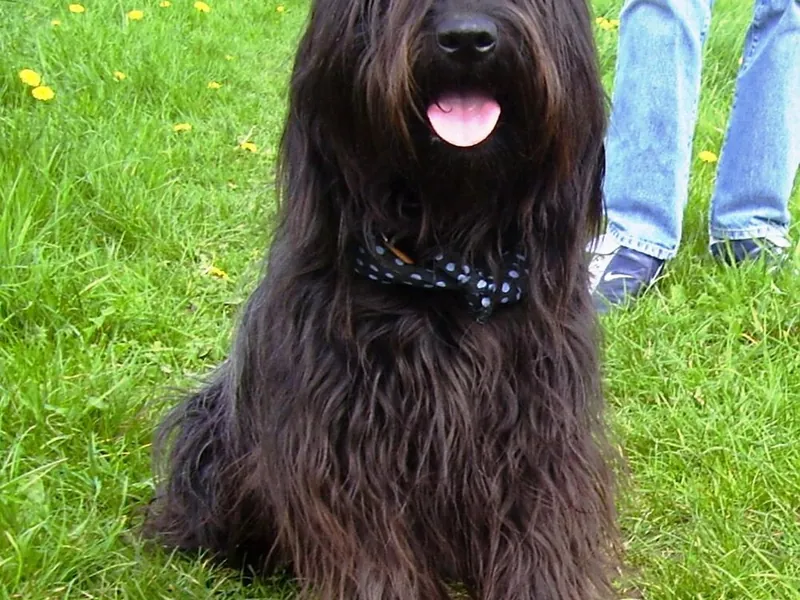
GoldendoodleFriendly Golden Retriever and Poodle cross
The Goldendoodle combines the Golden Retriever and the Poodle, aiming for a friendly family dog with a lower-shedding coat. Most are sociable, trainable and energetic, but size, coat and shedding vary widely, and grooming needs are often underestimated.
Why people love the Goldendoodle
- Friendly, social and usually great with children
- Trainable and eager to please
- Range of sizes to fit different homes
- Often lower-shedding, though not guaranteed
- Loves water, fetch and outdoor activities
Things to consider
- Coat mats easily and needs frequent professional grooming
- Prone to separation anxiety
- Size, coat and temperament vary widely
- Ear infections are common in hairy, floppy ears
- Not reliably hypoallergenic
Is this breed right for you?
10 questions · live resultHistory and Origin
Goldendoodles became popular in North America and Australia in the 1990s, following the success of the Labradoodle. Breeders crossed Golden Retrievers with Standard, Miniature or Toy Poodles to produce dogs ranging from small companions to large family dogs. In Australia the cross is often called a Groodle.
The Goldendoodle is not recognized by the AKC, The Kennel Club or the FCI. Puppies may be first-generation crosses (F1), crosses back to a Poodle (F1B) or multi-generation Doodles. Each type behaves and looks somewhat differently, so knowing the generation and both parents helps predict the adult dog.
Sizes, Coat Types and Colors
The Goldendoodle varies widely because it is a cross rather than a standardized breed. Size depends mainly on the Poodle parent, and adults weigh about 15 to 79 lb and stand 17 to 25 inches tall. Breeders commonly use these size terms:
- Mini: from a Miniature Poodle parent, at the small end.
- Medium: mid-range dogs.
- Standard: from a Standard Poodle parent, at the large end.
Males often grow larger than female littermates.
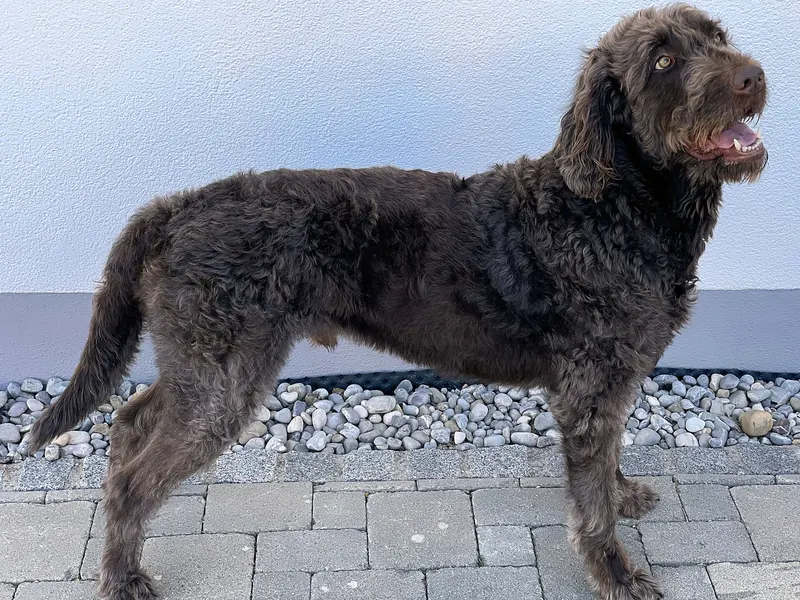
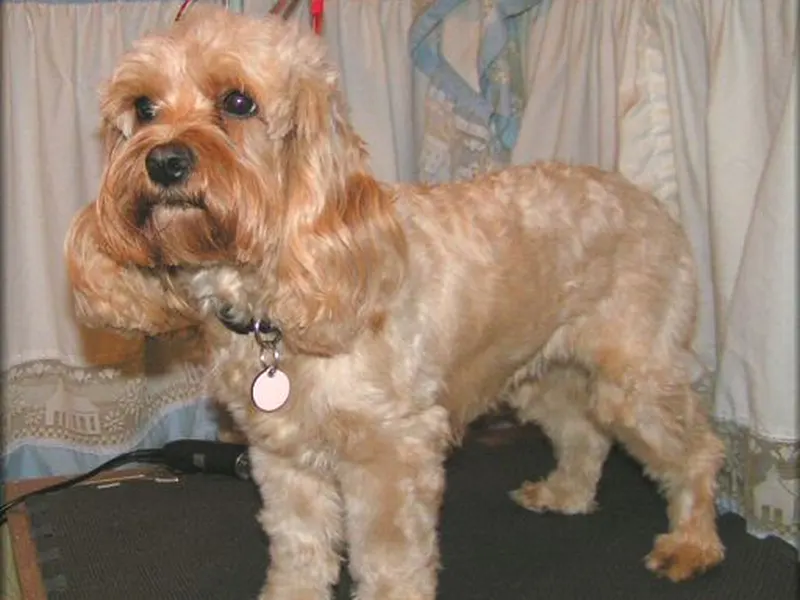
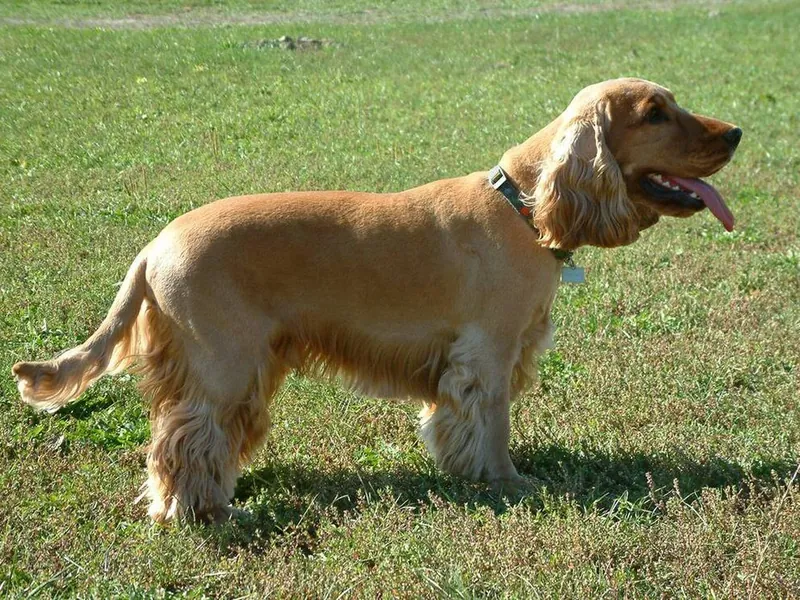
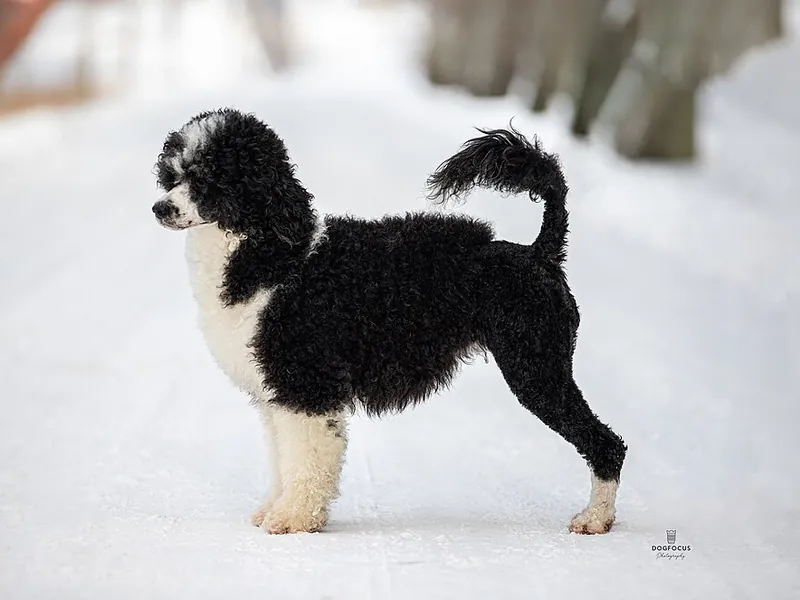
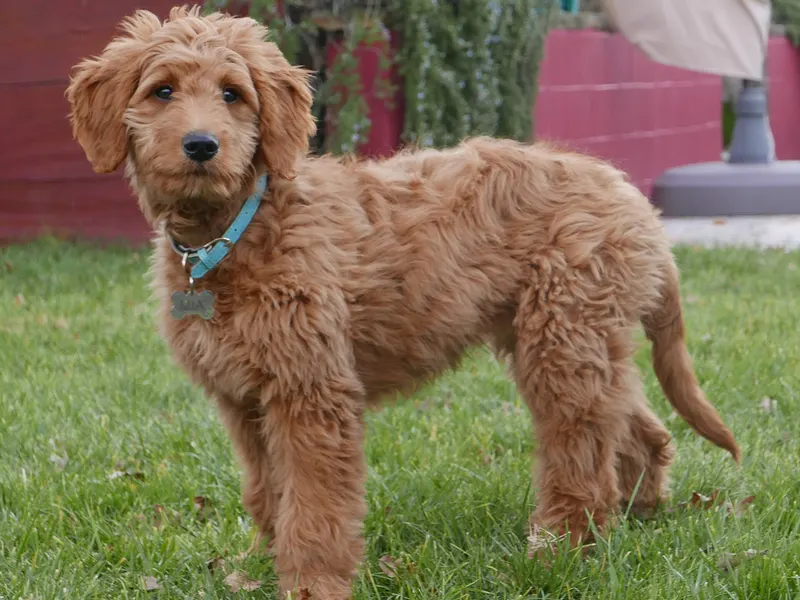
Coat types include straight or flat (closest to the Golden Retriever and the heaviest shedders), wavy (shaggy and very popular) and curly (most Poodle-like, lower-shedding but prone to matting). Some puppies have an improper coat without facial furnishings, which looks more like a Golden.
Colors include cream, apricot, gold, red, chocolate, black and white, plus parti (white with patches), phantom and merle in some lines. Colors may lighten with age.
Temperament and Personality
Most Goldendoodles are friendly, playful and people-oriented, inheriting the social nature of the Golden Retriever and the alertness of the Poodle. They usually welcome visitors and get along with children, which makes them affectionate family dogs but poor guard dogs.
Many become anxious when left alone for long periods, and separation problems are among the most common complaints from owners. Young Goldendoodles can be mouthy and bouncy, so early training in calm greetings is valuable.
Because both parent breeds are retrievers or water dogs at heart, many Goldendoodles carry objects around, love water and enjoy fetching games. Energy levels vary: a Goldendoodle from working Golden lines may need far more activity than one from calmer show lines.
Are Goldendoodles Good for First-Time Owners?
Yes, Goldendoodles are often a good choice for first-time owners. They are friendly, trainable and usually forgiving of beginner mistakes.
New owners should plan for more grooming than they might expect, with brushing several times a week and professional trims every six to eight weeks. Standard Goldendoodles also need one to two hours of exercise daily, and young dogs can be bouncy and mouthy. Early alone-time training helps prevent separation anxiety, which is a common issue. Choosing a health-tested breeding or a known adult rescue reduces surprises.
Can a Goldendoodle Live in an Apartment?
Mini Goldendoodles often adapt well to apartments, while standard Goldendoodles need more space and exercise to be comfortable indoors.
Any Goldendoodle in an apartment needs daily walks, play and training. Standard-sized dogs need one to two hours of activity daily, including running and fetch. Mental exercise, such as puzzle toys and scent games, helps them settle. Elevators or ground-floor homes help with frequent outings. Separation anxiety can cause barking that neighbors notice, so alone-time training should begin early. Ground-floor units or buildings with nearby green space make frequent potty breaks easier for puppies.
Can Goldendoodles Be Left Alone?
Only for moderate periods. Goldendoodles are people-oriented and often struggle with long hours alone, and separation problems are among the most common complaints from owners.
Build alone time gradually from puppyhood. Exercise before you leave, offer a chew or puzzle toy and provide a comfortable space. Most adults can learn to cope with a few hours alone. For full workdays, plan for a dog walker, daycare or someone at home for part of the day. Signs of distress, such as constant barking, chewing at doors or accidents, should be addressed early with a trainer.
Exercise and Training
Standard-sized Goldendoodles need one to two hours of exercise daily, including walks, retrieving and swimming, which many love. Mini Goldendoodles need somewhat less but still benefit from games and training. Mental tasks such as scent work and puzzle feeders help them settle.
They are usually quick learners and respond well to positive reinforcement. Focus on recall, loose-leash walking and settling calmly at home. Early, gradual alone-time training can help prevent separation anxiety.
Grooming and Shedding
Coats range from straight to wavy to tightly curly. Curly and wavy coats shed less but mat quickly, especially behind the ears, under the collar and on the legs. Brush down to the skin several times a week and book a professional trim every six to eight weeks. Straighter coats shed more. Keep the ears clean and dry, as hairy, floppy ears are prone to infections.
Feeding and Nutrition
Because Goldendoodles range from small to large, portions must fit the individual dog's size, age and activity. Golden Retrievers are prone to weight gain, and many Goldendoodles inherit a big appetite. Keep the dog lean, checking by touch, since a fluffy coat can hide extra weight.
- Feed adults two meals a day; puppies three or four.
- Large Goldendoodle puppies should eat a large-breed puppy diet that supports steady growth and joint health.
- Mini puppies may need small-breed formulas and frequent meals.
Standard Goldendoodles are deep-chested and can be at risk of bloat. Feed smaller meals and avoid exercise for an hour before and after eating.
Skin and ear problems are common, and food allergies are one possible cause. If your dog has itchy skin or frequent ear infections, ask your vet about a diet trial rather than switching foods on your own. Introduce any new diet gradually. Count training treats in the daily ration, and use part of the food in puzzle feeders to keep the dog busy.
| Adult weight | Less active | Typical adult | Very active |
|---|---|---|---|
| 15 lb | 410 kcal | 470 kcal | 590 kcal |
| 47 lb | 970 kcal | 1,110 kcal | 1,390 kcal |
| 79 lb | 1,440 kcal | 1,640 kcal | 2,050 kcal |
Estimates use the resting energy formula veterinarians work with (70 × body weight in kg0.75) and standard activity factors. Use the feeding guide on your food as a starting point and adjust to body condition. Puppies, seniors, pregnant animals and pets that need to lose weight have different needs, so ask your vet.
Health and Lifespan
Goldendoodles can inherit conditions from both parent breeds. From the Golden Retriever side, these include hip and elbow dysplasia, eye diseases and certain cancers; from the Poodle side, Addison's disease, von Willebrand disease, sebaceous adenitis and, in large dogs, bloat. Some reports also mention megaesophagus, a condition affecting swallowing.
Ask the breeder for hip and elbow scores, eye certificates and DNA results for both parents. With good care, many Goldendoodles live around 10 to 15 years, with smaller dogs often living longer.
Goldendoodle Price and Cost of Ownership
Typical breeder price in the US$1,500 to $4,000
A Goldendoodle puppy from a reputable US breeder typically costs about $1,500 to $4,000. Prices vary by breeder, region and lines, and size, coat type, color and generation can all affect price. Ask for hip and elbow scores, eye exams and DNA tests for both parents. Be cautious of sellers who guarantee non-shedding or hypoallergenic coats, or who have many litters at once.
Doodle-specific rescues and shelters frequently have Goldendoodles, often young adults surrendered because of grooming or behavior challenges.
Breed-specific ongoing costs include:
- Professional grooming every six to eight weeks.
- Vet care for ear infections and skin issues.
- Training or daycare to manage separation anxiety.
- Food for standard-sized dogs.
Is the Goldendoodle Right for You?
The Goldendoodle suits active families who want a friendly, trainable dog and can commit to daily exercise and regular professional grooming. Choose the size based on your home and lifestyle.
It is less suited to homes where the dog would be alone for long hours. Allergy sufferers should be cautious: a low-shedding coat is not guaranteed, and no Goldendoodle is reliably hypoallergenic.
When choosing a puppy, meet both parents, ask about their temperament and health tests, and be wary of sellers who guarantee a non-shedding coat or offer many litters at once.
Goldendoodle Traits at a Glance
Goldendoodle FAQ
Are Goldendoodles hypoallergenic?
Not reliably. Coat type and shedding vary, and allergens are also found in dander and saliva.
How big do Goldendoodles get?
Size varies by the Poodle parent: most weigh 15 to 79 lb and stand 17 to 25 inches, with mini Goldendoodles at the lower end.
Are Goldendoodles good family dogs?
Yes, they are typically friendly, gentle and playful with children. Training is important because young dogs can be bouncy.
Do Goldendoodles shed?
Some shed little, others shed moderately. Curlier coats generally shed less but need more grooming.
How much exercise does a Goldendoodle need?
Standard Goldendoodles need one to two hours of exercise daily; minis need a little less.
How long do Goldendoodles live?
Many Goldendoodles live around 10 to 15 years, with smaller dogs often living longer.