Bearded CollieBouncy, shaggy herder of the Highlands
The Bearded Collie is a lively Scottish herding dog with a long, shaggy coat and an irrepressible sense of fun. Friendly and good-natured, it needs an active family that enjoys long walks and is ready for serious coat care.
Why people love the Bearded Collie
- Cheerful, outgoing and great with visitors
- Gets along very well with other dogs
- Tireless partner for hiking and dog sports
- Forgiving temperament that rarely holds grudges
- Distinctive shaggy look with changing coat colors
Things to consider
- Long coat mats easily and needs weekly line-brushing
- High exercise needs, one to two hours daily
- Vocal when excited or bored
- May herd children by circling or nudging
- Higher risk of autoimmune conditions such as Addison's disease
Is this breed right for you?
10 questions · live resultHistory and Origin
Shaggy herding dogs have worked in Scotland for centuries, moving sheep and cattle across rough hill country and through mist and heather. These dogs worked with a characteristic bounce and used their voices to move stock. Shepherds valued function over looks, so type varied by region.
The modern breed owes much to Mrs. G. Olive Willison, who began breeding Beardies in the 1940s from a pair of dogs named Bailie and Jeannie. The Kennel Club granted the breed championship status in 1959, and the AKC recognized it in 1977.
The name comes from the long hair on the chin and muzzle that forms a beard. Unlike the Border Collie, which controls sheep with an intense stare, the Beardie traditionally worked with more movement and barking, which suited driving stock over open hills and through thick heather.
Size, Coat and Colors
The Bearded Collie is a lean, active herding dog, longer than tall, standing 20 to 22 inches and weighing 44 to 55 lb. Under the AKC standard, males measure 21 to 22 inches and females 20 to 21 inches. Despite the coat, there should be a strong, flexible body underneath.
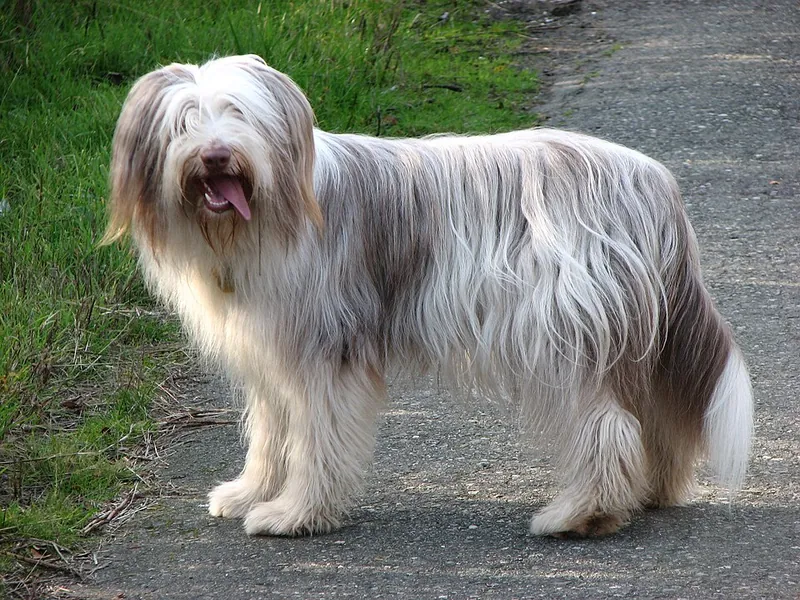
The head is broad and flat with a short, strong muzzle. The expression is bright and inquiring, with eyes framed by arched eyebrows, and the long beard on the chin gives the breed its name. Eye color tends to match coat color.
Accepted colors are:
- Black
- Blue
- Brown
- Fawn
Each may come with or without white markings, typically on the face, chest, legs and tail tip. Tan points can appear on the eyebrows, cheeks and legs. Because of the fading gene, a black puppy often lightens to slate or gray as a young adult, then may darken again, so a Beardie's color can change several times.
The coat is parted naturally down the back and should never be trimmed or sculpted for show.
Temperament and Personality
Beardies are cheerful, outgoing and affectionate. They usually love people, including visitors, and get on very well with other dogs. Many have a clownish streak and an enthusiastic greeting style.
They are vocal, barking when excited or bored, and some try to herd children by circling or nudging. They need plenty of company and activity; a lonely Beardie may bark, dig or chew. They are thinking dogs that can be stubborn, but they rarely hold a grudge.
Barking is part of the package, so teach a quiet cue early.
Do Bearded Collies Bark a Lot?
Yes, Bearded Collies are a vocal breed. They were bred to use their voice to move sheep across open hills, and many still bark when excited, playing or bored.
Barking can be managed but rarely eliminated. Meet exercise needs every day, give the dog brain work, and teach a quiet cue early. Avoid rewarding demand barking with attention. Beardies also bark during play and sports, which is normal. Households that want a quiet dog, or that live in close quarters with neighbors, should consider this before choosing the breed.
Is the Bearded Collie Good for First-Time Owners?
A Bearded Collie can suit a first-time owner who is active, patient and ready for heavy grooming. The breed is friendly and forgiving, which helps beginners, but it is also energetic and independent-minded.
The main challenges are exercise, barking and coat care. A Beardie that is not exercised daily can become noisy and destructive, and a neglected coat mats quickly. New owners do well when they join a puppy class, learn line-brushing from the breeder or a groomer, and find a dog sport they enjoy. Those wanting a calm, low-maintenance dog should look elsewhere.
Are Bearded Collies Easy to Train?
Bearded Collies are intelligent and learn quickly, but they are not as eager to please as Border Collies. They tend to think for themselves, and a bored Beardie may decide your plan is less interesting than its own.
Training works best with short, playful sessions, varied tasks and plenty of food and toy rewards. Harsh methods backfire. Their bounce and enthusiasm can make impulse control the hardest skill to teach, so practice calm greetings and settling at home. Many Beardies excel in agility, herding and rally once they see training as a game.
Exercise and Training
This is a high-energy working breed. Plan on at least one to two hours of daily exercise, including running off leash in safe areas, plus mental work. Herding, agility, rally and canicross are excellent options.
- Start training early with positive, playful methods; Beardies bore easily with repetition.
- Teach a solid recall and impulse control around moving children, bikes and joggers.
- Build in quiet time so your Beardie learns to settle at home.
Beardies have excellent stamina and are happy to hike for hours in any weather. They also enjoy flyball and dock diving.
Grooming and Shedding
The double coat has a long, flat, harsh outer layer and a soft, close undercoat. It mats easily, especially behind the ears, under the legs and on the belly. Line-brush down to the skin at least once a week, and more often during the coat change from puppy to adult coat, which is a particularly heavy matting phase.
Beardies are born dark and often lighten as they mature, sometimes darkening again later. Some pet owners keep a shorter clip to reduce grooming time. The breed sheds moderately.
Feeding and Nutrition
Bearded Collies are active dogs, and their food needs follow their workload. A dog doing agility or herding several days a week needs more than a family pet that walks daily. Adjust portions to body condition and use your hands rather than your eyes to check, since the coat hides both weight gain and loss.
Coat health depends partly on nutrition. A complete diet with adequate protein and fatty acids helps keep the long coat strong and reduces breakage that leads to mats.
The breed has a higher risk of Addison's disease. Early signs can include poor appetite, vomiting, diarrhea and weight loss that come and go. Do not dismiss repeated digestive upset as picky eating; report it to your vet.
Allergies are also reported. If itching, ear infections or soft stools persist, work with your vet on a structured diet trial rather than switching foods frequently.
Feed puppies three to four times daily and adults twice. Wipe the beard after meals to prevent staining and odor. Training treats should be small and counted in the daily ration.
| Adult weight | Less active | Typical adult | Very active |
|---|---|---|---|
| 44 lb | 930 kcal | 1,060 kcal | 1,320 kcal |
| 55 lb | 1,090 kcal | 1,250 kcal | 1,560 kcal |
Estimates use the resting energy formula veterinarians work with (70 × body weight in kg0.75) and standard activity factors. Use the feeding guide on your food as a starting point and adjust to body condition. Puppies, seniors, pregnant animals and pets that need to lose weight have different needs, so ask your vet.
Health and Lifespan
Bearded Collies typically live 12 to 14 years. The breed has a higher-than-average risk of autoimmune conditions, notably Addison's disease (hypoadrenocorticism) and immune-mediated hemolytic anemia. Allergies and hip dysplasia are also reported.
Choose breeders who screen hips and eyes and are open about autoimmune disease in their lines. Learn the subtle early signs of Addison's disease, such as lethargy, vomiting and poor appetite, and discuss them with your vet.
Bearded Collie Price and Cost of Ownership
Typical breeder price in the US$1,500 to $3,000
Bearded Collie puppies from reputable US breeders usually cost about $1,500 to $3,000, depending on breeder, region and lines. The breed is not common in the US, so expect to wait for a litter. Breed club rescue groups occasionally have adult Beardies.
Breed-specific costs include:
- Grooming: quality pin brushes, combs and sprays, plus professional grooming if you keep a shorter clip
- Insurance that covers autoimmune diseases such as Addison's disease and immune-mediated hemolytic anemia, which can require lifelong treatment
- Health screening: hip and eye exams
- Training and sports such as agility, herding or flyball
Food costs are moderate for a medium-sized, active dog.
Is the Bearded Collie Right for You?
The Beardie suits active families, hikers and dog sport fans with a house and garden, who enjoy a sociable, playful dog. It gets along well with other pets and visitors.
It is not ideal for apartments, quiet households, people away for long hours, or anyone unwilling to spend significant time on brushing.
Bearded Collie Traits at a Glance
Bearded Collie FAQ
Are Bearded Collies good family dogs?
Yes. They are friendly and playful, though their herding instinct and bounce require supervision with young children.
How big do Bearded Collies get?
They stand about 20 to 22 inches tall and weigh 44 to 55 lb.
Do Bearded Collies shed?
Moderately. The bigger task is preventing mats with regular, thorough brushing.
How much exercise does a Bearded Collie need?
At least one to two hours per day, plus mental challenges.
How long do Bearded Collies live?
Typically 12 to 14 years.
Are Bearded Collies good with other dogs?
Usually yes. Most Beardies are sociable with other dogs and enjoy having a canine playmate, which can help burn off some of their energy.