Irish WolfhoundThe gentle giant of Ireland
The Irish Wolfhound is the tallest of all dog breeds, an ancient coursing hound once used to hunt wolves and elk. Today it is known for a calm, kind and patient nature. It suits owners with plenty of space, a generous budget and the emotional readiness for a short lifespan.
Why people love the Irish Wolfhound
- Gentle, quiet giant that rarely barks
- Usually friendly with people and other dogs
- Calm and easygoing indoors once mature
- Wiry coat is simple to maintain with weekly brushing
- Imposing presence without guard-dog sharpness
Things to consider
- Short lifespan, usually 6 to 8 years
- High risk of bloat, heart disease and bone cancer
- Giant size means high costs for food, vet care and transport
- Puppies need restricted exercise during long growth phase
- Strong sighthound chase instinct around small animals
Is this breed right for you?
10 questions · live resultHistory and Origin
Giant rough-coated hounds appear in early Irish law and legend, and they were prized gifts for kings and nobles across Europe. They hunted wolves, deer and the now-extinct Irish elk. Once the last wolves in Ireland were killed in the late 18th century, the breed declined sharply.
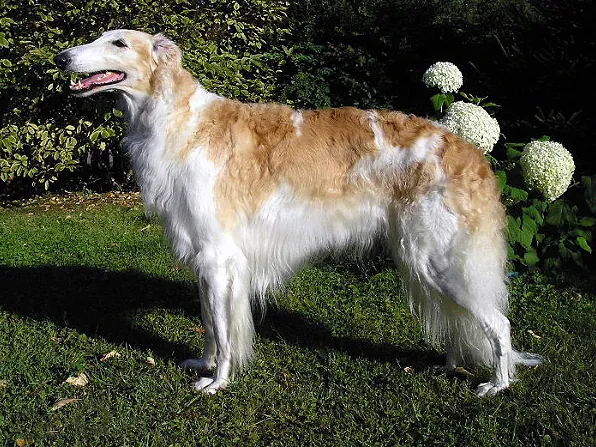
In the 1860s Captain George Augustus Graham, a Scottish army officer, began rebuilding the Wolfhound from the remaining dogs of the type, adding Scottish Deerhound and some Great Dane and Borzoi blood. The Irish Kennel Club and The Kennel Club recognized the restored breed, and the AKC registered it in 1897. The Wolfhound is the traditional mascot of the Irish Guards regiment.
Size, Coat and Colors
The Irish Wolfhound is the tallest AKC breed. Our data box lists a minimum of 30 inches and 105 lb, which matches the AKC minimum for females. Males must be at least 32 inches and 120 lb, and many adults stand several inches taller and weigh considerably more. Males are noticeably larger, with a broader head and heavier bone.
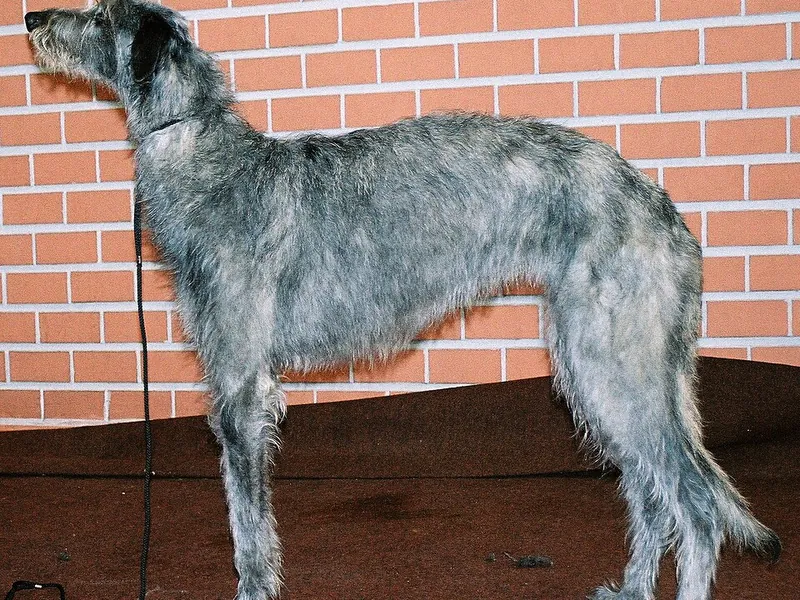
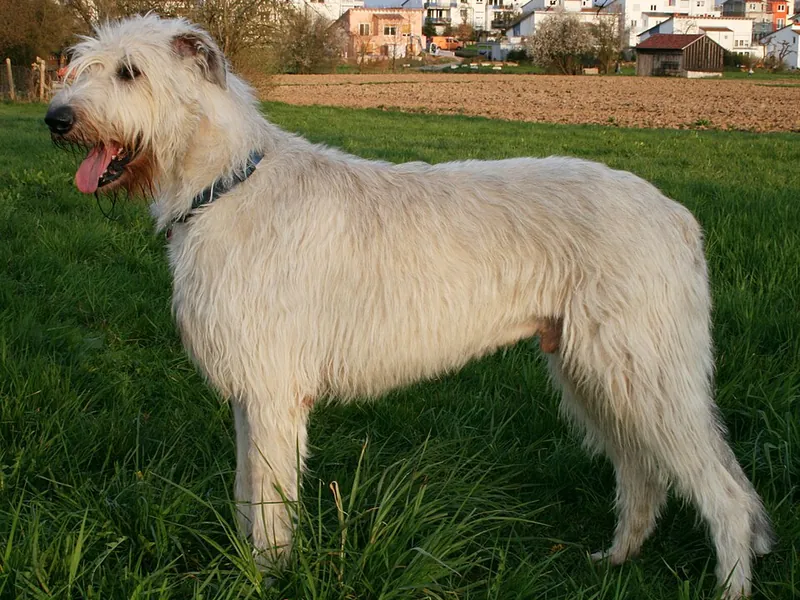
Despite its size, the breed is built like a sighthound: long-legged, deep-chested, with a slightly arched loin, a tucked-up belly and a long, slightly curved tail. It should look powerful and fast rather than massive like a mastiff.
The coat is rough and harsh, wiry and long over the eyes and under the jaw, forming a beard and eyebrows. Recognized colors include gray, brindle, red, black, pure white, fawn and wheaten. Gray and brindle shades are the most common. Puppies may change color and coat texture considerably as they mature.
Temperament and Personality
The breed motto "gentle when stroked, fierce when provoked" captures it well. Wolfhounds are typically quiet, easygoing and affectionate, and they rarely bark. Most are friendly with visitors, so their size is a deterrent but they are not real guard dogs.
They need closeness to their family and do poorly as outdoor or kennel dogs. Their sheer size means a friendly lean or wag can knock over a small child, so supervision is essential with toddlers. Like other sighthounds, they will chase running animals.
Is an Irish Wolfhound Good for First-Time Owners?
It can be, if the first-time owner is ready for the size, the cost and the short lifespan. Temperamentally, Wolfhounds are among the gentlest giant breeds.
The challenges are practical. A puppy grows from small to very large within a year, so leash manners and polite greetings must be taught before the dog outweighs you. You need a vehicle big enough for transport, space for large beds and a vet familiar with giant breeds. Health issues such as heart disease and bloat call for knowledge and quick action. A first-time owner who connects with a breed club mentor and an experienced breeder gets valuable support through these stages.
Do Irish Wolfhounds Need a Yard?
A securely fenced yard is strongly recommended. Adults benefit from the chance to stretch out at a gallop, which leash walks alone cannot provide.
The fence needs to be high and solid enough for a dog that can easily look over a standard fence, typically at least 5 to 6 feet. Wolfhounds are sighthounds and may chase a running animal at speed, so unfenced areas are risky even for well-trained dogs. If you do not have a yard, regular access to a safe, enclosed field can work. Indoor space matters too: a Wolfhound needs room to turn, lie flat and not sweep tables clear with its tail.
Are Irish Wolfhounds Good With Cats?
Many live peacefully with cats they were raised with, but outdoor or unfamiliar cats can trigger the sighthound chase instinct. Results depend heavily on the individual dog.
A Wolfhound puppy raised with a calm, confident cat usually learns that this cat is family. Even then, sudden running can spark a chase, and at this size even a playful pounce is risky for a cat. Give cats high escape routes and dog-free rooms, and supervise until you know the dog well. An adult Wolfhound with no cat history needs careful testing before adoption into a home with cats, and small pets such as rabbits are best kept separate.
Exercise and Training
Adult Wolfhounds need regular daily exercise, with the PDSA suggesting up to two hours including the chance to gallop in a securely fenced area. Puppies are the exception: they grow extremely fast, and long walks, stairs and jumping should be limited until growth plates close, usually well past the first year.
Wolfhounds are sensitive and respond to gentle, reward-based training. Teach loose-leash walking early, before the dog outweighs you. Reliable recall around wildlife is hard to achieve, so off-leash running should be in enclosed areas.
Grooming and Shedding
The harsh, wiry coat is easy to maintain. Brush weekly with a slicker or pin brush and comb the beard and leg furnishings. Some owners hand-strip loose hair a few times a year for a tidier outline. Shedding is moderate. A Wolfhound needs large beds with thick padding to protect elbows, and a big vehicle for transport.
Feeding and Nutrition
Feeding a Wolfhound puppy is mainly about controlling growth. Giant-breed puppies grow for 18 months or longer, and growing too fast is linked to joint and bone problems. Feed a complete food formulated for large or giant breed puppies, keep the puppy lean and do not add calcium or other supplements unless your vet advises it.
Bloat (gastric dilatation-volvulus) is a major risk in this deep-chested breed. Practical steps that may reduce risk include:
- Splitting the daily ration into two or three meals instead of one large one.
- Avoiding vigorous exercise for at least an hour before and after meals.
- Discouraging fast eating with a slow feeder.
- Knowing the warning signs: restlessness, unproductive retching and a swollen belly need emergency care.
Adults should stay lean, with ribs easy to feel, to reduce strain on joints and heart. Large, heavy-duty bowls placed at a comfortable height work well; discuss raised feeding with your vet, as advice on it varies. Use treats sparingly and count them in the daily ration.
| Adult weight | Less active | Typical adult | Very active |
|---|---|---|---|
| 105 lb | 1,780 kcal | 2,030 kcal | 2,540 kcal |
Estimates use the resting energy formula veterinarians work with (70 × body weight in kg0.75) and standard activity factors. Use the feeding guide on your food as a starting point and adjust to body condition. Puppies, seniors, pregnant animals and pets that need to lose weight have different needs, so ask your vet.
Health and Lifespan
The hardest fact for owners is lifespan: the AKC gives 6 to 8 years. Major health concerns include:
- Dilated cardiomyopathy and other heart disease: annual cardiac screening is recommended.
- Bone cancer (osteosarcoma), which is more common in giant breeds.
- Bloat (gastric torsion): know the signs and discuss preventive gastropexy with your vet.
- Liver shunt in puppies and progressive retinal atrophy.
Buy only from breeders who heart test, screen puppies for liver shunt and can share how long their dogs typically live. Giant-breed vet care, medication and food all cost more.
Irish Wolfhound Price and Cost of Ownership
Typical breeder price in the US$2,000 to $3,500
An Irish Wolfhound puppy from a reputable US breeder typically costs about $2,000 to $3,500, and prices vary by breeder, region and lines. Litters are planned infrequently, so waiting lists are common. Breed rescues occasionally place adults and retired breeding dogs.
Owning a giant breed multiplies many ordinary costs:
- Food for a dog that may weigh well over 120 lb.
- Medication and anesthesia, which are often dosed by weight.
- Annual cardiac screening, recommended by breed clubs.
- Preventive gastropexy, often done alongside spay or neuter.
- Insurance, which may be priced higher for giant breeds.
- Large beds, crates, ramps and a vehicle big enough to transport the dog.
Is the Irish Wolfhound Right for You?
A Wolfhound can be a wonderful companion if you have a house with room to stretch out, a fenced yard, a big car and someone home much of the day. Calm adult households and families with older children do best.
It is not a good fit for apartments, tight budgets or owners who want a protective guard dog. Be prepared for the cost of giant-breed care and a short time together.
Irish Wolfhound Traits at a Glance
Irish Wolfhound FAQ
How big do Irish Wolfhounds get?
They stand at least 30 inches (females) to 32 inches (males) at the shoulder and weigh at least 105 lb (females) to 120 lb (males).
How long do Irish Wolfhounds live?
Their lifespan is short, usually around 6 to 8 years.
Are Irish Wolfhounds good family dogs?
They are gentle and patient, but their size makes supervision necessary around small children.
Are Irish Wolfhounds good guard dogs?
Not really; their size impresses, but most are friendly with strangers and rarely bark.
How much exercise does an Irish Wolfhound need?
Adults need daily walks and chances to run in a secure area, up to around two hours a day, while puppies need restricted exercise during growth.
Do Irish Wolfhounds shed?
They shed moderately; weekly brushing keeps the wiry coat in good condition.