BologneseItaly's quiet, devoted white bichon
The Bolognese is a small, pure-white bichon from Italy with a fluffy, cottony coat and a calmer personality than its Bichon Frise cousin. It wants to be with its person almost constantly, which makes it a wonderful companion for homebodies and a poor fit for long days alone.
Why people love the Bolognese
- Barely sheds, a plus for tidy homes
- Calm and quiet compared with many toy breeds
- Very affectionate and devoted to its person
- Small enough for apartments, travel and older owners
- Usually gets along well with other pets
Things to consider
- Prone to separation stress when left alone
- Coat mats quickly without thorough brushing several times a week
- Rare in the US, so puppies often mean waitlists
- Too fragile for rough play with young children
- Tear staining is very visible on the white coat
Is this breed right for you?
10 questions · live resultHistory and Origin
The Bolognese belongs to the bichon family of small white companion dogs found around the Mediterranean. It is associated with the city of Bologna, and from the Renaissance onward it was kept and given as a prized gift among Italian noble families and European courts.
Interest dropped sharply in the 20th century, and Italian and other European breeders worked to preserve it. The FCI places it with companion and toy dogs, The Kennel Club lists it in the Toy Group, and the AKC records it in its Foundation Stock Service.
Size, Coat and Color
The Bolognese is a small, compact dog with a square outline, roughly as long as it is tall. Adults weigh about 7 to 9 lb and stand 10 to 12 inches at the shoulder. Males are usually slightly taller and a little sturdier than females, but the difference is small.
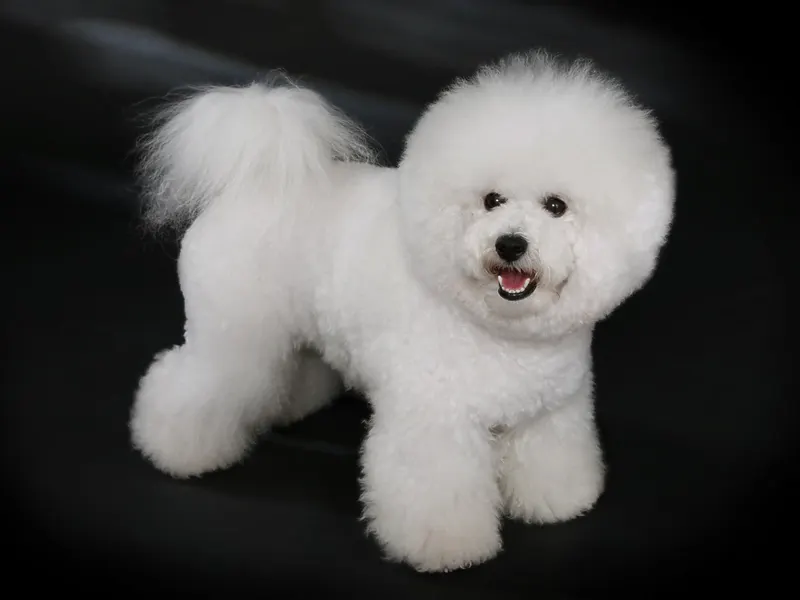
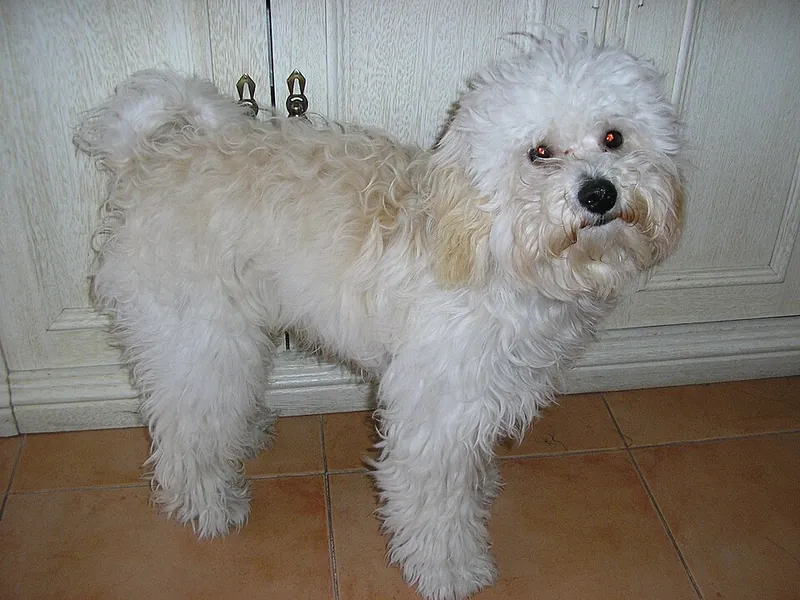
The breed comes in one color only: pure white, with no markings and no shading. Faint ivory tinges may occur in puppies or around the ears. The nose, eye rims and lips are black, which contrasts strikingly with the coat, and the large, round eyes are dark.
The coat is the breed's signature. It is long and flocked, standing away from the body in loose, open curls or tufts rather than lying flat or forming the powder-puff look of a show Bichon Frise. It covers the whole body, though hair on the muzzle is somewhat shorter. In the show ring it is left natural and not sculpted. Many pet owners keep a shorter, even trim for easier care.
Temperament and Personality
Bolognese are gentle, observant and affectionate. They are usually quieter and more reserved than many small breeds, often watching new people before warming up. With family they are cuddly and like to follow their owner from room to room.
That attachment has a downside: many Bolognese struggle with being left alone and may develop separation stress. They will bark to announce visitors, but they are not yappy by nature when their needs are met. They usually get along well with other pets.
Because the Bolognese is less boisterous than many toy breeds, it often suits older adults and calm households particularly well. It tends to choose one favorite person but stays friendly with the rest of the family.
Is the Bolognese Good for First-Time Owners?
Yes, for the right household. The Bolognese is gentle, eager to please and calmer than many toy breeds, so beginners usually find training straightforward.
The main challenges are not behavioral but practical:
- Coat care several times a week, down to the skin
- Someone home most of the day, since the breed is prone to separation stress
- Patience with housetraining, which takes longer in small dogs
A first-time owner who works from home, enjoys grooming or budgets for a groomer and wants a quiet companion will likely find the Bolognese one of the easier breeds to start with.
Is the Bolognese Easy to Train?
Generally yes. Bolognese are observant and keen to please their person, and they respond well to soft voices, food rewards and short, playful sessions.
They are sensitive, so harsh corrections tend to make them withdraw. Two areas need extra attention:
- Housetraining: small bladders and a reluctance to go out in rain mean frequent outings and a consistent schedule.
- Alone time: teaching the dog to relax on its own, a few minutes at a time, prevents separation problems later.
Many Bolognese enjoy trick training and gentle rally, which also builds confidence in more reserved individuals.
Is the Bolognese Good with Kids?
With calm, considerate children, usually yes. The Bolognese is affectionate and patient, but it is a 7 to 9 lb dog that can be injured if dropped, squeezed or stepped on.
It does best with school-age children who can learn to sit on the floor to cuddle, let the dog approach on its own terms and avoid picking it up. Households with toddlers need close supervision and safe retreat spaces for the dog.
Because the breed tends to be a little reserved, a noisy, chaotic home can stress it. Quiet family routines bring out its sweetest side.
Exercise and Training
Exercise needs are modest: two short walks and some indoor play cover most days. The breed adapts well to apartment life. Training is generally straightforward with gentle, reward-based methods, though housetraining small dogs can take patience.
- Build alone time gradually from puppyhood, starting with a few minutes.
- Teach a quiet cue early so alert barking stays under control.
- Keep training short and playful; the breed is sensitive to harsh tones.
Grooming and Shedding
The single coat is long, open and slightly wavy with loose curls, and it barely sheds. That low shedding is why the breed appeals to people with mild allergies, though no dog is fully allergen-free. The trade-off is maintenance: the coat mats if not brushed thoroughly several times a week, down to the skin.
Many pet owners keep a shorter trim done by a groomer. Wipe around the eyes daily, as tear staining shows clearly on the white coat, and brush teeth regularly.
Feeding and Nutrition
A toy breed weighing only 7 to 9 lb needs very little food, so small portion errors add up fast. A few extra treats can mean noticeable weight gain, which strains small knees already prone to patellar luxation. Measure meals and adjust if you can no longer feel the ribs under the coat.
Puppies of tiny breeds can develop low blood sugar if they go too long without food. Feed young puppies three to four small meals a day, then move to two or three meals as adults.
- Choose a small-breed kibble size or soft food the dog can chew comfortably.
- Dental disease is common in the breed; daily tooth brushing matters more than any food.
- Food residue and saliva stain the white coat around the mouth, so wipe the face after meals.
- Use tiny training treats, broken into pieces, and count them toward the daily total.
Some owners notice that tear staining varies with water or diet changes, but staining is mostly linked to eye and tear-duct anatomy, so discuss persistent staining with your vet.
| Adult weight | Less active | Typical adult | Very active |
|---|---|---|---|
| 7 lb | 230 kcal | 270 kcal | 330 kcal |
| 9 lb | 280 kcal | 320 kcal | 400 kcal |
Estimates use the resting energy formula veterinarians work with (70 × body weight in kg0.75) and standard activity factors. Use the feeding guide on your food as a starting point and adjust to body condition. Puppies, seniors, pregnant animals and pets that need to lose weight have different needs, so ask your vet.
Health and Lifespan
Bolognese usually live 12 to 14 years. Conditions reported in the breed include kneecap dislocation (patellar luxation), hip dysplasia, progressive retinal atrophy (PRA) and Legg-Calve-Perthes disease, a hip problem seen in small dogs. Dental disease is common, as in many toy breeds, and tear staining is frequent.
Ask breeders for knee, hip and eye examinations of the parents, and plan for routine dental care throughout the dog's life.
Bolognese Price and Cost of Ownership
Typical breeder price in the US$1,500 to $3,000
The Bolognese is rare in the US, and puppies from reputable breeders commonly cost around $1,500 to $3,000, with imported dogs from European lines sometimes higher. Prices vary by breeder, region and lines, and waitlists are common.
Purebred Bolognese rarely appear in shelters, though small white rescue dogs of similar type sometimes do, and some bichon rescues occasionally place them.
Breed-specific ongoing costs include:
- Professional grooming every four to eight weeks if you keep a trim
- Dental cleanings, which toy breeds often need regularly
- Knee, hip and eye checks if breeding
- Insurance that covers patellar luxation and dental care
- Pet sitters or daycare, since the breed should not be alone for long
Is the Bolognese Right for You?
At 7 to 9 lb and 10 to 12 inches, the Bolognese is ideal for apartment dwellers, retirees and people who work from home and want a calm, devoted shadow. It is a reasonable choice for allergy-conscious households willing to commit to grooming.
It is less suited to homes with very young, boisterous children who might drop or squeeze a small dog, and to anyone who is out of the house most of the day.
Bolognese Traits at a Glance
Bolognese FAQ
Are Bolognese hypoallergenic?
They shed very little, which helps many people with mild allergies, but no breed is truly hypoallergenic. Spend time with the breed before committing.
How big do Bolognese dogs get?
Adults weigh about 7 to 9 lb and stand roughly 10 to 12 inches at the shoulder.
Can a Bolognese be left alone?
Not for long. The breed is very people-oriented and prone to separation stress, so it suits homes where someone is around most of the day.
What is the difference between a Bolognese and a Bichon Frise?
Both are white bichons, but the Bolognese has a flatter, looser, flocked coat and is typically calmer and more reserved than the outgoing Bichon Frise.
How long do Bolognese live?
Most live around 12 to 14 years.
Do Bolognese bark a lot?
They bark to alert you to visitors or noises, but a well-exercised Bolognese that is not left alone too long is usually fairly quiet.