Bichon FriseCheerful, cuddly and low-shedding
The Bichon Frise is a small, merry companion with a powder-puff white coat and an almost permanently good mood. Because it sheds very little, it is popular with people who react to dog hair, and it adapts well to apartments. The trade-off is grooming: that coat needs brushing every day or two and a professional trim every few weeks.
Why people love the Bichon Frise
- Cheerful, sociable dog that likes nearly everyone
- Usually good with children, dogs and cats
- Low shedding; some people with allergies cope better
- Long-lived, typically 14 to 15 years
- Moderate exercise needs suit apartments and seniors
Things to consider
- Needs professional grooming every four to six weeks
- Mats quickly if home brushing is skipped
- House training is often slow
- Prone to separation stress and barking when alone
- Allergies, bladder stones and dental disease are common
Is this breed right for you?
10 questions · live resultHistory and Origin
The Bichon belongs to the Barbichon family of small white Mediterranean dogs, which also includes the Maltese, the Bolognese and the Havanese. Sailors traded these dogs between ports, and one branch became established on the Canary Islands, which is why the breed was once called the Bichon Tenerife.
In the 1500s and 1600s Bichons became favorites at the French and Italian courts and appear in portraits of the period. After the nobility lost interest, they found a new role as street and circus performers, valued for learning tricks. French breeders standardized the breed after World War I, and the FCI lists France and Belgium as its homeland. Bichons reached the United States in the 1950s, and the AKC recognized the breed in 1972.
Size, Coat and Color
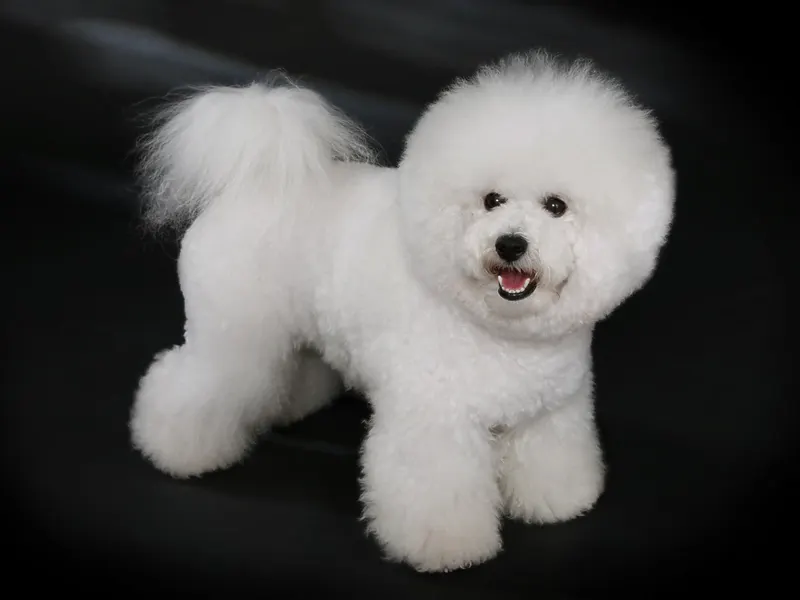
The Bichon Frise is a small, sturdy dog standing about 9 to 12 inches and weighing roughly 9 to 18 lb. It is slightly longer than tall, with a merry, plumed tail carried over the back, round dark eyes, a black nose and black eye rims that stand out against the white coat. Males and females look much alike, with males sometimes a little larger and heavier-boned.
The double coat has a soft, dense undercoat and a coarser, curly outer coat. When groomed, the coat stands away from the body, giving the rounded, powder-puff look seen in the show ring. The head is scissored into a rounded shape, and the coat is left longer than in many trimmed breeds. Pet owners often choose a shorter, easier cut.
The only accepted color is white. Cream, buff or apricot shading is allowed around the ears or on the body as long as it does not exceed about 10 percent of the coat in the adult; puppies often show more shading that fades with age. Dark-pigmented skin under the coat is desired.
Temperament and Personality
Bichons are cheerful, curious and affectionate. Most are friendly with strangers, gentle with children and easygoing with other dogs and even cats, which makes them a good choice for multi-pet homes.
They are sensitive dogs that respond badly to harsh words and thrive on attention. Many dislike being left alone and may bark or chew when bored or anxious. Teach a puppy from the start that short absences are normal, using chews and food puzzles, and build up the time slowly.
Are Bichon Frises Good for First-Time Owners?
Yes, the Bichon is one of the friendlier choices for first-time owners. It is sociable, adaptable, eager to please and small enough to handle easily, and it usually fits into family life without fuss.
The learning curve is in grooming and house training rather than temperament. New owners should budget for regular professional grooming, learn to brush down to the skin and start handling paws, ears and face early. Expect house training to take patience. If you are ready for that routine and are home a fair amount, a Bichon is a forgiving, cheerful first dog.
Can a Bichon Frise Be Left Alone?
A Bichon can be left for a few hours once trained, but it is a companion breed that dislikes long stretches alone. Many bark, chew or develop separation stress if left for a full workday without a break.
Start alone-time training as soon as the puppy arrives. Use short departures, a safe pen, a stuffed chew and calm comings and goings, then extend the time slowly. Exercise and play before you leave help the dog settle. For longer days, arrange a dog walker or daycare. A second friendly pet can help some Bichons, but human company matters most to this breed.
Are Bichon Frises Easy to Potty Train?
Bichons are smart and willing in most training, but house training is the area owners struggle with most. Small bladders, slow maturity and a habit of sneaking off to a quiet corner all contribute.
Use a crate or small pen, take the puppy out after sleeping, eating and playing, and praise every success outdoors right away. Keep the same schedule every day, including weekends. Limit free access to the whole home until the dog has been accident-free for several weeks. Clean mistakes with an enzyme cleaner so the smell does not draw the dog back. Most Bichons get there, but it often takes longer than with larger breeds.
Exercise and Training
A Bichon's exercise needs are modest: one or two daily walks of 20 to 30 minutes plus indoor play. Many have sudden bursts of energy in which they race around in circles, which owners call the Bichon blitz.
They are bright and eager to please, and they excel at tricks, rally and beginner agility. Housetraining is the most common struggle, so stick to a tight schedule, praise outdoor successes generously and consider crate training. Short, playful sessions with small food rewards work best.
Grooming and Shedding
The double coat has a soft, dense undercoat and a coarser, curly outer coat. Loose hair gets caught in the coat instead of falling on the floor, which is why the Bichon sheds so little, but it also means mats form quickly if you skip brushing.
- Brush down to the skin every day or two with a slicker brush, then comb through.
- Book a professional groom every four to six weeks to bathe and scissor the coat.
- Wipe around the eyes daily to reduce tear staining on the white coat.
- Check and clean the ears and trim hair between the pads.
Feeding and Nutrition
Bichons do best on a complete small-breed diet fed in two measured meals a day, with three or four smaller meals for young puppies. Their small size makes weight gain easy, and an overweight Bichon is at higher risk of knee problems and diabetes, both seen in the breed.
Bladder stones are a known issue. Plenty of fresh water and regular chances to urinate help, and some owners add water to kibble. If your dog has had stones, your vet may recommend a specific diet based on the stone type; do not guess, since different stones need different approaches.
Food allergies can play a role in the breed's itchy skin and ear infections. If problems persist, an elimination trial guided by your vet is more useful than frequent food changes. Dental disease is common, so pair the diet with daily brushing. Keep treats small and count them as part of the daily ration, especially during house training, when rewards are frequent.
| Adult weight | Less active | Typical adult | Very active |
|---|---|---|---|
| 9 lb | 280 kcal | 320 kcal | 400 kcal |
| 14 lb | 390 kcal | 450 kcal | 560 kcal |
| 18 lb | 470 kcal | 540 kcal | 680 kcal |
Estimates use the resting energy formula veterinarians work with (70 × body weight in kg0.75) and standard activity factors. Use the feeding guide on your food as a starting point and adjust to body condition. Puppies, seniors, pregnant animals and pets that need to lose weight have different needs, so ask your vet.
Health and Lifespan
Bichons are long-lived, typically reaching 14 to 15 years. Conditions seen in the breed include:
- Luxating patellas, slipping kneecaps that can cause skipping or lameness
- Allergies, often showing as itchy skin, paw licking and ear infections
- Cataracts
- Bladder stones
- Portosystemic shunt, an abnormal blood vessel bypassing the liver
- Diabetes and dental disease
Daily tooth brushing and regular dental checks are especially important. Ask breeders about knee and eye exams on the parents.
Bichon Frise Price and Cost of Ownership
Typical breeder price in the US$1,000 to $3,000
A Bichon Frise puppy from a reputable US breeder typically costs about $1,000 to $3,000. Prices vary by breeder, region and lines. Ask for knee and eye exam results on both parents and a clear health guarantee.
Bichons and Bichon mixes regularly come into shelters and breed rescues, often as adults, which can be a good option if you want to skip puppy house training.
Grooming is the largest ongoing cost. Most Bichons need a professional bath and scissor trim every four to six weeks, and skipped appointments often lead to matting that has to be shaved off. Allergy management, ear care and professional dental cleanings are other common expenses. Pet insurance is worth considering for knee surgery, bladder stone treatment and long-term allergy care. Food costs are modest.
Is the Bichon Frise Right for You?
A Bichon suits apartment dwellers, families with considerate children, retirees and people who want a sociable small dog that gets along with everyone. It is a good option for some allergy sufferers, though spending time with the breed before buying is wise. It is less suited to owners who are away all day or who do not want to budget time and money for regular grooming.
Bichon Frise Traits at a Glance
Bichon Frise FAQ
Are Bichon Frises hypoallergenic?
No dog is completely allergen-free, but Bichons shed very little and many people with mild dog allergies tolerate them better than other breeds.
How big do Bichons get?
Bichons stand about 9 to 12 inches tall at the shoulder and weigh roughly 9 to 18 lb.
Are Bichons good with kids?
Yes, they are usually playful and gentle with children. Teach young kids to handle a small dog carefully.
Do Bichons bark a lot?
They bark moderately, mostly to alert or when left alone. Early training and company help keep it in check.
How often does a Bichon need grooming?
Brush every day or two at home and plan for a professional groom every four to six weeks.
How long do Bichon Frises live?
Typically 14 to 15 years.