Australian Cattle DogTireless heeler of the outback
The Australian Cattle Dog, often called the Blue or Red Heeler, is a compact, muscular herder built to move stubborn cattle across vast distances. Loyal, smart and almost inexhaustible, it needs an active owner with a real job for it to do.
Why people love the Australian Cattle Dog
- Tough, hardy breed that often lives 12 to 16 years
- Extremely loyal and alert, an effective watchdog
- Short, weather-resistant coat is easy to keep
- Tireless partner for hiking, running and dog sports
- Highly intelligent and capable of complex tasks
Things to consider
- Needs one to two hours of vigorous daily activity
- Heel nipping can target children, joggers and bikes
- Often reserved or suspicious with strangers
- Can be bossy with other dogs and chase small pets
- Heavy seasonal shedding twice a year
Is this breed right for you?
10 questions · live resultHistory and Origin
In the 1800s, cattlemen in New South Wales needed a dog that could drive half-wild cattle over long distances in heat and rough terrain. Around 1840, Thomas Hall crossed imported drovers' dogs with dingoes, and his "Hall's Heelers" became the foundation of the breed. Later breeders are believed to have added Dalmatian and black-and-tan Kelpie blood.
Robert Kaleski wrote an early breed standard in 1903. The breed helped build Australia's beef industry and spread to farms worldwide. The AKC recognized it in 1980, and it is in the Pastoral Group of The Kennel Club in the UK.
Size, Coat and Colors
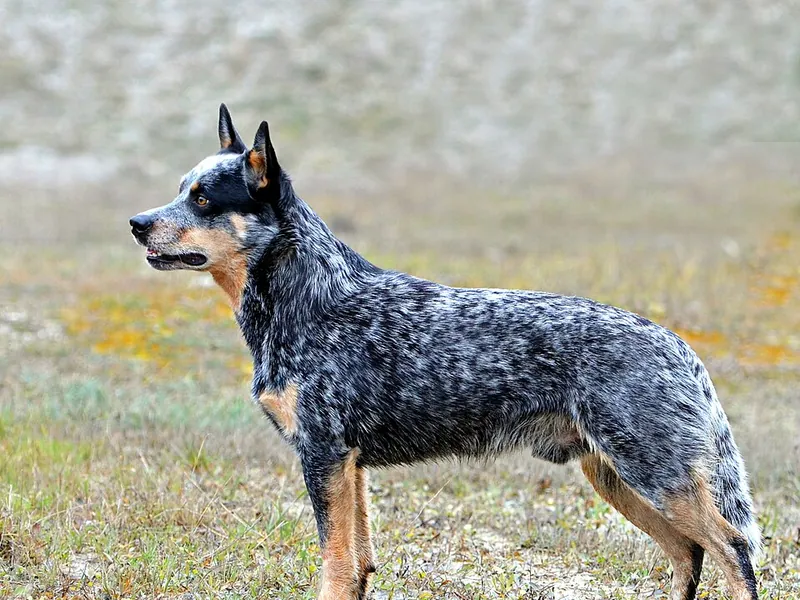
The Australian Cattle Dog is a compact, muscular herding dog built for endurance. Adults stand about 17 to 20 inches at the shoulder and weigh roughly 35 to 51 lb. Males are generally 18 to 20 inches and females about an inch shorter, with a slightly lighter build.
The body is slightly longer than tall, with strong shoulders, a deep chest and a broad head with pricked ears. The overall look is of agility combined with power, not bulk.
The double coat is short and dense, with a straight, weather-resistant outer coat. There are two color groups:
- Blue: blue, blue mottled or blue speckled, with or without black, blue or tan markings on the head and tan on the legs and chest.
- Red speckled: an even red speckle over the body, often with darker red markings on the head.
Puppies are born white. Many dogs have a white spot on the forehead called the Bentley mark, and patches over one or both eyes are common.
Temperament and Personality
Cattle Dogs are intensely loyal and often bond most closely with one person. They are alert, protective of their home and reserved with strangers, making them very effective watchdogs.
The herding style is to nip at heels, and some dogs try this on running children, joggers or bikes. They can be bossy with other dogs and are prone to chasing cats and small animals unless raised with them. With enough work they are steady, but an idle Cattle Dog often finds its own projects, such as digging or chewing.
Many Cattle Dogs follow their chosen person from room to room and are happiest riding along on errands or working beside them outdoors.
Is an Australian Cattle Dog Good for First-Time Owners?
Generally not. The breed rewards experienced, confident handlers and can overwhelm owners who are new to working dogs.
Cattle Dogs are smart and independent, and they test rules that are not applied consistently. Puppies nip hard, and many adults are wary of strangers and quick to react to other dogs. A first-time owner who is highly active, enjoys training and is willing to work with a trainer from day one can still make it work. Joining a herding, agility or scent work club gives both structure and support. If you mainly want an easy companion, a less intense breed is a safer choice.
Can Australian Cattle Dogs Be Left Alone?
For moderate periods, yes, if their exercise and mental needs are met first. Many cope better with alone time than very people-dependent breeds, but boredom shows quickly.
A Cattle Dog that has had a long run or training session in the morning may rest for several hours. Left alone daily without enough activity, many chew, dig, bark or try to escape, and some are skilled at opening latches or climbing fences. Use a secure crate or dog-proofed room, offer durable chews and puzzle feeders, and build up alone time gradually from puppyhood. Long workdays usually require a dog walker or midday break.
Are Australian Cattle Dogs Good With Cats?
Some are, especially when raised with a cat, but many have a strong urge to chase, herd or nip small animals. Expect careful management.
A puppy that grows up with a confident cat often accepts it, while still chasing unfamiliar cats outdoors. Adult Cattle Dogs without cat experience can be unpredictable, so introductions should be slow and supervised, with the dog on leash and rewarded for calm behavior. Give the cat high escape routes and areas the dog cannot reach. If the dog stares intently, stalks or nips at the cat, separate them when unsupervised and work with a trainer.
Exercise and Training
This is one of the most energetic breeds. Plan on at least one to two hours of physical and mental work every day: herding, running, cycling alongside you, agility, flyball or scent work.
Cattle Dogs are highly intelligent but independent, and they test inconsistent handlers. Tips:
- Redirect nipping from puppyhood with tug toys and clear rules.
- Use firm, fair, reward-based training and keep sessions challenging.
- Socialize widely to temper suspicion of strangers.
- Give puzzle feeders and tasks on rest days.
Grooming and Shedding
The short, weather-resistant double coat is easy care. A weekly brush keeps it in order. Twice a year the undercoat sheds heavily, and daily brushing for a couple of weeks speeds things up.
Puppies are born white and develop blue or red speckled coloring as they grow. Trim nails regularly, since working dogs on soft ground may not wear them down.
Feeding and Nutrition
Australian Cattle Dogs are lean, athletic dogs, and their food needs vary widely with activity. A ranch dog working cattle all day needs far more energy than a suburban companion with an hour of exercise. Adjust portions to body condition: the ribs should be easy to feel and the waist clearly visible.
Feed puppies three to four meals a day at first, moving to two meals by about six months. A complete puppy food and steady growth support healthy hips and elbows, both screened in the breed.
- Feed active adults two meals a day, and avoid intense exercise right after eating.
- On long working days, a light meal in the morning and a main meal in the evening suit many dogs, with fresh water available throughout.
- Puzzle feeders, snuffle mats and scatter feeding use part of the daily ration as mental work, which helps take the edge off this busy breed.
Older Cattle Dogs often stay active but need less food as their pace slows. Check weight regularly and adjust, since extra weight adds strain to aging joints. Treats used in training should be small and counted in the daily ration.
| Adult weight | Less active | Typical adult | Very active |
|---|---|---|---|
| 35 lb | 780 kcal | 890 kcal | 1,110 kcal |
| 51 lb | 1,030 kcal | 1,180 kcal | 1,480 kcal |
Estimates use the resting energy formula veterinarians work with (70 × body weight in kg0.75) and standard activity factors. Use the feeding guide on your food as a starting point and adjust to body condition. Puppies, seniors, pregnant animals and pets that need to lose weight have different needs, so ask your vet.
Health and Lifespan
Australian Cattle Dogs are generally hardy and often live 12 to 16 years. Inherited deafness occurs in the breed, and puppies should be BAER-tested to check hearing in each ear.
Other conditions include progressive retinal atrophy, primary lens luxation, and hip and elbow dysplasia. DNA tests exist for PRA (prcd) and lens luxation. Ask breeders for hip and elbow scores, eye exams and BAER results for both parents.
Australian Cattle Dog Price and Cost of Ownership
Typical breeder price in the US$800 to $2,000
An Australian Cattle Dog puppy from a reputable US breeder typically costs about $800 to $2,000, and prices vary by breeder, region and lines. Working and show lines may cost more. Cattle Dogs and Cattle Dog mixes are common in US shelters and breed rescues, so adoption is a realistic option.
Breed-specific cost drivers include:
- BAER hearing tests for puppies, which responsible breeders do before sale.
- Eye exams and DNA tests for PRA and lens luxation in breeding stock.
- Sturdy fencing, durable toys and chews for a strong, busy dog.
- Training classes and sport or herding club fees, which most owners find essential.
- Injury care for very active dogs, worth considering when choosing insurance.
Is the Australian Cattle Dog Right for You?
The breed is ideal for farms, ranches and very active owners who run, hike or do dog sports, and who enjoy training. Experienced owners will find a devoted, capable partner.
It is a poor fit for apartments, sedentary households and homes with toddlers or small pets unless the owner is ready for careful management. A bored Cattle Dog becomes a problem quickly.
Australian Cattle Dog Traits at a Glance
Australian Cattle Dog FAQ
Are Australian Cattle Dogs good family dogs?
They are loyal and protective, but their herding nips and high energy suit families with older children and active lifestyles better than homes with toddlers.
How big do Australian Cattle Dogs get?
They stand 17 to 20 inches tall and weigh about 35 to 51 lb.
Why is it called a Blue Heeler?
Blue-coated dogs have a mottled blue-gray coat, and the breed controls cattle by nipping at their heels. Red-coated dogs are called Red Heelers.
How much exercise does an Australian Cattle Dog need?
At least one to two hours of vigorous activity plus mental work every day.
Do Australian Cattle Dogs shed?
They shed moderately year-round and heavily twice a year.
How long do Australian Cattle Dogs live?
Typically 12 to 16 years.