American Staffordshire TerrierStrong, loyal and people-focused
The American Staffordshire Terrier is a muscular, confident dog that is typically affectionate and goofy with its family. It needs an experienced, committed owner who will invest in early socialization, consistent training and daily exercise.
Why people love the American Staffordshire Terrier
- Deeply affectionate and loves physical closeness with family
- Short coat needs only a weekly brush
- Athletic and keen on sports like agility and weight pulling
- Responds well to reward-based training and clear structure
- Long lifespan of 12 to 16 years
Things to consider
- Often intolerant of other dogs, especially same sex
- Breed-specific legislation, insurance and lease restrictions in some areas
- Strong prey drive toward cats and small animals
- Prone to skin allergies
- Very strong, so leash training is essential early
Is this breed right for you?
10 questions · live resultHistory and Origin
The AmStaff shares its roots with the bull-and-terrier dogs brought from England to the United States in the 19th century. In America these dogs grew larger and heavier than their British relatives and were used on farms as all-purpose dogs and guardians.
The AKC recognized the breed in 1936 as the Staffordshire Terrier. The name was changed to American Staffordshire Terrier in 1972 to distinguish it from the smaller Staffordshire Bull Terrier. The breed is related to the American Pit Bull Terrier but has been bred separately to the AKC standard for decades.
Size, Colors and Coat
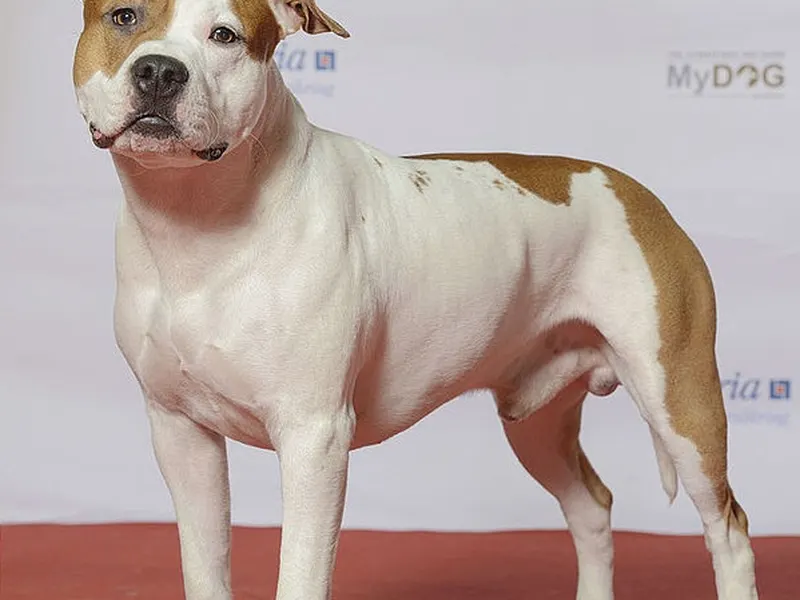
The American Staffordshire Terrier is a stocky, muscular dog that gives an impression of great strength for its size. It has a broad skull, pronounced cheek muscles, a medium-length muzzle and a deep, wide chest. Adults stand about 17 to 19 inches at the shoulder and weigh roughly 40 to 71 lb. The AKC standard suggests 18 to 19 inches for males and 17 to 18 inches for females, and males usually look heavier in the head and chest.
The coat is short, close, stiff to the touch and glossy. Almost any color is accepted, solid, parti or patched, including blue, black, fawn, red, brindle and combinations with white. The AKC standard discourages all-white coats, coats more than 80 percent white, black and tan and liver.
Ears may be cropped or left natural, and uncropped ears are preferred in the AKC standard. Natural ears are usually half-pricked or rose-shaped. The tail is short and tapers to a point.
Temperament and Personality
Well-bred AmStaffs are confident, loyal and affectionate, and many love to cuddle. They are alert to strangers and watchful around the home. They tend to be tolerant with their own family's children, but their strength means supervision is essential.
Many AmStaffs do not enjoy other dogs, particularly of the same sex, and some have a strong drive to chase small animals. Careful introductions and lifelong management of dog interactions are part of owning this breed.
Well-socialized AmStaffs are often clownish at home: they enjoy games, follow their people from room to room and like to sleep pressed against someone. Their confidence means they rarely back down once engaged, which is one reason calm, early dog socialization matters so much.
Are American Staffordshire Terriers Good for First-Time Owners?
AmStaffs are usually better suited to owners with some dog experience. Their temperament with people is often affectionate and eager, but their strength, persistence and frequent intolerance of other dogs require confident, consistent handling.
A committed first-time owner can succeed with the right support. Choose a puppy from a breeder who health-tests and selects for stable temperament, or adopt an adult whose behavior around dogs is known. Enroll in puppy and obedience classes, focus on leash manners and calm behavior around other dogs, and check local laws, insurance and rental rules before you bring one home.
Are American Staffordshire Terriers Aggressive?
Well-bred, well-socialized AmStaffs are typically friendly and affectionate with people, including visitors. The breed standard calls for a dog that is confident and keenly aware of its surroundings, not one that is hostile to humans.
The more relevant issue is other dogs. Many AmStaffs are intolerant of unfamiliar dogs, particularly of the same sex, and some have a strong drive to chase small animals. Because of their strength, any conflict can cause serious injuries. Behavior depends on genetics, early socialization, training and management, so meet the parents, ask about their temperament and plan for lifelong careful introductions.
Are American Staffordshire Terriers Good with Cats?
Some are, but many are not, so it depends on the individual dog. AmStaffs raised from puppyhood with a confident cat often live peacefully with that cat, while unfamiliar cats outdoors may still trigger chasing.
An adult AmStaff with a known history of chasing small animals is a risky choice for a cat household. If you want both, start with a puppy or an adult tested with cats by a rescue, introduce them slowly behind a gate, and give the cat high escape routes and a dog-free room. Supervise interactions until you are confident, and separate them when you are not home.
Exercise and Training
Plan for an hour or more of daily activity: walks, structured play like tug or flirt pole, and training sessions. AmStaffs enjoy obedience, weight pulling, agility and other sports that channel their strength.
Training should begin as soon as the puppy comes home. Use reward-based methods and clear, consistent rules. Prioritize leash manners, calm behavior around other dogs and a solid settle. Puppy classes and controlled socialization are invaluable.
Choose sturdy toys and supervise chew sessions. A secure, high fence is important, and dog parks are often not a good fit. Structured walks with familiar, compatible dogs are usually a better way to meet social needs.
Grooming and Shedding
The short, stiff coat needs little more than a weekly brush and the occasional bath. Shedding is light to moderate. Many AmStaffs are prone to skin allergies, so check for redness, itching and hot spots. Trim nails regularly. Because the coat is so short, AmStaffs feel the cold; a dog coat in winter and shade in strong summer sun keep them comfortable.
Feeding and Nutrition
AmStaffs are muscular, food-loving dogs that can easily become heavy. Extra weight strains the hips, elbows and cruciate ligaments, all of which are concerns in the breed. Aim for a defined waist and ribs you can feel without pressing, and adjust portions to activity rather than to appetite.
Puppies do well on three meals a day until about six months, then two meals. A complete food for medium-sized breed puppies supports steady growth. Avoid forced jumping and hard pulling sports until growth is finished.
Skin allergies are common in AmStaffs. Chronic itching, licking paws, ear infections or hot spots can have environmental or food causes, and only a vet-guided elimination trial can identify a food allergy. Avoid frequent random food changes, which make the picture harder to read.
Because training is so important for this breed, a lot of food goes into rewards. Use small, low-fat pieces and subtract them from daily meals. Strong chewers should get sturdy chews only under supervision.
| Adult weight | Less active | Typical adult | Very active |
|---|---|---|---|
| 40 lb | 860 kcal | 980 kcal | 1,230 kcal |
| 56 lb | 1,110 kcal | 1,270 kcal | 1,580 kcal |
| 71 lb | 1,320 kcal | 1,510 kcal | 1,890 kcal |
Estimates use the resting energy formula veterinarians work with (70 × body weight in kg0.75) and standard activity factors. Use the feeding guide on your food as a starting point and adjust to body condition. Puppies, seniors, pregnant animals and pets that need to lose weight have different needs, so ask your vet.
Health and Lifespan
AmStaffs typically live 12 to 16 years. Health concerns include:
- Hip and elbow dysplasia
- Cruciate ligament tears
- Allergies and skin problems
- Cerebellar ataxia (NCL4A), a progressive neurological disease with a DNA test
- Heart defects such as subaortic and pulmonic stenosis
Choose a breeder who tests for these conditions or adopt from a rescue that evaluates temperament.
American Staffordshire Terrier Price and Cost of Ownership
Typical breeder price in the US$1,000 to $2,500
An American Staffordshire Terrier puppy from a reputable US breeder typically costs about $1,000 to $2,500. Prices vary by breeder, region and lines, and AKC-registered puppies from health-tested, temperament-tested parents usually cost more. Shelters and pit bull type rescues have many AmStaffs and AmStaff mixes, so adoption is a widely available option.
Ongoing costs are moderate for a medium dog, with a few breed-specific drivers. Skin allergies can mean repeated vet visits, medicated shampoos or prescription diets. Cruciate ligament surgery is a common big-ticket risk.
Housing and insurance can also cost more. Some homeowner and renter policies exclude or surcharge the breed, some landlords restrict it, and certain cities or counties have breed-specific rules. Strong, chew-proof toys and secure, high fencing are worth budgeting for.
Is the American Staffordshire Terrier Right for You?
The AmStaff suits experienced owners who are home a good deal, enjoy training and can manage a strong dog in public. It is best as the only dog or with a carefully matched companion. Many countries, states and cities restrict or regulate this breed, and insurers or landlords may have rules as well, so check local regulations before you commit.
American Staffordshire Terrier Traits at a Glance
American Staffordshire Terrier FAQ
Are American Staffordshire Terriers good family dogs?
With good breeding, socialization and training, many are affectionate family dogs. Their strength means supervision with children is important.
How big do AmStaffs get?
They stand about 17 to 19 inches at the shoulder and weigh roughly 40 to 71 lb.
Is an AmStaff a Pit Bull?
The AmStaff shares ancestry with the American Pit Bull Terrier, but it is a separate AKC breed. Some laws group them together as pit bull types.
Do AmStaffs get along with other dogs?
Many find other dogs challenging. Early socialization helps, but careful management is usually needed for life.
Do American Staffordshire Terriers shed?
Lightly to moderately. The short coat needs only a weekly brush, though they are not considered hypoallergenic.
How long do American Staffordshire Terriers live?
Usually 12 to 16 years.