Peruvian Inca OrchidPeru's ancient hairless companion
The Peruvian Inca Orchid, known internationally as the Peruvian Hairless Dog, is a sleek, elegant dog with mostly bare skin and a loyal, watchful nature. It comes in three sizes and suits owners who want a devoted companion and are ready to manage its skin and dental care.
Why people love the Peruvian Inca Orchid
- Little to no shedding in the hairless variety
- Loyal and affectionate with its family
- Elegant, athletic and quiet indoors
- Comes in three sizes for different homes
- Natural watchdog that is wary of strangers
Things to consider
- Bare skin needs protection from sun and cold
- Missing teeth common in hairless dogs
- Reserved or wary with strangers
- Chase instinct toward small pets
- Rare in the US and hard to find
Health note: this breed is affected by health concerns linked to its body shape. Read the health section and choose a breeder who health-tests and breeds for moderate features.
Is this breed right for you?
10 questions · live resultHistory and Origin
Hairless dogs appear in Peruvian pottery from pre-Inca cultures such as the Moche, Chimú and Vicús, dating back well over a thousand years. The dogs were kept as companions and, according to tradition, valued as warm bodies for people with aches. Peru declared the Peruvian Hairless Dog a national patrimony in 2001.
The FCI recognizes three sizes: small, medium and large. In the United States the breed is known as the Peruvian Inca Orchid. Coated puppies occur naturally in litters, because hairlessness is caused by a dominant gene that is fatal when inherited from both parents.
In Peru, these dogs are a common sight at archaeological sites, where they are kept as living links to the country's ancient cultures.
Sizes, Skin and Colors
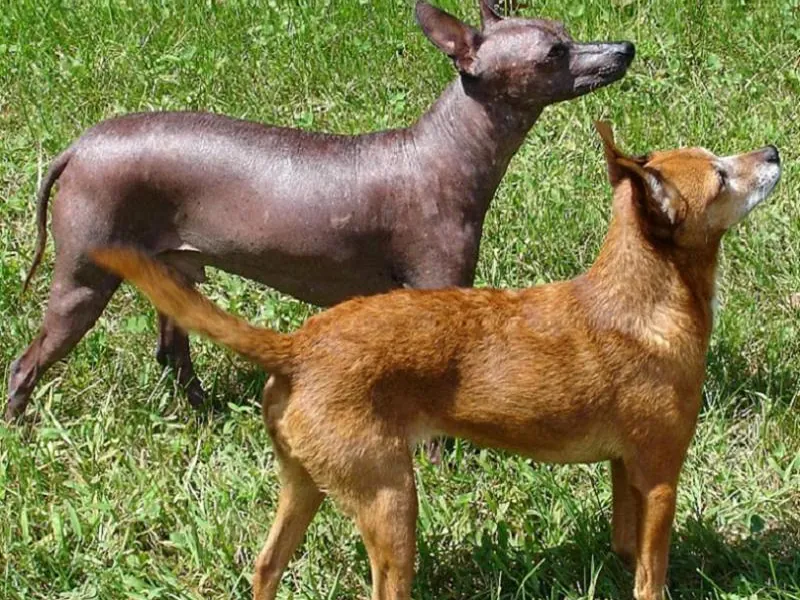
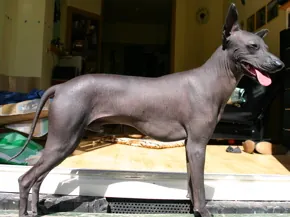
The Peruvian Inca Orchid is a slim, elegant dog with a sighthound-like outline, long legs and a lightly built frame. It comes in three sizes, together spanning about 10 to 26 inches at the shoulder and roughly 9 to 66 lb:
- Small: about 10 to 16 inches
- Medium: about 16 to 20 inches
- Large: about 20 to 26 inches
Most dogs are hairless, often with short tufts of hair on the head, feet and tail tip. The skin is smooth and elastic and can be any color, from black and elephant gray to slate, copper or blond, either solid or with pink patches. The skin often darkens with sun exposure.
Coated dogs are born in many litters because of the way the hairless gene is inherited. They have a short, smooth coat and full dentition. The AKC accepts both hairless and coated varieties, though some registries restrict coated dogs. Males and females are similar in build, with males often slightly larger within each size.
Temperament and Personality
These dogs are affectionate and loyal with their family and typically wary of strangers, making them good watchdogs. They can be sensitive to noise and hectic households. Their sighthound-like build comes with a chase instinct, so small pets may be seen as prey.
Early socialization helps them accept visitors and new situations calmly.
Peruvian Inca Orchids are often described as elegant and quiet indoors. They like warmth and comfort, and many seek out blankets or sunny spots. Gentle, calm children are a better match than toddlers.
Is the Peruvian Inca Orchid a Good Family Dog?
It can be a devoted family dog in a calm household. Peruvian Inca Orchids bond closely with their people and are often quiet and gentle indoors.
The breed is better suited to families with older, calm children than toddlers, as many are sensitive to noise and rough handling. It tends to be wary of visitors, so early socialization with guests is important. Small pets such as rabbits or rodents can trigger its chase instinct. Families also need to commit to skin care, including sun protection and baths, which children can help with under supervision.
Is the Peruvian Inca Orchid Good for First-Time Owners?
It can work for a thoughtful first-time owner, especially the small or medium size. The breed is affectionate, generally quiet and responds well to gentle training.
Beginners should be ready for its sensitivity, wariness of strangers and need for socialization. The bigger learning curve is physical care: sunscreen or shirts, coats in cold weather, regular baths for clogged pores and careful dental checks for missing teeth. Finding a breeder is also harder in the US than for common breeds. Talking with the breed club and experienced owners first is wise.
Is the Peruvian Inca Orchid a Good Apartment Dog?
The small and medium sizes often adapt well to apartments, as they are typically quiet and calm indoors. The large size can manage too but needs more room to stretch out and run.
All sizes need daily walks and chances to sprint in a fenced area. Apartments can be an advantage for skin care, as owners can easily control temperature and limit sun exposure. Watch for alert barking at hallway noises, since the breed is watchful. In cold climates, apartment owners should keep a sweater handy even for short trips outside.
Exercise and Training
Daily walks plus chances to run in a fenced area keep these athletic dogs fit. They enjoy lure coursing and agility. Training responds well to gentle, reward-based methods. On sunny days, use dog-safe sun protection or a light shirt, and in cold weather a warm coat.
Train with patience and positive methods. These dogs can be sensitive and may withdraw with harsh treatment. They enjoy running, so a safely fenced area is ideal. Keep walks shorter in very hot or cold weather.
Grooming and Shedding
Hairless dogs shed little to no hair, which some allergy sufferers find easier, but skin needs regular care.
- Wash with a mild shampoo every week or two to prevent clogged pores
- Moisturize dry skin as needed
- Protect from sunburn and cold
Coated varieties have a short coat that needs only occasional brushing.
Feeding and Nutrition
Portions vary hugely across the three sizes, so feed for your dog's actual weight and activity rather than the breed as a whole. Keep the slim, athletic outline the breed is known for.
Dental structure is the most important breed-specific feeding issue. The hairless gene often means missing or misaligned teeth.
- Choose a kibble size your dog can pick up and chew comfortably, or soften food with warm water.
- Watch for dropped food or slow eating, which can signal dental discomfort.
- Keep up with dental checks, as the remaining teeth need protecting.
Without fur, hairless dogs lose more body heat, and some need slightly more food in cold weather, especially if they spend time outdoors. Adjust gradually by body condition. Feed adults two meals a day and puppies three or four. If your dog has recurring skin problems, discuss diet with your vet, but do not assume food is the cause.
| Adult weight | Less active | Typical adult | Very active |
|---|---|---|---|
| 9 lb | 280 kcal | 320 kcal | 400 kcal |
| 38 lb | 830 kcal | 950 kcal | 1,180 kcal |
| 66 lb | 1,250 kcal | 1,430 kcal | 1,790 kcal |
Estimates use the resting energy formula veterinarians work with (70 × body weight in kg0.75) and standard activity factors. Use the feeding guide on your food as a starting point and adjust to body condition. Puppies, seniors, pregnant animals and pets that need to lose weight have different needs, so ask your vet.
Health and Lifespan
Peruvian Inca Orchids usually live 12 to 14 years. The gene responsible for hairlessness (FOXI3) also affects tooth development, so hairless dogs often have missing teeth, which some welfare bodies consider a concern when breeding for this trait. Their exposed skin is prone to sunburn, acne and injury. Good dental care, skin protection and a breeder who explains these issues openly are important.
Keep an eye on teeth: missing or misaligned teeth can affect chewing, so regular dental checks and appropriate food texture matter. Watch for blackheads and skin irritation, and avoid harsh products on the skin.
Peruvian Inca Orchid Price and Cost of Ownership
Peruvian Inca Orchids are rare in the US, and few breeders produce litters each year, so there is no well-established price range. Prices vary by breeder, region, size and lines, and some buyers import dogs from Peru or Europe, which adds travel and import costs.
Rescue dogs are uncommon but sometimes available through breed contacts and sighthound rescues.
Breed-specific ongoing cost drivers include:
- Dog-safe sunscreen, shirts and winter coats
- Mild shampoos and skin care products for regular baths
- Dental checks and possible treatment for missing or misaligned teeth
- Treatment for skin irritation, acne or minor injuries on bare skin
- Shipping or travel costs to reach a breeder
Is the Peruvian Inca Orchid Right for You?
This breed suits you if you:
- Want a very low-shedding, loyal companion
- Can protect its skin from sun and cold
- Have a calm household without small pets
It is less suited to noisy homes or people who prefer a dog that welcomes strangers.
Choose a size that fits your lifestyle: the small variety adapts more easily to apartments, while the large one needs more space to run.
Peruvian Inca Orchid Traits at a Glance
Peruvian Inca Orchid FAQ
Is the Peruvian Inca Orchid hypoallergenic?
Hairless dogs shed very little, which helps some allergy sufferers, but no dog is fully allergen-free.
How big do Peruvian Inca Orchids get?
They come in three sizes, ranging from about 10 to 26 inches tall and 9 to 66 lb.
Do hairless dogs need sunscreen?
Yes, exposed skin can burn. Use a dog-safe sunscreen or clothing and limit midday sun.
Why do Peruvian Inca Orchids have missing teeth?
The gene that causes hairlessness also affects tooth development, so hairless dogs often have incomplete dentition.
How long do Peruvian Inca Orchids live?
Typically 12 to 14 years.