XoloitzcuintliMexico's ancient hairless watchdog
The Xoloitzcuintli (show-low-eets-KWEENT-lee) is one of the oldest dog types in the Americas, a calm, alert companion that comes in three sizes and usually without a coat. It suits owners who want a quiet, devoted house dog with real watchdog instincts and who are happy to trade brushing for skin care.
Why people love the Xoloitzcuintli
- Hairless variety sheds almost nothing
- Calm, quiet and composed indoors
- Three sizes, from apartment-friendly toy to athletic standard
- Long-lived, often reaching 13 to 18 years
- Alert watchdog that alerts rather than barks nonstop
Things to consider
- Skin needs regular baths, sunscreen and moisturizing
- Feels the cold and needs clothing in winter
- Reserved with strangers without careful socialization
- Missing or irregular teeth are common in hairless dogs
- Good jumper and climber, so fences must be secure
Health note: this breed is affected by health concerns linked to its body shape. Read the health section and choose a breeder who health-tests and breeds for moderate features.
Is this breed right for you?
10 questions · live resultHistory and Origin
Hairless dogs were living in Mexico long before European contact. Clay figures of bald, wrinkled dogs from western Mexico are more than 2,000 years old, and the name links the Aztec god Xolotl with itzcuintli, the Nahuatl word for dog. The dogs were valued as bed warmers, as companions and in ritual life.
After the Spanish conquest the type survived mainly in remote villages. In the mid 20th century Mexican breeders and the national kennel club gathered village dogs and rebuilt the breed, and the FCI recognized it. The AKC admitted the Xolo to its Non-Sporting Group in 2011. Today it is regarded as a national symbol of Mexico.
Sizes, Coat Varieties and Colors
The Xoloitzcuintli is a lean, graceful, moderately built dog with a wedge-shaped head, large upright ears and an almond-eyed, thoughtful expression. It comes in three sizes. Under the AKC standard the toy stands about 10 to 14 inches, the miniature over 14 to 18 inches and the standard over 18 inches, with large standards reaching around 24 inches. Weights run from about 11 to 55 lb across the sizes.
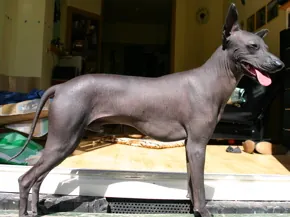
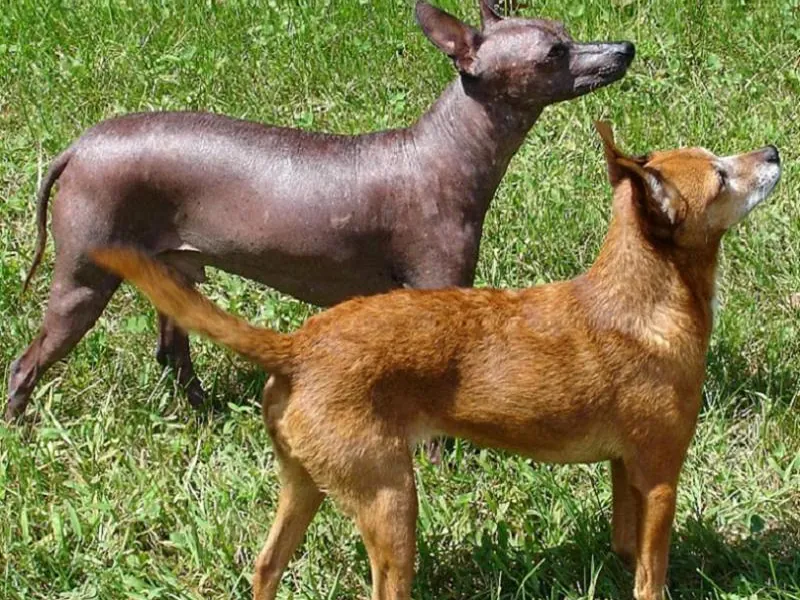
There are two varieties. The hairless Xolo has smooth, tough skin that feels warm to the touch, sometimes with a short tuft of coarse hair on the head, feet or tail tip. The coated Xolo has a short, flat, close coat over the whole body and usually a full set of teeth.
Dark, solid skin colors such as black, gray-black, slate, liver, red and bronze are typical, and spots or white markings are permitted. Lighter skin tends to need more sun protection. Males and females are similar in build, with males often slightly larger and heavier in the head.
Temperament and Personality
Xolos are typically calm and composed indoors and strongly attached to their own people. Many pick one favorite person and like to stay within touching distance.
They are naturally reserved with strangers and notice everything happening around the house, which makes them effective watchdogs. They tend to alert rather than bark nonstop. Early, gentle socialization helps a young Xolo meet visitors with polite indifference instead of suspicion.
- Quiet and observant at home
- Watchful and wary of unfamiliar people
- Usually gets along with other pets it is raised with
Are Xolos Good for First-Time Owners?
Xolos can suit a thoughtful first-time owner, especially an adult who wants a calm companion and is home a lot. They are generally clean, quiet indoors and willing to learn with gentle, reward-based training.
Two things trip up beginners. First, young Xolos can be lively and sensitive, and they need patient socialization so their natural wariness of strangers does not harden into nervousness. Second, a hairless dog needs a skin-care routine, sun protection and warm clothing in winter. Meet adult Xolos before you commit, and choose a breeder who raises puppies in the home and talks openly about temperament.
Do Xolos Bark a Lot?
No, Xolos are not known as heavy barkers. They are watchful and will alert you to someone at the door or an unusual noise, usually with a few barks, and then settle once they see that you have it under control.
Barking can increase in under-exercised or lonely Xolos, and some young dogs bark more while they are still unsure of strangers. Gentle socialization, daily walks and not leaving the dog alone for long stretches keep noise low. Toy Xolos can be a bit more vocal than standards, but overall the breed is a good choice for owners who want an alert but quiet dog.
Are Xolos Good with Cats?
Many Xolos live well with cats, particularly when raised with them from puppyhood. They are not driven hunters like many terriers or sighthounds, and their calm indoor manner suits a cat household.
Individual temperament still matters. Young Xolos can be playful and may chase a running cat, and a large standard can overwhelm a timid one. Introduce them slowly, give the cat high perches and a dog-free retreat, and reward the dog for calm behavior around the cat. Unfamiliar cats outdoors may be treated differently from the family cat, so keep your Xolo leashed on walks.
Exercise and Training
Despite the relaxed house manners, Xolos are athletic dogs, especially the standard size. Plan on one or two brisk walks a day plus play or a safe run in a fenced area. Puppies and adolescents are noticeably livelier than adults.
They are intelligent and generally willing, but sensitive. Short, reward-based sessions work far better than repetition or harsh corrections. Many Xolos are good jumpers and climbers, so check fences before trusting the yard. They do not like being left alone for long stretches and may become anxious or destructive if routinely isolated.
Grooming and Shedding
The hairless Xolo barely sheds, but its skin needs regular attention:
- Bathe or wipe down every week or two to keep pores clear; young dogs are prone to acne and blackheads.
- Use a pet-safe sunscreen on light-colored skin and limit midday sun.
- Moisturize lightly if the skin gets dry, without clogging pores.
- Provide a sweater or coat in cold or wet weather, and soft bedding indoors.
Litters also produce coated Xolos with a short, flat coat. These need only occasional brushing and still have the breed's character.
Feeding and Nutrition
The hairless Xolo loses more body heat than a coated dog of the same size, so many need a little more food in cold months and slightly less in hot weather. Judge by body condition: on a hairless dog the ribs and hip bones are easy to see, so aim for ribs that are faintly visible rather than prominent.
Teeth are the main breed-specific consideration. Hairless Xolos often have missing or irregular premolars, but most eat normal kibble without trouble. If a dog has very few teeth, a smaller kibble size or softened food can help. Daily tooth brushing protects the teeth that are there.
Because the size range is so wide, feed according to the individual: toy puppies need three or four small meals to avoid low blood sugar, while standards do well on two meals as adults. Some Xolos have sensitive skin, and if acne or itching persists despite good skin care, discuss a possible food reaction with your vet. Keep training treats small, as weight gain shows clearly on hairless skin.
| Adult weight | Less active | Typical adult | Very active |
|---|---|---|---|
| 11 lb | 330 kcal | 370 kcal | 470 kcal |
| 33 lb | 750 kcal | 850 kcal | 1,070 kcal |
| 55 lb | 1,090 kcal | 1,250 kcal | 1,560 kcal |
Estimates use the resting energy formula veterinarians work with (70 × body weight in kg0.75) and standard activity factors. Use the feeding guide on your food as a starting point and adjust to body condition. Puppies, seniors, pregnant animals and pets that need to lose weight have different needs, so ask your vet.
Health and Lifespan
Xolos are a long-lived breed, typically reaching 13 to 18 years. Their main breed-specific issues come from the hairless gene itself. The same mutation that removes the coat also affects tooth development, so many hairless Xolos have missing or irregular teeth, especially premolars. Two copies of the gene are lethal before birth, so every hairless Xolo carries exactly one copy and the dental effect comes with it. Some welfare assessments, for example in Germany, therefore list hairless breeds as a concern.
Skin is the other focus: sunburn, acne, dryness and minor wounds occur more easily without fur. Choose a breeder who health-checks parents, raises puppies in the home and explains dental and skin care honestly.
Xoloitzcuintli Price and Cost of Ownership
Typical breeder price in the US$1,000 to $3,000
A Xoloitzcuintli puppy from a reputable US breeder typically costs about $1,000 to $3,000. Prices vary by breeder, region, size and variety, and breeders are fewer than for common breeds, so waiting lists are normal. Some hairless and coated Xolos come into rescues, sometimes as mixes, which can be an option for an adult dog.
Ongoing costs are modest compared with many breeds, since there is no professional grooming. Instead, budget for skin care: gentle shampoos, pet-safe sunscreen, non-comedogenic moisturizer and a wardrobe of sweaters and coats for winter.
Dental care is the other driver. Missing or irregular teeth make regular dental checks and periodic cleanings worthwhile, and insurance can help with any extractions. Treatment of skin injuries, sunburn or acne flare-ups also adds occasional costs.
Is the Xoloitzcuintli Right for You?
A Xolo can be a great fit if you:
- Want a low-shedding dog and are fine with weekly skin care instead of brushing
- Spend most of the day at home or can take the dog along
- Like a quiet, alert companion that keeps an eye on the house
- Can choose the right size: toy and miniature Xolos suit apartments well
It is less suited to owners who leave the dog alone all day, live in a very hot, sunny climate without shade, or want a dog that is friendly with every stranger.
Xoloitzcuintli Traits at a Glance
Xoloitzcuintli FAQ
How big do Xoloitzcuintlis get?
Xolos come in toy, miniature and standard sizes, ranging from about 10 to 24 inches at the shoulder and roughly 11 to 55 lb overall.
Are Xolos hypoallergenic?
The hairless variety sheds almost nothing and is often tolerated by allergy sufferers, but no dog is fully allergen-free because allergens are also found in skin flakes and saliva.
How long do Xoloitzcuintlis live?
Typically 13 to 18 years, which is long for a dog of its size range.
Do Xolos need clothes?
In cold, wet or windy weather a hairless Xolo benefits from a coat or sweater, and in strong sun it needs shade or sunscreen.
Are Xolos good family dogs?
They are affectionate with their household and do well with respectful older children, but they are reserved with strangers and prefer a calm home.
Do Xolos have teeth problems?
Many hairless Xolos have missing or irregular teeth because the hairless gene also affects tooth development; soft food is rarely necessary, but regular dental checks are.