HokkaidoJapan's hardy bear-hunting spitz
The Hokkaido is a rare, sturdy Japanese spitz from the country's northernmost island, once kept by the Ainu people to hunt bear and deer in deep snow. Brave, alert and devoted to its family, it suits active owners who want a hardy, natural breed with a strong watchdog instinct.
Why people love the Hokkaido
- Courageous, loyal and alert companion
- Natural, unexaggerated build
- Thrives in cold climates and outdoor activities
- Usually more cooperative than other Japanese breeds
- Typically lives 12 to 15 years
Things to consider
- Strong prey drive toward cats and small pets
- Reserved and watchful with strangers
- Heavy seasonal shedding
- Rare outside Japan; puppies may need importing
- Recall can fail around wildlife
Is this breed right for you?
10 questions · live resultHistory and Origin
The Hokkaido is one of six native Japanese spitz breeds, alongside the Akita, Shiba, Kishu, Shikoku and Kai. Its ancestors are believed to have arrived with people migrating from the main islands of Japan many centuries ago. On Hokkaido the dogs lived with the Ainu, the island's Indigenous people, who used them to hunt brown bear, deer and smaller game and to guard their settlements.
The breed was declared a Natural Monument of Japan in 1937, and the name Hokkaido Inu became official around that time. It remains uncommon even in Japan and rare elsewhere. The AKC currently records it in the Foundation Stock Service, its program for breeds working toward full recognition.
Size, Coat and Colors
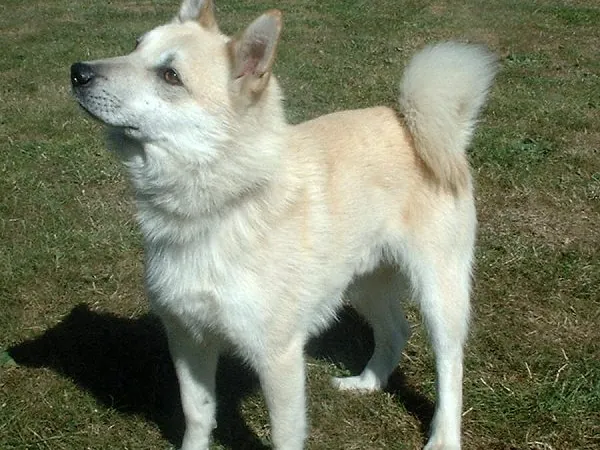
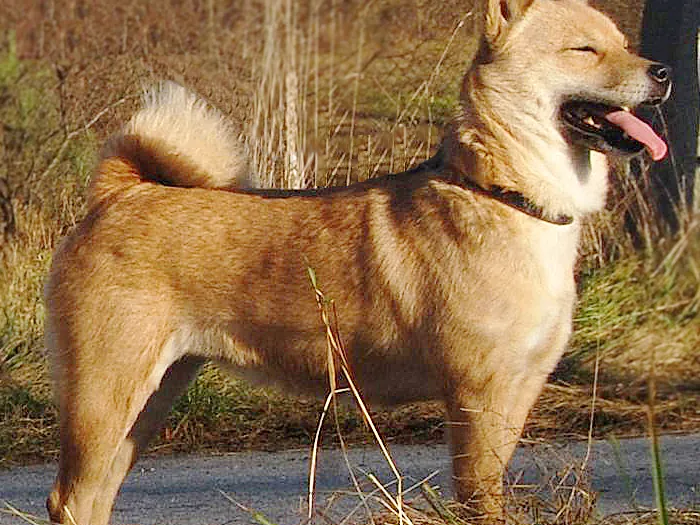
The Hokkaido is a medium-sized, sturdy spitz with strong bones and a well-balanced, muscular body. Adults stand about 18 to 20 inches at the shoulder and weigh 44 to 66 lb. Males are larger and more robust, with a broader head and a fuller neck ruff, while females are lighter but still solid.
Typical spitz features include:
- Small, triangular, upright ears that tilt slightly forward
- Small, deep-set triangular eyes
- A broad skull with a wedge-shaped muzzle
- A thick tail curled or sickled over the back
The double coat has a harsh, straight outer coat and a soft, dense undercoat. The ears are thickly furred to protect against cold.
Accepted colors include:
- Sesame, red hairs tipped with black
- Red and black
- Black and tan
- Brindle
- White
Many Hokkaidos have blue-black spots on the tongue, a trait often noted in the breed.
Temperament and Personality
Hokkaidos are courageous, loyal and very alert. They tend to bond closely with their family and are watchful and often reserved with strangers, quickly announcing anything unusual. Their bear-hunting history shows in a confident, bold attitude.
With good socialization they can be affectionate and playful at home and live well with older children and other dogs raised alongside them. Their prey drive is strong, so cats, chickens and small pets need careful introductions or separation.
Is the Hokkaido Good for First-Time Owners?
The Hokkaido is better suited to owners with some dog experience, especially with spitz or Japanese breeds. It is loyal and more cooperative than some relatives, but its watchfulness, prey drive and independent mind require consistent handling.
First-time owners can succeed if they are active, commit to early and ongoing socialization, and use positive training. They must also manage prey drive with secure fencing and leashed walks. Because the breed is rare, finding experienced guidance can be harder than with common breeds. Working closely with the breeder and a trainer familiar with spitz types helps.
Are Hokkaidos Good With Cats?
Hokkaidos often have a strong prey drive and are not a natural match for cats. They were bred to hunt game, and a running cat may trigger chasing.
Puppies raised with a confident cat sometimes form a peaceful relationship, but even then they may chase unfamiliar cats outdoors. Introductions should be slow and supervised, and the cat needs escape routes and dog-free spaces. Small pets such as rabbits or chickens should be kept securely separated. If you already have a cat, discuss the breeder's experience with cat-friendly lines before committing.
Are Hokkaidos Easy to Train?
Hokkaidos are intelligent and usually more willing to work with their owners than some other Japanese breeds, but they are not pushovers. They learn quickly when they see a reason to cooperate.
Food and play rewards work best, along with short, varied sessions. Harsh corrections tend to backfire with this proud, independent breed. Socialization is as important as training to prevent excessive wariness of strangers. Recall is the hardest skill, especially around wildlife, so use a long line in open country. Many Hokkaidos enjoy trick training, scent work and hiking-based activities.
Exercise and Training
This is an energetic, enduring working dog. Plan for at least an hour of activity a day: long walks, hikes, jogging once grown, and free running in securely fenced areas. Scent games, tracking and trick training keep the mind busy. They usually enjoy cold-weather activities such as snowshoe hikes, and many are agile climbers, so check fences for gaps and footholds.
Hokkaidos are intelligent and generally more willing to work with their owners than some other Japanese breeds, especially with food and play rewards. Start socialization early with many people, places and dogs to avoid excessive wariness. Recall can fail around wildlife, so use a long line in open country.
Grooming and Shedding
The coat is a thick double coat with a harsh outer layer and soft undercoat, built for snowy winters. A weekly brush is enough most of the year, but during the seasonal shed, usually twice a year, the undercoat comes out in clumps and daily raking helps. The coat sheds dirt well, so baths are rarely needed. In hot weather, provide shade and limit exercise to cool hours.
Feeding and Nutrition
The Hokkaido is a robust, active working dog, and its food needs vary with activity and climate. Dogs that spend a lot of time outdoors in cold weather or hike regularly need more than less active companions. Adjust portions to body condition, checking by feel under the thick coat.
Puppies should grow steadily on a diet suited to medium-sized breeds. Avoid overfeeding, as hip dysplasia and luxating patellas occur in the breed.
Some Hokkaidos show pica, the habit of eating non-food items. Keep socks, toys and other small objects out of reach, offer safe chews and discuss persistent pica with your vet, since it can have behavioral or medical causes.
In hot weather, appetite and activity may drop. Feed during cooler hours and adjust portions to maintain condition.
Two meals a day suits most adults. Food rewards are effective for training, so use small, high-value treats and deduct them from daily meals.
A balanced diet supports the coat, and a dull or flaky coat outside of shedding season is worth discussing with your vet.
| Adult weight | Less active | Typical adult | Very active |
|---|---|---|---|
| 44 lb | 930 kcal | 1,060 kcal | 1,320 kcal |
| 66 lb | 1,250 kcal | 1,430 kcal | 1,790 kcal |
Estimates use the resting energy formula veterinarians work with (70 × body weight in kg0.75) and standard activity factors. Use the feeding guide on your food as a starting point and adjust to body condition. Puppies, seniors, pregnant animals and pets that need to lose weight have different needs, so ask your vet.
Health and Lifespan
Hokkaidos are generally robust and typically live 12 to 15 years. Conditions reported in the breed include:
- Collie eye anomaly (CEA), an inherited eye disorder with a DNA test available
- Hip dysplasia and luxating patellas
- Heart murmurs
- Idiopathic epilepsy
Some individuals show anxiety or pica, the habit of eating non-food items. Ask breeders about CEA status and hip screening of both parents.
Hokkaido Price and Cost of Ownership
Hokkaidos are rare in the US, and there is no reliable published price range. Some puppies are bred domestically through a small community of enthusiasts, while others are imported from Japan, which adds transport, health certificates and paperwork. Prices vary by breeder, region and lines. Expect to wait for a litter.
Rescue options are very limited, though occasional rehomed adults appear through breed communities.
Ongoing cost drivers include:
- Secure fencing that resists climbing
- Grooming tools such as undercoat rakes and a high-velocity dryer for seasonal shedding
- Insurance covering hip dysplasia, patellar luxation, eye disease and epilepsy
- Health screening: DNA test for collie eye anomaly and hip evaluations
- Training with a trainer experienced in spitz breeds
Is the Hokkaido Right for You?
A Hokkaido suits active owners, ideally in cooler climates, who want a loyal and alert companion and enjoy outdoor activity. It is a good choice for people who appreciate a natural, unexaggerated breed. Be prepared to manage prey drive, invest in socialization and wait a long time for a puppy, which may need to be imported. It is less suited to homes with small pets or owners who want a dog that is friendly with every stranger.
Hokkaido Traits at a Glance
Hokkaido FAQ
How big do Hokkaido dogs get?
They stand about 18 to 20 inches at the shoulder and weigh roughly 44 to 66 lb.
Are Hokkaido dogs good family dogs?
They are loyal and affectionate with their family and usually do best with older children and owners who understand spitz breeds.
Is the Hokkaido AKC-recognized?
Not fully. It is recorded in the AKC Foundation Stock Service, which is a step toward full recognition.
Do Hokkaido dogs shed?
Yes. They shed moderately year-round and heavily during their seasonal coat change.
Are Hokkaidos good watchdogs?
Yes. They are alert, protective of their home and quick to warn of strangers.
How long do Hokkaido dogs live?
Typically 12 to 15 years.