Nederlandse KooikerhondjeDutch duck-decoy dog with plumed tail
The Nederlandse Kooikerhondje is a small Dutch spaniel-type dog once used to lure ducks into traps with its waving white tail. Lively, eager to learn and affectionate, it thrives with active owners who offer training and daily exercise.
Why people love the Nederlandse Kooikerhondje
- Quick learner that loves training and dog sports
- Affectionate and closely bonded with its people
- Medium-small size fits many homes
- Easy-care, water-resistant coat
- Distinctive orange and white look with black earrings
Things to consider
- Can be sound-sensitive and reserved with strangers
- Inherited diseases from a small founder population
- Not ideal with very young or noisy children
- Dislikes long hours alone
- Rare in the US, often with waiting lists
Is this breed right for you?
10 questions · live resultHistory and Origin
For centuries Dutch decoy keepers used small dogs in duck decoys, called eendenkooi. The dog would appear and disappear between screens along a canal, its white plumed tail attracting curious ducks, which followed it into a narrowing pipe where they were caught. Dogs of this type appear in 17th-century Dutch paintings.
By the early 20th century, the breed was nearly extinct. In the 1940s, Baroness van Hardenbroek van Ammerstol began rebuilding it from a small number of dogs. The breed was recognized in the Netherlands in 1966 and by the AKC in 2018.
The breed's bright orange-red and white coloring made it easy for ducks to notice from a distance, which was essential to its decoy work.
Size, Coat and Colors
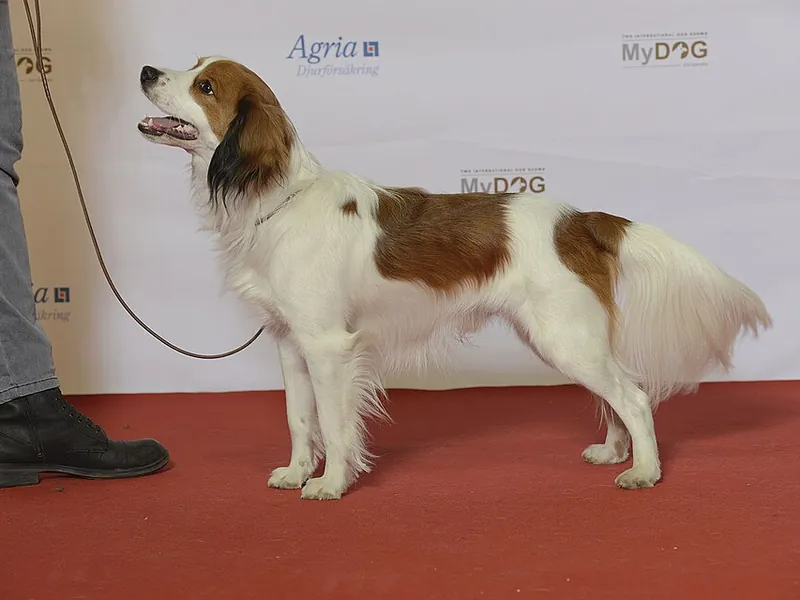
The Nederlandse Kooikerhondje is a small, spaniel-type sporting dog standing about 15 to 16 inches at the shoulder and weighing around 20 to 30 lb. The AKC standard gives about 15 to 16 inches for males and 14 to 15 inches for females. The body is slightly longer than tall, light and athletic, with a moderately long neck, a feathered tail carried level or gently curved and a friendly, alert head.
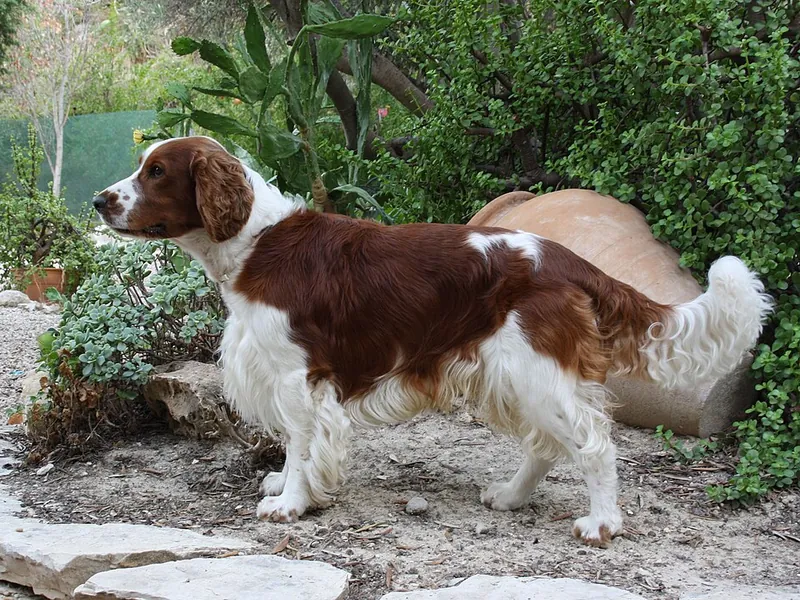
The coat is medium-length, slightly wavy or straight and lying close, with a well-developed undercoat. There is feathering on the ears, chest, legs and tail, which is a full white plume, the feature that once lured ducks.
Color is distinctive: clear orange-red patches on white, with long black hair tips on the ears called earrings. A small white blaze on the face is preferred. Black ticking and tricolor are faults. Males are a little larger and have a broader head, while females are more refined.
Temperament and Personality
Kooikers are cheerful, alert and affectionate with their family. They are often reserved with strangers and can be sensitive to loud noises and rough handling. Many are very attached to their people.
They are generally good with older children and other dogs when socialized, but some prefer calmer households. They have a moderate hunting interest and can learn to live with cats.
Kooikers are lively and curious outdoors but generally settle well indoors once exercised. They often bond closely with one person and may take time to warm up to new people. Because they can be sound-sensitive, gradual exposure to traffic, crowds and household noises is important in puppyhood.
Is the Kooikerhondje Good for First-Time Owners?
Yes, for an active first-time owner who enjoys training. Kooikers are eager to learn, respond well to positive methods and are a manageable size, which makes them more beginner-friendly than many sporting breeds.
What first-time owners should plan for is sensitivity. Many Kooikers are reserved with strangers and can be startled by loud noises or rough handling, so careful, gentle socialization from puppyhood matters a great deal. They do best in calm households and need about an hour of activity and mental work daily. Buying from a breeder who health tests and temperament-tests carefully is especially important, given the breed's small gene pool.
Do Kooikerhondjes Bark a Lot?
Kooikers are not known as heavy barkers. Their original job was to work silently in the duck decoy, luring birds with movement rather than noise, and most are fairly quiet in the house.
They are alert, though, and will bark at visitors, unexpected sounds or anything unusual, particularly if they are sensitive or under-exercised. A Kooiker that is bored, anxious or left alone too long may become noisier. Teaching a quiet cue, rewarding calm behavior and giving daily exercise and training games usually keep barking moderate, which makes the breed workable in apartments.
Can Kooikerhondjes Be Left Alone?
Kooikers are people-oriented and do not like long periods alone. An adult that has had a good walk and some training can usually manage about four hours, but full workdays are difficult for most of them.
Because many Kooikers bond closely with one person and can be sensitive, separation-related stress is a real risk. Build alone time gradually from puppyhood, starting with a few minutes and lengthening slowly. Give mental work such as a puzzle feeder before leaving, and keep departures low-key. For full-time workers, a dog walker, daycare suited to sensitive dogs or a family member at home helps the breed thrive.
Exercise and Training
Plan about an hour of activity daily. Kooikers enjoy agility, obedience, flyball and nosework, and they are quick learners.
- Use positive reinforcement and short sessions; they are eager to please.
- Socialize early to prevent excessive shyness.
- Give mental challenges such as puzzle toys.
Their history as decoy dogs means they were bred to work closely with a person, so they often respond well to training and can learn a good recall. Many enjoy retrieving and water.
Avoid long repetitive drills; Kooikers prefer variety and become bored with excessive repetition.
Grooming and Shedding
The medium-length, slightly wavy coat is orange-red and white, with black ear tips called earrings. Brush weekly to remove loose hair and keep feathering tangle-free.
They shed moderately, with heavier seasonal sheds. Trim hair between the paw pads and keep ears clean.
The coat is fairly easy to care for and is water-resistant. Avoid frequent bathing to protect the natural oils.
Feeding and Nutrition
Kooikers are moderately active and usually maintain weight well, but dogs that do agility, flyball or long hikes may need more food on busy days and less on quiet ones. Feed by body condition: you should feel ribs easily under the coat and see a waist from above.
Adults do well on two meals a day. Puppies need three or four smaller meals until about six months and steady, not rapid, growth.
- Kooikers are quick learners and respond well to food rewards. Use small treats and count them in the daily ration, or use part of each meal for training.
- Kidney disease is reported in the breed. If your vet finds kidney changes, the diet becomes part of the treatment plan, so follow your vet's advice rather than switching foods yourself.
- Food puzzles and nosework games make good use of the breed's busy mind.
- Keep fresh water available after training and water play.
| Adult weight | Less active | Typical adult | Very active |
|---|---|---|---|
| 20 lb | 510 kcal | 590 kcal | 730 kcal |
| 30 lb | 690 kcal | 790 kcal | 990 kcal |
Estimates use the resting energy formula veterinarians work with (70 × body weight in kg0.75) and standard activity factors. Use the feeding guide on your food as a starting point and adjust to body condition. Puppies, seniors, pregnant animals and pets that need to lose weight have different needs, so ask your vet.
Health and Lifespan
Kooikers typically live 12 to 15 years. The breed descends from a very small founder population, so inherited diseases are a concern. These include hereditary necrotizing myelopathy, von Willebrand's disease, polymyositis, kidney disease and epilepsy.
Ask breeders for DNA test results and eye and patella checks. Breed clubs often encourage health testing and outcrossing projects to widen the gene pool.
Von Willebrand's disease is a bleeding disorder, so breeders should test for it, and you should tell your vet before surgery if your dog's status is unknown.
Nederlandse Kooikerhondje Price and Cost of Ownership
Typical breeder price in the US$2,000 to $4,000
Kooikerhondje puppies from reputable US breeders typically cost about $2,000 to $4,000. Prices vary by breeder, region and lines. The breed is still uncommon in the US, so waiting lists are usual, and some owners import from Europe, which adds travel costs.
Adult Kooikers occasionally need new homes, and the national breed club can point you to rehoming options.
Breed-specific cost drivers are mainly health related. Responsible breeders pay for DNA tests for hereditary necrotizing myelopathy, von Willebrand's disease and other conditions, which is reflected in the price. Owners should know their dog's von Willebrand status before surgery. Budget also for regular checkups for kidney function and eyes, and for training and sport classes, which this breed enjoys.
Is the Nederlandse Kooikerhondje Right for You?
A Kooiker suits active singles, couples and families with older children who enjoy training and dog sports. It adapts to apartments if exercised daily.
It is less suitable for homes with very young children, noisy environments or owners who are away for long hours.
Kooikers make excellent partners for people who enjoy agility or trick training and want a medium-small, attractive and trainable dog.
Nederlandse Kooikerhondje Traits at a Glance
Nederlandse Kooikerhondje FAQ
How big do Kooikerhondjes get?
They stand about 15 to 16 inches tall and weigh 20 to 30 lb.
Are Kooikerhondjes good family dogs?
Yes, for calm, active families. They are affectionate but can be sensitive around very young children.
Do Kooikerhondjes shed?
They shed moderately, with heavier seasonal sheds.
Are Kooikerhondjes easy to train?
Yes. They are quick learners and respond well to positive training.
How long do Kooikerhondjes live?
Typically 12 to 15 years.
What are Kooikerhondje earrings?
They are the black tips on the ear feathering, a prized breed feature.