Miniature Bull TerrierThe egg-headed clown in a smaller size
The Miniature Bull Terrier packs the Bull Terrier's egg-shaped head, muscle and comic personality into a dog of 10 to 14 inches. It suits experienced, patient owners who enjoy a playful, determined companion and can handle a strong-willed terrier.
Why people love the Miniature Bull Terrier
- Bull Terrier personality in a compact size
- Playful, funny and deeply attached to its people
- Short coat that is quick to groom
- Sturdy enough for active play
- Alert watchdog without excessive size
Things to consider
- Stubborn and quick to test boundaries
- Strong chase instinct toward cats and small animals
- Some are intolerant of same-sex dogs
- Inherited eye, kidney and hearing issues need screening
- May develop compulsive habits when bored
Is this breed right for you?
10 questions · live resultHistory and Origin
The Bull Terrier was developed in 19th century England, famously refined by James Hinks of Birmingham in the 1860s. From the start, litters included smaller dogs, and small Bull Terriers were valued as ratters and companions.
Very tiny toy versions proved unhealthy and faded, but a miniature at a sensible size survived. The Kennel Club recognized the Miniature Bull Terrier as a separate breed in 1939. The AKC followed in 1991. The breed standard is essentially the Bull Terrier's, with a height limit instead of a weight limit, so the Mini should look like a smaller copy of its big relative, not a toy dog.
Size, Colors and Coat
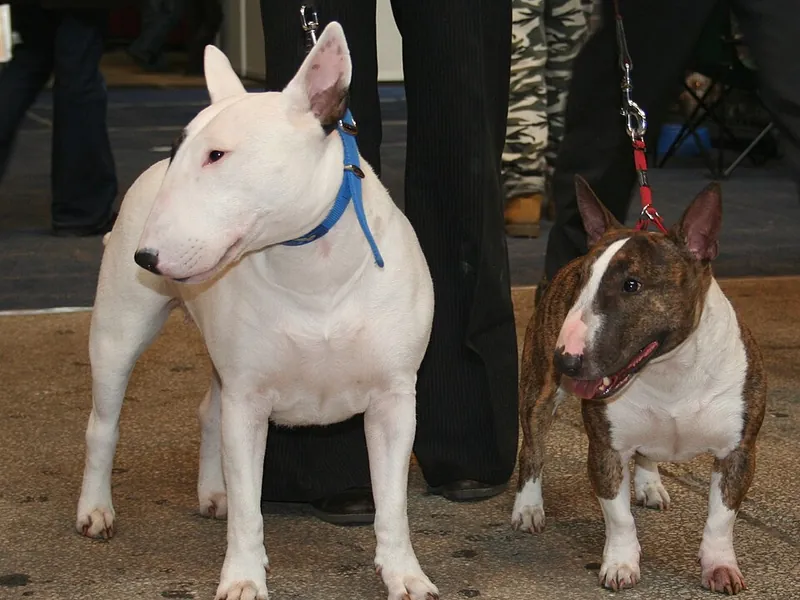
The Miniature Bull Terrier is a strongly built, muscular dog with the breed family's unique egg-shaped head: long, deep and curving down from skull to nose without a stop. It stands about 10 to 14 inches at the shoulder and weighs roughly 18 to 29 lb. The standard sets a height limit only, so weight should be in proportion. Males are generally more massive in head and body, while females look slightly more refined.
Small, triangular, deep-set dark eyes and erect ears complete the look. The coat is short, flat and harsh to the touch with a fine gloss.
Colors fall into two groups:
- White: pure white, with markings on the head allowed
- Colored: any color with or without white, including brindle, red, fawn, black brindle and tricolor
Brindle is often preferred among colored dogs. Blue and liver are considered undesirable. The Mini should look like a smaller Bull Terrier, not a toy dog.
Temperament and Personality
Minis are cheerful, cheeky and very attached to their people. Many have a strong sense of play, invent games, and like to be in the middle of family life. Their famous "zoomies", fast laps around the room, are a breed hallmark.
They also have a stubborn streak and real terrier tenacity. Many will chase cats and small animals, and some do not tolerate other dogs of the same sex. Early socialization and supervision around other pets are important. Minis can be vocal and make alert watchdogs.
Is the Miniature Bull Terrier a Good Family Dog?
Yes, in many households the Mini is a fun, affectionate family dog that loves to be part of everything. Its sturdy build makes it better suited to play with children than many toy breeds.
The caveats are its boisterous energy, strength for its size and stubborn streak. Young children should always be supervised, and the dog needs clear house rules from the start. Families with cats, rabbits or rodents need careful management because of the breed's chase instinct. A Mini fits best in a home where someone is around much of the day to provide exercise, games and training.
Is the Miniature Bull Terrier Good for First-Time Owners?
It can be challenging. The Mini's size is manageable, but its personality is a full terrier: clever, headstrong and quick to take advantage of inconsistency.
A first-time owner who is patient, enjoys training and can commit to a puppy class is more likely to succeed. Expect to work on leash manners, polite greetings and impulse control, and to provide plenty of toys and games to avoid boredom behaviors like digging or tail chasing. Choosing a breeder who screens for PLL, deafness and kidney disease also takes some research, which first-time buyers should not skip.
Is the Miniature Bull Terrier a Good Apartment Dog?
Yes, a Mini can live well in an apartment if it gets around an hour of exercise and mental work every day. Its size is a good fit for smaller homes.
Apartment owners should plan for its energy: daily walks, tug and fetch sessions, food puzzles and short training games. Minis can be vocal and some bark at noises in hallways, so early desensitization helps. They should not be left alone for long hours, which can lead to chewing or compulsive habits. Hard-wearing toys are a must, as Minis are strong chewers.
Exercise and Training
Expect to provide around an hour of activity a day: walks, tug games, fetch and sniffing time. A bored Mini will dig, chew or invent its own entertainment.
Training works best with short, upbeat sessions, food rewards and lots of consistency. These dogs quickly test boundaries and lose interest in repetitive drills. Teach a reliable "drop it" and "leave it" early, and keep the dog leashed near wildlife or cats because the chase instinct can override recall. Some Minis develop compulsive habits such as tail chasing when under-stimulated, so mental work matters as much as physical exercise.
Grooming and Shedding
The short, flat coat is simple to care for. A weekly rub with a rubber mitt or hound glove removes loose hair, and shedding increases seasonally. White and light-colored dogs can sunburn on thinly haired areas, so offer shade on bright days. Check nails every few weeks and clean teeth regularly.
Feeding and Nutrition
Minis are muscular and food-motivated, which makes them easy to train but also easy to overfeed. Aim for a firm, athletic body with a visible waist.
- Feed adults two measured meals a day; puppies usually get three or four meals until around six months.
- Count training treats toward the daily ration and use small pieces.
- Food puzzles and lick mats provide mental work, which helps a breed prone to boredom habits.
The Bull Terrier family can inherit kidney disease, so routine bloodwork and urine tests matter, especially as the dog ages. If kidney problems are diagnosed, your vet may recommend a specific feeding plan; follow it rather than adjusting the diet on your own. Always provide plenty of fresh water. Some Minis develop skin allergies; persistent itching may need a vet-guided elimination diet trial. Supervise strong chewers with bones and chews, and choose items too large to swallow.
| Adult weight | Less active | Typical adult | Very active |
|---|---|---|---|
| 18 lb | 470 kcal | 540 kcal | 680 kcal |
| 24 lb | 590 kcal | 670 kcal | 840 kcal |
| 29 lb | 680 kcal | 770 kcal | 970 kcal |
Estimates use the resting energy formula veterinarians work with (70 × body weight in kg0.75) and standard activity factors. Use the feeding guide on your food as a starting point and adjust to body condition. Puppies, seniors, pregnant animals and pets that need to lose weight have different needs, so ask your vet.
Health and Lifespan
Most Miniature Bull Terriers live 11 to 13 years. Known inherited issues include:
- Primary lens luxation (PLL): the lens can dislocate and cause painful glaucoma. A DNA test exists, and responsible breeders test all breeding dogs.
- Deafness: more common in white dogs; puppies should be BAER tested.
- Kidney disease: hereditary nephritis and polycystic kidney disease occur in the Bull Terrier family; urine screening of parents is advised.
- Heart disease, including mitral valve problems, and luxating kneecaps.
Ask breeders for PLL results, hearing tests, heart and kidney screening on both parents.
Miniature Bull Terrier Price and Cost of Ownership
Typical breeder price in the US$1,500 to $3,500
A Miniature Bull Terrier puppy from a reputable US breeder typically costs around $1,500 to $3,500. Prices vary by breeder, region and lines. The breed is uncommon in the US, so waiting lists are typical. Ask for PLL DNA results, BAER hearing tests and kidney and heart screening on both parents.
Bull Terrier rescues sometimes have Minis or Mini mixes available.
Breed-specific ongoing cost drivers include:
- Eye exams and possible surgery if lens luxation develops
- Kidney and heart monitoring as the dog ages
- Treatment for skin allergies
- Durable toys and chews for a strong jaw
- Pet insurance, since some providers list bull breeds separately
Is the Miniature Bull Terrier Right for You?
A Mini fits well if you want a sturdy, funny, people-focused dog in a manageable size and enjoy training a clever but headstrong character. It does best with someone home for much of the day.
Think twice if you have cats or small pets, want an easily obedient dog, or will leave the dog alone for long hours. Families with young children should choose a well-socialized puppy and supervise, since Minis are boisterous and strong for their size.
Miniature Bull Terrier Traits at a Glance
Miniature Bull Terrier FAQ
How big do Miniature Bull Terriers get?
They stand about 10 to 14 inches at the shoulder and typically weigh 18 to 29 lb, with a muscular, compact build.
Are Miniature Bull Terriers good with other pets?
Many have a strong chase instinct toward cats and small animals, and some are not tolerant of other dogs, so early socialization and careful introductions are needed.
Do Miniature Bull Terriers shed?
They shed lightly to moderately year-round, a bit more seasonally; weekly brushing with a rubber mitt keeps it under control.
How long do Miniature Bull Terriers live?
The typical lifespan is 11 to 13 years.
Is a Miniature Bull Terrier the same breed as a Bull Terrier?
They share ancestry and almost the same standard, but kennel clubs register them as separate breeds, with the Mini limited to about 14 inches.
Are Miniature Bull Terriers easy to train?
They are smart but stubborn; short, fun, reward-based sessions and steady consistency work best.