Irish TerrierBold red daredevil from Ireland
The Irish Terrier is a leggy, red-coated terrier with a fearless streak and a big heart for its family. Lively and loyal but often intolerant of other dogs, it suits experienced owners who enjoy a spirited, independent companion.
Why people love the Irish Terrier
- Loyal, playful and protective with its family
- Light shedding wiry coat with little odor
- Athletic partner for hiking and jogging
- Usually affectionate with children it knows
- Long-lived, typically 13 to 15 years
Things to consider
- Often intolerant of other dogs, especially same sex
- Chases cats and small animals unless raised together
- Independent and quick to test rules
- Coat needs hand-stripping to keep its texture
- Bored dogs dig, chew and make their own fun
Is this breed right for you?
10 questions · live resultHistory and Origin
The Irish Terrier is considered one of the oldest terrier breeds. In rural Ireland it was a working farm dog, killing rats, guarding the property and accompanying hunters. The breed's nickname, Daredevil, reflects its courage.
The breed was shown in Ireland in the 1870s and soon recognized by The Kennel Club. During World War I, Irish Terriers served as messengers and sentries. The AKC recognized the breed in 1885.
Early Irish Terriers varied in color and size, but breeders in the late 19th century settled on the solid red coat that distinguishes the breed today. The Irish Terrier was one of the first terriers to be shown, and it remained popular in Britain and America into the early 20th century.
Size, Wiry Coat and Red Shades
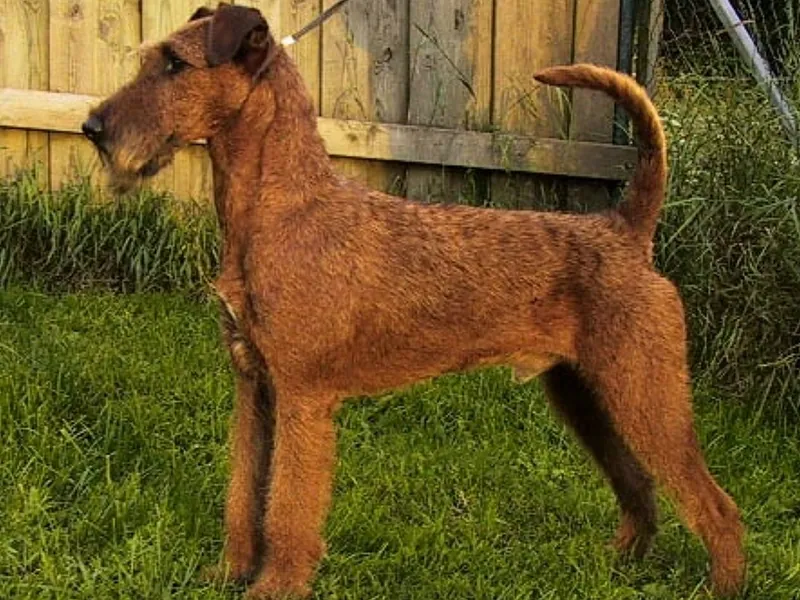
The Irish Terrier is a leggy, racy terrier with a longer body and more length of leg than most of its relatives. It stands about 18 inches at the shoulder and weighs 25 to 27 lb. Under the AKC standard, males weigh about 27 lb and females about 25 lb, so the sexes are close in size, though males usually have a stronger head and more substance.
The outline is graceful but sturdy: a long, flat head with a strong jaw, small V-shaped ears folded forward, a deep chest and a docked or natural tail carried gaily. The breed should look built for speed and endurance rather than bulk.
The coat is dense and wiry, lying close to the body, with a softer undercoat. The hair forms a short beard and slight eyebrows. Colors are whole-colored: bright red, golden red, red wheaten or wheaten. A small patch of white on the chest is allowed, but white elsewhere is not. Puppies are often born darker and can show black hairs that clear as they mature.
Temperament and Personality
Irish Terriers are affectionate, playful and protective with their family. They are usually wonderful with children they know and alert watchdogs.
They can be intolerant of other dogs, especially of the same sex, and do not back down from challenges. They chase cats and small animals unless raised with them. They are independent and question commands.
Irish Terriers are often described as having a big personality in a medium-sized body. They are spirited and fun-loving, and they bond strongly with their family. They are generally patient with children and enjoy being involved in family activities.
They need clear rules and consistent guidance, as they will happily take charge if allowed.
Is the Irish Terrier Good for First-Time Owners?
The Irish Terrier is usually better suited to experienced owners, but a well-prepared first-timer can manage one. The breed is smart and affectionate, yet bold, independent and often reactive toward other dogs.
Beginners tend to struggle with the dog-to-dog behavior and the habit of testing rules. If you are new to dogs, choose a breeder who matches you with a steadier puppy, enroll in a puppy class immediately and practice calm passing of other dogs on walks. Clear, consistent rules and plenty of exercise prevent most problems. Owners who want a dog park regular should look at another breed.
Are Irish Terriers Good With Cats?
Irish Terriers can live with cats they grow up with, but they are not a reliable choice around unfamiliar cats. The breed was used to kill vermin and has a strong instinct to chase small running animals.
A puppy raised with a calm, confident cat often learns to accept it, especially if the cat does not run. Supervise closely during the first months, give the cat dog-free spaces and step in early if play becomes too intense. Adult Irish Terriers with no cat history are risky in a cat home. Rabbits, guinea pigs and rodents should always be kept separate.
Can an Irish Terrier Live in an Apartment?
Yes, an Irish Terrier can adapt to an apartment if it gets enough daily exercise and mental work. It is medium-sized, light shedding and usually not a constant barker, which helps in shared buildings.
The real requirement is activity. Plan at least an hour a day of brisk walks, jogging or games, plus training or puzzle toys. Hallways and elevators can be tense if you meet other dogs, so work on calm leash manners and give other dogs space. A busy, well-exercised Irish Terrier settles well indoors; a bored one may chew, dig at carpets or bark at noises.
Exercise and Training
Plan about an hour or more of daily exercise, plus mental games. They enjoy running, hiking, agility and earthdog trials.
- Socialize early with other dogs, but supervise interactions.
- Use fair, consistent, reward-based training.
- Keep on leash in unfenced areas.
Irish Terriers are athletic, with longer legs than many terriers, and they make good hiking and jogging partners once fully grown. They also enjoy tug, fetch and problem-solving games.
Short, varied sessions work best, since they become bored with repetitive drills.
Grooming and Shedding
The wiry, dense coat is red, golden red, red wheaten or wheaten. Brush weekly and hand-strip a few times a year to keep its texture. Shedding is light.
Clipping is easier but softens and fades the coat.
Check and trim nails regularly, and clean the beard after meals.
The Irish Terrier's beard and eyebrows give it a distinctive look; tidy them lightly when stripping.
Feeding and Nutrition
Irish Terriers are active and usually keep good condition, but they gain weight if exercise drops. Keep the dog lean enough that you can feel the ribs easily and see a defined waist.
- Feed puppies three or four meals a day, then two meals for adults.
- Adjust portions to activity: a dog that hikes or jogs daily needs more than one that walks around the block.
- Cystinuria, an inherited metabolic condition that can cause bladder stones, is reported in the breed, mainly in males. Fresh water at all times and regular urination opportunities matter. If stones are diagnosed, your vet may recommend a specific diet, so do not change food without advice.
- Use small treats in training, since short, rewarding sessions suit this independent breed.
Clean the beard after meals to prevent staining and food buildup. Some owners feed from a slightly shallower bowl to keep the beard cleaner. If you see straining, blood in the urine or frequent attempts to urinate, contact your vet promptly.
| Adult weight | Less active | Typical adult | Very active |
|---|---|---|---|
| 25 lb | 610 kcal | 690 kcal | 870 kcal |
| 27 lb | 640 kcal | 730 kcal | 920 kcal |
Estimates use the resting energy formula veterinarians work with (70 × body weight in kg0.75) and standard activity factors. Use the feeding guide on your food as a starting point and adjust to body condition. Puppies, seniors, pregnant animals and pets that need to lose weight have different needs, so ask your vet.
Health and Lifespan
Irish Terriers typically live 13 to 15 years. Hereditary footpad hyperkeratosis has a DNA test. Cystinuria, which can cause bladder stones in males, and hip dysplasia are also reported.
Choose breeders who test for these conditions.
Hereditary footpad hyperkeratosis causes thickened, cracked paw pads in young dogs. A DNA test allows breeders to avoid producing affected puppies. Cystinuria is mostly seen in males and can lead to urinary blockages, so watch for straining when urinating.
Irish Terrier Price and Cost of Ownership
Typical breeder price in the US$1,500 to $3,000
An Irish Terrier puppy from a reputable US breeder typically costs about $1,500 to $3,000. Prices vary by breeder, region and lines. The breed is uncommon, so waiting lists are typical. Ask about DNA testing for hereditary footpad hyperkeratosis and cystinuria results in the lines. Show prospects from titled parents usually cost more.
The Irish Terrier Club of America and regional rescues place adult dogs occasionally.
Breed-specific ongoing costs include:
- Hand-stripping by a groomer who knows terrier coats, or tools and time to learn it yourself.
- Training classes focused on dog-to-dog manners.
- Insurance or savings for urinary stones and joint problems.
- Secure fencing, since bored terriers dig.
Is the Irish Terrier Right for You?
The Irish Terrier suits active owners and families who want a loyal, lively, medium-sized dog and can manage its dog-on-dog intolerance.
It is not ideal for multi-dog homes or homes with small pets.
Irish Terriers suit owners who enjoy a confident, energetic dog and are willing to provide consistent training. They adapt to houses or apartments if they get enough exercise.
They are a good fit for experienced terrier owners and families with older children.
Irish Terrier Traits at a Glance
Irish Terrier FAQ
How big do Irish Terriers get?
They stand about 18 inches tall and weigh 25 to 27 lb.
Are Irish Terriers good with kids?
Yes. They are usually affectionate and playful with children in their family.
Do Irish Terriers get along with other dogs?
Often not, especially with dogs of the same sex. Early socialization helps but does not guarantee tolerance.
Do Irish Terriers shed?
Lightly. Hand-stripping keeps the coat in good condition.
How long do Irish Terriers live?
Typically 13 to 15 years.
Are Irish Terriers easy to train?
They are intelligent but independent, so training needs patience and consistency.