Staffordshire Bull TerrierCompact, muscular and devoted to people
The Staffordshire Bull Terrier packs a lot of muscle and enthusiasm into a dog of around 14 to 16 inches. It is famously affectionate with people, including children, but needs plenty of exercise, early dog socialization and an owner who enjoys a physical, cheerful companion.
Why people love the Staffordshire Bull Terrier
- Deeply affectionate and people-focused
- Often excellent with children in its own family
- Short coat is quick and easy to care for
- Compact size suits houses and many apartments
- Food-motivated and responsive to reward-based training
Things to consider
- Can be intolerant of other dogs without careful socialization
- Strong and excitable, especially as a young dog
- Breed restrictions in some housing, insurance and regions
- Struggles when left alone for long periods
- Prone to skin allergies and overheating
Is this breed right for you?
10 questions · live resultHistory and Origin
The Staffy traces back to the bull-and-terrier dogs of early 19th century England, created by crossing Bulldog types with terriers. After bull baiting was outlawed in 1835, these dogs were sadly used in illegal dog fighting, particularly in the Black Country around Staffordshire.
Breed enthusiasts sought official recognition, and The Kennel Club accepted the breed in 1935. The AKC followed in 1974. Today the Staffy is one of the most popular family dogs in the UK and is also one of the breeds most often found in rescue there.
Size, Colors and Coat
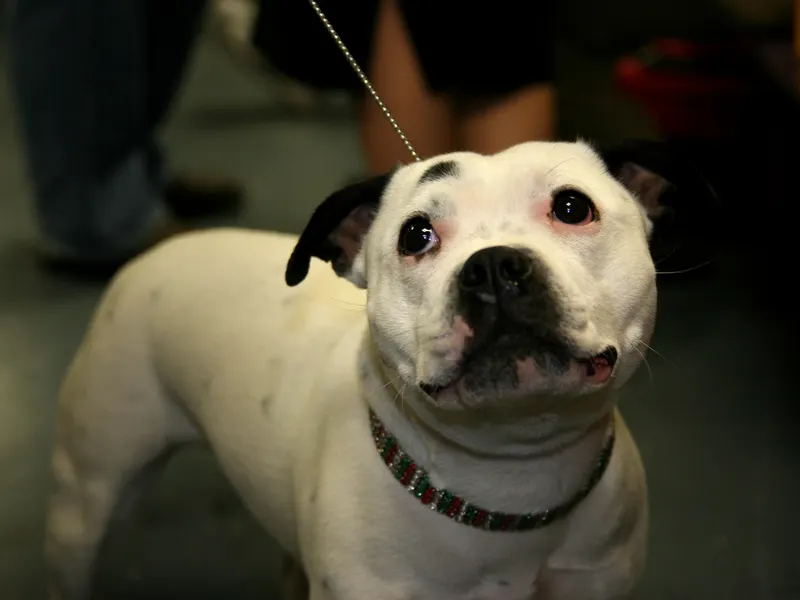
The Staffordshire Bull Terrier is a compact, muscular dog with a broad chest, short deep skull, pronounced cheek muscles and a distinct stop. It stands about 14 to 16 inches at the shoulder and weighs roughly 24 to 37 lb. Height and weight overlap between the sexes, but males are generally heavier, with broader heads and more muscle, while females are a little finer.
The coat is smooth, short and close to the skin, with no undercoat to speak of. Ears are small and rose or half-pricked, and the tail is medium length and carried low.
Accepted colors include:
- Red, fawn, white, black or blue, solid or with white
- Any shade of brindle, with or without white
Black and tan and liver are discouraged by the breed standards, and merle is not accepted for registration in the UK. Size matters for identification: a Staffy is noticeably shorter and lighter than the American Staffordshire Terrier.
Temperament and Personality
Staffies are people dogs. They are affectionate, confident and playful, and many are particularly fond of children. They want to be close to their family and generally greet visitors with whole-body wags rather than suspicion.
Their history means some Staffies can be intolerant of other dogs, especially if poorly socialized. They are strong for their size and can be excitable. Clear rules, early socialization and supervision around other dogs are important.
Staffies are emotionally sensitive despite their tough look. They react strongly to praise and to being ignored, and many become clingy if routines change. That sensitivity also makes them highly motivated by attention during training.
Are Staffordshire Bull Terriers Aggressive?
Staffies are not typically aggressive toward people; the breed standard describes them as affectionate, and most are very friendly with family and visitors. Individual behavior depends on genetics, socialization, training and management, as with any dog.
The more relevant point is other dogs. Because of the breed's history, some Staffies are intolerant of unfamiliar dogs, particularly of the same sex, and their strength means a scuffle can be serious. Early, positive socialization, careful introductions and leashing in busy dog areas reduce problems. A reputable breeder or rescue can help match a dog's temperament to your household.
Is a Staffordshire Bull Terrier Good for First-Time Owners?
A Staffy can work for a committed first-time owner, especially an adult rescue whose temperament is already known. The breed is affectionate, eager to please and easy to groom.
Beginners should be ready for a strong, bouncy dog that pulls on the leash without training, chews hard and needs daily exercise. Planning ahead matters too: check landlord, homeowners association and insurance rules, which sometimes restrict bull breeds. A good puppy class, early dog socialization and a routine that avoids long hours alone set a first-time owner up well.
Are Staffordshire Bull Terriers Good With Cats?
Many Staffies live happily with cats, especially when raised with them from puppyhood. Success depends on the individual dog's prey drive and on careful introductions.
Start with the cat having escape routes and dog-free rooms, keep the dog leashed for early meetings and reward calm behavior. Adult rescue Staffies should ideally be cat-tested by the shelter before adoption. A dog that lives peacefully with its own cat may still chase cats outdoors, so do not assume that tolerance carries over to neighborhood cats or small pets such as rabbits.
Exercise and Training
Staffies need around an hour or more of exercise a day, including walks, games of tug and fetch, and mental challenges. Without an outlet they can become destructive. They are generally not great swimmers because of their heavy muscle.
They are smart and food-motivated, which helps reward-based training. Focus early on loose-leash walking, calm greetings and settling at home. They dislike being alone for long periods, so build up alone time gradually from puppyhood.
Their powerful jaws mean toys need to be sturdy. Many owners use heavy rubber chews and rotate toys to keep them interesting. Avoid strenuous exercise in hot weather, as muscular, short-coated dogs can overheat.
Grooming and Shedding
The smooth, short coat is low maintenance. A weekly brush with a rubber mitt, an occasional bath and regular nail trims are enough. Shedding is moderate year-round. Some Staffies are prone to skin allergies, so watch for itching, redness and licking of the paws.
Feeding and Nutrition
Staffies are food-motivated and stocky, so it is easy to let them drift from muscular to overweight. Aim for a visible waist and ribs you can feel under a thin layer of muscle. Measure meals rather than free-feeding.
- Feed two meals a day for adults; puppies usually need three or four until around six months.
- Count training treats toward the daily total. A portion of kibble often works as a reward for this keen eater.
- Choose sturdy feeding toys and chews; Staffies can destroy flimsy ones and swallow pieces.
The breed is prone to skin allergies. If your dog itches, licks its paws or has recurring ear problems, your vet may suggest a structured elimination diet trial to check for food sensitivities, alongside testing for environmental allergies. Avoid changing foods repeatedly on your own, which can make a diagnosis harder. In hot weather, feed main meals at cooler times and always provide fresh water.
| Adult weight | Less active | Typical adult | Very active |
|---|---|---|---|
| 24 lb | 590 kcal | 670 kcal | 840 kcal |
| 37 lb | 810 kcal | 930 kcal | 1,160 kcal |
Estimates use the resting energy formula veterinarians work with (70 × body weight in kg0.75) and standard activity factors. Use the feeding guide on your food as a starting point and adjust to body condition. Puppies, seniors, pregnant animals and pets that need to lose weight have different needs, so ask your vet.
Health and Lifespan
Staffordshire Bull Terriers usually live 12 to 15 years and are generally sturdy. Health screening for breeding dogs covers:
- L-2-HGA (L-2-hydroxyglutaric aciduria), a metabolic disease affecting the brain, with a DNA test
- Hereditary cataract (HC), with a DNA test
- PHPV and PPSC, inherited eye conditions checked by eye exams
- Hip and elbow dysplasia and luxating patellas
Ask breeders for DNA results on both parents, or consider adopting from a reputable rescue.
Staffordshire Bull Terrier Price and Cost of Ownership
Typical breeder price in the US$1,000 to $2,500
A Staffordshire Bull Terrier puppy from a reputable US breeder typically costs around $1,000 to $2,500. Prices vary by breeder, region and lines, and show-bred puppies with health-tested parents (L-2-HGA, hereditary cataract, eye exams) are usually at the top of that range.
Adoption is a strong option. Staffies and Staffy mixes are common in rescues, especially in the UK, and adult dogs come with a known personality.
Breed-specific ongoing cost drivers include:
- Treating skin allergies, which can mean repeated vet visits
- Possibly higher homeowners or renters insurance, or restrictions from some providers
- Heavy-duty toys and chews that last against strong jaws
- Liability coverage and pet insurance chosen with bull-breed rules in mind
Is the Staffordshire Bull Terrier Right for You?
Staffies suit active households that want an affectionate, playful dog and are home for much of the day. They can adapt to apartments with enough exercise. They are less suited to homes with several dogs unless carefully matched. Some countries, regions and housing providers restrict bull-type breeds or apply rules to them, so check local regulations and insurance or rental terms before getting one.
Staffordshire Bull Terrier Traits at a Glance
Staffordshire Bull Terrier FAQ
Are Staffordshire Bull Terriers good with kids?
Many Staffies are very fond of children and are popular family dogs in the UK. As with any strong dog, supervise young children and teach both dog and kids good manners.
How big do Staffies get?
They stand about 14 to 16 inches at the shoulder and weigh roughly 24 to 37 lb, with a stocky, muscular build.
Is a Staffy the same as a Pit Bull?
No. The Staffordshire Bull Terrier is a separate, smaller recognized breed, although they share early bull-and-terrier ancestry.
Do Staffies shed?
Yes, moderately and year-round, but the short coat is easy to maintain.
How long do Staffordshire Bull Terriers live?
Usually 12 to 15 years.
Can Staffies be left alone?
They struggle with long periods alone. Build up alone time gradually and provide toys and chews.