Siberian HuskyFriendly endurance sled dog from Siberia
The Siberian Husky is a medium-sized sled dog bred to pull light loads fast over great distances. Outgoing, playful and vocal, it loves people but has a strong prey drive and a talent for escaping, so it needs an active, patient owner and secure fencing.
Why people love the Siberian Husky
- Friendly with people, including visitors, and usually good with other dogs
- Outstanding endurance for running, hiking and sled sports
- Clean coat with little doggy odor
- Playful, entertaining personality that stays young for years
- Moderate size that is easy to handle compared with giant breeds
Things to consider
- Strong prey drive puts cats and small pets at risk
- Expert escape artist that needs tall, dig-proof fencing
- Rarely reliable off leash in open areas
- Heavy coat blow twice a year
- Struggles in hot climates without careful exercise timing
Is this breed right for you?
10 questions · live resultHistory and Origin
The breed's ancestors were kept by the Chukchi people of northeastern Siberia, who used teams of light, efficient dogs to pull sleds across vast frozen distances. Around 1909, dogs from Siberia were brought to Alaska for sled races, where they impressed with their speed and stamina.
The breed became famous in 1925 during the serum run to Nome, when relay teams carried diphtheria antitoxin across Alaska. Musher Leonhard Seppala and his dogs, including Togo, played a key role, and Seppala's dogs later helped establish the breed in New England. The AKC recognized the Siberian Husky in 1930.
Size, Coat, Colors and Eyes
The Siberian Husky is a medium-sized, moderately compact sled dog built for speed and endurance rather than pulling heavy loads. Adults stand 20 to 24 inches tall and weigh about 35 to 62 lb. Males are noticeably taller and heavier than females and usually sit at the top of both ranges.
The double coat is medium in length, with a soft, dense undercoat and straight guard hairs that lie smoothly. It should never be so long that it hides the outline of the body.
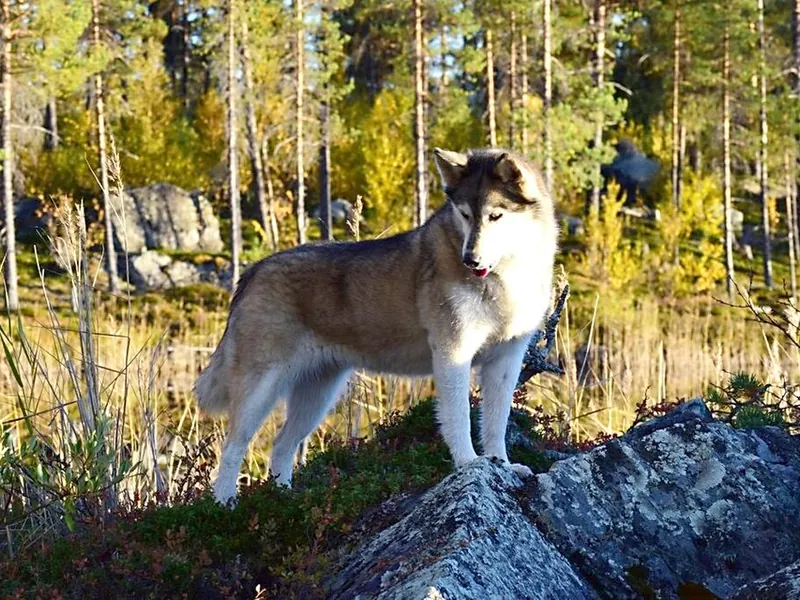
The AKC standard allows all colors from black to pure white. Common combinations include black and white, gray and white, red and white, agouti and sable, often with striking facial masks. Eyes may be brown, blue, one of each, or parti-colored, with all variants equally acceptable.
The ears are triangular, erect and set high, and the brush tail is carried in a sickle curve when the dog is alert. The breed's light build and easy, effortless gait are hallmarks of the type.
Temperament and Personality
Huskies are gentle, friendly and sociable, often greeting strangers warmly. That makes them poor guard dogs. They usually enjoy other dogs and do well in multi-dog homes.
They are also independent and mischievous. Huskies rarely bark much but howl, "talk" and complain expressively. Their prey drive is strong: cats, rabbits and poultry may be at risk unless the dog is raised with them, and even then caution is wise. They dislike being alone and can dig, chew or escape when bored.
Huskies are also known for their striking eyes, which can be brown, blue or one of each, and for their wolf-like markings, but appearance tells you little about the energy level you will be living with.
Is the Siberian Husky Good for First-Time Owners?
Often not. Huskies are friendly and easy to love, but their independence, escape skills and energy catch many new owners off guard.
Common first-owner surprises include:
- A dog that ignores recall the moment it sees a squirrel
- Digging under or climbing over fences
- Howling and destructive chewing when bored or alone
- The sheer amount of hair during a coat blow
A beginner who runs or hikes daily, has a secure yard and enjoys reward-based training can make it work. Talking to a local Husky rescue first is a realistic way to learn what living with the breed is like.
Are Siberian Huskies Good with Cats?
Some are, but many are not, and this is one of the breed's best-known challenges. Huskies have a strong prey drive, and small running animals can trigger chasing behavior.
Your chances are best when a Husky puppy is raised with a confident, dog-savvy cat and introductions are slow and supervised. Even then, many owners keep separate spaces when nobody is home. Adult Huskies with no history around cats are a gamble, and outdoor cats in the neighborhood remain at risk regardless.
If you already have cats, ask a rescue for an adult Husky that has been tested with cats rather than relying on luck with a puppy.
Is the Siberian Husky a Good Apartment Dog?
Generally no, although a few Huskies live in apartments with very committed owners. The challenge is less the dog's size than its energy, voice and need to run.
Apartment Huskies need one to two hours of real exercise every day, such as running, bikejoring or long hikes, plus mental work. Howling can bother neighbors, especially when the dog is left alone. Heat is another factor: city apartments without air conditioning can be uncomfortable for a breed built for cold.
A house with a securely fenced yard and an active family is a much more natural fit.
Exercise and Training
Expect to provide one to two hours of vigorous exercise every day. Running, canicross, bikejoring, sledding and long hikes all suit the breed. In warm weather, exercise early or late in the day.
- Off-leash freedom is rarely safe; Huskies are bred to run and often ignore recall.
- Fences should be tall and dig-proof, and gates must be kept closed.
- Training works best with short, upbeat sessions and high-value rewards; Huskies are intelligent but easily bored.
Grooming and Shedding
The medium-length double coat is soft and dense underneath with straight guard hairs on top. It is naturally clean and has little odor. Brush weekly most of the year.
Twice a year the undercoat blows, and hair comes out in large tufts for two to three weeks; daily brushing with an undercoat rake helps. Never shave a Husky, as the coat protects against both cold and heat.
Feeding and Nutrition
Huskies are famously efficient eaters. Sled dogs were bred to work hard on modest rations, and many pet Huskies need less food than their energy level suggests. Watch body condition rather than the feeding guide: you should feel the ribs easily and see a clear waist.
Appetite often varies with the seasons and activity. Many Huskies eat less in summer and more in winter or during sledding and running season. Some are picky eaters, which is common in the breed and usually not a sign of illness if weight stays stable.
- Feed adults two measured meals a day.
- Avoid hard running right before or after meals.
- A high-quality complete diet supports the dense coat; zinc-responsive skin problems have been reported in the breed, so ask your vet about crusting or hair loss around the face.
- Use small, healthy rewards, as Huskies often train better for food than praise.
Working sled dogs have very different needs from pets, so get advice from your vet or an experienced musher if your dog races.
| Adult weight | Less active | Typical adult | Very active |
|---|---|---|---|
| 35 lb | 780 kcal | 890 kcal | 1,110 kcal |
| 48 lb | 990 kcal | 1,130 kcal | 1,410 kcal |
| 62 lb | 1,200 kcal | 1,370 kcal | 1,710 kcal |
Estimates use the resting energy formula veterinarians work with (70 × body weight in kg0.75) and standard activity factors. Use the feeding guide on your food as a starting point and adjust to body condition. Puppies, seniors, pregnant animals and pets that need to lose weight have different needs, so ask your vet.
Health and Lifespan
Siberian Huskies typically live 12 to 14 years. Eye conditions are the main inherited concern, including juvenile cataracts, progressive retinal atrophy and glaucoma, so annual eye checks in breeding dogs are standard practice.
Hip dysplasia, epilepsy and some cancers are also reported. Choose a breeder who provides hip scores and recent eye exam results for both parents. Huskies are efficient eaters and usually need less food than their activity level suggests.
Siberian Husky Price and Cost of Ownership
Typical breeder price in the US$800 to $2,500
A Siberian Husky puppy from a reputable US breeder typically costs about $800 to $2,500. Prices vary by breeder, region and lines, and dogs from health-tested show or racing lines cost more. Unusual colors or blue eyes are not a reason to pay extra.
Huskies are among the breeds most often surrendered to shelters, frequently because of escaping or energy, so adoption through a Husky rescue is a strong option.
Breed-specific cost drivers include:
- Tall, dig-proof fencing and secure gates
- Running or sledding gear such as harnesses and lines
- Annual eye exams if breeding, and hip screening
- Insurance that covers eye conditions and epilepsy
- Deshedding sessions at a groomer during coat blows
- Air conditioning or cooling equipment in hot regions
Is the Siberian Husky Right for You?
A Husky suits active owners who run, hike or want to try sled sports, ideally in cooler climates and in a home with a secure yard. It does well with other dogs and enjoys a busy household.
It is not ideal for apartments, long workdays alone, homes with cats or small pets, or owners looking for a protective dog. Be ready for heavy shedding and a dog with its own opinions.
Siberian Husky Traits at a Glance
Siberian Husky FAQ
Are Siberian Huskies good family dogs?
They are friendly and playful with people, including children, but their energy and prey drive mean they need active families and supervision around small pets.
How big do Siberian Huskies get?
They stand 20 to 24 inches tall and weigh about 35 to 62 lb, with males at the upper end.
Do Siberian Huskies shed a lot?
Yes. They shed moderately all year and very heavily twice a year.
Are Huskies good guard dogs?
No. They are usually friendly with strangers and rarely show guarding behavior.
Can Siberian Huskies be off leash?
Generally not in open areas. Their urge to run and chase often overrides training.
How long do Siberian Huskies live?
Typically 12 to 14 years.