Shetland SheepdogSmall, smart herder from the Shetland Islands
The Shetland Sheepdog, or Sheltie, is a small, elegant herding dog from Scotland's Shetland Islands. Bright, sensitive and devoted, it ranks among the most trainable breeds, but it is vocal and its luxurious coat needs regular care. It suits active families who enjoy training and do not mind a talkative dog.
Why people love the Shetland Sheepdog
- Learns new cues quickly and excels in dog sports
- Gentle, devoted companion for kind children and seniors
- Medium-small size suits suburban homes and some apartments
- Strong bond with family and keen to please
- Long-lived, often 12 to 14 years
Things to consider
- Vocal breed that barks at noises and movement
- Heavy seasonal shedding from a dense double coat
- Can be shy without broad early socialization
- MDR1 drug sensitivity and inherited eye disease in the breed
- Chases cars, bikes and running children
Is this breed right for you?
10 questions · live resultHistory and Origin
On the remote Shetland Islands off northern Scotland, farmers kept small dogs to herd sheep, ponies and poultry and to keep them out of crofts and gardens. These early herding dogs likely descended from Scandinavian spitz-type dogs and the Scottish working collie, with later crosses to small companion breeds.
In the early 1900s fanciers on the mainland refined the breed, adding Rough Collie blood to create the miniature collie look. Originally called the Shetland Collie, it was renamed after objections from Collie breeders. The Kennel Club recognized it in 1909 and the AKC in 1911.
Size, Coat and Colors
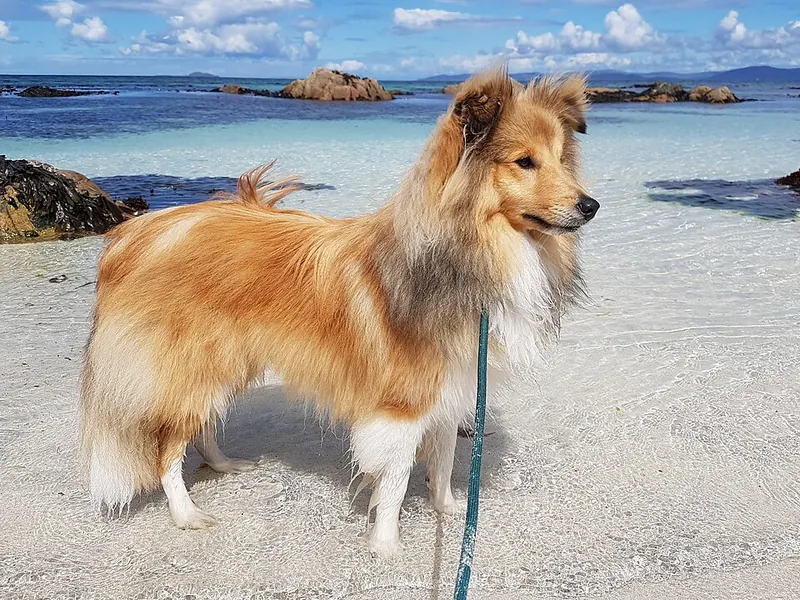
The Sheltie is a small, agile herding dog that looks like a scaled-down Rough Collie but is built a little more compactly. Most stand 14 to 15 inches at the shoulder and weigh 15 to 20 lb. The AKC standard allows 13 to 16 inches, and dogs outside that range are disqualified in the show ring, though pet Shelties are sometimes larger.
The head is a long, blunt wedge with almond eyes and small ears that are erect with the tips tipping forward. The double coat forms a full mane and frill around the neck, with feathering on the legs and a well-furnished tail.
Accepted colors are:
- Sable, from golden to mahogany
- Tricolor (black with tan and white)
- Blue merle
- Bi-black and bi-blue, without tan
All usually have white on the collar, chest, legs and tail tip. Males tend to be slightly larger with a fuller mane, while females often look more refined and may lose more coat after a heat cycle.
Temperament and Personality
Shelties are affectionate, gentle and eager to please. They are very attached to their family and good with children who treat them kindly, though some herd running kids by circling or nipping at heels.
They are often reserved with strangers and can be sensitive to loud noises and harsh voices. Shelties are alert watchdogs and enthusiastic barkers. Teaching a quiet cue early is a good idea, especially in close housing.
Is the Shetland Sheepdog Good for First-Time Owners?
Yes, a Sheltie is often a good choice for a first-time owner who is home a fair amount and enjoys training. Shelties are eager to please, learn quickly and rarely need firm handling.
The learning curve is about sensitivity and noise. A harsh word can make a Sheltie anxious, and barking must be shaped early. Plan to socialize the puppy widely so it does not become timid with strangers, and set up a grooming routine from day one. A beginner obedience or agility class is a good way for new owners and Shelties to learn together.
Are Shelties Good Apartment Dogs?
Shelties can live in apartments, but barking is the deciding factor. Their size and moderate energy fit smaller homes, provided they get about an hour of exercise and some brain work daily.
The breed reacts quickly to hallway sounds, doorbells and passing people, which can cause trouble with neighbors. Start quiet-cue training early, use white noise or window film if the dog alerts at movement outside, and make sure exercise happens before long quiet periods. Expect hair in every corner during coat blow, so a good vacuum helps in a small space.
Are Shetland Sheepdogs Easy to Train?
Yes, Shelties are among the easiest breeds to train. They are consistently ranked high for working intelligence and often pick up a new cue in a handful of repetitions.
Their sensitivity is the main thing to manage. Rewards, play and a calm voice work far better than corrections, which can cause a Sheltie to shut down. Because they learn fast, they also learn unwanted habits fast, such as barking for attention. Short sessions, clear criteria and plenty of variety keep them engaged, and many go on to compete in obedience, agility or herding.
Exercise and Training
Shelties need about an hour of exercise a day, plus mental work. They are star performers in agility, obedience, rally, herding and trick training, and they learn new cues remarkably fast.
Use gentle, reward-based methods, because harsh corrections can make a sensitive Sheltie shut down. Socialize puppies widely to reduce shyness. Many Shelties chase moving things like cars and bikes, so practice impulse control and keep them leashed near roads.
Grooming and Shedding
The double coat combines a long, harsh outer coat with a dense undercoat. It sheds steadily and heavily at seasonal changes, particularly in unspayed females after a heat cycle.
- Brush thoroughly once or twice a week, down to the skin, using a pin brush and undercoat rake.
- Pay close attention behind the ears, in the armpits and on the trousers, where mats form.
- Trim hair on the feet and around the hocks for a neat look.
Do not shave the coat, which protects against both heat and cold.
Feeding and Nutrition
Shelties are small, efficient herding dogs that gain weight easily once their activity drops. A thick coat hides extra pounds, so feel for the ribs and waist rather than relying on how the dog looks.
The breed is predisposed to hyperlipidemia (high blood fats) and gallbladder mucocele, and both have been linked to high-fat eating in susceptible dogs. Avoid fatty table scraps and rich chews, and ask your vet whether routine bloodwork should include fat levels as your Sheltie ages. If either condition is diagnosed, follow the vet's diet plan.
Hypothyroidism also occurs in Shelties and can cause weight gain despite normal portions, so unexplained weight change is worth a vet check.
Most adults do well on two measured meals a day; puppies need three to four. Coat quality reflects nutrition, and a dull coat or flaky skin can be a sign the diet needs review.
Shelties are quick learners and do a lot of training, so use small, low-fat rewards and subtract them from the daily ration.
| Adult weight | Less active | Typical adult | Very active |
|---|---|---|---|
| 15 lb | 410 kcal | 470 kcal | 590 kcal |
| 20 lb | 510 kcal | 590 kcal | 730 kcal |
Estimates use the resting energy formula veterinarians work with (70 × body weight in kg0.75) and standard activity factors. Use the feeding guide on your food as a starting point and adjust to body condition. Puppies, seniors, pregnant animals and pets that need to lose weight have different needs, so ask your vet.
Health and Lifespan
Shelties typically live 12 to 14 years. Conditions in the breed include:
- Collie eye anomaly (CEA) and progressive retinal atrophy (PRA), with DNA tests
- MDR1 gene mutation, which makes affected dogs sensitive to certain common drugs; a simple DNA test tells your vet whether to adjust medication
- Hip dysplasia, Legg-Calvé-Perthes disease and luxating patellas
- Von Willebrand disease and hypothyroidism
Blue merle is an accepted color, but breeding two merles together risks deafness and eye defects in puppies. Choose breeders who avoid merle-to-merle pairings and test for MDR1, CEA and PRA.
Shetland Sheepdog Price and Cost of Ownership
Typical breeder price in the US$1,000 to $3,000
A Shetland Sheepdog puppy from a reputable US breeder usually costs about $1,000 to $3,000. Prices vary by breeder, region and lines, with show and performance lines and blue merles often priced higher. Breed rescue groups place Shelties regularly, including adults with known temperaments.
Breed-specific cost drivers include:
- Health screening: an MDR1 DNA test if the breeder has not done it, plus eye exams
- Grooming: good brushes and rakes, and optional professional baths and blowouts during coat shedding
- Insurance that covers eye disease, hip problems, thyroid disease and gallbladder conditions
- Training and sports: many owners spend on classes in agility, obedience or herding
Food costs are moderate for a dog of this size.
Is the Shetland Sheepdog Right for You?
A Sheltie suits active families, singles and seniors who enjoy training and daily walks and can handle regular grooming. It adapts well to suburban homes and can live in an apartment if barking is managed. It is less suited to owners who want a quiet dog, hate dog hair, or are away for long hours.
Shelties are also common in rescue, and adult dogs can be a great choice for owners who want to skip the puppy stage and know the dog's temperament from the start.
Shetland Sheepdog Traits at a Glance
Shetland Sheepdog FAQ
Are Shelties good family dogs?
Yes. They are gentle and devoted, and usually good with children who treat them kindly.
How big do Shetland Sheepdogs get?
They stand about 14 to 15 inches tall and weigh roughly 15 to 20 lb, though some are larger.
Do Shelties bark a lot?
Yes, the breed is known for being vocal. Training a quiet cue early helps.
Is a Sheltie a miniature Collie?
No. It looks similar and has some Collie ancestry but developed separately as its own breed.
Do Shelties shed?
Yes, heavily, especially at seasonal coat changes.
How long do Shetland Sheepdogs live?
Typically 12 to 14 years.