PekingeseDignified lion dog of imperial China
The Pekingese is a small, sturdy toy breed with a lion-like mane and a dignified, independent personality. Devoted to its owners but not a pushover, it needs daily coat care, and its very flat face brings serious health and welfare considerations.
Why people love the Pekingese
- Calm indoors and content with short, gentle walks
- Devoted companion that bonds deeply with its owner
- Good small watchdog without constant barking
- Well suited to apartments and quieter homes
- Dignified, independent character with a long imperial history
Things to consider
- Flat face causes breathing problems and heat intolerance in many
- Long, thick coat needs daily brushing
- Prone to eye injuries, skin fold infections and back problems
- Stubborn and slow to housetrain
- Dislikes rough handling, so not ideal with small children
Health note: this breed is affected by health concerns linked to its body shape. Read the health section and choose a breeder who health-tests and breeds for moderate features.
Is this breed right for you?
10 questions · live resultHistory and Origin
The Pekingese was kept for centuries at the Chinese imperial court in Beijing, where it was bred to resemble the guardian lions of Buddhist tradition. Ownership was restricted to the royal family, and the smallest dogs were sometimes carried in the sleeves of courtiers' robes, earning the name sleeve dogs.
In 1860, British troops looted the Summer Palace and took five Pekingese to England; one, named Looty, was given to Queen Victoria. The breed spread from there and was recognized by the AKC in 1906. Both the AKC and The Kennel Club list it in the Toy group.
The breed's rolling gait comes from its heavy front and lighter hindquarters.
Size, Coat and Colors
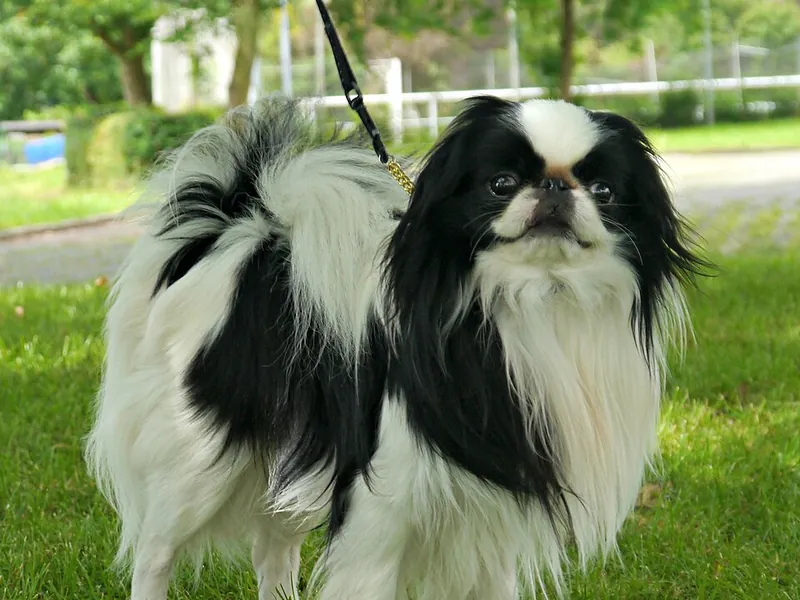
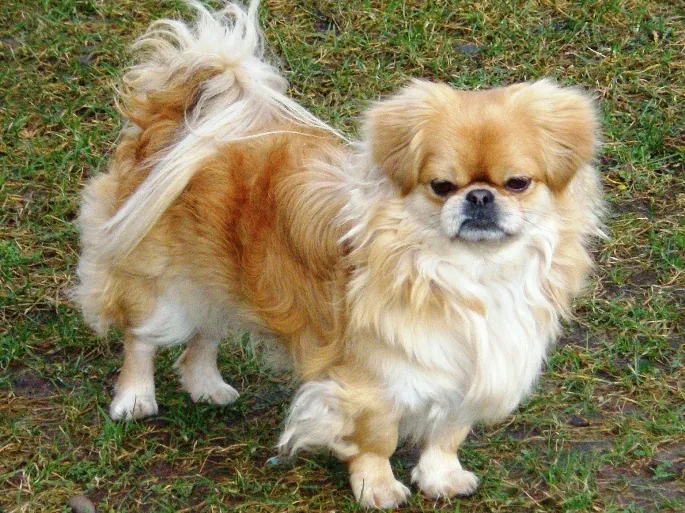
The Pekingese is a small but surprisingly heavy dog for its size, compact and low to the ground, with a pear-shaped body: heavy in front and lighter behind. Adults stand about 6 to 9 inches tall and weigh up to 14 lb, the maximum in the AKC standard. Males and females look similar, though females often weigh a little less.
The head is large and broad, with a flat face, short muzzle, prominent dark eyes and heart-shaped, feathered ears. A wrinkle over the nose is part of the standard. Many welfare-minded breeders now favor a slightly longer muzzle and open nostrils.
The coat is long, straight and coarse on top with a thick undercoat. It forms a mane around the neck and shoulders and heavy feathering on the ears, legs, toes and tail, which is carried over the back.
The AKC allows all colors and patterns equally, including gold, red, sable, cream, black, white, black and tan, and parti-color. A black mask is common, but self-colored faces are also accepted.
Temperament and Personality
Pekingese are calm, loyal and self-confident, often bonding strongly with one person. They are typically aloof with strangers and alert at home, making them good small watchdogs, though they are not usually big barkers.
They can be stubborn and do not enjoy rough handling, which makes them better suited to adults or families with older, considerate children. Most dislike being left alone for long.
Pekes are often described as dignified and a little catlike: they may choose when to be affectionate and dislike being picked up unexpectedly. They tend to be calm indoors and are content with a quiet daily routine.
Do Pekingese Bark a Lot?
Not usually. Pekingese bark to announce visitors or strange sounds, which makes them good little watchdogs, but most are not constant barkers.
Barking can increase if a Peke is bored, left alone for long periods or allowed to bark at every passerby from a window. Covering the lower part of street-facing windows and rewarding quiet behavior helps.
Many owners actually notice snoring, snorting and wheezing more than barking. Loud breathing noises are common in the breed but can signal airway problems, so mention them to your vet rather than assuming they are normal.
Are Pekingese Easy to Train?
Not especially. Pekingese are intelligent but independent and can be stubborn, so they often decide whether a request is worth their effort.
Training works best when it is calm, short and rewarding:
- Use small food rewards and quiet praise, never force.
- Keep sessions to a few minutes.
- Start housetraining early with a strict schedule and an indoor potty option for bad weather.
Housetraining often takes longer than in many breeds. Pekes also dislike being pulled on a leash, so use a harness and teach loose-leash walking patiently. Do not expect obedience-champion results, but a polite, well-mannered Peke is very achievable.
Can Pekingese Be Left Alone?
For short periods, yes. Pekingese are more independent than many toy breeds and often nap contentedly while you run errands. Most still dislike long, daily absences and are happiest with someone home much of the day.
Two breed-specific points matter when leaving a Peke alone:
- Temperature: the flat face makes overheating a real danger, so the home must stay cool. Never rely on an open window in hot weather.
- Safety: block access to furniture and stairs, since jumping can injure the long back.
A comfortable bed, fresh water and a cool, quiet room make alone time easier.
Exercise and Training
Pekingese need only modest exercise: short, gentle walks and indoor play. Their flat faces make it hard to cool down, so avoid exertion in warm or humid weather.
- Use a harness rather than a collar to protect the airway and neck.
- Train with patience and rewards; Pekes respond poorly to pressure.
- Start house training early and be consistent.
- Lift them carefully; their long back and short legs make jumping from furniture risky.
Keep walks short and steady, and stop at once if breathing becomes loud or labored. A cool, shaded room and fresh water matter in summer.
Grooming and Shedding
The long, thick double coat sheds heavily and needs brushing every day to prevent mats, especially behind the ears, under the legs and around the rear. Many pet owners keep the coat trimmed shorter.
Clean facial folds daily and keep them dry to prevent infection, and check the large, prominent eyes for redness, discharge or squinting.
Trim the hair around the feet and rear for hygiene, and check the coat for debris after walks.
Feeding and Nutrition
Weight control is critical for the Pekingese. Extra pounds make breathing harder for a brachycephalic dog and add strain to the long back and small joints. Pekes are often food-motivated and not very active, so they gain weight easily. Feel for the ribs under the coat regularly, since the thick hair hides fat.
- Feed two small, measured meals a day for adults, and three or four for young puppies.
- Choose a kibble size and shape that a flat-faced dog can pick up and chew comfortably; some do better with soft food or small, flat pieces.
- Use a shallow, wide bowl so the face is not pressed against the sides.
- Wipe and dry facial folds after meals to prevent skin fold infections.
- Keep treats tiny and count them in the daily total.
Dental crowding is common because the jaw is shortened, so daily tooth brushing is important. Avoid feeding right before exercise in warm weather, and watch for gulping air or regurgitation, which can be linked to airway issues.
| Adult weight | Less active | Typical adult | Very active |
|---|---|---|---|
| 14 lb | 390 kcal | 450 kcal | 560 kcal |
Estimates use the resting energy formula veterinarians work with (70 × body weight in kg0.75) and standard activity factors. Use the feeding guide on your food as a starting point and adjust to body condition. Puppies, seniors, pregnant animals and pets that need to lose weight have different needs, so ask your vet.
Health and Lifespan
Pekingese typically live 12 to 14 years. As a severely brachycephalic breed, many suffer from BOAS, which causes noisy breathing, sleep disturbance and heat intolerance. Skin fold dermatitis is common, and the prominent eyes are prone to corneal ulcers, entropion and dry eye. Their long back can predispose them to spinal disc problems.
The breed is central to welfare debates about extreme conformation. If choosing a Pekingese, look for breeders who select for more open nostrils, a slightly longer muzzle and healthy eyes.
Pekingese Price and Cost of Ownership
Typical breeder price in the US$1,000 to $3,000
A Pekingese puppy from a reputable US breeder typically costs about $1,000 to $3,000. Prices vary by breeder, region and lines. Ask breeders about breathing, nostril openness and eye health in the parents, not only appearance.
Pekes appear in toy breed rescues and shelters, often as adults, so adoption is a good option for calm households.
Breed-specific ongoing costs include:
- Professional grooming every four to eight weeks, or a short pet trim
- Possible airway surgery for BOAS, which can be expensive
- Eye care, including treatment of corneal ulcers
- Dental cleanings due to crowded teeth
- Insurance that covers brachycephalic and spinal conditions; check exclusions carefully
- Air conditioning in warm climates
Is the Pekingese Right for You?
A Pekingese suits calm adults or seniors who want a devoted, low-exercise companion and can handle daily grooming and careful health management.
It is less suited to homes with young children, hot climates without air conditioning, or owners away for long hours.
Plan for regular veterinary checks of the eyes and breathing throughout the dog's life.
Pekingese Traits at a Glance
Pekingese FAQ
Are Pekingese good family dogs?
They do best with adults or older, gentle children; they can be impatient with rough handling.
How big do Pekingese get?
Pekingese stand about 6 to 9 inches tall and weigh up to about 14 lb.
Do Pekingese shed?
Yes, heavily. Their long coat needs daily brushing.
Do Pekingese have breathing problems?
Many do, because of their very flat face. Avoid heat and overexertion.
Are Pekingese good apartment dogs?
Yes. They are quiet and need little exercise, making them suited to apartments.
How long do Pekingese live?
Most live 12 to 14 years.