KeeshondThe smiling spitz of the Dutch canals
The Keeshond is a medium-sized spitz with a thick gray coat, a ruff like a lion and distinctive spectacle markings around the eyes. Affectionate, alert and easy to train, it makes an excellent family companion and watchdog for owners who can handle barking and shedding.
Why people love the Keeshond
- Friendly, people-focused family companion
- Very low prey drive, usually good with pets
- Eager to learn and easy to train
- Adapts to apartments with daily walks
- Coat has little odor despite its volume
Things to consider
- Barks readily at visitors and noises
- Heavy seasonal shedding needs daily brushing
- Dislikes being left alone for long
- Thick coat makes heat a real risk
- Can become anxious if isolated or bored
Is this breed right for you?
10 questions · live resultHistory and Origin
The Keeshond belongs to the old German spitz family, and the FCI lists it as the Wolfspitz, the largest of the German Spitz varieties. In the Netherlands, these dogs became common on river barges and farms in the 17th and 18th centuries, working as watchdogs and companions.
The English name comes from Cornelis (Kees) de Gyselaer, a leader of the Dutch Patriot movement in the late 1700s, whose dog became a symbol of the party. After the Patriots lost power, the breed fell out of favor. Baroness van Hardenbroek revived it in the 1920s, and it reached Britain and America shortly after. The AKC recognized the Keeshond in 1930.
Size, Coat and Spectacle Markings
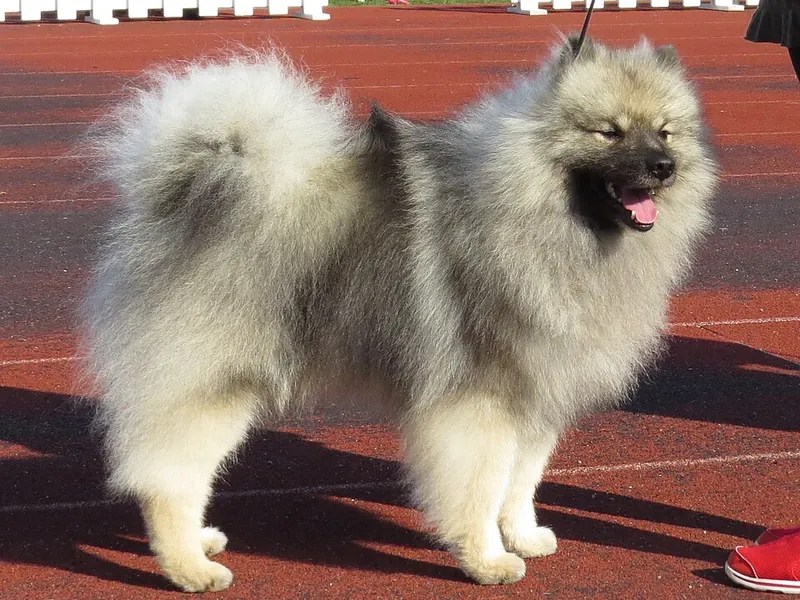
The Keeshond is a medium, square-built spitz with a fox-like head, small pointed ears, a lion-like ruff and a plumed tail curled tightly over the back. It stands 17 to 18 inches tall and weighs about 35 to 45 lb. The AKC ideal is 18 inches for males and 17 inches for females, and males usually carry a heavier ruff and more coat overall.
The double coat is long and harsh on top, standing well off the body, over a thick, downy undercoat. It forms a mane around the neck, trousers on the hind legs and a heavy tail plume.
Color is distinctive: a mixture of gray, black and cream. The outer hairs are black-tipped, the undercoat pale gray or cream, and the legs and feet cream. The famous spectacles are a delicate dark line running from the outer corner of each eye toward the ear, with distinct markings that shape the expression. The FCI's Wolfspitz standard calls this color wolf gray, or silver gray shaded with black.
Temperament and Personality
Keeshonden are outgoing, people-focused dogs that want to be involved in family life. They are typically excellent with children and other pets, and they have very little hunting drive, which makes them easier to manage around cats and small animals than many breeds.
As former barge watchdogs, they are alert and vocal. They will announce every visitor and unusual sound, but they are friendly once a guest is welcomed. They dislike being left alone for long and can become noisy or anxious when isolated.
Their famous expression, with dark lines running from the eyes toward the ears, gives them a permanently smiling look that matches their sunny character.
Is the Keeshond Good for First-Time Owners?
Yes, the Keeshond is one of the better medium-sized breeds for first-time owners. It is friendly, eager to please, learns quickly with rewards and has little hunting or guarding drive to manage.
Beginners should be ready for two things. First, the barking: Keeshonden were barge watchdogs and will announce every visitor, so teach a quiet cue early. Second, the coat: brushing down to the skin once or twice a week is non-negotiable, with daily sessions during the heavy shed. If you have time for company, brushing and around an hour of activity a day, a Kees is a very rewarding first dog.
Are Keeshonds Easy to Train?
Yes, Keeshonden are generally easy to train. They are intelligent, sensitive to their owner's mood and motivated by praise, play and food, which makes them quick learners.
They do best with short, upbeat sessions and positive methods. Repetitive drills bore them, and harsh corrections can make them worried or stubborn. Many Kees enjoy obedience, rally, agility and trick training, and some work as therapy dogs. The skills that need the most attention are a quiet cue for alert barking and calm behavior when left alone, since the breed is very people-oriented.
Can a Keeshond Live in an Apartment?
Yes, a Keeshond can live well in an apartment if it gets daily walks and company. The breed is medium-sized, not overly active indoors and adapts easily to routine.
The main challenges are noise and heat. A Kees will bark at hallway sounds and people at the door, so start quiet training early and consider neighbors when choosing a unit. The thick coat holds heat, so air conditioning in summer and walks in the cooler hours are important. Expect tufts of undercoat on floors during shedding season and keep a good vacuum handy.
Exercise and Training
Keeshonden need around an hour of daily activity, split between walks and play. They enjoy agility, obedience and trick training, and they learn quickly with praise, treats and short, fun sessions.
- Teach a "quiet" cue early to manage alert barking.
- Because the thick coat holds heat, exercise in the cooler parts of the day during summer.
- Include them in household routines; this breed thrives on companionship more than on hard physical work.
Grooming and Shedding
The coat is a long, harsh outer layer standing off the body over a dense, soft undercoat. Brush thoroughly once or twice a week down to the skin, paying attention to the ruff, behind the ears and the trousers on the hind legs, where mats form first.
Expect a heavy shed once or twice a year, when daily brushing is needed. Never shave the coat, as it protects against heat and cold and may grow back poorly. Despite the volume, the coat has little odor.
Feeding and Nutrition
The Keeshond's dense coat hides weight gain very effectively, and the breed tends to put on pounds easily. Check body condition by hand: you should feel the ribs under a light layer of fat and find a waist under the coat.
- Feed puppies three or four meals a day until about six months, then two meals.
- Measure food and reduce portions after neutering or when activity drops.
- Keeshonden are prone to hip dysplasia and patellar luxation, and lean condition reduces strain on these joints.
- The breed carries a known risk of primary hyperparathyroidism, which affects calcium levels. Avoid adding calcium or mineral supplements without veterinary advice, and report increased thirst or urination.
Kees are food-motivated, which helps training. Use small treats or part of the daily ration as rewards. A healthy diet with adequate fats supports the coat, but frequent brushing does more for coat quality than any supplement.
| Adult weight | Less active | Typical adult | Very active |
|---|---|---|---|
| 35 lb | 780 kcal | 890 kcal | 1,110 kcal |
| 45 lb | 940 kcal | 1,080 kcal | 1,340 kcal |
Estimates use the resting energy formula veterinarians work with (70 × body weight in kg0.75) and standard activity factors. Use the feeding guide on your food as a starting point and adjust to body condition. Puppies, seniors, pregnant animals and pets that need to lose weight have different needs, so ask your vet.
Health and Lifespan
Keeshonden usually live 12 to 15 years. Conditions reported in the breed include hip dysplasia, patellar luxation and epilepsy. The breed is also known for primary hyperparathyroidism, a disorder of the parathyroid glands that can cause high blood calcium; a DNA test is available.
Responsible breeders screen hips, knees and eyes and test for hyperparathyroidism. Keep your dog lean, since the coat can hide weight gain.
Keeshond Price and Cost of Ownership
Typical breeder price in the US$1,500 to $3,000
A Keeshond puppy from a reputable US breeder typically costs about $1,500 to $3,000. Prices vary by breeder, region and lines. Litters are not common, so expect to wait. Ask for hip, patella and eye results and a DNA test for primary hyperparathyroidism on both parents. Show prospects from champion parents usually sit at the top of the range.
Breed clubs run rescue programs, and Keeshonden occasionally appear in shelters.
Breed-specific ongoing costs include:
- Grooming tools, or professional bath-and-blowout sessions during the heavy shed.
- Air conditioning or cooling during hot summers.
- Insurance or savings for joint problems and hyperparathyroidism.
- Training classes to manage barking early.
Is the Keeshond Right for You?
A Keeshond suits families, first-time owners and seniors who want a sociable, trainable medium-sized dog. It adapts well to apartments or townhouses if neighbors can tolerate some barking and the dog gets daily walks.
It is less suited to people who want a quiet dog, who are away for long hours, or who live in very hot climates without air conditioning. Be ready for regular brushing and plenty of loose hair during shedding season.
Keeshond Traits at a Glance
Keeshond FAQ
Are Keeshonds good with kids?
Yes. They are known for being affectionate, playful and patient with children, and they usually get along with other pets too.
How big do Keeshonds get?
Most stand 17 to 18 inches tall and weigh 35 to 45 lb.
Is the Keeshond the same as the Wolfspitz?
Yes, it is the same breed. The FCI calls it the Wolfspitz; English-speaking kennel clubs use the Dutch name Keeshond.
Do Keeshonds bark a lot?
They are alert and vocal watchdogs. Training a quiet cue and providing company help keep barking manageable.
Do Keeshonds shed?
Yes, moderately year-round and heavily once or twice a year when the undercoat sheds.
How long do Keeshonds live?
Typically 12 to 15 years.