Chinese Shar-PeiWrinkled, independent guardian from China
The Chinese Shar-Pei is a medium-sized dog famous for its wrinkled skin, blue-black tongue and hippo-shaped muzzle. It is loyal, independent and watchful, and best suited to experienced owners prepared to manage its significant health issues.
Why people love the Chinese Shar-Pei
- Calm, quiet and clean in the house
- Deeply loyal to its own family
- Natural watchdog, reserved with strangers
- Moderate exercise needs suit apartment life
- Short coat needs only weekly brushing
Things to consider
- Shar-Pei fever and kidney amyloidosis are serious breed risks
- Skin folds, eyes and ears need constant attention
- Often intolerant of other dogs, especially same-sex
- Independent and not eager to please
- Overheats easily in warm weather
Health note: this breed is affected by health concerns linked to its body shape. Read the health section and choose a breeder who health-tests and breeds for moderate features.
Is this breed right for you?
10 questions · live resultHistory and Origin
The Shar-Pei originated in southern China, possibly as far back as the Han dynasty, as a farm dog used for guarding, hunting and herding. The breed nearly vanished during the 20th century, but in the 1970s a Hong Kong breeder, Matgo Law, appealed to American dog lovers to save it.
The AKC recognized the breed in 1992 in the Non-Sporting group. The Kennel Club lists it as Shar Pei in the Utility group, and has flagged it in its breed watch scheme due to concerns about exaggerated features.
The Shar-Pei's name is usually translated as sand skin, which describes its rough, sandpaper-like coat. Western breeding has often exaggerated the wrinkles; the original Chinese type, sometimes called bone-mouth, had tighter skin and fewer folds.
Size, Coat Types and Colors
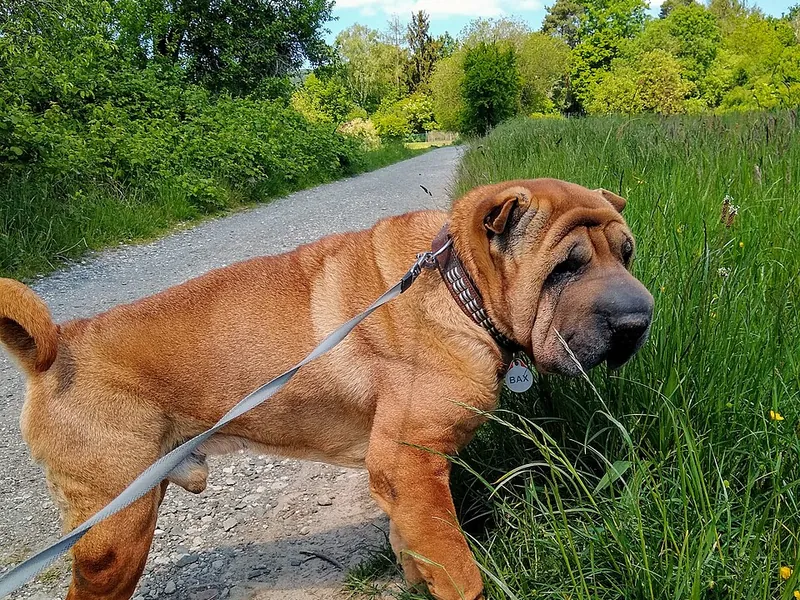
The Chinese Shar-Pei is a compact, square, medium-sized dog standing about 17 to 20 inches at the shoulder and weighing roughly 44 to 60 lb. Its look is unmistakable: a broad, padded hippopotamus-shaped muzzle, small triangular ears folded close to the head, deep-set eyes, a blue-black tongue and a high-set tail curled over the back. Adults carry loose skin and wrinkles mainly on the head, neck and withers. Puppies are much more wrinkled than adults.
The coat is short, harsh and stands off the body, and it is never trimmed. It comes in two types: the very short, prickly horse coat and the longer, smoother brush coat, up to about 1 inch. Longer bear coats occur but are disqualified in the show ring.
Any solid color is accepted, including black, cream, fawn, red, chocolate, apricot and blue or lilac dilutes, which have a lavender tongue. Spotted or albino dogs are disqualified. Males are larger and heavier in head than females.
Temperament and Personality
Shar-Peis are calm, loyal and independent. They tend to bond closely with their family and are aloof or suspicious with strangers, making them good watchdogs.
They can be territorial and may not tolerate other dogs, especially of the same sex. They often have a strong prey drive. Their independent nature calls for experienced, consistent handling, and they may not be ideal for families with young children.
Many Shar-Peis are quiet and clean in the house and like a predictable routine. They tend to be reserved rather than cuddly with visitors and may not enjoy being handled by strangers.
Is the Shar-Pei Good for First-Time Owners?
The Shar-Pei is usually not recommended for first-time owners. It is calm and clean at home, which appeals to many people, but its independence, guarding instinct and health needs call for experience.
A beginner would need to socialize the puppy extensively with people and dogs, train with consistency and no harshness, and spot early signs of skin, ear, eye and fever problems. Many Shar-Peis are intolerant of other dogs, so walks require management. Vet costs can be high. A first-time owner who is determined to own the breed should look for a breeder selecting for moderate wrinkles and open eyes, join a breed club and line up a trainer before bringing the puppy home.
Are Shar-Peis Aggressive?
Shar-Peis are not described as aggressive in the breed standard, but they were bred as guard and farm dogs and are naturally reserved, territorial and suspicious of strangers. How these traits show depends on genetics, socialization and handling.
The most common challenge is with other dogs: many Shar-Peis, especially of the same sex, do not tolerate unfamiliar dogs well. Their deep-set eyes and folds can limit peripheral vision, so a dog startled from the side may react defensively.
A well-socialized Shar-Pei is typically calm, dignified and devoted to its family. Approach from the front, give the dog time to see you, and keep greetings with strange dogs short and controlled.
Are Shar-Peis Easy to Train?
Shar-Peis are intelligent and learn quickly, but they are not eager to please, so training is easy only when the dog sees a reason to cooperate. Most are naturally clean and house train readily, which is one area where the breed is easier than many.
For everything else:
- Use calm, consistent, reward-based methods, since harsh corrections damage trust.
- Keep sessions short and purposeful; repetition bores them.
- Prioritize socialization with people, places and dogs throughout life.
- Teach handling of ears, eyes and skin folds early, because care is a lifelong task.
A Shar-Pei that trusts its owner is usually well-mannered, but it rarely shows the eager obedience of retrievers or herding breeds.
Exercise and Training
Exercise needs are moderate: one or two daily walks plus play. Shar-Peis are generally calm indoors and can adapt to apartment living.
- Start socialization early and continue throughout life.
- Use consistent, reward-based training; harsh methods backfire.
- Avoid strenuous exercise in heat; they overheat easily.
- Supervise interactions with other dogs and small animals.
Because the folds around the eyes can narrow vision, approach a Shar-Pei from the front and let it see you before touching it.
Grooming and Shedding
The short coat comes in two types: the very short, harsh horse coat and the slightly longer brush coat. Weekly brushing is enough. Shedding is moderate.
Skin folds need regular checks and cleaning to prevent infection. The small ears are prone to infection; clean gently and check often.
Avoid frequent baths with harsh shampoos, which can dry the skin; ask your vet about suitable products if skin problems appear.
Feeding and Nutrition
Many Shar-Peis have sensitive skin and some react to food ingredients. If your dog has recurring itching, ear infections or skin infections in the folds, ask your vet about a structured elimination diet trial rather than changing foods often. Hypothyroidism is also reported in the breed and can cause weight gain and coat changes.
Shar-Pei fever can lead to amyloidosis, which damages the kidneys. A dog diagnosed with kidney changes may need a diet chosen by the vet as part of its treatment, and fresh water should always be available. Regular blood and urine checks help detect kidney changes early.
- Feed adults two measured meals a day, and puppies three or four.
- Keep the dog lean, since extra weight deepens folds and traps moisture.
- Wipe the muzzle and lip folds after meals.
- Count training treats in the daily ration and keep them simple during diet trials.
| Adult weight | Less active | Typical adult | Very active |
|---|---|---|---|
| 44 lb | 930 kcal | 1,060 kcal | 1,320 kcal |
| 60 lb | 1,170 kcal | 1,330 kcal | 1,670 kcal |
Estimates use the resting energy formula veterinarians work with (70 × body weight in kg0.75) and standard activity factors. Use the feeding guide on your food as a starting point and adjust to body condition. Puppies, seniors, pregnant animals and pets that need to lose weight have different needs, so ask your vet.
Health and Lifespan
Shar-Peis typically live 8 to 12 years, shorter than many breeds of similar size. Shar-Pei fever, also known as Shar-Pei autoinflammatory disease (SPAID), causes episodes of fever and swelling and can lead to amyloidosis, which damages the kidneys. Other issues include mucinosis, entropion (eyelids rolling inward), glaucoma, skin fold infections, ear infections and breathing problems.
German animal welfare experts have classified breeding for extreme features in this breed as harmful. If you choose a Shar-Pei, look for breeders who select for less wrinkling, open eyes and healthy skin.
Chinese Shar-Pei Price and Cost of Ownership
Typical breeder price in the US$1,000 to $3,000
Shar-Pei puppies from reputable US breeders typically cost about $1,000 to $3,000. Prices vary by breeder, region and lines. Look for breeders who select for less wrinkling and open eyes and who are open about fever and amyloidosis in their lines, rather than those advertising extra wrinkles or rare colors.
Shar-Pei rescues place many adult dogs, and adoption is a good option for experienced owners.
The breed's ongoing costs are driven by health. Entropion surgery (eyelid tacking in puppies or corrective surgery later) is common, as are treatments for skin-fold and ear infections. Shar-Pei fever episodes and kidney monitoring add vet visits over a lifetime. Insurance taken out early, before any condition is recorded, is worth comparing carefully. Some insurers and landlords also restrict the breed.
Is the Shar-Pei Right for You?
The Shar-Pei suits experienced owners who want a calm, loyal companion and can handle its independence and health needs.
It is less suited to first-time owners, homes with young children or other pets, or people unable to budget for veterinary care.
A calm adult home with a regular routine usually suits the breed best.
Chinese Shar-Pei Traits at a Glance
Chinese Shar-Pei FAQ
Are Shar-Peis good family dogs?
They are loyal and calm but can be aloof and independent. They suit experienced adults or families with older children better.
How big do Shar-Peis get?
Shar-Peis stand about 17 to 20 inches tall and weigh roughly 44 to 60 lb.
What is Shar-Pei fever?
An inherited inflammatory disease causing recurring fever and swelling, which can lead to kidney damage from amyloidosis.
Do Shar-Peis shed?
Moderately. Their short coat needs weekly brushing.
Are Shar-Peis good with other dogs?
Many are not, especially with dogs of the same sex. Early socialization helps.
How long do Shar-Peis live?
Most Shar-Peis live 8 to 12 years.