BulldogCalm, affectionate and built for comfort
The English Bulldog is a calm, affectionate companion with a stocky frame, rolling gait and wrinkled face. Those looks come with real health costs, especially breathing difficulties and heat sensitivity, so anyone considering the breed should choose a health-focused breeder and plan for higher veterinary care.
Why people love the Bulldog
- Calm, low-key companion that enjoys a relaxed home routine
- Usually patient and gentle with children in the family
- Short coat needs only a quick weekly brush
- Rarely a nuisance barker, fits apartment life well
- Modest exercise needs suit less active owners
Things to consider
- Breathing problems (BOAS) are common and can be costly to treat
- Heat sensitive: needs air conditioning and cool-hour walks
- Skin folds need cleaning several times a week
- Many litters need cesarean delivery, raising puppy prices
- Stubborn streak makes training a slow, food-driven process
Health note: this breed is affected by health concerns linked to its body shape. Read the health section and choose a breeder who health-tests and breeds for moderate features.
Is this breed right for you?
10 questions · live resultHistory and Origin
Bulldogs were bred in England from at least the 1500s for bull baiting, a blood sport in which dogs gripped a tethered bull. When Parliament outlawed animal baiting in 1835, the original working Bulldog had no purpose and numbers fell.
Fanciers then remade the Bulldog as a companion, selecting for a gentler temperament and a more exaggerated build. It became a national symbol of British determination and is the mascot of many US schools and sports teams. The AKC recognized the breed in 1886. During the 20th century, show trends favored shorter muzzles, heavier heads and deeper wrinkles, which worsened health problems. The Kennel Club revised its standard to encourage more moderate dogs.
Size, Build, Coat and Colors
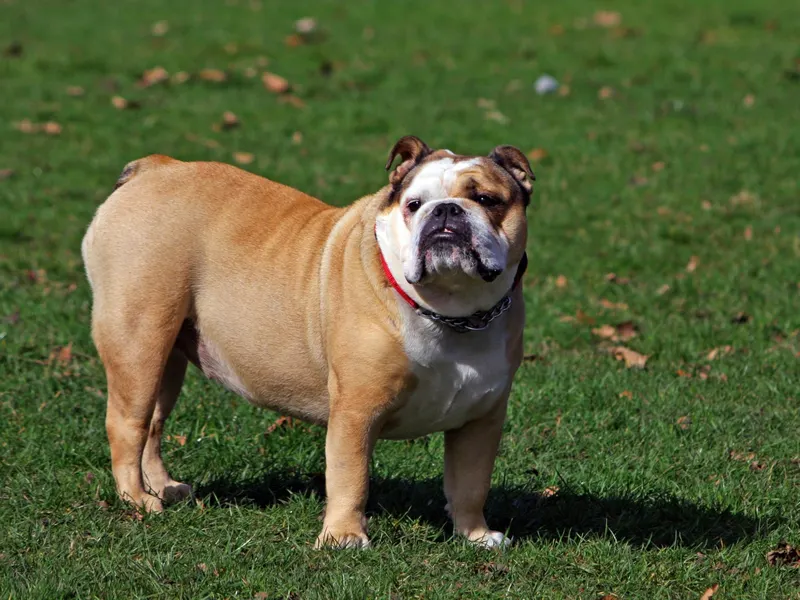
The Bulldog is a medium-sized, low-slung dog with a lot of weight packed into a short frame. Adults stand about 14 to 15 inches at the shoulder and weigh roughly 40 to 50 lb. Males are typically at the upper end of that range, and females are lighter with a slightly less massive head.
The build is broad and heavy in front, with wide-set shoulders, a deep chest and a comparatively narrow, lighter rear, which produces the breed's rolling gait. The head is large with a short muzzle, an undershot jaw, loose skin and an over-nose wrinkle. The tail is short and either straight or screwed.
The coat is short, fine and glossy. The AKC standard lists brindles, solid white, red, fawn and fallow, and piebald (white with patches of color). Solid black is considered undesirable. Colors such as blue, lilac and merle are marketed by some sellers but are not part of the breed standard.
Temperament and Personality
Bulldogs are calm, friendly and affectionate, and many love nothing more than lying near their people. They are usually tolerant and patient with children and welcoming toward visitors.
They can be stubborn and sensitive at the same time: pushing them rarely works, while patience and food often do. Some Bulldogs guard toys or food, and some are not keen on unfamiliar dogs. Early socialization and teaching a puppy to trade items for treats help prevent problems.
Is the Bulldog Good for First-Time Owners?
Yes, in terms of temperament, but first-time owners need to be prepared for the health side. Bulldogs are easygoing, people-focused and do not need an experienced handler to manage their energy.
The learning curve is mostly medical and practical: recognizing labored breathing and overheating, keeping folds clean and dry, managing weight and budgeting for vet visits. Training takes patience because Bulldogs can simply refuse to move or comply, so short sessions with food rewards work better than repetition. A first-time owner who researches breeders carefully, chooses a puppy with open nostrils from health-screened parents and sets up insurance early can do very well with the breed.
Are Bulldogs Good Apartment Dogs?
Yes. The Bulldog is one of the better choices for apartment living thanks to its size, low activity level and generally quiet nature.
A few points matter more than square footage. The apartment must stay cool in summer, so reliable air conditioning is essential. Stairs can be hard on heavy-fronted Bulldogs, especially puppies and seniors, so an elevator or ground-floor unit helps, and many owners carry their dog up and down. Bulldogs snore and snort, which can be noticeable in a small space. Two short walks plus indoor play are usually enough, and nearby shaded areas for early morning or evening outings make summer much easier.
Do Bulldogs Bark a Lot?
No. Most Bulldogs are quiet dogs that bark only occasionally, usually to alert you to someone at the door.
That does not mean they are silent. Bulldogs are known for snoring, snorting, grunting and wheezing, largely because of their shortened airways. Some owners mistake these sounds for vocalizing, but loud or rasping noises during light activity can also be a sign of airway obstruction worth discussing with a vet. Bulldogs that are bored or left alone too long may whine or bark more, so a predictable routine and chew toys help. For neighbors in shared buildings, the typical Bulldog is one of the less noisy breeds.
Exercise and Training
Exercise needs are moderate: two short walks a day plus gentle play. Bulldogs overheat dangerously fast because their airway limits cooling by panting. Walk early in the morning or late in the evening in summer, avoid strenuous exercise in heat and humidity, and keep the house cool.
Many Bulldogs cannot swim because of their heavy front and short muzzle, so always supervise near pools and use a dog life jacket on boats. Training works best in short sessions with food rewards. Use a harness rather than a collar to avoid pressure on the airway. Loud breathing, gagging, blue gums or collapse are emergencies.
Grooming and Shedding
The short, fine coat sheds moderately and needs only a weekly brush. Skin care is the bigger task. Clean and thoroughly dry the facial wrinkles, the nose rope, the folds around the tail and any other creases several times a week, or daily if your dog is prone to infection. Keep nails short, as many Bulldogs do not wear them down on walks.
Feeding and Nutrition
Weight control is the single most important feeding goal for a Bulldog. Extra pounds put more pressure on an already restricted airway, worsen heat intolerance and add load to hips, elbows and the spine. You should be able to feel the ribs under a light layer of fat, even if the broad build makes this harder to judge by eye.
The short muzzle and undershot jaw can make picking up food awkward. Many Bulldogs gulp air while eating, which adds to gas. A shallow, wide bowl or a slow feeder, kibble of a shape and size the dog can grasp easily, and calm, unhurried meals help.
- Feed puppies three to four meals a day and adults two measured meals.
- Avoid exercise right after eating, especially in warm weather.
- Watch for itchy skin, paw licking or recurring fold infections, which can sometimes involve food sensitivities; work through any elimination trial with your vet.
Bulldogs are very food motivated, which is useful in training. Use small treats, count them as part of the daily ration and replace some rewards with praise or play.
| Adult weight | Less active | Typical adult | Very active |
|---|---|---|---|
| 40 lb | 860 kcal | 980 kcal | 1,230 kcal |
| 50 lb | 1,020 kcal | 1,160 kcal | 1,450 kcal |
Estimates use the resting energy formula veterinarians work with (70 × body weight in kg0.75) and standard activity factors. Use the feeding guide on your food as a starting point and adjust to body condition. Puppies, seniors, pregnant animals and pets that need to lose weight have different needs, so ask your vet.
Health and Lifespan
Bulldogs usually live 8 to 10 years. Common problems include:
- Brachycephalic obstructive airway syndrome (BOAS): narrow nostrils, an elongated soft palate and a narrow windpipe that cause noisy breathing, exercise intolerance and heat stroke risk. Surgery can help some dogs
- Skin fold dermatitis
- Eye problems such as entropion, cherry eye and dry eye
- Hip and elbow dysplasia
- Screw tail and spinal malformations
Many Bulldogs need cesarean sections to give birth. In the UK, a respiratory function grading scheme helps breeders select dogs that breathe better. Look for breeders who use it, choose puppies with open nostrils and a less extreme face, or consider adopting from a breed rescue.
Bulldog Price and Cost of Ownership
Typical breeder price in the US$2,000 to $5,000
A Bulldog puppy from a reputable US breeder typically costs about $2,000 to $5,000, and prices vary by breeder, region and lines. Part of the reason the breed is expensive is that many litters are born by cesarean section and litters are small. Very low prices often signal breeders who skip health screening.
Bulldogs and Bulldog mixes regularly come into breed-specific rescues, which is worth considering, especially for an adult whose health status is already known.
Ongoing costs are driven largely by health care:
- Pet insurance, ideally started early, since BOAS, skin and eye conditions are common and some insurers exclude pre-existing issues.
- Possible airway surgery, cherry eye or entropion correction.
- Regular vet visits for skin fold, ear and allergy flare-ups.
- Air conditioning and cooling gear in hot climates.
Is the English Bulldog Right for You?
Bulldogs suit relaxed households, apartments or houses, in cooler climates or with air conditioning, where a laid-back companion is wanted. They are not suited to active owners seeking a jogging or hiking partner. Be ready for higher vet bills and consider pet insurance early, as many breathing and skin conditions can be costly to treat.
Bulldog Traits at a Glance
Bulldog FAQ
Are English Bulldogs good family dogs?
They are typically affectionate, calm and patient with children, though their health needs and stubborn streak require commitment.
How big do English Bulldogs get?
They stand about 14 to 15 inches tall and weigh roughly 40 to 50 lb, with a heavy, wide build.
Why do Bulldogs have breathing problems?
Their shortened skull compresses the airway structures, a condition called brachycephalic obstructive airway syndrome (BOAS).
Can English Bulldogs swim?
Most cannot swim well because of their heavy front and short muzzle. Always supervise near water and use a life jacket.
How much exercise does a Bulldog need?
Two short walks and some gentle play a day, kept to cool times of day.
How long do English Bulldogs live?
Usually 8 to 10 years.