Skye TerrierScotland's long, low and loyal terrier
The Skye Terrier is a long-bodied, short-legged terrier from Scotland's Isle of Skye, famous for its veil of hair and fierce loyalty to its people. Dignified and courageous, it suits owners who want a devoted, moderately active companion and are ready for regular coat care.
Why people love the Skye Terrier
- Intensely loyal and devoted to its family
- Moderate exercise needs
- Brave, alert watchdog
- Dignified and calm indoors
- Distinctive, elegant appearance
Things to consider
- Long back at risk of disc disease
- Coat needs regular brushing and combing
- Reserved with strangers; needs socialization
- Can be stubborn and selective with other dogs
- Rare; very few breeders
Is this breed right for you?
10 questions · live resultHistory and Origin
Skye Terriers developed on the Isle of Skye and nearby areas of western Scotland, where they were used to hunt fox, badger and otter among rocks and cairns. The long, low body allowed them to follow quarry into dens, and the hard outer coat protected them from bites and weather.
The breed became fashionable in the 19th century, partly thanks to Queen Victoria's interest. The most famous Skye is Greyfriars Bobby, the Edinburgh dog said to have guarded his master's grave for years; a statue of him still stands in the city. Today the breed is rare, and The Kennel Club lists it as a vulnerable native breed. The AKC recognized it in 1887.
Size, Colors and Coat
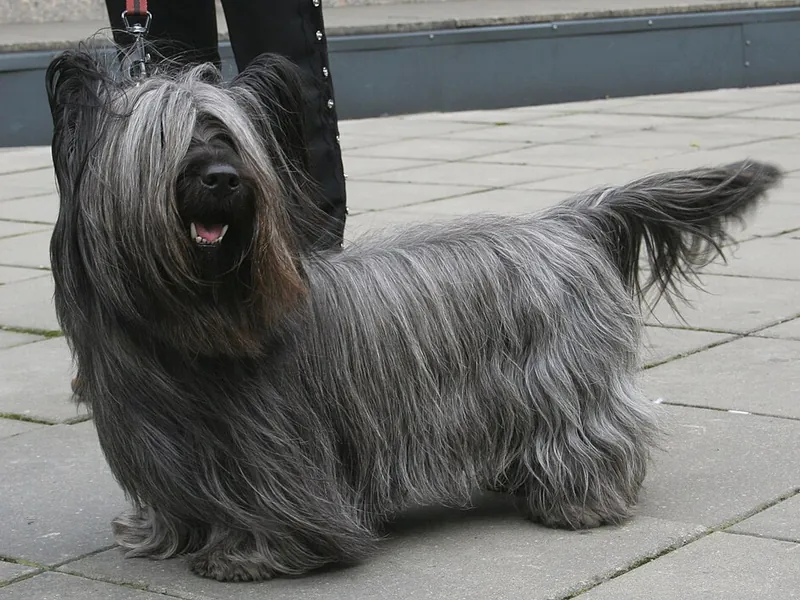
The Skye Terrier is long, low and sturdy, standing only 9 to 10 inches at the shoulder but weighing 35 to 44 lb. Its body is about twice as long as it is tall, giving it a distinctive low profile. Males are slightly taller and heavier, with more substance; females are a little smaller.
The double coat has a soft, woolly undercoat and a long, hard, straight outer coat that falls over the face and eyes and along the body to the ground.
Accepted colors include:
- Black, blue and dark or light gray
- Silver platinum, fawn and cream
Black points on the ears, muzzle and tail tip are typical, and the coat may lighten or change color as the dog matures. Two ear types are recognized: prick ears, which stand erect with long feathering, and drop ears, which hang flat against the head. Both are accepted in the show ring.
Temperament and Personality
Skyes are known for intense loyalty, often to one person, and a dignified reserve with strangers. They are brave, sometimes surprisingly so for their size, and make good watchdogs. With family they are affectionate and enjoy being close.
Like many terriers, they can be stubborn and may not tolerate rough handling, so they do best with older, gentle children. Early socialization helps them accept new people and dogs. Some are selective with other dogs, particularly of the same sex.
Is the Skye Terrier Good for First-Time Owners?
A Skye Terrier can suit a first-time owner who is patient, calm and committed to grooming and back care, but it is not the easiest beginner breed.
Its moderate exercise needs and loyalty are advantages. Challenges include terrier stubbornness, reserve with strangers and the need for early socialization. Beginners must also learn to protect the long back: no jumping from furniture, careful lifting and limited stairs for puppies. Regular grooming is essential. Owners who enjoy a dignified, loyal companion and are ready to learn usually do well.
Are Skye Terriers Good with Cats?
Some Skye Terriers live peacefully with cats they are raised with, but their hunting heritage means outdoor and unfamiliar cats may be chased.
Skyes were bred to hunt fox, badger and otter, and the prey drive is still present. A puppy raised with a confident cat often accepts it as part of the household. Adult dogs without cat experience are less predictable. Introduce them slowly, keep the dog leashed during early meetings and provide the cat with high escape routes. Pet rodents and rabbits should be kept securely away.
Do Skye Terriers Bark a Lot?
Skye Terriers are alert watchdogs and will bark at visitors and unusual sounds, but they are not generally nuisance barkers.
Their reserve with strangers means they announce new people readily. Teaching a quiet cue early and rewarding calm behavior at the door helps. Boredom and isolation can increase barking, so daily walks, scent games and company matter. Their bark is deeper than many expect from a small dog. In apartments, most Skyes settle well once they are familiar with everyday noises.
Exercise and Training
A moderate amount of exercise suits the Skye: one or two good walks a day plus play. They enjoy sniffing and exploring, and some take part in earthdog trials and rally.
Because of the long back, protect the spine. Avoid lots of jumping on and off furniture, and do not let puppies run up and down stairs; breed sources specifically advise against stairs in young dogs. Training should be calm, consistent and reward-based. Skyes respond poorly to harshness but learn well when motivated.
Puzzle toys and scent games are good outlets that do not stress the back, and Skyes enjoy being given small jobs around the house.
Grooming and Shedding
The double coat has a soft, woolly undercoat and a long, hard, straight outer coat that falls over the face and eyes and along the body. It is not trimmed for the show ring, so it needs regular attention.
- Brush and comb thoroughly at least once a week, more if the coat tangles
- Check the beard and the area under the legs for mats
- Keep the feet and nails tidy
Skyes shed moderately. Many pet owners keep the coat a little shorter for easier care.
Feeding and Nutrition
Keeping a Skye Terrier lean is one of the most important things you can do for its long back. Extra weight increases the strain on the spine and the risk of intervertebral disc disease. Check body condition by feel, since the long coat hides the waist, and measure meals carefully.
Puppies should grow steadily rather than quickly. Feed a balanced puppy diet and avoid extra calcium or other supplements unless your vet recommends them, since growth plate problems have been reported in the breed. Breeders often advise controlled growth and limited strenuous exercise during the first year.
- Feed puppies three or four meals a day and adults two.
- Use small treats in training and count them as part of the daily ration.
- Wipe the beard after meals to prevent staining and matting.
- Use shallow bowls at a comfortable height to avoid strain.
Seniors often need smaller portions as activity decreases. Regular weigh-ins help catch gradual weight gain early.
| Adult weight | Less active | Typical adult | Very active |
|---|---|---|---|
| 35 lb | 780 kcal | 890 kcal | 1,110 kcal |
| 44 lb | 930 kcal | 1,060 kcal | 1,320 kcal |
Estimates use the resting energy formula veterinarians work with (70 × body weight in kg0.75) and standard activity factors. Use the feeding guide on your food as a starting point and adjust to body condition. Puppies, seniors, pregnant animals and pets that need to lose weight have different needs, so ask your vet.
Health and Lifespan
Skye Terriers typically live 12 to 14 years. The breed's very long back and short legs increase the risk of intervertebral disc disease, so keep the dog lean, limit jumping, and lift it in and out of the car. Growth issues in puppies, sometimes called premature closure of the growth plates, have been reported, which is one reason breeders advise restricting heavy exercise in youngsters. Choose a breeder who discusses back health openly.
Skye Terrier Price and Cost of Ownership
The Skye Terrier is rare in the US and listed as a vulnerable native breed in the UK. Only a few litters are born each year, so expect waiting lists and searches through the national breed club. Prices vary by breeder, region and lines, and some puppies are imported. Rescue Skyes are uncommon.
Breed-specific cost drivers include:
- Grooming tools or professional grooming to maintain the long coat
- Ramps and steps to protect the back
- Pet insurance that covers intervertebral disc disease, which may require surgery
- Vet visits for back problems or mobility issues
- Training and socialization classes
Food costs are moderate for a dog of 35 to 44 lb.
Is the Skye Terrier Right for You?
A Skye might be right for you if you:
- Want a loyal, dignified companion of moderate energy
- Enjoy regular grooming
- Can protect a long back from jumping and stairs
It suits apartments well when exercised. It is less ideal for homes with toddlers or people wanting a dog that loves everyone.
Skye Terrier Traits at a Glance
Skye Terrier FAQ
Are Skye Terriers good family dogs?
They are devoted to their family but often reserved with strangers. They suit calm homes with older, gentle children.
How big do Skye Terriers get?
They stand only about 9 to 10 inches tall but are long and sturdy, weighing roughly 35 to 44 lb.
Do Skye Terriers shed?
They shed moderately. The long coat needs weekly brushing and combing.
Who was Greyfriars Bobby?
A Skye Terrier in 19th-century Edinburgh, famous for reportedly guarding his owner's grave for many years.
How long do Skye Terriers live?
Typically 12 to 14 years.