Glen of Imaal TerrierIreland's low-slung, quietly tough terrier
The Glen of Imaal Terrier is a low, powerful terrier from Ireland's Wicklow Mountains, calmer and quieter than many of its cousins. It is gentle at home and brave outdoors, a good fit for owners who want a sturdy, medium-energy dog with real terrier character.
Why people love the Glen of Imaal Terrier
- Calmer and quieter than many terriers
- Affectionate, steady companion at home
- Adapts well to apartments with daily walks
- Low shedding when coat is stripped regularly
- Sturdy, compact size with a big-dog attitude
Things to consider
- Can be intolerant of dogs, especially of the same sex
- Strong prey drive toward small animals
- Hand-stripping is needed a few times a year
- Stubborn and independent in training
- Heavy body on short legs needs joint-friendly exercise
Is this breed right for you?
10 questions · live resultHistory and Origin
The breed comes from the Glen of Imaal, a remote valley in County Wicklow. Farmers there needed a versatile, tough dog that could control rats and foxes and go to ground after badgers. Glens are also linked to the old practice of turnspit work, turning roasting spits by walking in a wheel.
The Irish Kennel Club recognized the breed in the 1930s. The Kennel Club in the UK followed in 1975, and the AKC admitted it to the Terrier Group in 2004. It remains one of the rarer terriers worldwide.
Size, Coat and Colors
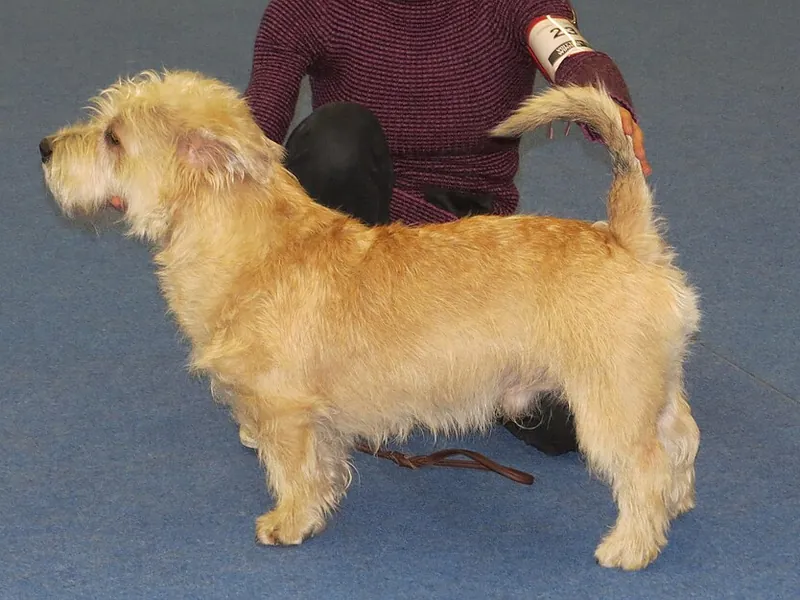
The Glen of Imaal Terrier is a low-to-ground, heavy-bodied terrier with surprising strength. Adults stand about 13 to 14 inches at the shoulder and weigh roughly 32 to 35 lb. Males are at the upper end, while females are slightly smaller and lighter.
The body is longer than tall, with a deep chest, broad back and slightly bowed forelegs turned outward at the feet. The topline rises slightly toward the rear. The head is powerful, with a strong muzzle, rose or half-prick ears and brown eyes.
The coat is medium length, harsh on top with a soft undercoat. Recognized colors are:
- Wheaten: from light cream to red wheaten.
- Blue: any shade of blue, but not black.
- Brindle: blue brindle, not tiger-striped.
Wheaten puppies often have dark shading that clears as they mature. The coat is presented in a natural, tidy outline rather than heavily trimmed.
Temperament and Personality
Glens are often described as less excitable than many terriers. At home they are affectionate, fairly quiet and content to relax with their people. They tend to bark less than average but are alert and will sound the alarm when something seems wrong.
The terrier spirit is still there. Glens are courageous, can be stubborn and may not tolerate other dogs who challenge them, especially same-sex dogs. Their prey drive toward small animals is strong, so cats and rodents need careful introductions or separation.
Is the Glen of Imaal Terrier Good for First-Time Owners?
It can be, especially for first-time owners who like terriers but want a calmer version. Glens are relatively easygoing at home and do not need intense exercise.
The main challenges are independence and dog-to-dog relations. Glens think for themselves, so training takes patience and food rewards. Some become intolerant of other dogs, particularly same-sex dogs, which makes careful socialization and management essential. Hand-stripping or professional grooming a few times a year is also part of ownership. A first-time owner who prepares for these points usually finds the Glen a loyal, low-drama companion.
Do Glen of Imaal Terriers Bark a Lot?
No. Glens are known as one of the quieter terriers and usually bark only when something seems out of place.
They are alert and will sound the alarm when strangers approach, but most do not bark at every noise. Barking may increase if a Glen is bored, frustrated or confronted by another dog. This low-noise temperament is one reason the breed can work well in apartments and close neighborhoods. Teach a quiet cue early and provide daily walks and puzzle toys to keep the dog content.
Are Glen of Imaal Terriers Good With Cats?
Sometimes, if raised with a cat, but many Glens have a strong prey drive and are not reliable with cats or small pets.
A Glen puppy raised with a confident household cat may accept it, though chasing outdoor cats is common. Adult Glens with no cat experience may react strongly to a running cat. Introductions should be slow and supervised, with the dog on leash and the cat given high escape routes. Small pets such as rabbits, guinea pigs and rodents are best kept separate. If you already have cats, discuss your situation honestly with the breeder.
Exercise and Training
Daily walks of 30 to 60 minutes plus play are usually enough. The Glen's heavy body and short, slightly bowed front legs make it strong rather than fast, so avoid lots of jumping and stair running, especially in puppies.
Training works best with patience and food rewards. Glens think for themselves and can be stubborn, but they are not frantic and tend to learn steadily. Early socialization with other dogs is important. Keep the dog on lead near wildlife, as it may ignore recall once a scent or quarry takes over.
Grooming and Shedding
The medium-length coat is harsh on top with a soft undercoat, in wheaten, blue or brindle. Brush it about twice a week and hand-strip it a few times a year to remove dead hair and keep the texture right.
Shedding is fairly low when the coat is properly stripped, which some allergy-prone owners find helpful, although no breed is truly hypoallergenic. Trim the hair between the pads and keep nails short.
Feeding and Nutrition
Weight control is especially important for the Glen of Imaal Terrier. Its long, heavy body on short, slightly bowed front legs puts extra load on the joints and back, and even a few extra pounds increase that strain. Keep the dog lean, with ribs easy to feel and a visible waist.
Feed puppies three to four meals a day, moving to two meals for adults. Glens are slow to mature, and moderate, steady growth supports healthy joints, as hip and elbow dysplasia occur in the breed.
- Choose a complete food suited to the dog's size and activity level, and adjust portions if weight creeps up.
- Glens are often enthusiastic eaters, so use measured portions rather than free feeding.
- In multi-dog homes, feed separately to prevent tension around food.
Training relies on food rewards because Glens are independent. Use tiny treats, count them in the daily ration and use part of each meal for training sessions.
| Adult weight | Less active | Typical adult | Very active |
|---|---|---|---|
| 32 lb | 730 kcal | 830 kcal | 1,040 kcal |
| 35 lb | 780 kcal | 890 kcal | 1,110 kcal |
Estimates use the resting energy formula veterinarians work with (70 × body weight in kg0.75) and standard activity factors. Use the feeding guide on your food as a starting point and adjust to body condition. Puppies, seniors, pregnant animals and pets that need to lose weight have different needs, so ask your vet.
Health and Lifespan
Glens typically live about 10 to 15 years. The best-known inherited problem is a form of progressive retinal atrophy that leads to vision loss; a DNA test is available, so ask for results on both parents.
Hip and elbow dysplasia also occur. The breed's long, heavy body on short, bowed front legs puts extra load on the joints, so keep your Glen lean and avoid repeated high-impact activity. Choose breeders who screen for eyes and joints.
Glen of Imaal Terrier Price and Cost of Ownership
Typical breeder price in the US$1,500 to $2,500
A Glen of Imaal Terrier puppy from a reputable US breeder typically costs about $1,500 to $2,500, and prices vary by breeder, region and lines. The breed is rare in the US, with few litters each year, so expect a waiting list. The breed club can sometimes help place adults.
Breed-specific cost drivers include:
- Hand-stripping a few times a year, either learned at home or done by a groomer familiar with terrier coats.
- DNA testing for the breed's form of progressive retinal atrophy in both parents.
- Hip and elbow screening and possible orthopedic treatment.
- Insurance, worth considering for joint and back problems.
Is the Glen of Imaal Terrier Right for You?
The Glen suits owners who like terriers but prefer a calmer, quieter version. It can adapt well to apartments or small homes with daily walks.
- Good match: adults and families with older children, apartment dwellers, owners with terrier experience.
- Less ideal: homes with small pets, dog parks with lots of unfamiliar dogs, owners wanting an off-lead jogging partner.
Glen of Imaal Terrier Traits at a Glance
Glen of Imaal Terrier FAQ
Are Glen of Imaal Terriers good family dogs?
They are affectionate and steady with their family. They are best with respectful children and may not like rough handling.
How big do Glen of Imaal Terriers get?
They stand about 13 to 14 inches tall but are heavy for their height, around 32 to 35 lb.
Do Glen of Imaal Terriers shed?
They shed relatively little if the coat is brushed and hand-stripped regularly.
Are Glen of Imaal Terriers hypoallergenic?
No dog is fully hypoallergenic, but the low-shedding coat may suit some people with mild allergies.
Do Glens get along with other dogs?
Many do with careful socialization, but some can be intolerant of dogs that challenge them, particularly of the same sex.
How long do Glen of Imaal Terriers live?
Typically 10 to 15 years.